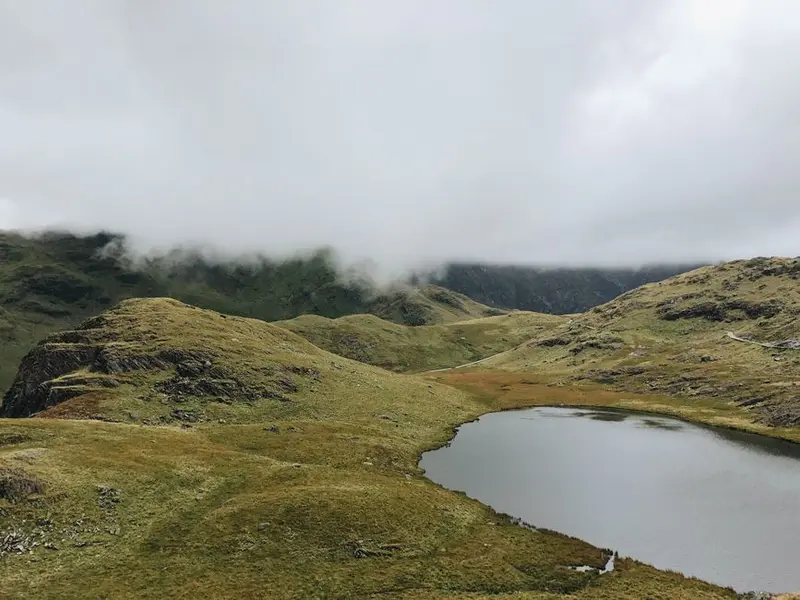
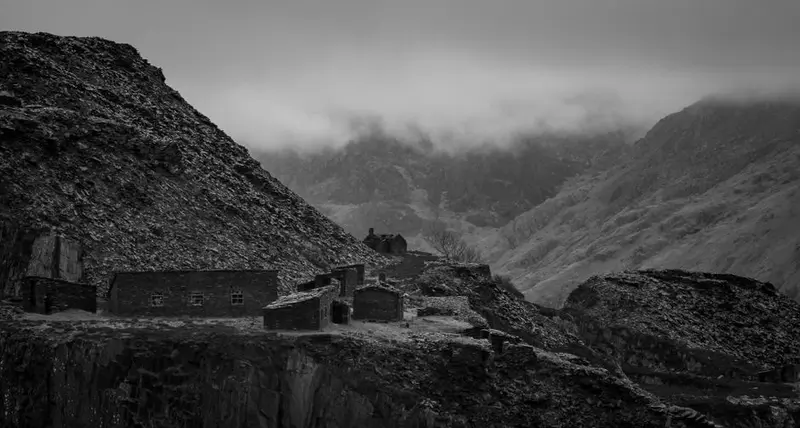
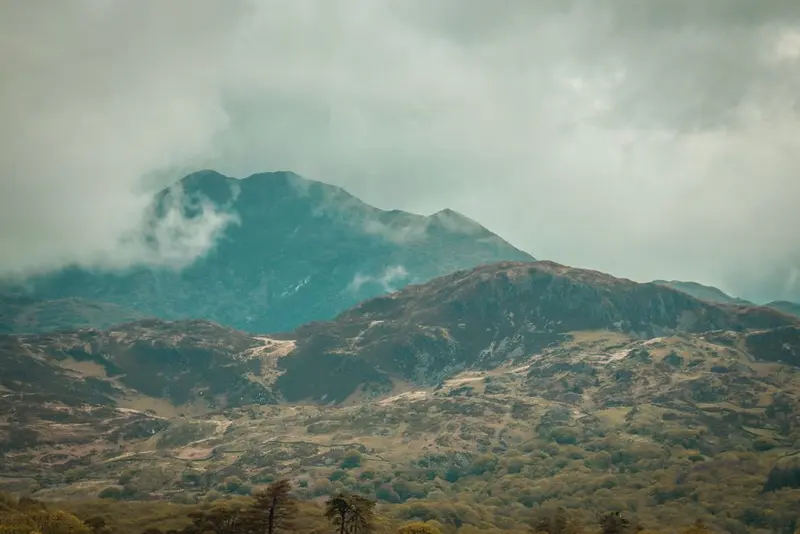
Eryri, officially Snowdonia until 2023, is Wales' oldest national park and covers 2,130 square kilometres in the northwest of the country. Unlike German national parks, it is a cultural landscape: around 26,000 people live within it, more than half of whom speak Welsh, and the slopes have been grazed for centuries.The highest point is Yr Wyddfa at 1,085 metres. Six marked paths lead up to it, along with a rack railway from Llanberis. The rock is predominantly of Ordovician volcanic origin, shaped by glaciers that left behind the characteristic corries and U-shaped valleys. The park is so well geologically exposed that significant parts of geological research originated here in the 19th century.Slate mining is also a defining feature. The quarries of Blaenau Ffestiniog and Llanberis once covered the roofs of half of Europe; the landscape with its grey spoil heaps has been on the World Heritage List since 2021. Yr Wyddfa is heavily frequented, while the Carneddau in the north and the Rhinogydd in the south are quieter.
Sights in Eryri (Snowdonia) National Park
Discover the most important sights and attractions
1Cwm Idwal
Cwm Idwal is a glacial cirque in the Glyderau mountains, featuring a lake, Llyn Idwal, nestled in its basin. In 1954, it was declared Wales' first National Nature Reserve. Charles Darwin visited in 1831 and again in 1842; it was only on his second visit that he recognised the traces of glaciation he had previously overlooked, an example he later used to illustrate selective perception.A circular route of about five kilometres runs around the lake. In the back wall, the Twll Du, the Devil's Kitchen, gapes – a vertical cleft in the rock face. On the inaccessible rock ledges grow arctic-alpine plants that have survived since the Ice Age. The path begins at the Ogwen Cottage car park on the A5.
The National Slate Museum is housed in the original workshops of the Dinorwig Slate Quarry, which, after its closure in 1969, were left exactly as they stood during operation: tools on the wall, a forge, a foundry, and the machine hall featuring Britain's largest water wheel.North Wales slate covered roofs across Europe and North America in the 19th century; at times, the region supplied a third of the world's production. The museum also includes workers' cottages depicting three different decades and demonstrations of hand-splitting slate, where wafer-thin slabs are created from a block in seconds. Admission is free. The surrounding slate landscape has been on the World Heritage List since 2021.
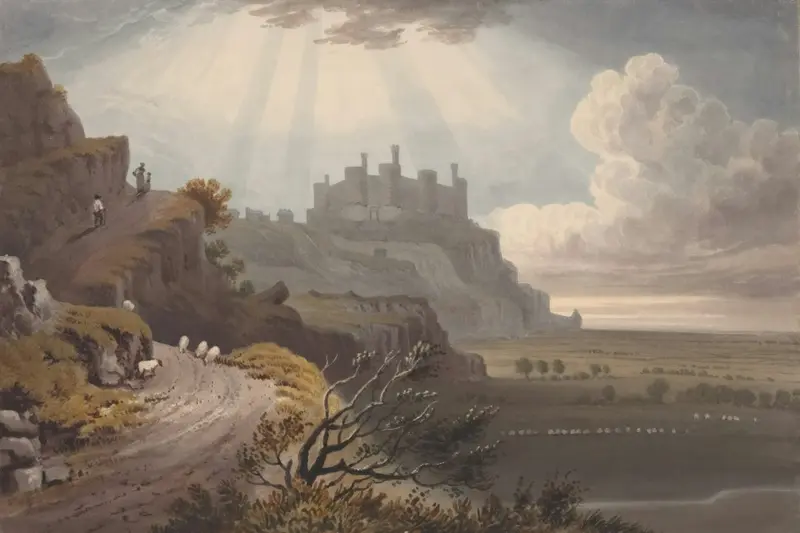
Harlech Castle stands on a rock 60 metres above the coastal plain, where the sea still reached in the 13th century. A staircase cut into the rock, the Water Gate Stairs, led down to a landing stage, through which the castle could be supplied during a siege. Today, the sea lies a good kilometre away, the land has silted up.The site withstood several long sieges. Owain Glyndŵr captured it in 1404 after years of blockade and made it his headquarters. During the Wars of the Roses, a Lancastrian garrison held out for seven years, which is said to be the inspiration for the song Men of Harlech. From the walls, you gaze across Tremadog Bay to the mountains of Eryri.
These places are nearby — perfect for additional days or a day trip.
Conwy
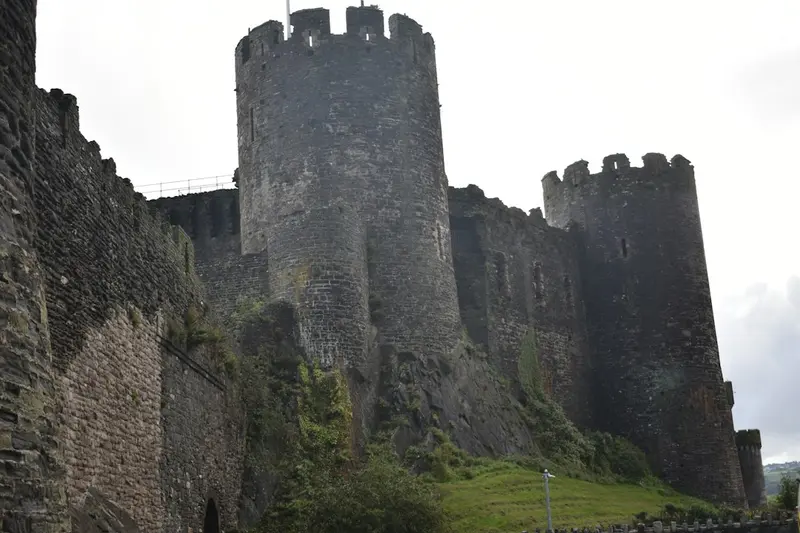
Conwy, on the north coast of Wales, is one of Europe's most completely preserved fortified towns. Edward I had the castle and town walls built between 1283 and 1287 in just four years, as part of the iron ring of fortresses with which he secured the conquered Gwynedd. The master builder was James of St. George from Savoy.The town walls are preserved intact for 1.3 kilometers, with 21 towers and three gates, and are largely walkable. The castle, with its eight towers, stands on a rock above the Conwy estuary. Both have been UNESCO World Heritage Sites since 1986.On the quay stands the Smallest House in Great Britain, 3.05 meters high and 1.8 meters wide, inhabited until 1900. Three bridges span the river side by side, including Thomas Telford's suspension bridge from 1826, whose towers are deliberately modelled on the castle's battlements.
Wales
Wales, at just over 20,000 square kilometers, is smaller than Hesse, yet it boasts three national parks, five mountain ranges, and a continuously accessible coastline. The country was conquered by England in 1284 and formally incorporated in 1536, but it has retained its language: About a fifth of the population speaks Welsh, significantly more in the northwest. All place signs are bilingual, and since 2023, the national parks officially bear their Welsh names.Mountains, Coast, CastlesThe north is dominated by Eryri, formerly Snowdonia, home to the 1,085-meter-high Yr Wyddfa. To the south lie the Bannau Brycheiniog, formerly Brecon Beacons, with their sweeping sandstone ridges. In between stretches thinly populated Mid Wales. The Wales Coast Path, since 2012, spans over 1,400 kilometers around the entire country, the first such project worldwide. Wales also boasts the highest density of castles in Europe: Around 600 sites, many from Edward I's campaign.Industry and SongThe valleys south of Merthyr Tydfil supplied a significant portion of the world's coal production in the 19th century. While mining disappeared in the 1980s, its culture has endured: The male voice choirs, rugby enthusiasm, and the Eisteddfod festival trace their origins back to this period and older bardic traditions. The former industrial facilities of Blaenavon and the Slate Landscape of Northwest Wales are now on the World Heritage List.When to VisitWales is among the rainiest regions of Great Britain, with over 3,000 millimeters falling annually on the western slopes of Eryri. May to September are the most reliable months. In the mountains, the weather changes quickly, so waterproof clothing is a year-round necessity, not a luxury.
Buxton
Buxton, a historic spa town in Derbyshire, is renowned for its thermal springs and impressive architecture. The Buxton Crescent, a masterpiece of Georgian architecture, attests to its rich spa heritage and now houses a luxurious hotel and thermal spa. You'll also find the imposing Devonshire Dome here, once stables, now part of the university, as well as the picturesque Pavilion Gardens with their Victorian greenhouses and the Buxton Opera House. At St Ann's Well, you can taste the famous spring water that has attracted visitors for centuries. The town also serves as an ideal gateway to the Peak District National Park, inviting you to hikes and explorations, such as the nearby Pooles Cavern. For a relaxed atmosphere, a visit in spring or autumn is recommended, to experience the town and the surrounding nature without the largest crowds.
Bannau Brycheiniog (Brecon Beacons)
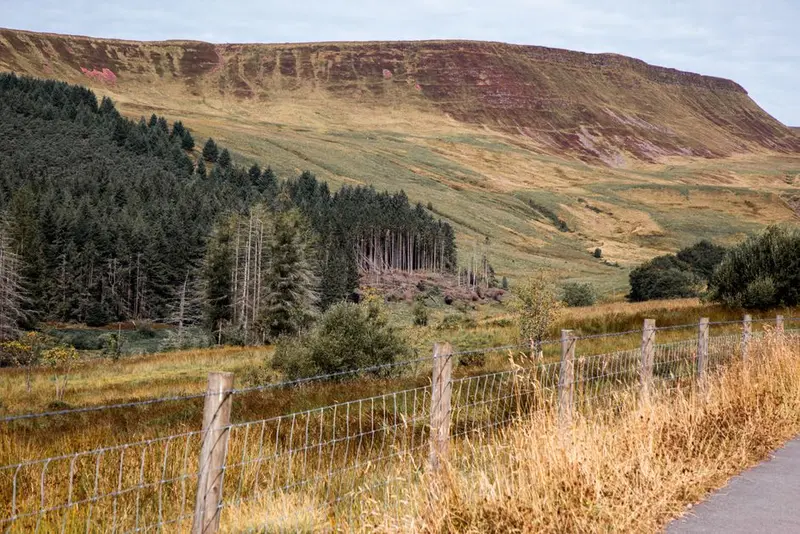
Bannau Brycheiniog, known as Brecon Beacons until 2023, is located in South Wales and consists of four distinct mountain ranges of Old Red Sandstone. The characteristic shape is uniform throughout: gently sloping southern slopes and abruptly dropping northern faces, carved out by glaciers. The highest point is Pen y Fan at 886 metres.The reversion to the Welsh name was a deliberate decision by the park authorities: Beacon refers to signal fires and thus to fossil fuels, which no longer seemed appropriate given the park's climate goals. Bannau simply means peaks.To the south, Waterfall Country around Ystradfellte is a zone where limestone and sandstone meet; several waterfalls cascade over rock steps, and behind Sgwd yr Eira, one can walk through. Beneath these lie extensive cave systems. The entire park is designated as an International Dark Sky Reserve, where the Milky Way is visible to the naked eye on clear nights.
Peak District National Park
The Peak District National Park, Britain's first national park, is a breathtaking landscape of contrasting moors, valleys, and imposing limestone formations.It invites you to explore the wild beauty of nature and offers countless opportunities for adventure and relaxation in its unique hilly landscape.