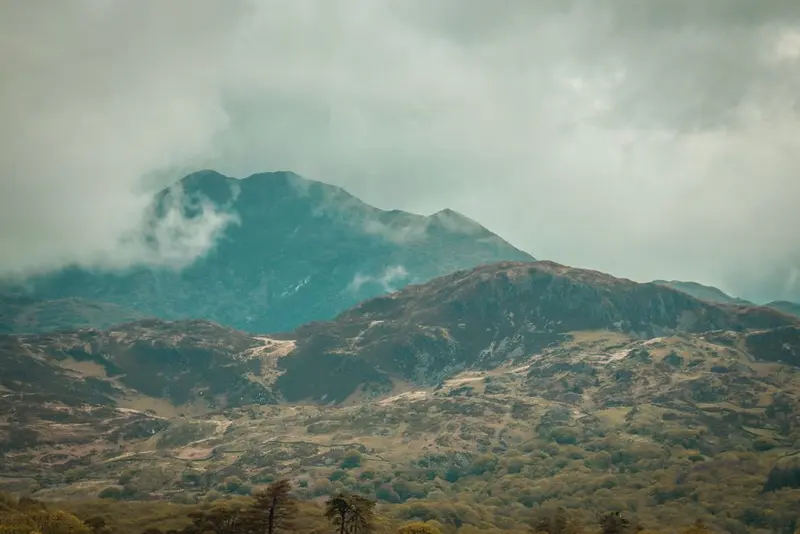
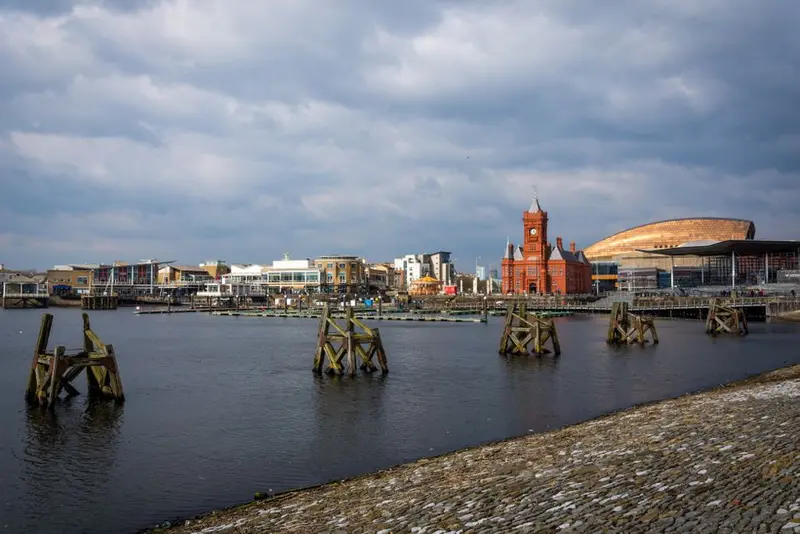
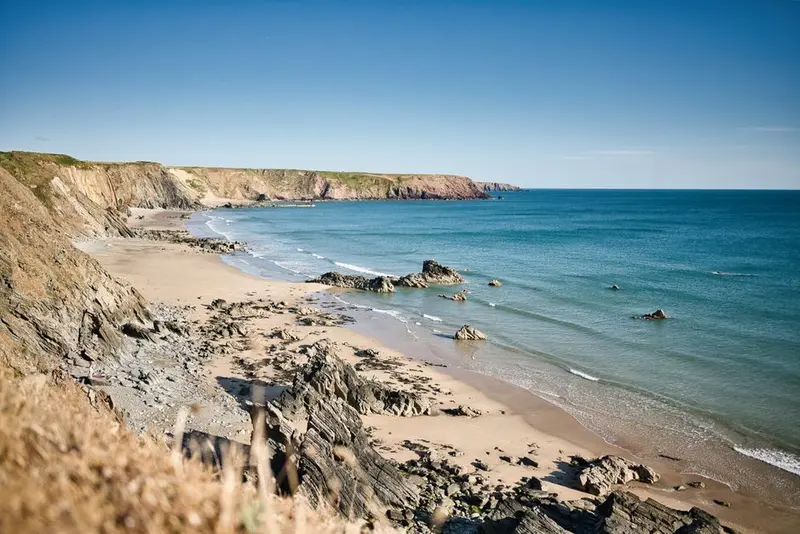
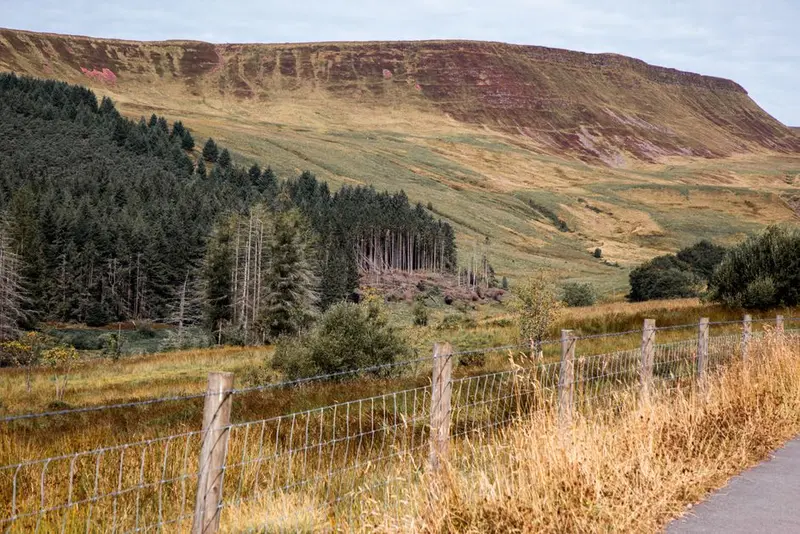
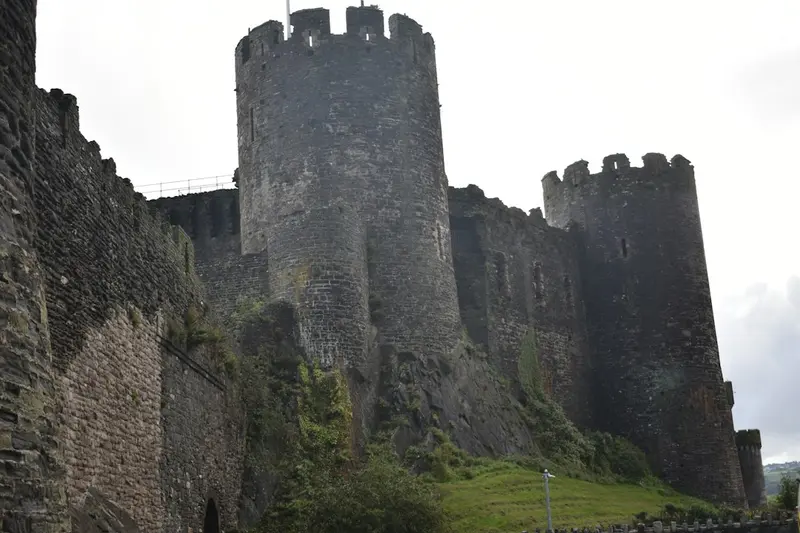
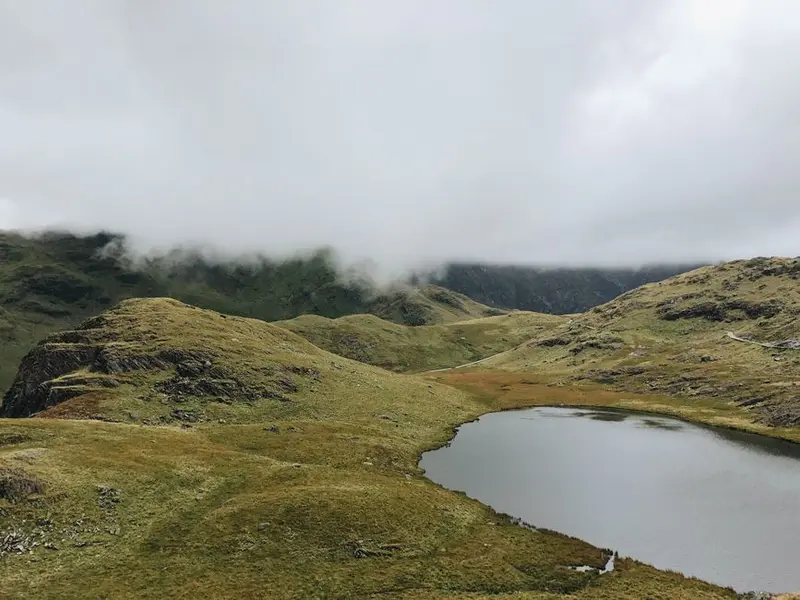
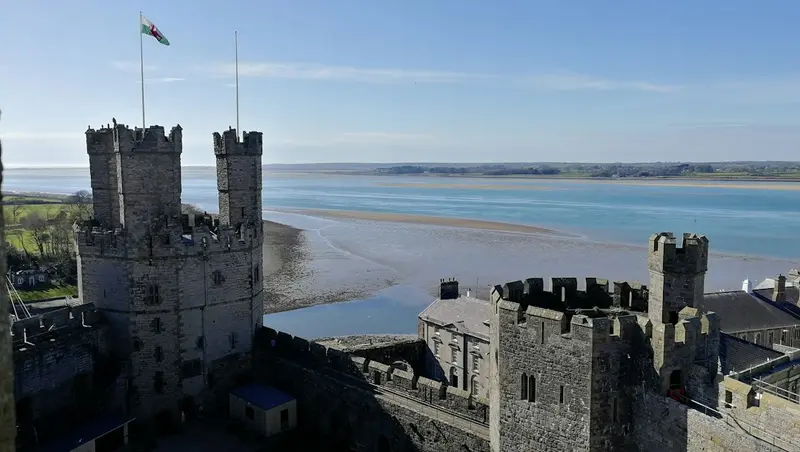
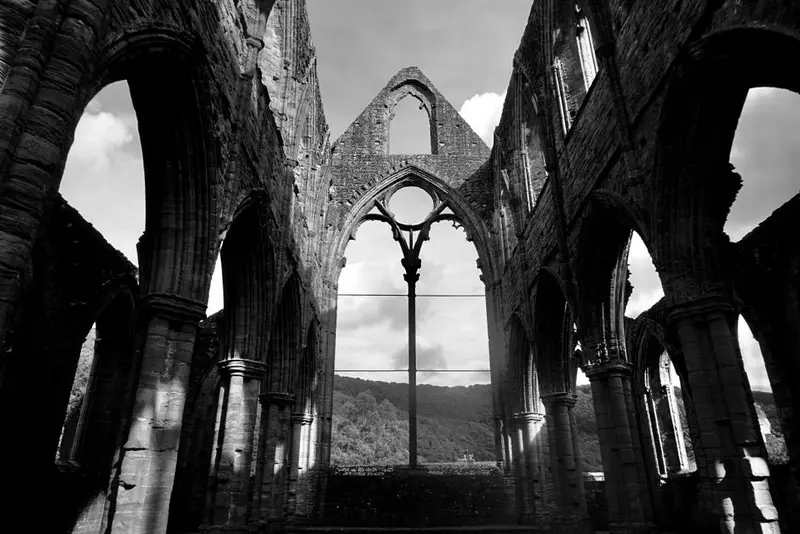
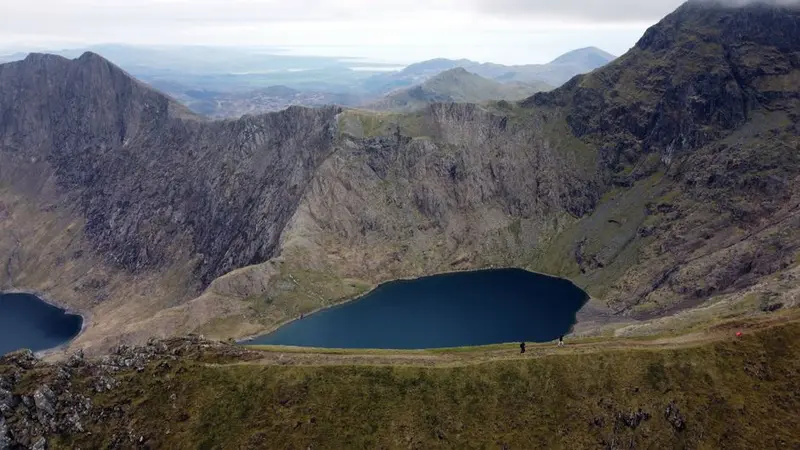
Wales, at just over 20,000 square kilometers, is smaller than Hesse, yet it boasts three national parks, five mountain ranges, and a continuously accessible coastline. The country was conquered by England in 1284 and formally incorporated in 1536, but it has retained its language: About a fifth of the population speaks Welsh, significantly more in the northwest. All place signs are bilingual, and since 2023, the national parks officially bear their Welsh names.Mountains, Coast, CastlesThe north is dominated by Eryri, formerly Snowdonia, home to the 1,085-meter-high Yr Wyddfa. To the south lie the Bannau Brycheiniog, formerly Brecon Beacons, with their sweeping sandstone ridges. In between stretches thinly populated Mid Wales. The Wales Coast Path, since 2012, spans over 1,400 kilometers around the entire country, the first such project worldwide. Wales also boasts the highest density of castles in Europe: Around 600 sites, many from Edward I's campaign.Industry and SongThe valleys south of Merthyr Tydfil supplied a significant portion of the world's coal production in the 19th century. While mining disappeared in the 1980s, its culture has endured: The male voice choirs, rugby enthusiasm, and the Eisteddfod festival trace their origins back to this period and older bardic traditions. The former industrial facilities of Blaenavon and the Slate Landscape of Northwest Wales are now on the World Heritage List.When to VisitWales is among the rainiest regions of Great Britain, with over 3,000 millimeters falling annually on the western slopes of Eryri. May to September are the most reliable months. In the mountains, the weather changes quickly, so waterproof clothing is a year-round necessity, not a luxury.