Fernweh: Home
    ExploreTravel GuidesPlan a tripMy tripLast visited
    de|en
    All Places & RegionsAll highlightsAbout FernwehFAQPrivacy PolicyImprint
    ExploreTravel GuidesPlan a tripMy tripLast visited
    Amalfi Coast

    Italy

    Amalfi Coast

    Point of InterestCultureFor Families

    The Amalfi Coast is the southern edge of the Sorrentine Peninsula on the Gulf of Salerno, with approximately 40 kilometers of coastal road stretching between Positano and Vietri sul Mare.

    by Felix Gillen

    1. Home
    2. Destinations
    3. Italy
    4. Campania
    5. Amalfi Coast
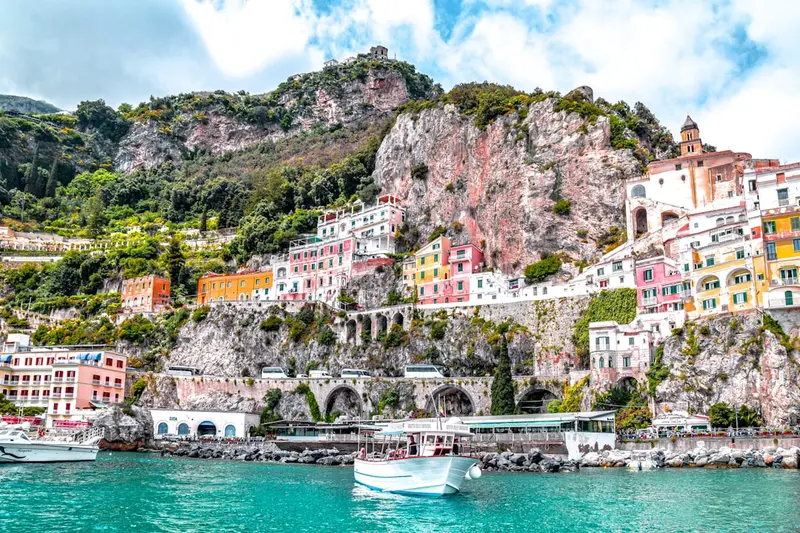
    The Amalfi Coast is the southern edge of the Sorrentine Peninsula on the Gulf of Salerno, with approximately 40 kilometers of coastal road stretching between Positano and Vietri sul Mare. The mountains here drop steeply into the sea; lemon groves cling to the slopes, and densely built towns perch in the bays and on rocky promontories.The most famous are Positano, Amalfi, Atrani, and Ravello. Since 1997, the coast has been a UNESCO World Heritage site.

    Points of Interest

    Discover the most important sights and attractions

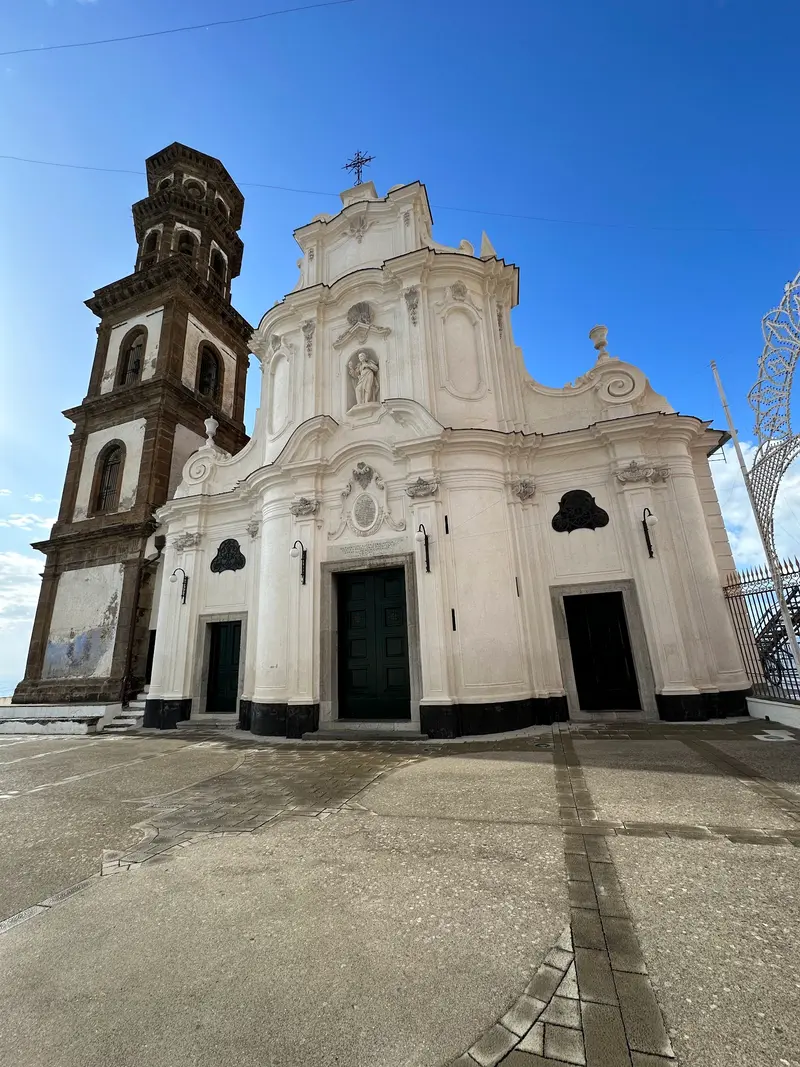
    Santa Maria Maddalena, Atrani
    Church

    1Santa Maria Maddalena, Atrani

    The Collegiate Church in Atrani, Amalfi's small neighboring town, was built in 1274 on the remains of a medieval fortress. Its facade is considered the only example of Rococo on the Amalfi Coast; the vaults of a transept are covered externally with majolica tiles. From the sacristy's terrace, you look over the Gulf of Salerno.
    Open in Google Maps
    Museo della Carta, Amalfi
    Museum

    2Museo della Carta, Amalfi

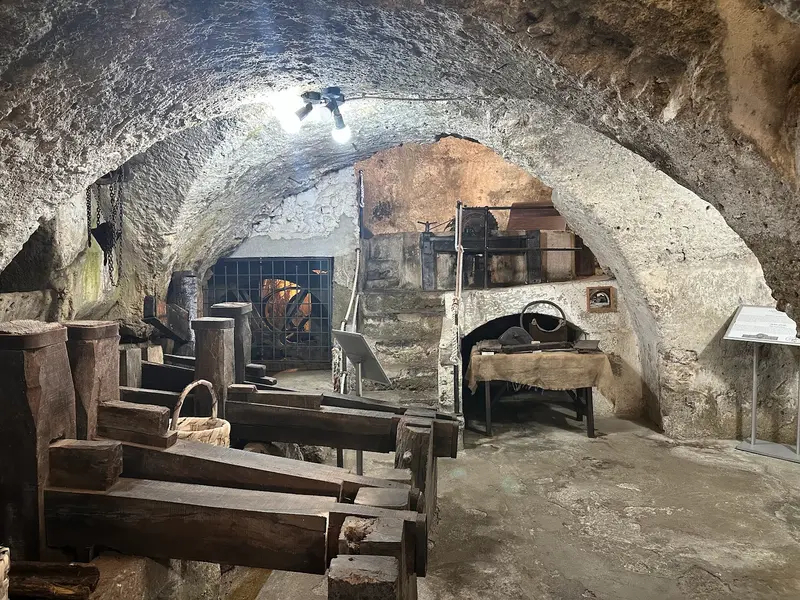
    Paper Museum in a former paper mill in the Valle dei Mulini above the town center of Amalfi, a museum since 1969. The restored machines still work; during the short guided tour, you see how a sheet of handmade Bambagina paper is made.
    Open in Google Maps
    Fiordo di Furore
    Attraction

    3Fiordo di Furore

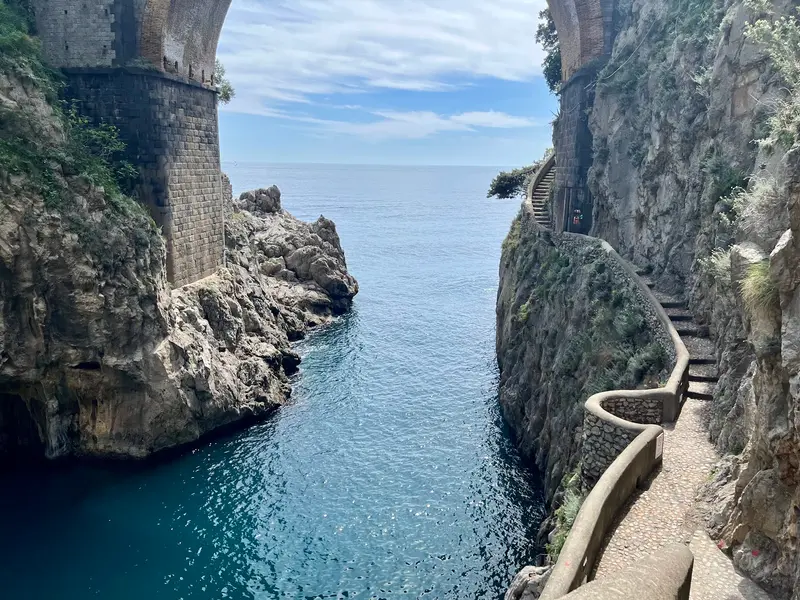
    A narrow rocky gorge between Positano and Amalfi, carved out by the Schiato stream; the coastal road SS163 crosses it on a bridge. At its base lie an old fishing village and a hidden beach, to which about 200 steps lead down from the road.
    Open in Google Maps
    Valle delle Ferriere
    Park

    4Valle delle Ferriere

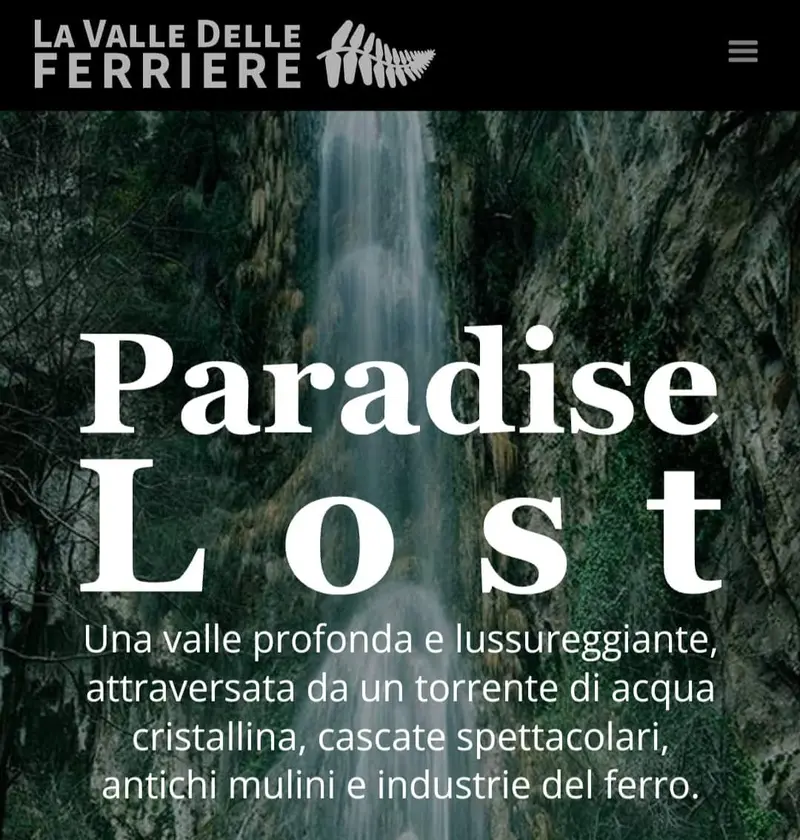
    A deep valley above Amalfi in the municipality of Scala, named after the ironworks of the Maritime Republic, where nails for ships were primarily produced. Karst springs feed a stream at the valley floor. The state nature reserve protects populations of the fern Woodwardia radicans, a relict from the Tertiary period. Hiking trails lead in from places like Amalfi and Pogerola; the main path takes around two and a half hours.
    Open in Google Maps
    Sant'Andrea Cathedral and Cloister of Paradise, Amalfi
    Attraction

    5Sant'Andrea Cathedral and Cloister of Paradise, Amalfi

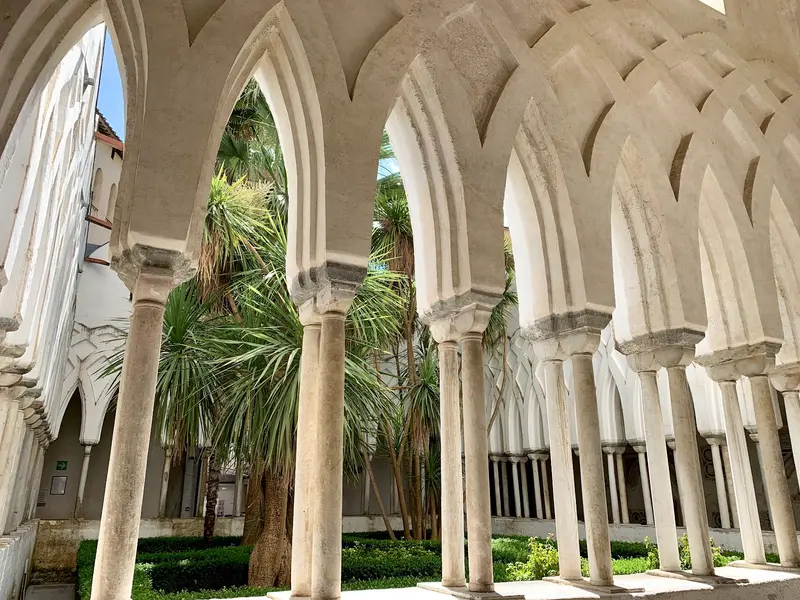
    Amalfi Cathedral rises above a grand staircase of 62 steps on Piazza Duomo. Following a partial collapse in 1861, the facade was restored by Errico Alvino in medieval style by 1891. The bronze door was cast in Constantinople before 1066 and is considered Italy's oldest post-ancient bronze door. The visit includes the Chiostro del Paradiso, a 13th-century cloister in Arab-Norman style with pointed arches.
    Open in Google Maps

    Dining & Drinks

    1

    Sensi Restaurant

    Restaurant offering Italian and Mediterranean cuisine on Via Pietro Comite in the center of Amalfi, near Piazza Duomo.
    Show on Google Maps
    2

    Unbekannter Ort

    Restaurant in Atrani, the small neighboring town east of Amalfi, just a few steps from the beach.
    Show on Google Maps
    3

    Il Chiostro, Amalfi

    Restaurant with fish and Italian cuisine on Via dei Prefetturi, right next to Amalfi Cathedral.
    Show on Google Maps
    4

    Taverna Buonvicino, Amalfi

    Restaurant with fish and Mediterranean cuisine on Largo Santa Maria Maggiore in Amalfi's Old Town.
    Show on Google Maps

    Food and Drink

    Amalfi Coast cuisine thrives on lemons, fish and terrace produce.

    Colatura di alici di Cetara

    Clear, amber fish sauce from salted anchovies, traditionally made in Cetara with a Protected Designation of Origin (DOP). Enjoy with Spaghetti or Linguine, which you then cook unsalted.

    Scialatielli

    Short, wide ribbon pasta with basil and cheese in the dough, invented in Amalfi in 1978 and today a recognized traditional product of Campania.

    Limoncello and Delizia al limone

    Lemon liqueur from coastal lemons and lemon cream pastries, invented 1978 in Sorrento, now region-wide.

    History and Culture

    From the 9th century, Amalfi was an independent maritime republic; its merchants traded with Byzantium, North Africa, and the Levant. Its collection of maritime laws, the Tabula de Amalpha, is considered the oldest Italian maritime law and was applied throughout the Mediterranean until the 16th century. After its conquest by the Normans in 1073 and its plundering by Pisa in 1135 and 1137, the city lost its significance.From these trade contacts emerged Arab-Norman architectural styles, such as those seen in the Chiostro del Paradiso in Amalfi. To this day, Amalfi produces handmade Bambagina paper, while Vietri sul Mare is known for its painted ceramics.The lemons of the coast, especially the variety Sfusato Amalfitano, grow in terraced gardens on the steep slopes and are protected as Limone Costa d'Amalfi by a geographical indication (IGP).

    Exploring the Amalfi Coast

    SITA's public buses connect Sorrento, Positano, and Amalfi, plus Amalfi with Maiori, Salerno, and Ravello. There's no direct line; you transfer in Amalfi between Salerno and Positano. Purchase tickets beforehand at tobacconists, bars, or newsstands; no tickets are sold on the bus. From May to October, buses are often full, so allow ample time for train or flight connections.From early April to late October, ferries run between Salerno, Amalfi, Positano, Sorrento, and Capri; traveling by water helps you avoid coastal road traffic jams. In rough seas, services are canceled.Driving the SS163 is challenging, and parking in the towns is scarce and expensive. At certain times, a daytime driving ban applies on the coastal road based on odd or even license plate numbers; hotel guests with a booking are exempt. Check current dates before you travel. Within the towns, you'll get around on foot, mostly via stairs and steep alleys.

    Accommodations in Amalfi Coast

    Find perfect stay in Amalfi Coast

    Booking.com* (Affiliate link)
    Search Hotels
    Agoda* (Affiliate link)
    Search Hotels
    Airbnb
    Vacation Rentals

    * Affiliate link: if you book through it, we earn a small commission. The price stays the same for you.

    Campgrounds in Amalfi Coast

    Find perfect campground in Amalfi Coast

    Search via Google Maps
    Campgrounds nearby (15km)
    Camping.info
    Find Campgrounds
    Park4Night
    RV Parks & Camping

    Nearby

    Ravello

    Ravello

    Ravello is situated on a rocky plateau about 350 meters above the Amalfi Coast, above Atrani. This small town of around 2,300 residents is known for its villas, gardens, and panoramic terraces.In the Middle Ages, Ravello belonged to the Duchy of Amalfi; merchant families like the Rufolo built their palaces here. Today, Villa Rufolo, Villa Cimbrone, and the summer Ravello Festival define the town.
    Positano

    Positano

    Positano lies on the western Amalfi Coast, its houses climbing from the sea far up the hillside. The colorful facades, Santa Maria Assunta's majolica dome, and the main beach below define the town's image.The town has about 3,700 residents. Most routes within the town are stairs and steep alleys.
    Pompeii

    Pompeii

    Pompeii was a Roman town at the foot of Mount Vesuvius, which disappeared under four to six meters of pumice and ash during the eruption in 79 AD. It has been excavated since 1748, revealing streets, houses, workshops, temples, theaters, and baths.The archaeological site, a UNESCO World Heritage site since 1997, lies on the outskirts of the modern town of Pompei, southeast of Naples, about 35 to 40 minutes away via the Circumvesuviana.
    Sorrento

    Sorrento

    Sorrent is situated on a high tuff terrace, descending steeply towards the Gulf of Naples, overlooking Mount Vesuvius. This town of about 15,000 residents is the main hub of its namesake peninsula; travelers have been drawn here since the era of the Grand Tour.The Old Town's street network still adheres to the ancient city's grid layout. Citrus groves flourish all around. From Marina Piccola port, ships sail to Capri, Naples, and the Amalfi Coast.
    Campania

    Campania

    Campania is located in southwest Italy on the Tyrrhenian Sea, with Naples as its capital. Around the Gulf of Naples, the most famous destinations cluster: Mount Vesuvius, the archaeological sites of Pompeii and Herculaneum, the Sorrento Peninsula, and the islands of Capri, Ischia, and Procida.South of this, the Amalfi Coast stretches along with its towns built into the cliffs; further south are the Greek temples of Paestum and the Cilento National Park. Inland lie the Royal Palace of Caserta and the hills of Irpinia, known for producing the region's famous wines.

    Sources & method

    • Photos: Unsplash, Google Maps. Each photo carries its credit.
    • Place data such as addresses and ratings comes from Google Maps.
    • The content is based on web research from public, traceable sources. How the content is made · The role of AI