Fernweh: Home
    ExploreTravel GuidesPlan a tripMy tripLast visited
    de|en
    All Places & RegionsAll highlightsAbout FernwehFAQPrivacy PolicyImprint
    ExploreTravel GuidesPlan a tripMy tripLast visited
    • Overview
    • Places in the region
    • Food culture
    • Culture
    • Getting around
    • Round trips
    • Nearby
    Campania

    Italy

    Campania

    Region

    Campania is located in southwest Italy on the Tyrrhenian Sea, with Naples as its capital.

    by Felix Gillen

    1. Home
    2. Destinations
    3. Italy
    4. Campania
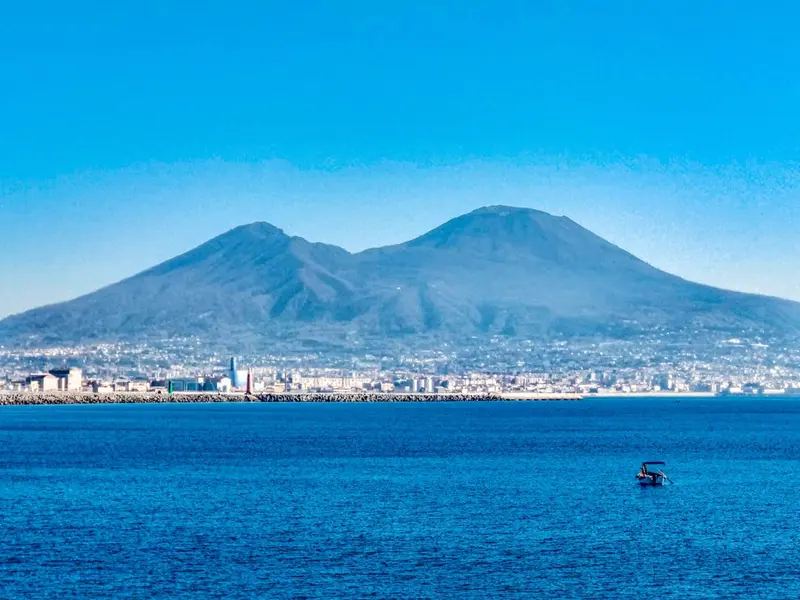
    Campania is located in southwest Italy on the Tyrrhenian Sea, with Naples as its capital. Around the Gulf of Naples, the most famous destinations cluster: Mount Vesuvius, the archaeological sites of Pompeii and Herculaneum, the Sorrento Peninsula, and the islands of Capri, Ischia, and Procida.South of this, the Amalfi Coast stretches along with its towns built into the cliffs; further south are the Greek temples of Paestum and the Cilento National Park. Inland lie the Royal Palace of Caserta and the hills of Irpinia, known for producing the region's famous wines.
    With around 5.6 million inhabitants, Campania is one of Italy's most populous regions, with most residents living in the Naples metropolitan area. The region boasts several UNESCO World Heritage Sites, including Naples' Old Town, Pompeii and Herculaneum, the Amalfi Coast, the Royal Palace of Caserta, and Paestum with the Cilento National Park. For a first visit, Naples serves as a base for the city, Vesuvius, and excavations; Sorrento or an Amalfi Coast town for the coast and islands.
    Pompeii

    Place 1 of 4

    Pompeii

    Pompeii was a Roman town at the foot of Mount Vesuvius, which disappeared under four to six meters of pumice and ash during the eruption in 79 AD. It has been excavated since 1748, revealing streets, houses, workshops, temples, theaters, and baths.

    Discover
    Ravello

    Place 2 of 4

    Ravello

    Ravello is situated on a rocky plateau about 350 meters above the Amalfi Coast, above Atrani. This small town of around 2,300 residents is known for its villas, gardens, and panoramic terraces.

    Discover
    Sorrento

    Place 3 of 4

    Sorrento

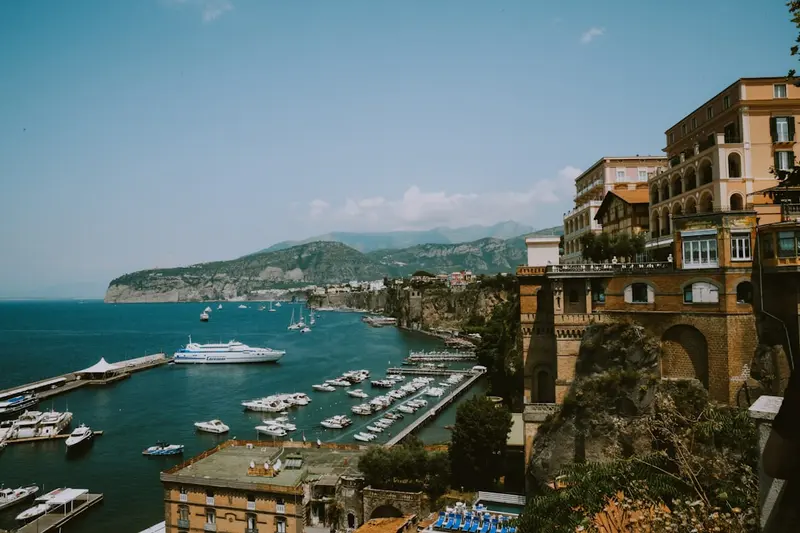
    Sorrent is situated on a high tuff terrace, descending steeply towards the Gulf of Naples, overlooking Mount Vesuvius.

    Discover
    Positano

    Place 4 of 4

    Positano

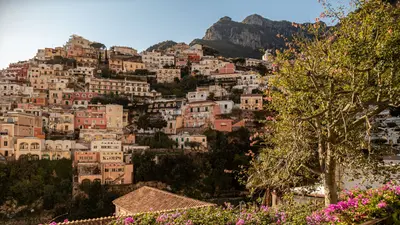
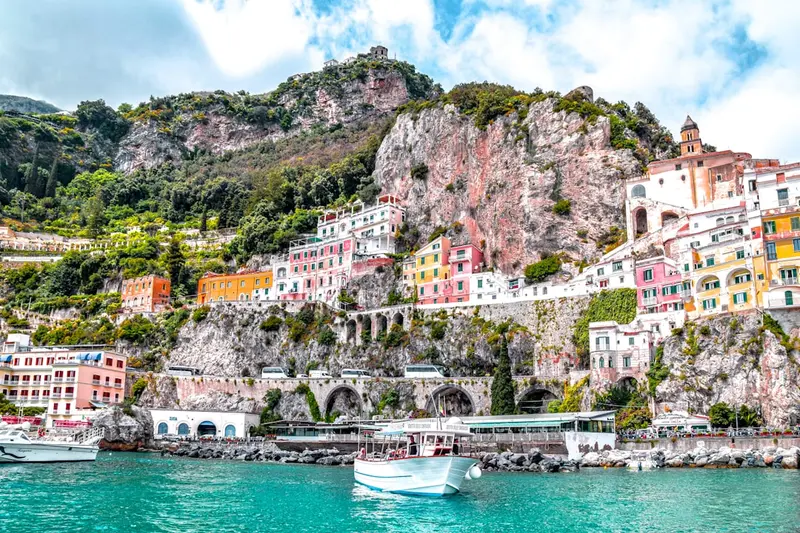
    Positano lies on the western Amalfi Coast, its houses climbing from the sea far up the hillside. The colorful facades, Santa Maria Assunta's majolica dome, and the main beach below define the town's image.

    Discover

    More places in Campania

    Amalfi Coast

    Amalfi Coast

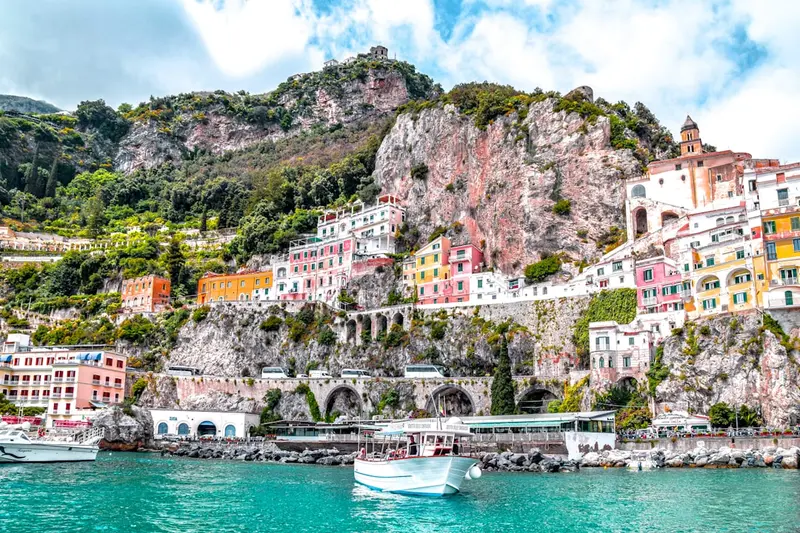
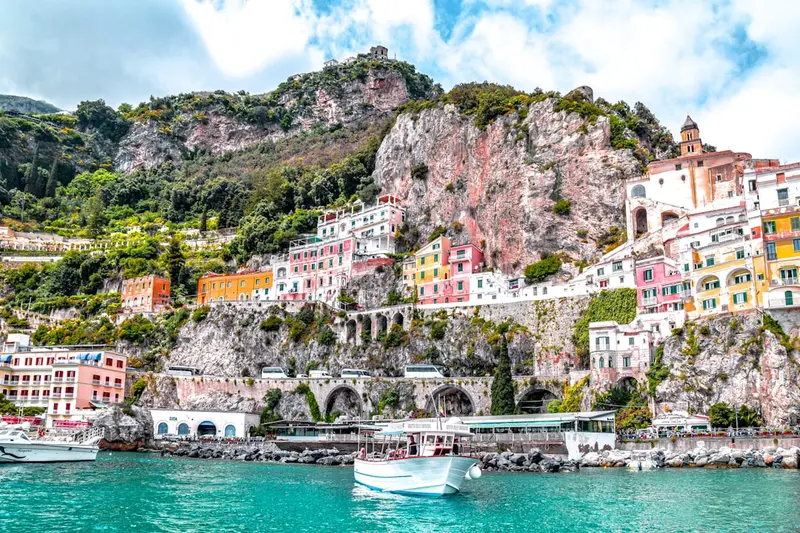
    The Amalfi Coast is the southern edge of the Sorrentine Peninsula on the Gulf of Salerno, with approximately 40 kilometers of coastal road stretching between Positano and Vietri sul Mare. The mountains here drop steeply into the sea; lemon groves cling to the slopes, and densely built towns perch in the bays and on rocky promontories.The most famous are Positano, Amalfi, Atrani, and Ravello. Since 1997, the coast has been a UNESCO World Heritage site.
    Naples

    Naples

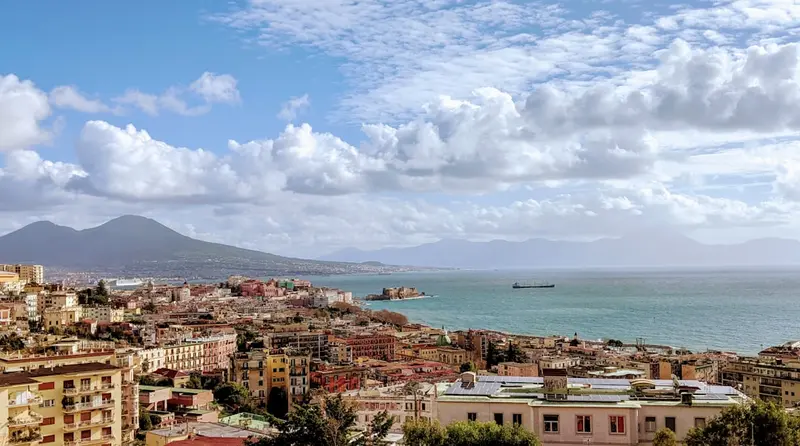
    Naples is the capital of Campania and, with over 900,000 inhabitants, the third-largest city in Italy. It is located on the Bay of Naples between Mount Vesuvius to the east and the Phlegraean Fields to the west.Its historic centre has been a UNESCO World Heritage site since 1995. Its street network remains almost unchanged from its Greek foundation, with churches, monasteries, and palaces from almost all eras built upon it. Naples is considered the birthplace of pizza.
    Paestum

    Paestum

    Paestum is located in the coastal plain south of Salerno. Greek settlers from Sybaris founded the city around 600 BC as Poseidonia. Three Doric temples from the period between approximately 550 and 450 BC are preserved in exceptionally good condition.The archaeological site is surrounded by an approximately 4.75-kilometer-long, largely preserved city wall and, together with the Cilento National Park, is a UNESCO World Heritage site.

    Sights in Campania

    Discover the most important sights and attractions

    Reggia di Caserta
    Museum

    Reggia di Caserta

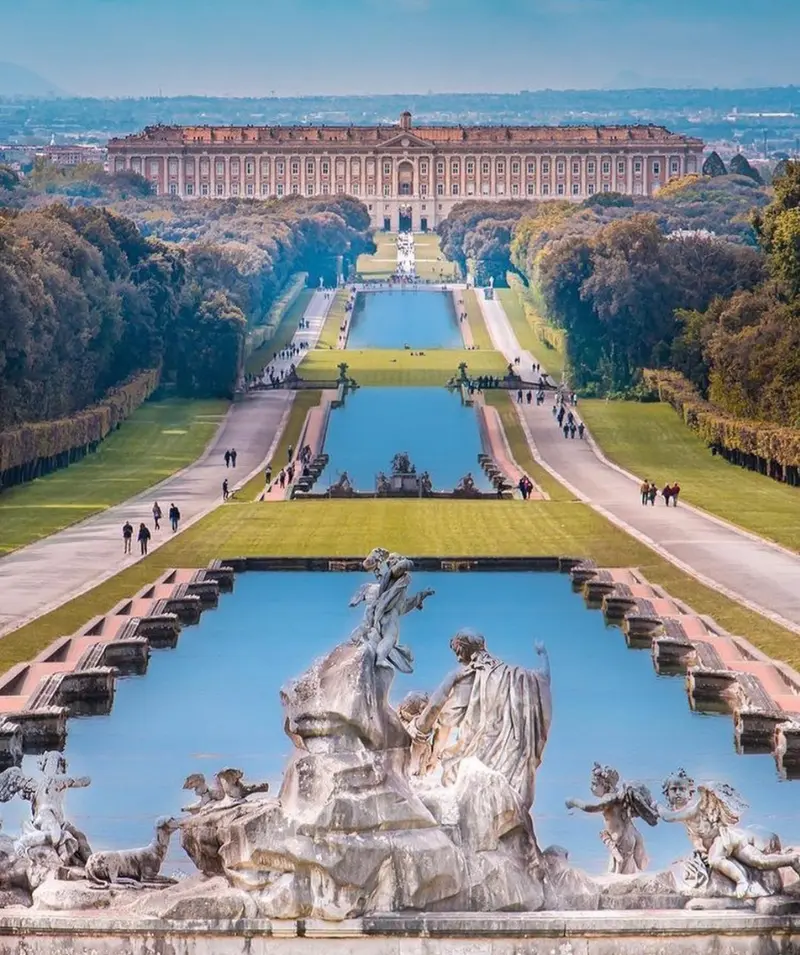
    The Royal Palace of Caserta, built from 1752 onwards to plans by Luigi Vanvitelli, is among the largest palace constructions of the 18th century in Europe. Behind the palace stretches an almost three-kilometer-long park with water features and an English Garden. The palace and park have been a UNESCO World Heritage site since 1997.
    Open in Google Maps
    Herculaneum
    Museum

    Herculaneum

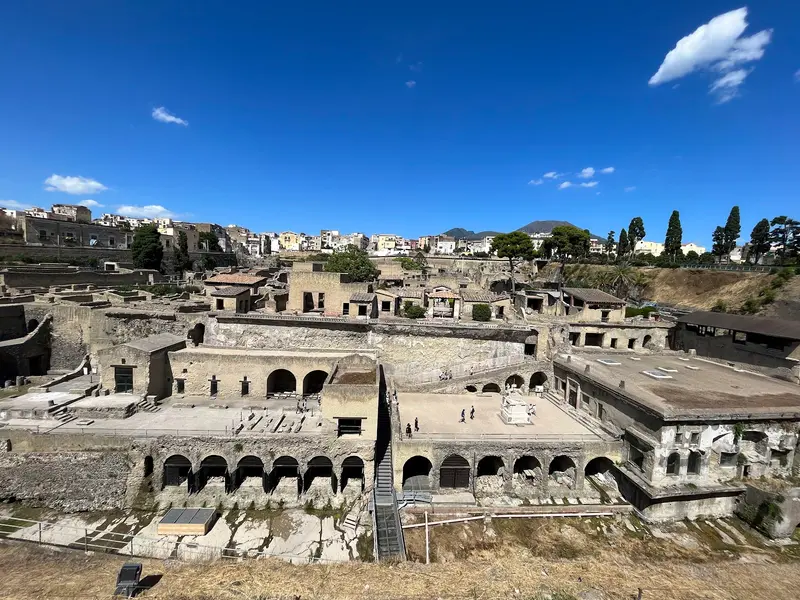
    The Roman town was buried by the Vesuvius eruption in 79 AD under about 20 meters of pyroclastic deposits. This preserved wooden roofs, doors, and beds, partly carbonized. Herculaneum was smaller than Pompeii, but wealthier. The site is located in Ercolano; the nearest Circumvesuviana station is Ercolano Scavi.
    Open in Google Maps
    Vesuvius National Park
    National Park

    Vesuvius National Park

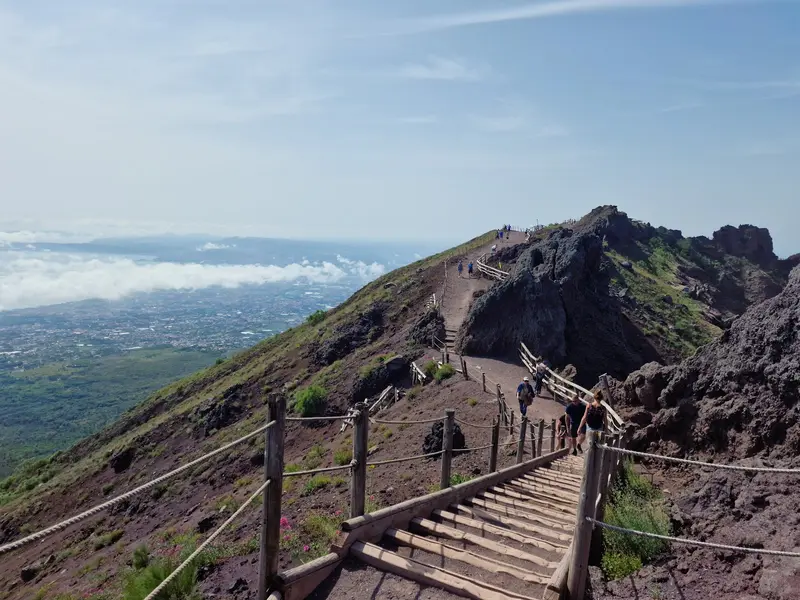
    Vesuvius is the only volcano on the European mainland that has erupted in the last hundred years; it was last active in 1944. The path to the crater rim starts at the plaza at approx. 1,000 meters altitude; you cannot park there. Parking is located further down the access road, from where a shuttle ascends. Tickets are available online only, with a pre-booked time slot; there is no ticket office at the entrance. In case of storm warnings, the Gran Cono is closed. Current safety advisories for Vesuvius and the Phlegraean Fields are issued by the Foreign Office.
    Open in Google Maps
    Grotta Azzurra, Capri
    Attraction

    Grotta Azzurra, Capri

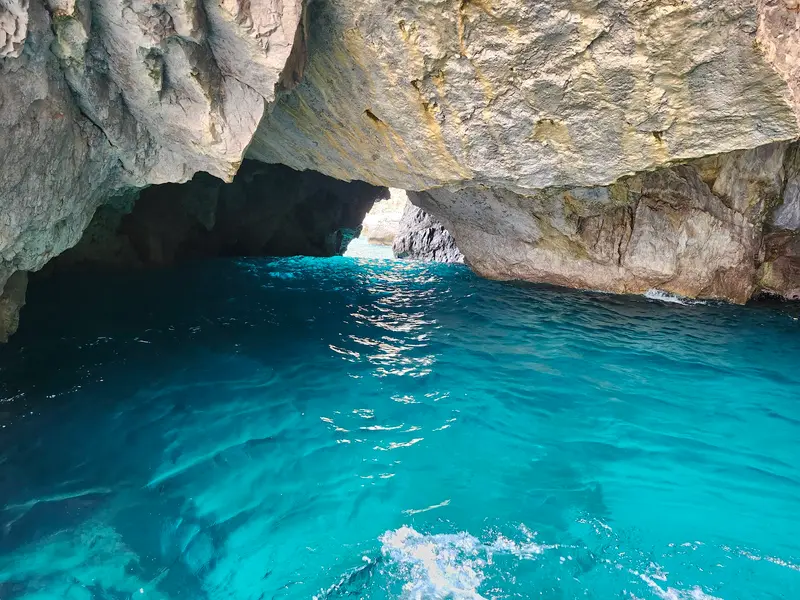
    Grotto on the northwest coast of Capri in the municipality of Anacapri. You enter lying down in small rowboats with a maximum of four guests through an opening only about one meter high; light entering through an underwater opening makes the water appear a luminous blue. The grotto is closed in case of wind and rough seas, and always on December 25 and January 1.
    Open in Google Maps
    Faraglioni, Capri
    Attraction

    Faraglioni, Capri

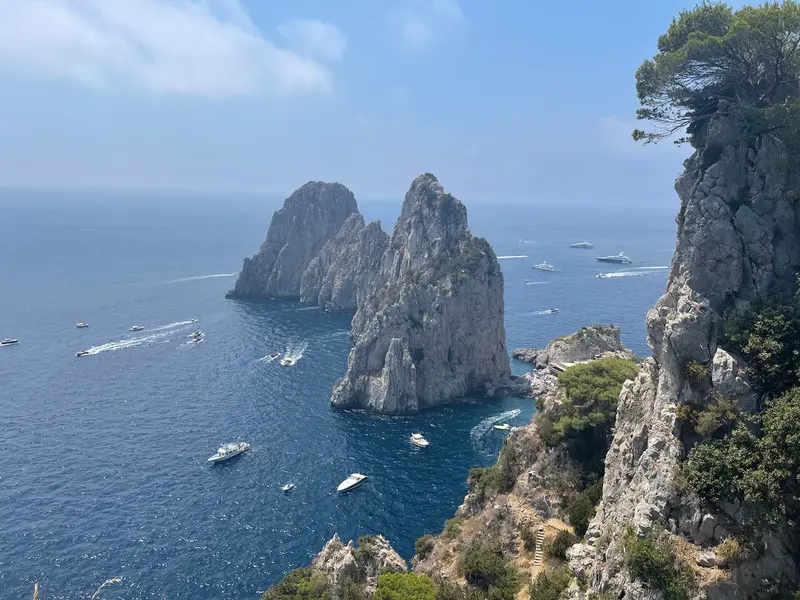
    Three limestone stacks off Capri's southeast coast, the tallest rising 111m from the sea. Get the best view from the Giardini di Augusto viewpoint or a boat trip around the island.
    Open in Google Maps

    Food and Drink

    The cuisine of Campania has produced some of Italy's most famous dishes.

    Neapolitan pizza

    Soft, thin dough with a high rim, baked in a wood-fired oven at a very high temperature in 60 to 90 seconds. The classics are Margherita and Marinara.

    Mozzarella di bufala campana

    Buffalo mozzarella with Protected Designation of Origin, in Campania, primarily from the provinces of Caserta and Salerno.

    Sfogliatella and Babà

    Shell-shaped puff pastry with a sweet filling and a rum-soaked yeast cake, both typical of Naples’ pastry shops.

    Limoncello

    Limoncello, made from the peel of lemons grown on the Sorrento Peninsula and the Amalfi Coast, usually served chilled after meals.

    The Wine of Irpinia

    From the hilly hinterland around Avellino come the red wine Taurasi and the white wines Fiano di Avellino and Greco di Tufo, all with DOCG status.

    History and Culture

    From the 8th century BC, Greek settlers founded some of the first colonies in Italy along the coast of Campania, including Cuma, Neapolis, and Poseidonia, later Paestum. In Roman times, the villas of wealthy Romans lined the Gulf of Naples until the eruption of Vesuvius in AD 79 buried Pompeii, Herculaneum, and Stabiae.In the Middle Ages, Amalfi was an independent maritime trading power. From the 13th century, Naples was the capital of a kingdom that encompassed the south of the Italian mainland under Anjou, Aragonese, Spanish viceroys, and Bourbons. The churches and palaces of Naples and the Royal Palace of Caserta date from this period.In the 17th and 18th centuries, composers of the Neapolitan School shaped European opera. The art of Neapolitan pizza makers was recognized by UNESCO as an intangible cultural heritage in 2017.

    On the Road in Campania

    Naples-Capodichino Airport is situated a few kilometers from the city center. High-speed trains connect Naples to Rome in just over an hour and proceed to Salerno.The regional train Circumvesuviana runs from Naples, via the stations Ercolano Scavi and Pompei Scavi, to Sorrento. From Naples and Sorrento, ferries depart for Capri and Ischia, and during the season, also from towns along the Amalfi Coast and from Salerno. Public buses also operate along the Amalfi Coast.For Paestum, the Cilento, and the hinterland, a rental car is practical. In Naples and along the Amalfi Coast, however, driving is cumbersome due to heavy traffic and expensive parking.

    Round trips through this region

    Amalfi Coast & Campania

    Amalfi Coast & Campania

    The route starts in Naples, takes you to the excavations of Pompeii and via Sorrento to the Amalfi Coast, to Positano and Ravello. On the SS163 coastal road a car is more of a burden than a help in summer. Ferries from Sorrento and the public buses connect the towns more reliably.

    10 Days
    5 stops
    Italy Complete Motorhome (2–3 Weeks)

    Italy Complete Motorhome (2–3 Weeks)

    The motorhome route leads from Lake Garda via Verona, Florence and Siena to Rome, to the Lazio coast to Sperlonga, and continues via Naples to the Amalfi Coast. In the historic city centers and on the Amalfi Coast, motorhome access is limited. You park at designated pitches on the outskirts and travel onward by bus, train, or ferry.

    19 Days
    8 stops

    Nearby

    Naples

    Naples

    Naples is the capital of Campania and, with over 900,000 inhabitants, the third-largest city in Italy. It is located on the Bay of Naples between Mount Vesuvius to the east and the Phlegraean Fields to the west.Its historic centre has been a UNESCO World Heritage site since 1995. Its street network remains almost unchanged from its Greek foundation, with churches, monasteries, and palaces from almost all eras built upon it. Naples is considered the birthplace of pizza.
    Pompeii

    Pompeii

    Pompeii was a Roman town at the foot of Mount Vesuvius, which disappeared under four to six meters of pumice and ash during the eruption in 79 AD. It has been excavated since 1748, revealing streets, houses, workshops, temples, theaters, and baths.The archaeological site, a UNESCO World Heritage site since 1997, lies on the outskirts of the modern town of Pompei, southeast of Naples, about 35 to 40 minutes away via the Circumvesuviana.
    Sorrento

    Sorrento

    Sorrent is situated on a high tuff terrace, descending steeply towards the Gulf of Naples, overlooking Mount Vesuvius. This town of about 15,000 residents is the main hub of its namesake peninsula; travelers have been drawn here since the era of the Grand Tour.The Old Town's street network still adheres to the ancient city's grid layout. Citrus groves flourish all around. From Marina Piccola port, ships sail to Capri, Naples, and the Amalfi Coast.
    Positano

    Positano

    Positano lies on the western Amalfi Coast, its houses climbing from the sea far up the hillside. The colorful facades, Santa Maria Assunta's majolica dome, and the main beach below define the town's image.The town has about 3,700 residents. Most routes within the town are stairs and steep alleys.
    Ravello

    Ravello

    Ravello is situated on a rocky plateau about 350 meters above the Amalfi Coast, above Atrani. This small town of around 2,300 residents is known for its villas, gardens, and panoramic terraces.In the Middle Ages, Ravello belonged to the Duchy of Amalfi; merchant families like the Rufolo built their palaces here. Today, Villa Rufolo, Villa Cimbrone, and the summer Ravello Festival define the town.

    Sources & method

    • Photos: Unsplash, Google Maps. Each photo carries its credit.
    • Place data such as addresses and ratings comes from Google Maps.
    • The content is based on web research from public, traceable sources. How the content is made · The role of AI