Fernweh: Home
    ExploreTravel GuidesPlan a tripMy tripLast visited
    de|en
    All Places & RegionsAll highlightsAbout FernwehFAQPrivacy PolicyImprint
    ExploreTravel GuidesPlan a tripMy tripLast visited
    • Overview
    • Places in the region
    • Recommendations
    • Food culture
    • Best travel time
    • Culture
    • Getting around
    • Round trips
    • Nearby
    Småland

    Sweden

    Småland

    Region

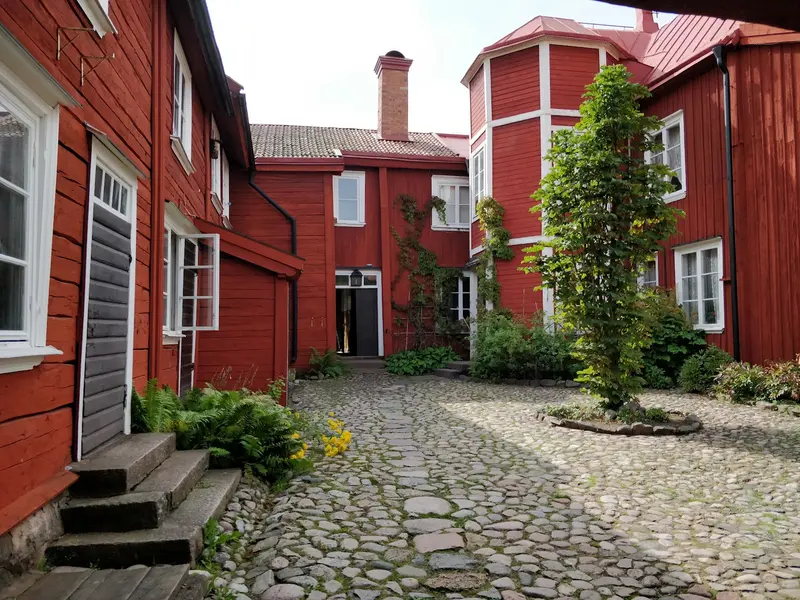
    Småland is southern Sweden's forested, lake-dotted landscape, between Lake Vättern (north) and the Baltic Sea (east). Red wooden houses, stone walls, and moors define the scene.

    by Felix Gillen

    1. Home
    2. Destinations
    3. Sweden
    4. Småland
    Småland is southern Sweden's forested, lake-dotted landscape, between Lake Vättern (north) and the Baltic Sea (east). Red wooden houses, stone walls, and moors define the scene. Highlights include the Kingdom of Crystal (between Växjö and Kalmar) and Vimmerby, Astrid Lindgren's hometown.
    Småland is one of southern Sweden's large historical regions and today essentially covers the provinces of Jönköping, Kronoberg, and Kalmar. The largest cities are Jönköping on the southern shore of Lake Vättern, Växjö inland, and Kalmar on the Baltic Sea coast. In between lie extensive coniferous forests, thousands of lakes, and small villages; the landscape is sparsely populated. East of Växjö, the glassworks of the Kingdom of Crystal are strung together, and in the northeast lies Vimmerby with Astrid Lindgren's World. The island of Öland is actually a region of its own, but it is reached from Kalmar via the Öland Bridge and can be easily combined with a trip to Småland. For excursions outside the cities, you generally need a car.
    Älmhult

    Place 1 of 4

    Älmhult

    Älmhult is a small town in southern Småland on Lake Möckeln. Here, Ingvar Kamprad opened the first IKEA furniture store in 1958, where today the IKEA Museum tells the company's story.

    Discover
    Kosta

    Place 2 of 4

    Kosta

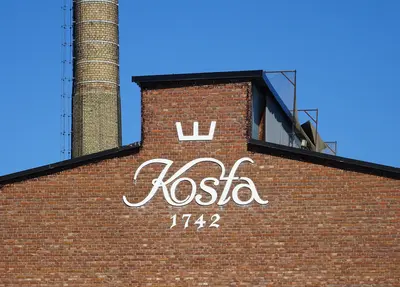
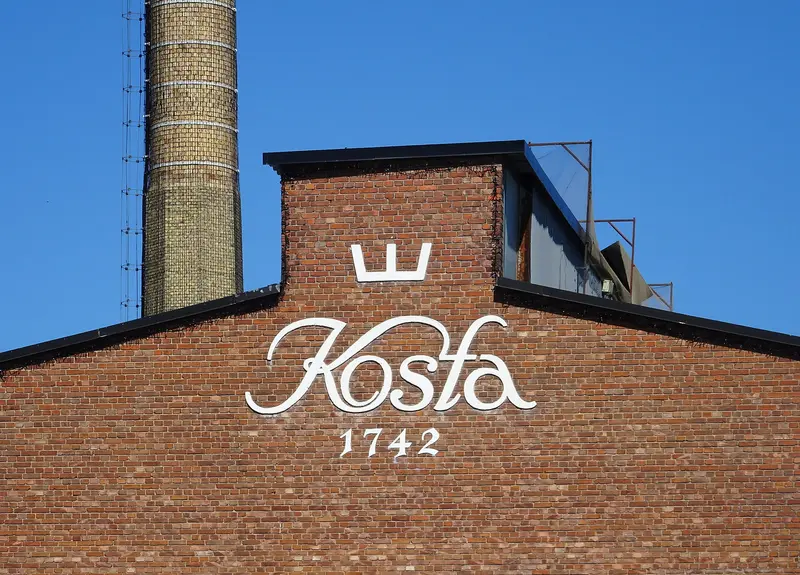
    Kosta is a small village in the forests of Småland and the historical heart of the Kingdom of Crystal. The glassworks has been active since 1742 and is Sweden's oldest continuously operating glassworks.

    Discover
    Glasriket (Glass Kingdom)
    Holger.Ellgaard / Wikimedia Commons / CC BY-SA 4.0

    Place 3 of 4

    Glasriket (Glass Kingdom)

    Glasriket, the Kingdom of Crystal, spans the municipalities of Lessebo, Uppvidinge, Nybro, and Emmaboda between Växjö and Kalmar. Today, around 14 glassworks still operate here, including Kosta Boda and Orrefors.

    Discover
    Jönköping

    Place 4 of 4

    Jönköping

    Jönköping is located on the southern shore of Lake Vättern, Sweden's second-largest lake. From 1845 to 1970, the city was a hub of match production, a story told at the Tändsticksmuseet in the old factory district.

    Discover

    More places in Småland

    Kalmar

    Kalmar

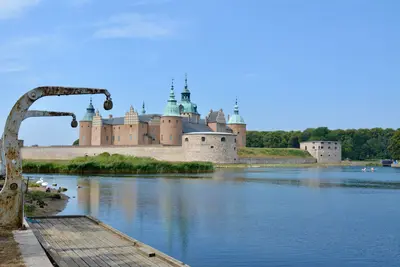
    Kalmar is located on the Baltic Sea coast of Småland, opposite the island of Öland. The Renaissance castle on the water, the baroque cathedral, and the Old Town on the island of Kvarnholmen make the city one of Southern Sweden's most important historical destinations. Via the Öland Bridge, you're on Öland in just a few minutes.
    Öland

    Öland

    Öland is Sweden's second-largest island after Gotland, located off Kalmar in the Baltic Sea. The island is flat and elongated, featuring open limestone plains, windmills, stone walls, and sandy beaches. The agricultural landscape in the south is a UNESCO World Heritage site.
    Vimmerby

    Vimmerby

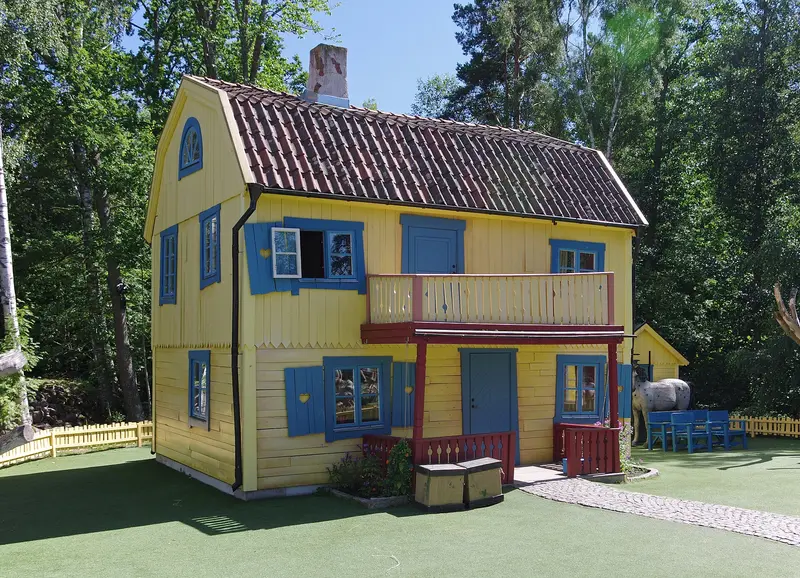
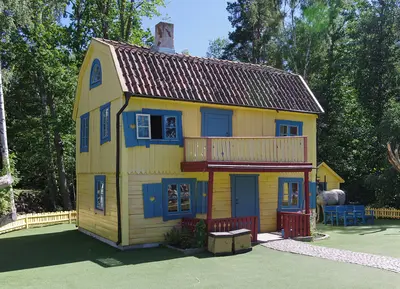
    Vimmerby is a small town in northeastern Småland and the hometown of Astrid Lindgren. It is best known for Astrid Lindgrens Värld, a theme park featuring settings from her books, and for Näs Farm, where the author grew up. In the surrounding area are filming locations for the Michel and Bullerbü films.
    Växjö

    Växjö

    Växjö is the main town of the Kronoberg district and a university city in the heart of Småland, surrounded by lakes. In its compact center are the Cathedral, the Småland Museum with the Swedish Glass Museum, and the House of Emigrants. The city is considered a pioneer in municipal climate protection, and in 2018, it was the first Swedish city to receive the European Green Leaf Award. It's not far to the Kingdom of Crystal.

    Sights in Småland

    Discover the most important sights and attractions

    Eksjö Trästaden
    Attraction

    Eksjö Trästaden

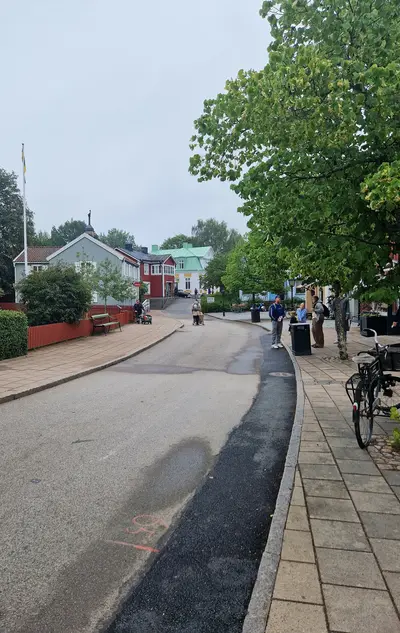
    Eksjö's Old Town is among Sweden's best-preserved wooden towns. Colorful wooden houses and courtyards line the alleys north of the center.
    Open in Google Maps
    Store Mosse National Park
    National Park

    Store Mosse National Park

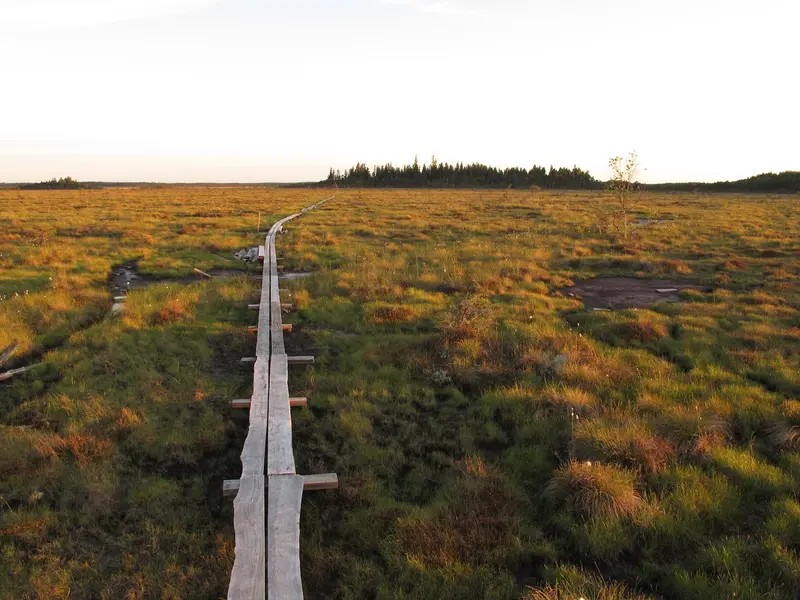
    Extensive bog area approximately 17 km west of Värnamo on Road 151 towards Gnosjö, featuring boardwalks, observation towers, and a Naturum at the main entrance. In spring and autumn, many migratory birds, including cranes, rest here.
    Open in Google Maps
    Skurugata
    Park

    Skurugata

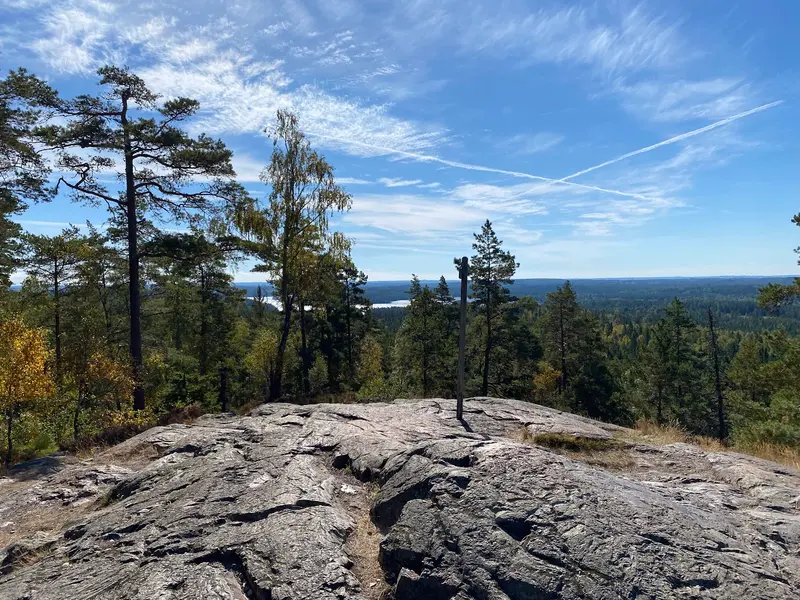
    Narrow, deeply cut rock gorge northeast of Eksjö. A hiking trail leads between steep, moss-covered walls and up to the Skuruhatt viewpoint.
    Open in Google Maps
    Norra Kvill National Park
    National Park

    Norra Kvill National Park

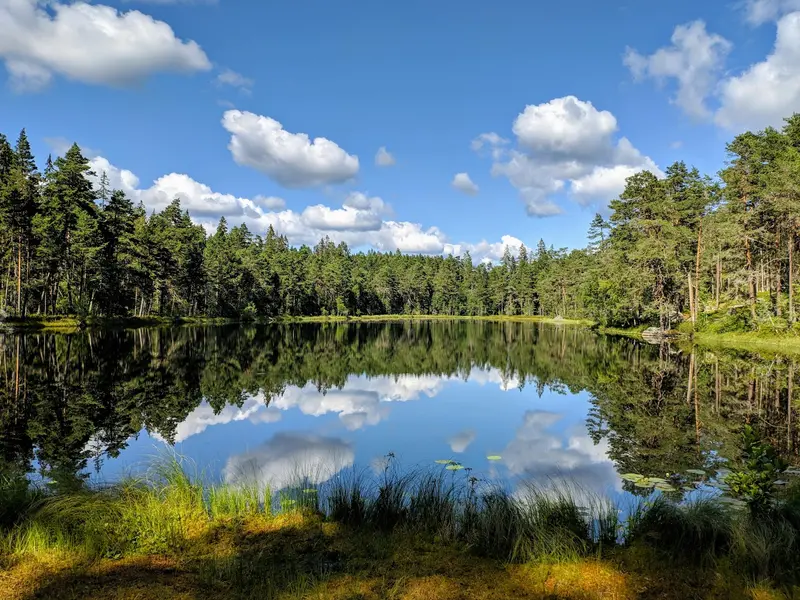
    Small national park northwest of Vimmerby. The forest has remained untouched for over 150 years, with individual pines over 350 years old. Between moss-covered boulders lie the forest lakes Stora and Lilla Idgölen, a path leads up to the viewpoint on Idhöjden, the highest point of the park.
    Open in Google Maps

    Food & Beverages

    Småland's cuisine is rustic, with potatoes, meat, fish from the lakes and berries from the forest.

    Småland cheesecake

    Baked cheesecake made from milk, rennet, and almonds, served lukewarm with jam and cream. It is considered a typical dessert of the region.

    Isterband

    Slightly tangy, smoked pork and barley groat sausage, which is fried and often served with dill potatoes.

    Kroppkakor

    Potato dumplings with a filling of bacon and onions, served with lingonberries and melted butter.

    Hyttsill

    Herring, traditionally cooked at the Glass Kingdom's furnace embers. Some glassworks hold Hyttsill evenings in summer.

    Best Time to Visit

    When is the best time for your trip?

    May
    June
    July
    August
    September
    12–18°C·49–90 mm(moderate rain)
    From May to September, the days are long and mild, and swimming lakes, glassworks, and theme parks like Astrid Lindgrens Värld are open. July is the warmest, but also the rainiest and busiest due to the Swedish summer holidays. June and August are good alternatives; in September, the forests change colour and it becomes quieter.
    Reference city: Växjö, averages 2002 to 2018 according to SMHI. Inland, winters are somewhat colder; on the coast near Kalmar and on Öland, it is sunnier and drier.

    Seasons

    Jan
    Feb
    Mar
    Apr
    May
    Jun
    Jul
    Aug
    Sep
    Oct
    Nov
    Dec
    Summer season
    Off-season with mild weather
    Cold and dark time of year, many attractions closed
    Best Time to Visit
    ▶Show detailed monthly data
    MonthTemp (°C)Rain (mm)Sun (h)
    January-1.7511.0
    February-1.4362.0
    March1.6324.6
    April6.8296.8
    May11.6527.6
    June14.7677.9
    July17.5907.5
    August16.4786.2
    September12.8495.1
    October7.2652.8
    November3.4571.2
    December0.3550.8

    Culture and History

    Barrenness, Emigration, and IngenuityThe stony soil made farming in Småland difficult for a long time. In the 19th century, many people therefore left the region and emigrated to North America. Vilhelm Moberg's novel series The Emigrants tells of a family from Småland, and The House of Emigrants in Växjö documents this history. To this day, Smålanders are known for their frugality and resourcefulness. A famous example is Ingvar Kamprad, who founded IKEA in the Älmhult area. The naturalist Carl Linnaeus also came from Småland; he was born in Råshult near Älmhult.Glass and Children's BooksWood, water, and sand made the region a location for glassworks from the 18th century onwards. Kosta was founded in 1742, many more glassworks followed, and you can visit some of them today. Astrid Lindgren grew up on the Näs farm near Vimmerby, and the landscape with its farms, meadows, and forests is reflected in books such as Emil in Lönneberga and The Children of Noisy Village.

    Getting There and Around

    Småland is conveniently located between Malmö, Gothenburg, and Stockholm, though a car is the easiest solution for areas off the main routes.Train: The main line from Malmö to Stockholm runs via Alvesta and Nässjö. Öresundståg and the regional Krösatåg connect Växjö and Kalmar with Alvesta and Southern Sweden; Jönköping can be reached via Nässjö.Car: The E4 runs along Lake Vättern via Jönköping, and Road 25 connects Växjö with Kalmar. To reach Öland, you cross the Öland Bridge near Kalmar.Flight: Regional airports are located in Växjö, Kalmar, and Jönköping.Local Transport: Regional buses serve smaller towns but run infrequently in rural areas. For the Kingdom of Crystal, national parks, and remote lakes, planning with a car is recommended.

    Round trips through this region

    Southern Sweden Highlights

    Southern Sweden Highlights

    A relaxed route through Southern Sweden with Baltic Sea beaches, coastal towns, and the forests of Småland. From Malmö, the journey goes along the south coast via Ystad to Karlskrona, continuing to Kalmar and Öland, and via Växjö back to the west coast to Halmstad. It’s ideal for a first trip to Sweden and for families, as the stages are mostly short.

    16 Days
    7 stops
    Småland & Astrid Lindgren

    Småland & Astrid Lindgren

    A family-friendly tour through forests, lakes, and red wooden houses in Småland: from the IKEA Museum in Älmhult to the glassworks around Kosta, on to Kalmar with its castle and to the island of Öland, then to Vimmerby for Astrid Lindgren's World and finally to Jönköping on Lake Vättern. The stages usually last one to two hours, the pace is relaxed.

    15 Days
    6 stops

    Nearby

    Växjö

    Växjö

    Växjö is the main town of the Kronoberg district and a university city in the heart of Småland, surrounded by lakes. In its compact center are the Cathedral, the Småland Museum with the Swedish Glass Museum, and the House of Emigrants. The city is considered a pioneer in municipal climate protection, and in 2018, it was the first Swedish city to receive the European Green Leaf Award. It's not far to the Kingdom of Crystal.
    Glasriket (Glass Kingdom)

    Glasriket (Glass Kingdom)

    Glasriket, the Kingdom of Crystal, spans the municipalities of Lessebo, Uppvidinge, Nybro, and Emmaboda between Växjö and Kalmar. Today, around 14 glassworks still operate here, including Kosta Boda and Orrefors. In many, you can watch the glassblowers and shop directly from the factory.
    Kosta

    Kosta

    Kosta is a small village in the forests of Småland and the historical heart of the Kingdom of Crystal. The glassworks has been active since 1742 and is Sweden's oldest continuously operating glassworks. You can watch the glassblowers at work, shop at the outlet, and observe elk and red deer in nearby wildlife parks.
    Vimmerby

    Vimmerby

    Vimmerby is a small town in northeastern Småland and the hometown of Astrid Lindgren. It is best known for Astrid Lindgrens Värld, a theme park featuring settings from her books, and for Näs Farm, where the author grew up. In the surrounding area are filming locations for the Michel and Bullerbü films.
    Jönköping

    Jönköping

    Jönköping is located on the southern shore of Lake Vättern, Sweden's second-largest lake. From 1845 to 1970, the city was a hub of match production, a story told at the Tändsticksmuseet in the old factory district. Between Lake Vättern and Munksjön lies the city center with its waterfront promenades, cafés, and shops. Worthwhile excursions lead to the wooden Habo kyrka from 1680, to Gränna, and to the island of Visingsö. In summer, bathing spots and lake activities beckon; spring and autumn are calmer.

    Sources & method

    • Photos: Unsplash, Google Maps. Each photo carries its credit.
    • Place data such as addresses and ratings comes from Google Maps.
    • The content is based on web research from public, traceable sources. How the content is made · The role of AI