Fernweh: Home
    ExploreTravel GuidesPlan a tripMy tripLast visited
    de|en
    All Places & RegionsAll highlightsAbout FernwehFAQPrivacy PolicyImprint
    ExploreTravel GuidesPlan a tripMy tripLast visited
    • Overview
    • Places in the region
    • Eat & drink
    • Food culture
    • Culture
    • Getting around
    • Round trips
    • Nearby
    Gulf of Thailand Coast

    Thailand

    Gulf of Thailand Coast

    Region

    The Gulf of Thailand coast here stretches from Hua Hin south of Bangkok, via Chumphon and Surat Thani, down to Songkhla.

    by Felix Gillen

    1. Home
    2. Destinations
    3. Thailand
    4. Gulf of Thailand Coast
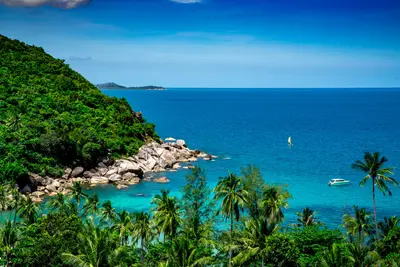
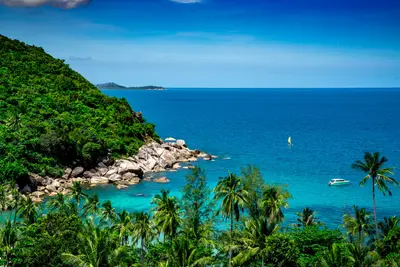
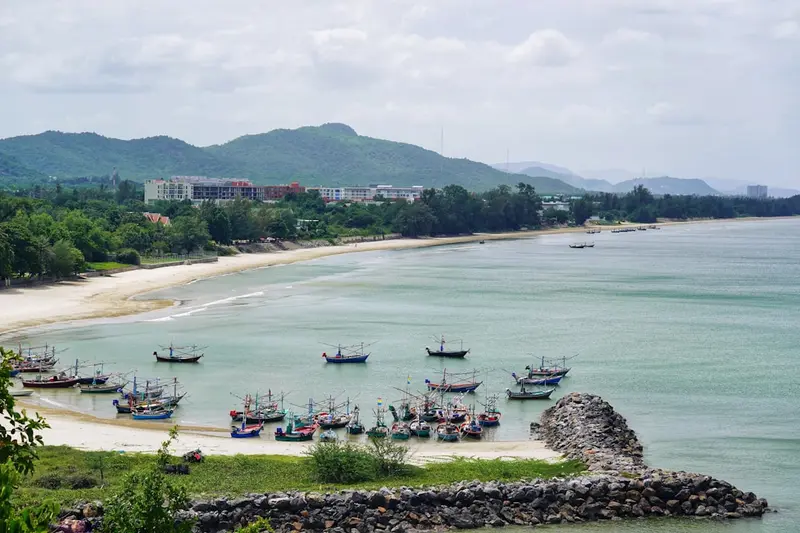
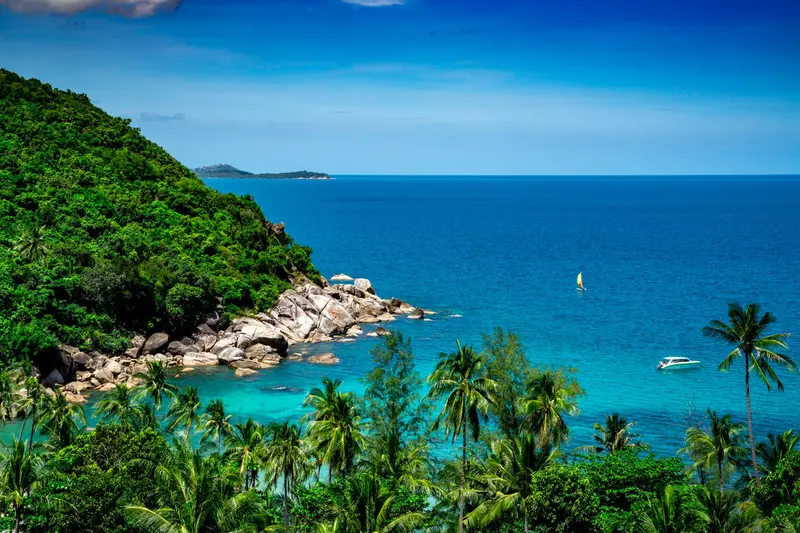
    The Gulf of Thailand coast here stretches from Hua Hin south of Bangkok, via Chumphon and Surat Thani, down to Songkhla. It includes beach resorts like Hua Hin, tranquil fishing villages, and the island group of Koh Samui, Koh Phangan, and Koh Tao.The beaches are mostly shallow, and the sea is calmer than on the Andaman Coast. Important for planning: The southern Gulf receives most rain from October to December, which is when the season starts on the Andaman Coast. In May and June, it's the opposite, making the Gulf the better choice.Trains, buses, and highways run parallel along the coast. You can reach the islands by ferry from Chumphon, Surat Thani, and Don Sak.
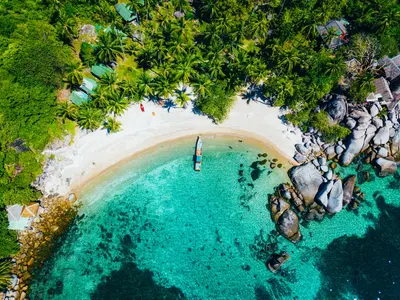
    The region encompasses the coast from Hua Hin to Songkhla and the islands in the Gulf. Koh Samui is the largest and most developed island, Koh Phangan is known for the Full Moon Party and quiet coves, Koh Tao for diving courses. On the mainland, Hua Hin has been a royal summer retreat since the 1920s. Further south are the Ang Thong Marine National Park, Khao Sam Roi Yot National Park, and ancient temple cities like Nakhon Si Thammarat. The driest period is usually from February to June.
    Ang Thong Marine National Park

    Place 1 of 4

    Ang Thong Marine National Park

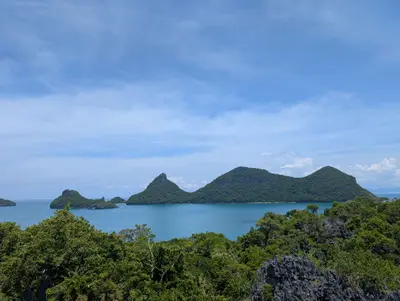
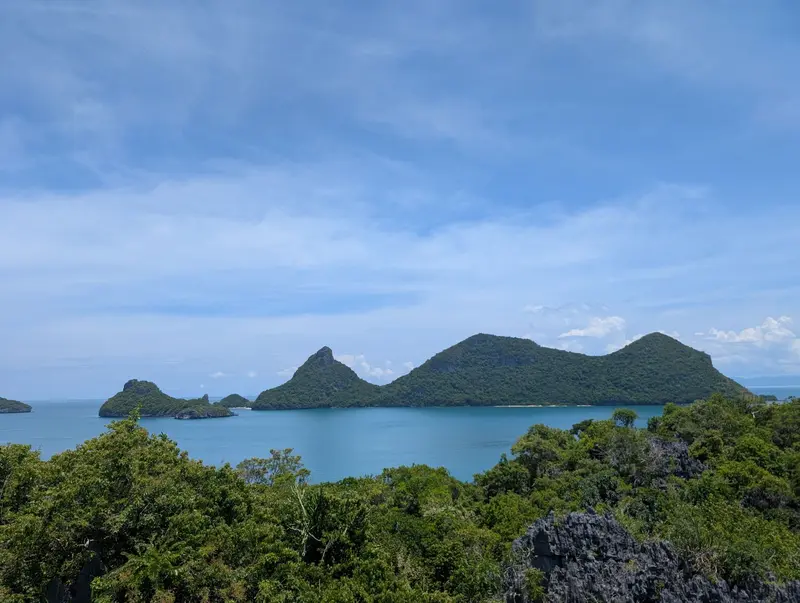
    The Ang Thong Marine National Park comprises 42 islands in the Gulf of Thailand, located approximately 30 kilometers northwest of Koh Samui. Established in 1980, it spans over 100 square kilometers, with about half of that being land.

    Discover
    Khao Sam Roi Yot National Park

    Place 2 of 4

    Khao Sam Roi Yot National Park

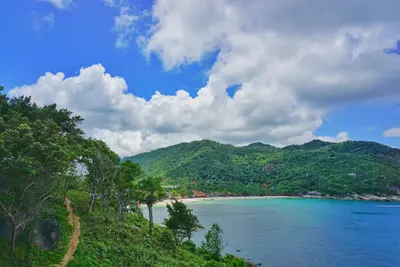
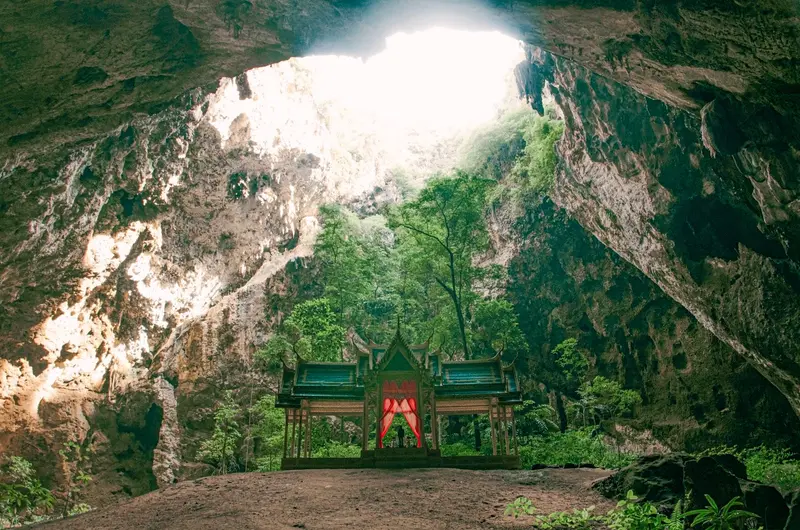
    The Khao Sam Roi Yot National Park is located just under 60 kilometers south of Hua Hin on the Gulf Coast of Prachuap Khiri Khan province.

    Discover
    Hua Hin

    Place 3 of 4

    Hua Hin

    Hua Hin is one of Thailand's oldest seaside resorts, closely linked to the royal family. It features a long sandy beach, the historic train station with its royal pavilion, and, near the coast, the summer palaces Klai Kangwon and Mrigadayavan.

    Discover
    Koh Phangan

    Place 4 of 4

    Koh Phangan

    Koh Phangan lies in the Gulf of Thailand between Koh Samui and Koh Tao.

    Discover

    More places in Gulf of Thailand Coast

    Koh Samui

    Koh Samui

    Koh Samui, Thailand's second-largest after Phuket, is the Gulf's most developed, with its airport, ring road, and lodging from basic bungalows to large resorts. The east coast (Chaweng, Lamai) drives tourism; the south and mountainous, palm-filled interior is calmer. Beyond beaches, the Big Buddha, Wat Plai Laem temple, and island waterfalls merit a visit. Planning note: Samui's rain patterns differ from the Andaman Coast, with most rain from mid-October to early December.
    Koh Tao

    Koh Tao

    Koh Tao is the smallest of the three well-known islands in the Gulf of Thailand and thrives mainly on diving. Short boat rides to dive sites and numerous dive schools make the island one of the world's most important locations for dive training.The main arrival point is the pier of Mae Haad; the largest area is along the long Sairee Beach on the west coast. To the south, Chalok Baan Kao is quieter, while in the east, rocky bays can be reached via steep tracks.Notable dive sites include Chumphon Pinnacle, where lucky divers may spot whale sharks, most likely in April and May, and the rock Sail Rock between Koh Tao and Koh Phangan. In Shark Bay to the southeast, blacktip reef sharks can be observed while snorkeling.Northwest lies Koh Nang Yuan, three rocky islets connected by sandbars. Ferries operate from Chumphon, Koh Phangan, and Koh Samui; however, crossings are occasionally cancelled due to strong winds.

    Sights in Gulf of Thailand Coast

    Discover the most important sights and attractions

    Street Art on the Kromluang Road (Chumphon)

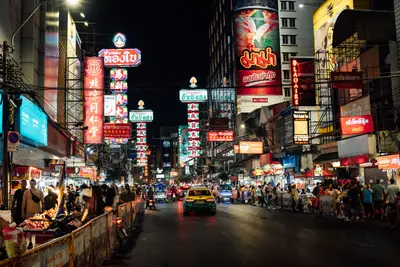
    On Krom Luang Road in Chumphon, artists have painted the walls of an entire street of houses. The motifs reflect what sustains the province: fishing, agriculture, and the sea off its coast. For most travelers, Chumphon is merely a transfer point for ferries to Ko Tao, and these murals offer one of the few reasons to see the city itself. The walk takes less than an hour.
    Open in Google Maps

    Thale Noi Waterbird Reserve

    Freshwater lake at the northern end of Songkhla Lagoon in Phatthalung Province. The wetland was declared Thailand's first Ramsar site in 1998. Take longtail boats in the early morning through fields of red water lilies, which bloom from mid-February to April and close by late morning. You'll see most birds from January to April.
    Open in Google Maps

    Wat Phra Mahathat Woramahawihan

    Significant temple in Southern Thailand in Nakhon Si Thammarat. The bell-shaped, Sri Lankan-style chedi was built in the early 13th century and is 78 meters high, including its spire. At its base stand 22 stucco elephants. Since 2012, the complex is on the UNESCO World Heritage Tentative List. In the Wihan Kien, a museum displays Buddha figures and votive offerings.
    Open in Google Maps

    Essen & Trinken

    1

    Thot Kluai (Fried Bananas at the Chumphon Registration Office)

    A street stall in Chumphon selling fried bananas – kluai thot, one of the country's most popular snacks. The bananas are coated in batter and sold fresh from the oil, eaten standing up or on the go. It's nothing more than a roadside counter, and nothing more is needed.
    Show on Google Maps
    2

    Tiao Kalok Kala

    A noodle soup spot serves portions in coconut shells – a detail its Thai name alludes to. The shells hold less than a standard bowl, so several rounds are ordered. Diners season at the table with chili, fish sauce, sugar, and vinegar. The decor is simple, the clientele local.
    Show on Google Maps
    3

    Mee Rak Kuaitiao Tom Yam (San Lak Mueang Market)

    A stall at the market by the City Pillar Shrine, specializing in Tom Yum noodle soup – spicy and sour instead of clear broth. You eat at simple tables right in the middle of the market's hustle and bustle. As is common, you choose your noodle type and toppings yourself and season to taste at the table. It's busiest in the morning when the market is open.
    Show on Google Maps
    4

    Pimploy

    An eatery on the Gulf Coast serving Thai cuisine with a focus on fish and seafood. The decor is simple and open, typical for the coast. Guests are predominantly locals; the menu is not tailored for travelers.
    Show on Google Maps
    5

    Khao Na Kai (beside Saha School)

    A street food stall specializing in Khao Na Gai: chicken in a thick sauce over rice, a dish with a distinctly Chinese influence. Portions are small to medium-sized, for quick, casual meals. The setup consists of a few tables next to the counter, the clientele comes from the neighborhood.
    Show on Google Maps

    Eating & Drinking

    Die Küche der Golfküste ist südthailändisch, also schärfer und salziger als im Zentrum, arbeitet aber stärker mit Fisch aus dem flachen Golf als mit den großen Meeresfrüchten der Andamanenseite. Kokospalmen prägen die Landwirtschaft, besonders um Surat Thani und auf Ko Samui, entsprechend viel Kokosmilch und Kokoszucker landet in den Töpfen. Je weiter Du nach Süden kommst, desto stärker wird der malaiisch-muslimische Einfluss.

    Khao Mok and Muslim cuisine of the South

    In Songkhla, Hat Yai, and the border provinces, find spiced rice with chicken or goat, plus curries featuring cinnamon, cardamom, and star anise. The cuisine clearly differs from Central Thai.

    Fried chicken from Hat Yai

    Kai Thot Hat Yai is fried chicken with crispy shallots, named throughout Thailand after the city. It comes with sticky rice and a spicy dipping sauce.

    Coconut from Surat Thani

    Surat Thani and Koh Samui are major coconut-growing regions in the country. Beyond fresh coconut water, you'll find coconut sugar, sweets, and dishes with coconut milk.

    Fish and Cuttlefish caught in the Gulf

    In the fishing towns from Prachuap across Chumphon to Songkhla, fish, squid, and mussels are affordable. Common are grilled squid on a skewer, steamed fish with lime and chili, and Pla Thu, steamed mackerel in small bamboo baskets.

    Khanom Jeen with Southern Thai Curries

    Spicy curry with rice noodles, fresh herbs, cucumbers, and beans. The South usually adds a turmeric fish curry. A typical market and small shop breakfast.

    History and Culture

    The southern Gulf coast was early connected to maritime trade between India and China. In Chaiya near Surat Thani, temples like Wat Phra Borommathat recall the Srivijaya Kingdom era. Nakhon Si Thammarat was a religious center for centuries; its large chedi dates from the 13th century.From the 1920s, Hua Hin became a royal seaside resort when the Klai Kangwon Palace was built there. In Surat Thani, the Chak Phra festival is celebrated at the end of Buddhist Lent, with Buddha figures paraded through town on decorated floats and boats. Further south, around Songkhla, Muslim cuisine and culture become more visible.

    Exploring Locally

    Rail, bus, and highways run parallel along the coast heading south. The Southern Line from Bangkok travels via Hua Hin, Prachuap Khiri Khan, Chumphon, and Surat Thani to Hat Yai. The night train arrives in the morning; buses are often faster but less comfortable.From Bangkok, you'll need about three to four hours to reach Hua Hin, around seven to Chumphon, and nine to eleven to Surat Thani. Airports are located in Hua Hin, Chumphon, Surat Thani, Nakhon Si Thammarat, Hat Yai, and Koh Samui, among others.Ferries to the islands: from Chumphon to Koh Tao; from Don Sak and Surat Thani to Koh Samui and Koh Phangan. Separate connections operate between the three islands; combination tickets for train or bus plus ferry are common.Local transport: Songthaews and motorbike taxis in the towns. On the islands and in Hua Hin, scooters or rental cars are most practical.In the Southern Gulf, most rain falls from October to December, extending partly into January around Nakhon Si Thammarat and Songkhla. The driest period is usually from February to June.Current safety and health information, including for the southern border provinces, can be found at the Auswärtigen Amt.

    Round trips through this region

    Kultur & Küche Thailands

    Kultur & Küche Thailands

    The route showcases Thailand through temples, markets, and cuisine: street food in Bangkok, cooking classes and night markets in Chiang Mai, the temples of Chiang Rai, and finally a few days by the Gulf in Hua Hin. From Chiang Rai, you fly back to Bangkok and then drive about three hours to Hua Hin.

    17 Days
    4 stops
    Thailand familienfreundlich & stressarm

    Thailand familienfreundlich & stressarm

    Three destinations and short flights: Bangkok, Chiang Mai with markets and temples, and finally, a good week on Koh Samui. The minimal travel allows children enough time to settle in.

    17 Days
    3 stops

    Nearby

    Koh Tao

    Koh Tao

    Koh Tao is the smallest of the three well-known islands in the Gulf of Thailand and thrives mainly on diving. Short boat rides to dive sites and numerous dive schools make the island one of the world's most important locations for dive training.The main arrival point is the pier of Mae Haad; the largest area is along the long Sairee Beach on the west coast. To the south, Chalok Baan Kao is quieter, while in the east, rocky bays can be reached via steep tracks.Notable dive sites include Chumphon Pinnacle, where lucky divers may spot whale sharks, most likely in April and May, and the rock Sail Rock between Koh Tao and Koh Phangan. In Shark Bay to the southeast, blacktip reef sharks can be observed while snorkeling.Northwest lies Koh Nang Yuan, three rocky islets connected by sandbars. Ferries operate from Chumphon, Koh Phangan, and Koh Samui; however, crossings are occasionally cancelled due to strong winds.
    Ang Thong Marine National Park

    Ang Thong Marine National Park

    The Ang Thong Marine National Park comprises 42 islands in the Gulf of Thailand, located approximately 30 kilometers northwest of Koh Samui. Established in 1980, it spans over 100 square kilometers, with about half of that being land.The landscape features steep, forested limestone islands and saltwater lakes in the interior, such as the emerald-green Lake Thale Nai on Koh Mae Ko. Koh Wua Talap hosts the park headquarters, bungalows, and a steep path to a viewpoint. The park gained wider recognition through Alex Garland's novel The Beach.Access is restricted to authorized tour operators, with most visitors arriving via day trips from Koh Samui or Koh Phangan. Annually, the park closes for recuperation from approximately November 1st to December 15th.
    Koh Phangan

    Koh Phangan

    Koh Phangan lies in the Gulf of Thailand between Koh Samui and Koh Tao. The island became known through the Full Moon Party on Haad Rin beach in the south, but most of it is quiet: wooded hill country fills the interior, and individual bays lie along the edges.The main arrival point is the harbour of Thong Sala with the island's largest market. On the west coast around Srithanu, a yoga and wellness scene has settled, and in the north-east lie Thong Nai Pan and Bottle Beach, which can only be reached by boat or on foot.In the east, the Than Sadet Waterfall drops through the forest; King Chulalongkorn visited it several times, and his initials are carved into a rock. Hiking trails lead up Khao Ra, at 635 metres the highest point on the island.Ferries run from Surat Thani, Koh Samui and Koh Tao. The roads in the island's interior are in places very steep, and for some stretches pick-up taxis are the safer choice compared with a scooter. Around the full moon, accommodation in Haad Rin is booked out early.
    Koh Samui

    Koh Samui

    Koh Samui, Thailand's second-largest after Phuket, is the Gulf's most developed, with its airport, ring road, and lodging from basic bungalows to large resorts. The east coast (Chaweng, Lamai) drives tourism; the south and mountainous, palm-filled interior is calmer. Beyond beaches, the Big Buddha, Wat Plai Laem temple, and island waterfalls merit a visit. Planning note: Samui's rain patterns differ from the Andaman Coast, with most rain from mid-October to early December.
    Nam Talu Cave

    Nam Talu Cave

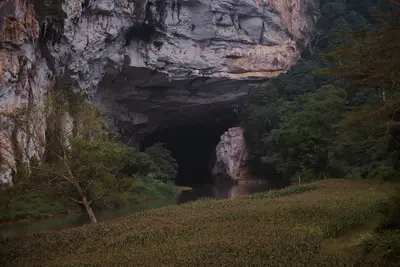
    The **Nam Talu Cave** is a river cave in Khao Sok National Park on Cheow Lan Lake. A stream flows through the limestone mountain, with the path often leading through water: knee-deep, sometimes deeper, and some sections requiring swimming. Inside, you'll find stalactites and bats.Access is by boat and hike, usually as a day trip from one of the raft houses. A **licensed guide is mandatory**.The reason is serious: Eight tourists died in a flash flood in the cave in October 2007, and a guide in August 2024. The cave is therefore closed from June 1 to November 30; even outside this period, it can close at short notice after rain.You should bring shoes that can get wet and provide grip, a headlamp, and waterproof packed items. If you cannot swim or tolerate confined spaces poorly, you should skip the tour.

    Sources & method

    • Photos: Unsplash. Each photo carries its credit.
    • The content is based on web research from public, traceable sources. How the content is made · The role of AI