ExploreTravel GuidesPlan a trip
    de|en
    All Places & RegionsAbout FernwehFAQPrivacy PolicyImprint
    ExploreTravel GuidesPlan a trip
    • Neighborhoods & highlights
    • Eat & drink
    • Food culture
    • Culture
    • Nightlife
    • Getting around
    • Accommodation
    • Plan trip
    • Nearby
    Dover
    kallerna / Wikimedia Commons / CC BY-SA 4.0
    City

    Dover

    Dover is England's most important ferry port to the continent: From here it's only about 35 kilometers to Calais.

    1. Home
    2. Destinations
    3. Great Britain
    4. South East England
    5. Dover
    Dover is England's most important ferry port to the continent: From here it's only about 35 kilometers to Calais. Above the town rise the white chalk cliffs, the White Cliffs of Dover, and Dover Castle, one of England's largest castles, with Second World War tunnels in the rock below.Many only experience Dover in transit. If you plan half a day, you can hike along the cliffs to the South Foreland Lighthouse or visit the castle before continuing by ferry.
    Dover is home to around 31,000 residents and is nestled in a narrow valley between two chalk hills: to the east, the castle and the white cliffs; to the west, the Western Heights fortifications. In between, the town centre stretches from Dover Priory station, across the market square, to the promenade. The ferry port, the Eastern Docks, is located at the east end of the bay, beneath the cliffs.The town centre was heavily damaged during World War II and has been rebuilt in a rather plain style; few visitors come for it. The main attractions are found on the periphery: Dover Castle, the cliff path to St Margaret's Bay, and the museums by the market square. With an overnight stay, you can explore the castle and cliffs at your leisure, on foot or with short bus rides.

    Sights in Dover

    Discover the most important sights and attractions

    Museum

    1Dover Castle

    The castle above the harbour is one of England's largest and was militarily utilised for nearly 2,000 years due to its location at the narrowest point of the Channel. On the grounds stand a 2nd-century Roman lighthouse, the Anglo-Saxon church St Mary in Castro, and the mighty keep, which Henry II had built in the 1180s; its halls are colourfully furnished in the style of the period.Below, within the chalk cliffs, lie tunnels from several eras. From here, Vice-Admiral Ramsay directed the 1940 evacuation of over 300,000 soldiers from Dunkirk; a guided tour with sound and film projections recounts the operation, while a second leads through the underground hospital. English Heritage manages the site. Plan at least half a day and book tickets in advance during peak season.

    Open in Google Maps
    Museum

    2South Foreland Lighthouse

    The Victorian lighthouse stands on the cliffs between Dover and St Margaret's Bay, warning shipping of the Goodwin Sands. It was the world's first lighthouse with electric light, tested under Michael Faraday, and in 1899, Guglielmo Marconi received one of the first radio transmissions across the Channel here. In 1988, its light was extinguished.The National Trust offers guided tours up to the lantern; on the ground floor, there's a 1950s-style tearoom. There is no car access: you come on foot via the cliff path from the Dover visitor centre or from St Margaret's.
    Open in Google Maps
    Attraction

    3White Cliffs of Dover

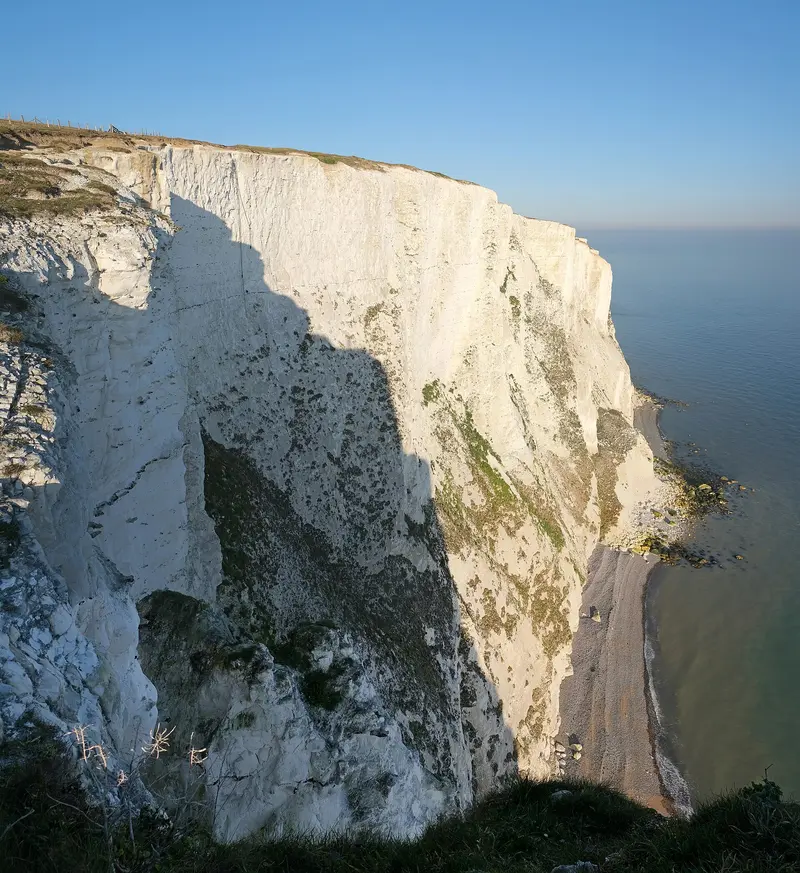
    The chalk cliffs east of the harbour belong to the National Trust. The starting point is the visitor centre on Langdon Cliffs, from whose terrace you can look down at the ferries arriving and departing. From there, a path leads over the cliffs to South Foreland Lighthouse, about three kilometres each way, with constant views of the Channel and, on a clear day, the French coast.Along the way is the Fan Bay Deep Shelter, a World War II tunnel system accessible with a guided tour during the season. Exmoor ponies graze in the meadows. The path is not secured, the edge frequently breaks away; keep your distance. Access is free, only parking is paid. On foot, you can reach the centre from town in about 40 minutes.
    Open in Google Maps
    Historic Landmark

    4Western Heights

    On the ridge west of the town, opposite the castle, the British Army had an extensive system of trenches, ramparts, and forts constructed during the Napoleonic Wars, which was further expanded in the 19th century. It was designed to prevent an attacker from taking Dover from the landward side.The deep, brick-lined ditches and outer walls of the Drop Redoubt can be freely explored, but its interior is open only on selected days. Of note is the Grand Shaft, a triple spiral staircase used by soldiers to quickly reach the harbour. From above, you'll get good views of the harbour, town, and castle, and the site is far less visited than the eastern cliffs.
    Open in Google Maps
    Attraction

    5St Margaret's Bay

    A shingle bay beneath high chalk cliffs, about six kilometres northeast of Dover. This is where England is closest to the Continent: It's about 34 kilometres to the French coast, and on clear days it's clearly visible. The writer Ian Fleming and the playwright Noël Coward owned houses on the beach.A steep winding road descends from the village of St Margaret's at Cliffe; the car park is small and fills up early on summer days. On the beach, there's a pub and a kiosk. Arriving on foot is more picturesque: From the White Cliffs Visitor Centre, walk here via the South Foreland Lighthouse in about an hour and a half.
    Open in Google Maps
    Park

    6Samphire Hoe

    A piece of new land at the foot of Shakespeare Cliff west of Dover: Samphire Hoe was built up from almost five million cubic metres of chalk marl that accumulated during the construction of the Channel Tunnel, and opened as a nature park in 1997. Access is via a single-lane tunnel through the rock.On level paths, you walk between meadows with orchids and along a long sea wall, with the white cliffs towering above you at their full height. The view from below is more impressive than from any spot above. There is a kiosk and a paid car park; an hour is enough for a circuit.
    Open in Google Maps

    Restaurants in Dover

    1

    The White Horse

    The city's oldest pub, in a 14th-century house below the castle next to the ruins of St James' Church. Walls and ceilings are covered with the signatures of Channel swimmers who record their times here after crossing. Serving pub classics and ales; a good stop after visiting the castle.
    Show on Google Maps
    2

    The Nook

    A small café on High Street, right by the Maison Dieu. During the day, it offers breakfast, sandwiches, cakes, and coffee. Few tables and very good reviews; convenient for a break during your city tour.
    Show on Google Maps
    3

    Aspendos Dover

    A Turkish restaurant on King Street near the Market Square. On the menu you'll find cold and warm mezze, skewers from the charcoal grill, lamb and fish. With over a thousand reviews, it's a popular central address and a dependable choice for dinner before or after the ferry.
    Show on Google Maps
    4

    The Coastguard

    A pub and restaurant situated right on the beach of St Margaret's Bay, six kilometres northeast of Dover, claiming to be England's closest pub to the Continent. From the terrace, you can look out over the pebble bay towards the Channel. The menu features fish, seafood, and classic pub dishes; a rewarding stop after a cliff walk.
    Show on Google Maps

    Dining and Drinks

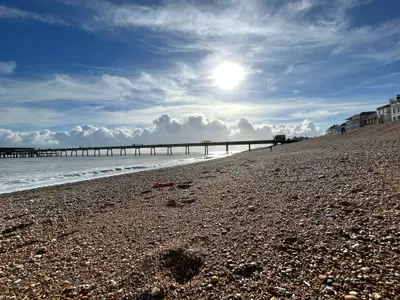
    Dover is not a culinary destination, but you'll find solid pubs, some good international restaurants in the center, and seafood places along the coast. Bars and cafés have opened up in recent years at the marina and the new marina pier.

    Dover Sole

    In England, Dover sole is named after the city because the London market was supplied from there. Classically, it is grilled whole or fried in butter and filleted at the table.

    Fish and Chips

    Freshly fried cod or haddock with chips is a must-have on the Kent coast, ideally with a view of the harbour or on the beach at St Margaret's Bay.

    Ale from Kent

    The pubs serve beers from Shepherd Neame of Faversham and small regional breweries, including one from Dover itself.

    Cream Tea at Lighthouse

    In the tearoom of the South Foreland Lighthouse, scones and tea are served in old-fashioned crockery, making it the ideal break halfway along the cliff walk.

    Culture and History

    Key to EnglandEven in the Bronze Age, boats crossed the Channel from here. The Romans developed Portus Dubris as a naval base, placing two lighthouses on the heights, one of which remains in the castle. In the Middle Ages, Dover was one of the Cinque Ports, harbors that supplied ships to the Crown and received privileges in return. The castle was considered the Key to England.Hellfire CornerDuring World War II, Dover lay within range of German long-range guns near Calais and was shelled and bombed for four years. From the tunnels under the castle, the evacuation of Dunkirk was directed in 1940. Gun emplacements and shelters were built into the cliffs, some of which can be visited.Across the ChannelIn 1875, Matthew Webb swam from Dover to become the first person to cross the English Channel; channel swimmers still depart from here today. In 1909, Louis Blériot landed in a field behind the castle after the first Channel flight; a monument in the shape of his aircraft marks the spot. The song about the white cliffs, popularized by Vera Lynn in 1942, cemented their status as a national symbol.

    Nightlife

    1

    Breakwater Brewery & Taproom

    A small brewery with a bar in a courtyard in the city's north, on the Dour River. Their own beers come straight from the tap, with oven-baked pizza. Evenings and weekends, locals mainly gather here, with live music on some days.
    Show on Google Maps
    2

    Cullins Yard

    A bar and restaurant at the marina, decorated with ship parts, oars, and a boat-shaped counter. Among the offerings are beers from their own small brewery, complemented by a wide menu from fish to steak. Live music often plays on weekends; in summer, you can sit outside by the harbor basin.
    Show on Google Maps

    Getting There & Around

    By FerryFrom the Eastern Docks, car ferries depart, reaching Calais in about 90 minutes and Dunkirk in approximately two hours. Expect waiting times at border controls during holidays and on weekends. Not every ferry company takes foot passengers; check before booking. The car train through the Channel Tunnel does not depart from Dover, but from Folkestone, 15 kilometres to the west.By TrainFrom Dover Priory station, the high-speed train reaches London St Pancras in just over an hour. Regional trains connect Dover with Canterbury, Folkestone, Deal, and Sandwich. From the station, it's about a ten-minute walk to the town centre and roughly half an hour to the ferry terminal.Around TownA steep footpath leads to the castle from the town centre, or you can take a bus. The White Cliffs Visitor Centre can be reached on foot in about 40 minutes or by car via Upper Road. Buses run to St Margaret's at Cliffe, Deal, and Folkestone. Sturdy footwear is advisable on the clifftop path, and a jacket if it's windy.

    Accommodations in Dover

    Find perfect stay in Dover

    Booking.com* (Affiliate link)
    Search Hotels
    Agoda* (Affiliate link)
    Search Hotels
    Airbnb
    Vacation Rentals

    * Affiliate link: if you book through it, we earn a small commission. The price stays the same for you.

    Campgrounds in Dover

    Find perfect campground in Dover

    Search via Google Maps
    Campgrounds nearby (15km)
    Camping.info
    Find Campgrounds
    Park4Night
    RV Parks & Camping

    Plan your trip to Dover

    Save places, build a route and plan your city trip, all in one place.

    1. 1
      1234

      Round trip

      12 days · 4 stops

      Saved

      Pick a route

      Pick a ready-made one or save places and plan your own.

      Open bookmarks
    2. 2

      Trip to Dover

      Live
      • 1Dover Castle3 days
      • 2South Foreland Lighthouse4 days
      • 3White Cliffs of Dover5 days
      Budget

      Plan your trip

      The planner sorts stops, days and budget. Plan together in real time.

      Start trip planning
    3. 3
      9:41 No signal
      Available offline

      Use it on the road

      Download the guide to your phone and use it on site, even offline.

    Nearby

    Deal & Sandwich

    Deal & Sandwich

    Deal and Sandwich are located on the east coast of Kent between Dover and the Isle of Thanet, ten kilometres apart. Deal is a port town without a harbour: Ships used to anchor in the roadstead off its pebble beach, where today a long promenade, a pier, and two fortresses of Henry VIII stand.Sandwich was in the Middle Ages one of England's most important ports until the river silted up. The town remained small and has retained its street network, its town gates, and hundreds of old houses. Together, both places offer a tranquil contrast to the ferry traffic in Dover.
    Canterbury

    Canterbury

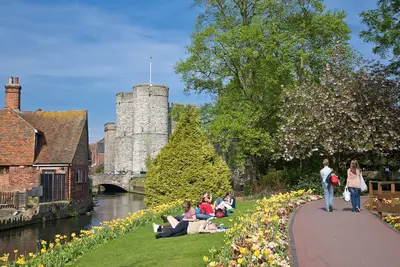
    Canterbury in the county of Kent is one of England's oldest cities and has been a pilgrimage destination since the Middle Ages. At its heart is the Cathedral, seat of the Archbishop of Canterbury and a UNESCO World Heritage site. Surrounding it is a walled Old Town with half-timbered houses, narrow lanes, and the River Stour, where you can be punted through the city.Canterbury is just under an hour by train from London and half an hour from Dover – a good stop on the way to the ferry or as a base for exploring the Kent coast.
    Whitstable

    Whitstable

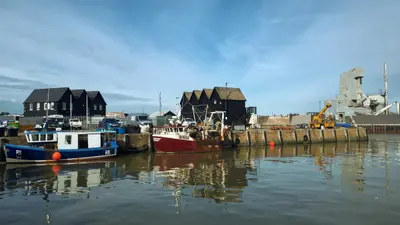
    Whitstable is a fishing town on the north coast of Kent, ten kilometres north of Canterbury, and has been known for its oysters since Roman times. Fish stalls and black-tarred fishermen's huts line the harbour; behind the shingle beach, rows of colourful beach huts extend west to Tankerton.The main street is almost free of chain stores and full of small shops, galleries, and cafés. On summer weekends, many Londoners visit; during the week and off-season, the town is quieter. At low tide, the water recedes far, and at sunset over the Thames Estuary, everyone gathers on the beach.
    Côte d'Opale (Opal Coast)

    Côte d'Opale (Opal Coast)

    The stunning Opale Coast stretches along the English Channel and enchants with dramatic chalk cliffs, wide sandy beaches, and charming coastal towns, perfect for hiking and relaxation.
    Rye & Camber Sands

    Rye & Camber Sands

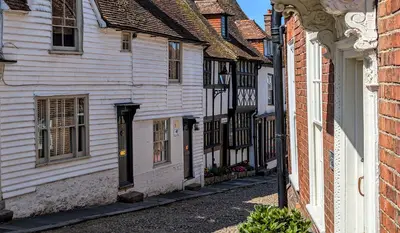
    Rye is located in eastern East Sussex on a sandstone hill that was once a peninsula in the sea. As an ancient town, it was part of the Cinque Ports confederation and thrived on fishing, trade, and smuggling. Then the bay silted up, the coast receded, and Rye was left approximately three kilometers inland. This economic insignificance preserved its medieval layout.What remains today is a dense network of cobblestone lanes, half-timbered houses, and Georgian brick facades. Mermaid Street, with its crooked gables, is the most famous. From the tower of St Mary's Church, you can overlook the rooftops and the flat marshland of Romney Marsh.A few kilometers to the southeast begins Camber Sands, the only extensive dune beach in East Sussex. At low tide, the sand stretches out for several hundred meters. Together with the neighboring town of Winchelsea, a 13th-century planned settlement, this area offers excellent opportunities for exploring on foot over one or two days.