ExploreTravel GuidesPlan a trip
    de|en
    All Places & RegionsAbout FernwehFAQPrivacy PolicyImprint
    ExploreTravel GuidesPlan a trip
    • Neighborhoods & highlights
    • Eat & drink
    • Food culture
    • Culture
    • Nightlife
    • Getting around
    • Accommodation
    • Plan trip
    • Nearby
    Whitstable
    City

    Whitstable

    Whitstable is a fishing town on the north coast of Kent, ten kilometres north of Canterbury, and has been known for its oysters since Roman times.

    1. Home
    2. Destinations
    3. Great Britain
    4. South East England
    5. Whitstable
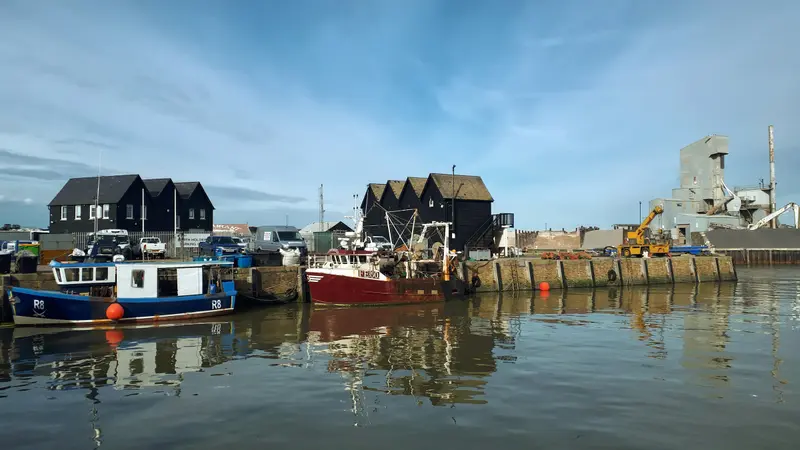
    Whitstable is a fishing town on the north coast of Kent, ten kilometres north of Canterbury, and has been known for its oysters since Roman times. Fish stalls and black-tarred fishermen's huts line the harbour; behind the shingle beach, rows of colourful beach huts extend west to Tankerton.The main street is almost free of chain stores and full of small shops, galleries, and cafés. On summer weekends, many Londoners visit; during the week and off-season, the town is quieter. At low tide, the water recedes far, and at sunset over the Thames Estuary, everyone gathers on the beach.
    Whitstable has around 32,000 inhabitants, but the part interesting for visitors is small: the High Street and its extension Harbour Street, the harbour and the beach, all traversable on foot in about fifteen minutes. Narrow passages run between the street and the sea, of which the narrowest, Squeeze Gut Alley, is barely shoulder-width.West of the harbour lies the old town centre with fishermen's houses and the pebble beach; to the east, the district of Tankerton adjoins, with grassy slopes and beach huts. One day is enough for a visit; those who stay overnight experience the town in the evening, once the day-trippers have left. The beach is shingle; swim shoes are recommended for bathing.

    Sights in Whitstable

    Discover the most important sights and attractions

    Market

    1Whitstable Harbour

    The harbour was opened in 1832 as the terminus of the railway line from Canterbury, one of the world's first railways with regular passenger service. It is still in operation today: fishing boats dock, and gravel is loaded on the east side.On the South Quay, you'll find stalls where you can eat oysters, crabs, whelks, and fish and chips straight from your hand. Next to them, the Harbour Market sells handicrafts and street food from small wooden huts. It's most beautiful in the late afternoon when the boats return.

    Open in Google Maps
    Park

    2Tankerton Slopes and The Street

    East of the harbour, a wide grassy slope descends to the sea, at the foot of which stretches a long row of brightly painted beach huts. Above, a promenade with benches offers views over the Thames Estuary to the Isle of Sheppey and the wind farms out at sea.At low tide, The Street appears here, a natural shingle bank, which extends several hundred metres out into the sea and allows you to walk out dry-footed. Watch out for the tides: the incoming tide comes in from the sides and cuts off the return path faster than it looks.
    Open in Google Maps
    Museum

    3Whitstable Community Museum & Gallery

    The small, volunteer-run museum on Oxford Street tells the story of the town through its three trades: oyster fishing, shipbuilding, and diving. In Whitstable, the diving helmet was developed in the early 19th century and first used for wreck salvage.Also on display are models of the early railway to Canterbury and a corner for actor Peter Cushing, who lived here for many years. A visit takes just under an hour; opening days are limited.
    Open in Google Maps
    Historic Landmark

    4Whitstable Castle & Gardens

    Kein mittelalterliches Bauwerk, sondern ein Landhaus mit Zinnen und Türmen, das ein Londoner Geschäftsmann in den 1790er Jahren auf dem Hügel zwischen Whitstable und Tankerton errichten ließ und das spätere Besitzer erweiterten. Heute gehört es der Gemeinde.Die Gärten mit Rosenbeeten, alten Bäumen und einem Spielplatz sind frei zugänglich, im Haus gibt es eine Teestube. Vom Tor sind es nur wenige Schritte hinunter zu den Tankerton Slopes und zum Hafen.
    Open in Google Maps

    Restaurants in Whitstable

    1

    Birdies Restaurant

    A decades-old bistro on Harbour Street with French-influenced cuisine and plenty of fish: oysters, mussels, sole and the catch of the day, plus classics like duck breast. In summer, you sit in the small courtyard behind the house. On weekends, you should make a reservation.
    Show on Google Maps
    2

    Lazy Lobster

    A small seafood restaurant on Sea Street, a few steps from the beach. The menu features lobster, crab, oysters, and seafood platters, prepared simply. Few tables and very good reviews; during high season, it's worth coming early.
    Show on Google Maps
    3

    Harbour Street Tapas

    A Spanish tapas bar on Harbour Street, the shopping street linking the town centre and harbour. Small sharing plates are served, from Gambas and Croquetas to local fish, plus Spanish wines and sherry. A great choice if you're after something other than Fish and Chips in the evening.
    Show on Google Maps

    Eating and Drinking

    In Whitstable, you can enjoy fish and seafood, from paper plates at a harbour stall to a multi-course meal. For the popular beachfront restaurants, you'll need a reservation on weekends.

    Oysters

    Raw with lemon or Tabasco, sold by the piece at the harbor for little money. The year-round rock oysters are larger and milder; local Native Oysters are only available from September to April.

    Common Whelks and Common Cockles

    Whelks and Cockles are a traditional offering at fish stalls: cooked, cold, and eaten with vinegar and pepper.

    Whitstable Bay Ale

    The Shepherd Neame brewery from nearby Faversham brews several beers under the bay's name, which you can find in the local pubs.

    Culture and History

    The Oyster CityThe shallow, nutrient-rich bay off Whitstable has yielded oysters for two millennia; the Romans reportedly shipped them to Rome. In the 19th century, millions went to London annually, a cheap food for workers. Diseases, harsh winters, and pollution caused stocks to plummet in the 20th century. Today, Pacific rock oysters are mainly cultivated on racks in the intertidal zone; the native oyster's season is limited to 'r' months.Railway and DiversIn 1830, the railway from Canterbury to Whitstable opened, locally known as the Crab and Winkle Line, one of the world's first lines with steam operation and passenger tickets. At the same time, local divers developed the helmet diving suit and used it to salvage wrecks off the coast.From Fishing Village to Weekend DestinationSince the 1990s, artists and Londoners have discovered the town; fishing huts became holiday homes, warehouses became restaurants. In summer, the town celebrates an Oyster Festival with a parade and the symbolic landing of the first catch, and every two years, the Whitstable Biennale for contemporary art takes place.

    Nightlife

    1

    Old Neptune

    A white-painted wooden pub standing directly on the pebble beach, dubbed Neppy by the locals. Inside, the floor is uneven and a band often plays; outside, benches sit on the pebbles. At sunset over the bay, seats are hard to come by.
    Show on Google Maps
    2

    The Twelve Taps

    A small bar on the High Street with twelve rotating taps for craft beer and cider, plus a long gin menu. There's nothing to eat except snacks. Easy-going, popular, and a pleasant start to the evening.
    Show on Google Maps

    Getting Here & Around

    By TrainTrains from London Victoria and the high-speed service from St Pancras take around 75 to 90 minutes. The station is about a 15-minute walk from the harbour. For Margate and Broadstairs, continue on the same line for another 20 to 30 minutes.From CanterburyBuses run several times an hour and take half an hour. By bike, follow the Crab and Winkle Way, a twelve-kilometre long, mostly car-free path through Blean Forest.LocallyWalk around the town. Parking spaces are scarce and fill up early in summer; it’s best to park at Gorrell Tank by the harbour or arrive by train. A promenade runs along the sea in both directions, eastwards via Tankerton to Herne Bay, about eight kilometres.

    Accommodations in Whitstable

    Find perfect stay in Whitstable

    Booking.com* (Affiliate link)
    Search Hotels
    Agoda* (Affiliate link)
    Search Hotels
    Airbnb
    Vacation Rentals

    * Affiliate link: if you book through it, we earn a small commission. The price stays the same for you.

    Campgrounds in Whitstable

    Find perfect campground in Whitstable

    Search via Google Maps
    Campgrounds nearby (15km)
    Camping.info
    Find Campgrounds
    Park4Night
    RV Parks & Camping

    Plan your trip to Whitstable

    Save places, build a route and plan your city trip, all in one place.

    1. 1
      1234

      Round trip

      12 days · 4 stops

      Saved

      Pick a route

      Pick a ready-made one or save places and plan your own.

      Open bookmarks
    2. 2

      Trip to Whitstable

      Live
      • 1Whitstable Harbour3 days
      • 2Tankerton Slopes and The Street4 days
      • 3Whitstable Community Museum & Gallery5 days
      Budget

      Plan your trip

      The planner sorts stops, days and budget. Plan together in real time.

      Start trip planning
    3. 3
      9:41 No signal
      Available offline

      Use it on the road

      Download the guide to your phone and use it on site, even offline.

    Nearby

    Canterbury

    Canterbury

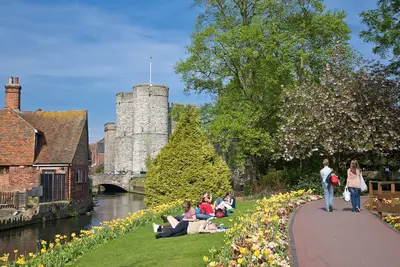
    Canterbury in the county of Kent is one of England's oldest cities and has been a pilgrimage destination since the Middle Ages. At its heart is the Cathedral, seat of the Archbishop of Canterbury and a UNESCO World Heritage site. Surrounding it is a walled Old Town with half-timbered houses, narrow lanes, and the River Stour, where you can be punted through the city.Canterbury is just under an hour by train from London and half an hour from Dover – a good stop on the way to the ferry or as a base for exploring the Kent coast.
    Deal & Sandwich

    Deal & Sandwich

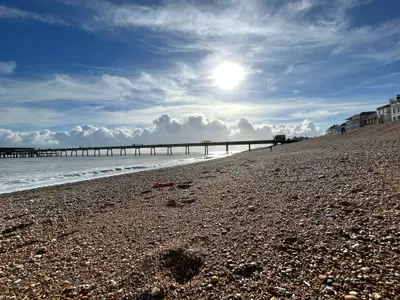
    Deal and Sandwich are located on the east coast of Kent between Dover and the Isle of Thanet, ten kilometres apart. Deal is a port town without a harbour: Ships used to anchor in the roadstead off its pebble beach, where today a long promenade, a pier, and two fortresses of Henry VIII stand.Sandwich was in the Middle Ages one of England's most important ports until the river silted up. The town remained small and has retained its street network, its town gates, and hundreds of old houses. Together, both places offer a tranquil contrast to the ferry traffic in Dover.
    Dover

    Dover

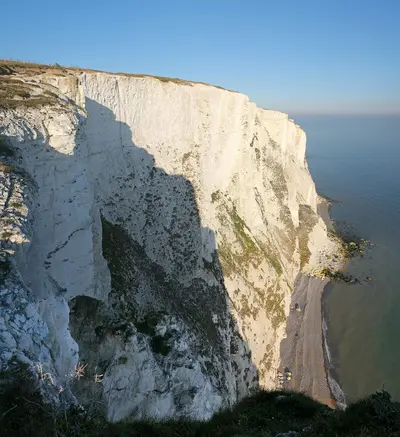
    Dover is England's most important ferry port to the continent: From here it's only about 35 kilometers to Calais. Above the town rise the white chalk cliffs, the White Cliffs of Dover, and Dover Castle, one of England's largest castles, with Second World War tunnels in the rock below.Many only experience Dover in transit. If you plan half a day, you can hike along the cliffs to the South Foreland Lighthouse or visit the castle before continuing by ferry.
    Rye & Camber Sands

    Rye & Camber Sands

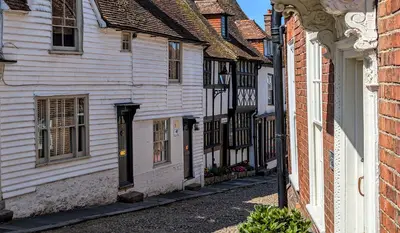
    Rye is located in eastern East Sussex on a sandstone hill that was once a peninsula in the sea. As an ancient town, it was part of the Cinque Ports confederation and thrived on fishing, trade, and smuggling. Then the bay silted up, the coast receded, and Rye was left approximately three kilometers inland. This economic insignificance preserved its medieval layout.What remains today is a dense network of cobblestone lanes, half-timbered houses, and Georgian brick facades. Mermaid Street, with its crooked gables, is the most famous. From the tower of St Mary's Church, you can overlook the rooftops and the flat marshland of Romney Marsh.A few kilometers to the southeast begins Camber Sands, the only extensive dune beach in East Sussex. At low tide, the sand stretches out for several hundred meters. Together with the neighboring town of Winchelsea, a 13th-century planned settlement, this area offers excellent opportunities for exploring on foot over one or two days.
    Côte d'Opale (Opal Coast)

    Côte d'Opale (Opal Coast)

    The stunning Opale Coast stretches along the English Channel and enchants with dramatic chalk cliffs, wide sandy beaches, and charming coastal towns, perfect for hiking and relaxation.