Fernweh: Home
    ExploreTravel GuidesPlan a tripMy tripLast visited
    de|en
    All Places & RegionsAll highlightsAbout FernwehFAQPrivacy PolicyImprint
    ExploreTravel GuidesPlan a tripMy tripLast visited
    • Neighborhoods & highlights
    • Recommendations
    • Walking tours
    • Eat & drink
    • Food culture
    • Culture
    • Nightlife
    • Getting around
    • Accommodation
    • Plan trip
    • Nearby
    Denver
    Justusco / Wikimedia Commons / CC BY-SA 4.0

    United States

    Denver

    City

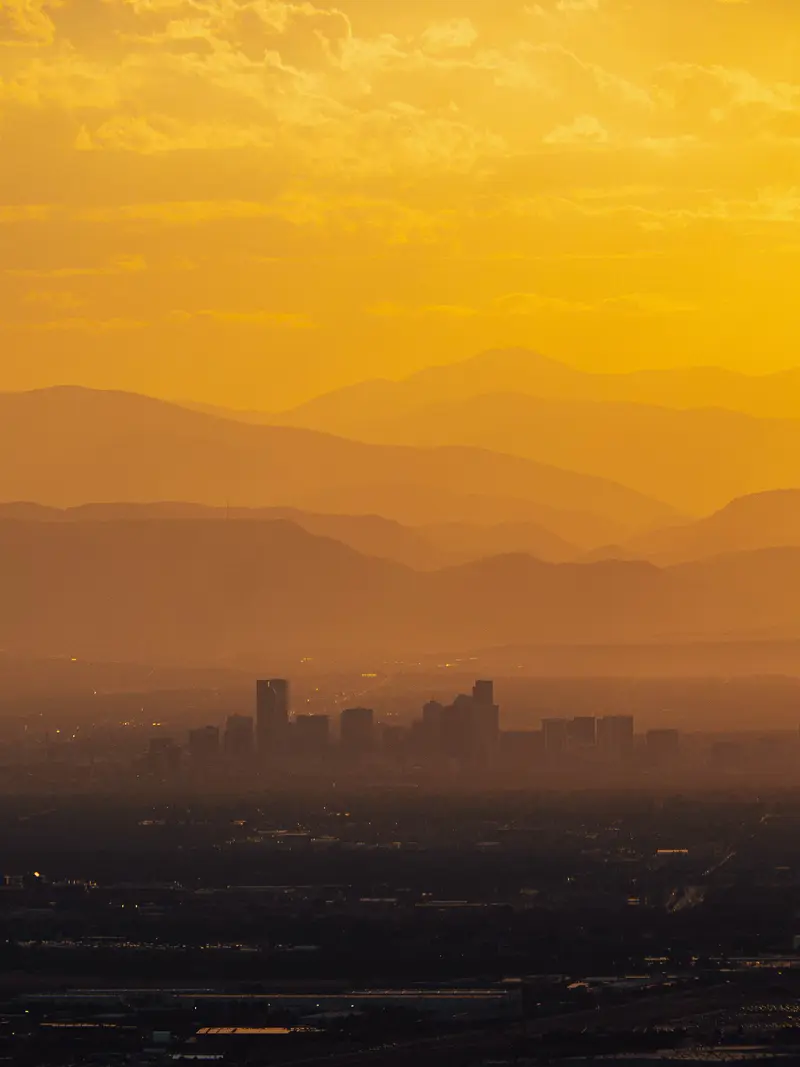
    Denver, the capital of Colorado, sits at the eastern edge of the Rockies about a mile above sea level. Come for concerts at the Red Rocks amphitheater, the museums around Civic Center, and easy access to the mountains just west of town.

    by Felix Gillen

    1. Home
    2. Destinations
    3. United States
    4. Colorado
    5. Denver
    Denver, the capital of Colorado, sits at the eastern edge of the Rockies about a mile above sea level. Come for concerts at the Red Rocks amphitheater, the museums around Civic Center, and easy access to the mountains just west of town.Downtown is easy to walk. In the northwest corner is LoDo (Lower Downtown), home to the restored Union Station and historic Larimer Square. From there 16th Street runs southeast to Civic Center Park, framed by the gold-domed Capitol and the Denver Art Museum. To the northeast, River North (RiNo) is full of murals, galleries and restaurants.The A Line train gets you from the airport to Union Station in about 37 minutes. For Red Rocks and the mountains you'll need a car or a shuttle. For health guidance on altitude, check the CDC or, if you're visiting from abroad, the UK FCDO travel advice.

    Sights in Denver

    Discover the most important sights and attractions

    Union Station

    1Union Station

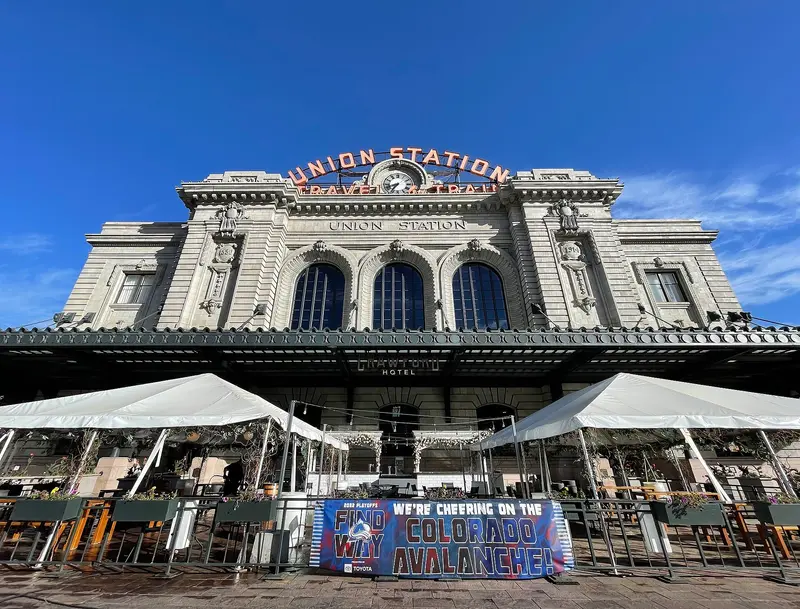
    Since its 2014 renovation, the station on Wynkoop Street has been downtown's gathering place again. The central building dates to 1914, and the Crawford Hotel fills the upper floors. The Great Hall doubles as the hotel lobby and a public living room with free Wi-Fi and shuffleboard tables, good for a break. The A Line to the airport, light rail, buses and Amtrak's California Zephyr all stop here. In summer the plaza out front has a pop-up fountain and a Saturday farmers market.
    Open in Google Maps
    Colorado State Capitol
    Historic Landmark

    2Colorado State Capitol

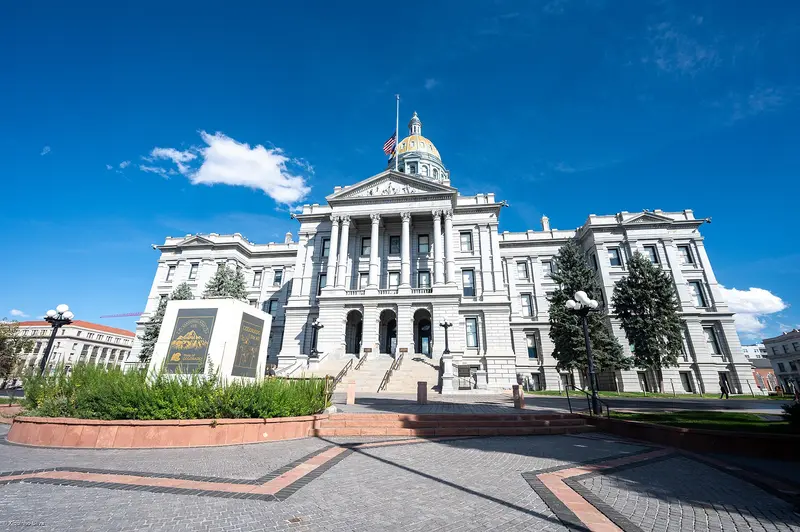
    The Capitol opened in 1894, and its dome has been covered in real gold leaf since 1908 in honor of the gold rush. Three different steps on the west staircase claim to sit exactly one mile up: the 15th with the original engraving, the 18th after a 1969 resurvey, and the 13th, marked after a 2003 measurement found it to be the true mile-high step. Free tours run about 45 minutes and include roughly 15 minutes up in the dome, which Lonely Planet says is worth the tour on its own.
    Open in Google Maps
    Denver Art Museum
    Museum

    3Denver Art Museum

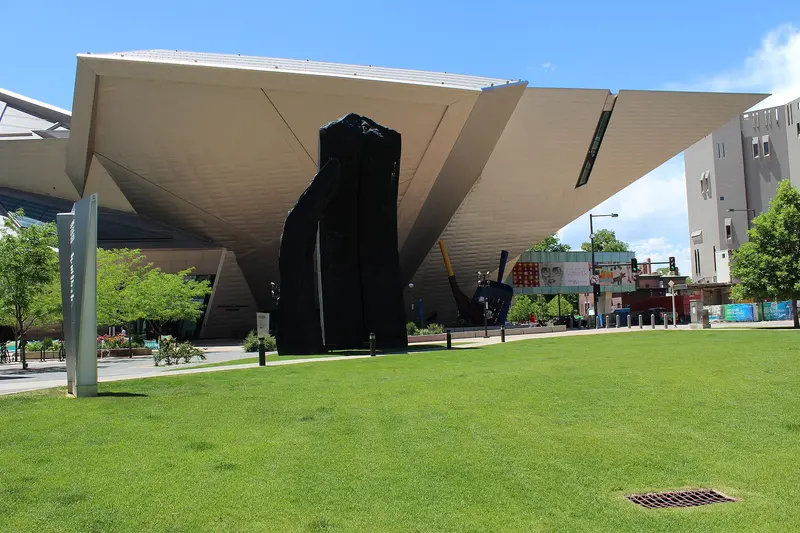
    The art museum on Civic Center spans two striking buildings: Gio Ponti's glass-tiled Martin Building (1971), his only completed design in the U.S., and Daniel Libeskind's angular, titanium-clad Hamilton Building (2006). It's especially known for its Indigenous art collection. Kids and teens under 18 get in free, and nearly every month there are free days for everyone. Plan on two to three hours.
    Open in Google Maps
    Red Rocks Park and Amphitheatre
    Park

    4Red Rocks Park and Amphitheatre

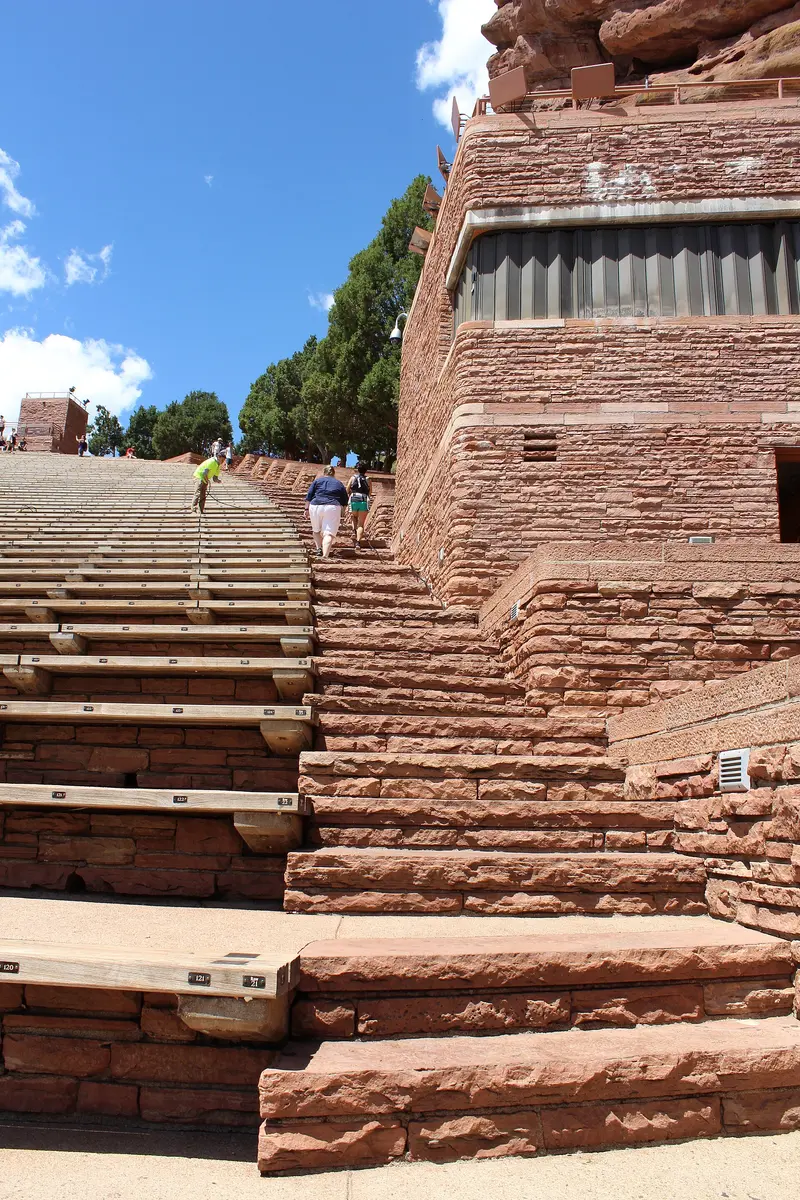
    This open-air amphitheater set between huge red rock monoliths is about 10 miles southwest of Denver in Morrison. The Civilian Conservation Corps built it in the 1930s, it was dedicated in 1941, and it seats 9,525. The Beatles played here in 1964. When there's no show, the park, amphitheater, visitor center and parking are free, open from an hour before sunrise to an hour after sunset. About 250 steps take you to the top, and trails wind through the rocks. The park closes earlier on concert days; most shows are in summer.
    Open in Google Maps
    Larimer Square
    Historic Landmark

    5Larimer Square

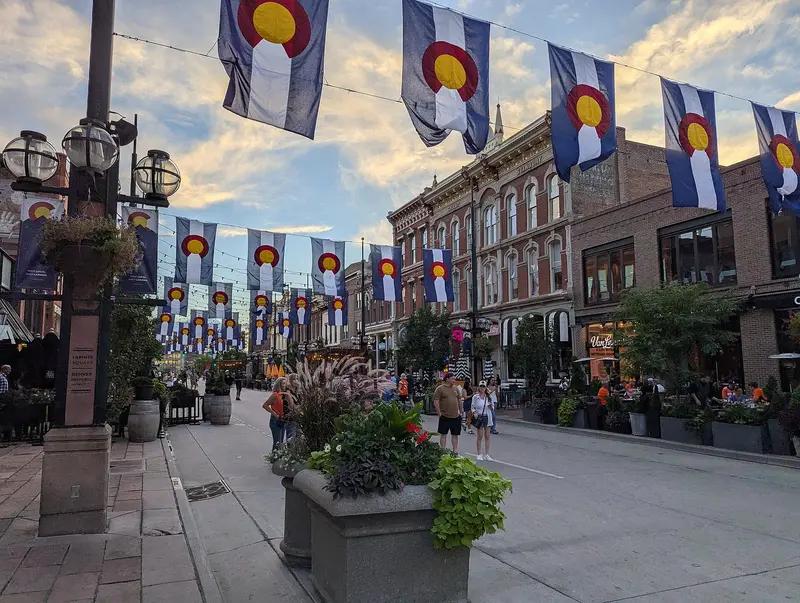
    The 1400 block of Larimer Street is Denver's oldest block, laid out by William Larimer in 1858, with most buildings dating from the 1870s to the 1890s. By the 1960s it was slated for demolition until Dana Crawford started restoring it in 1965. It became the city's first historic district in 1971 and was listed on the National Register of Historic Places in 1973. Today its Victorian buildings hold shops, bars and restaurants. Union Station is about a third of a mile away.
    Open in Google Maps

    City walks in Denver

    Curated walking tours through the city's highlights, handpicked by experienced travel journalists.

    Union Station to the Capitol

    This walk runs from LoDo through Larimer Square and down 16th Street to Civic Center: about 2 miles, two and a half to three hours with stops and a Capitol tour. Start at Union Station, where the A Line from the airport comes in. If your feet give out, the free FreeRide shuttle runs back along 16th Street. Capitol tours take about 45 minutes, so build one into the middle. On hot summer days, go in the morning.

    Open in Google Maps
    Stops (8)

    Restaurants in Denver

    1

    Tavernetta

    Italian restaurant right at the edge of the tracks at Union Station, with a Michelin Bib Gourmand. The inspectors praise the classic menu, from cacio e pepe to rigatoni with lamb ragù, and recommend the honey gelato affogato to finish. The wine list comes from the Frasca group in Boulder, and Michelin calls lunch an especially good value. Open from 11:30 a.m. Monday through Friday and from 3 p.m. on weekends; book on OpenTable.
    Show on Google Maps
    2

    Hop Alley

    Modern Chinese cooking with a Sichuan streak on Larimer Street in RiNo, with a Michelin Bib Gourmand. The name nods to Denver's original Chinatown. Michelin's picks: beef and celery dumplings with chili crisp, plus wood-grilled half chicken or char siu pork ribs to share, and the cocktails. Open Monday through Saturday, 5 to 10 p.m.; closed Sundays. Book directly with the restaurant.
    Show on Google Maps
    3

    Buckhorn Exchange

    Denver's oldest steakhouse, on Osage Street, opened in 1893 as a saloon by Henry "Shorty Scout" Zietz and listed on the National Register of Historic Places since 1983. More than 500 mounted animals and trophies line the walls, and Theodore Roosevelt ate here in 1905. The menu runs to steaks and the famous Rocky Mountain oysters. Most people come for the atmosphere and the history, so treat dinner here as part of the sightseeing.
    Show on Google Maps
    4

    Brutø

    A counter restaurant tucked into the Dairy Block's Free Market in LoDo, with one Michelin star. The kitchen leans on local, seasonal ingredients, fermentation and live fire, and Michelin singles out the nonalcoholic pairing. Dinner only and closed Mondays: 5 to 8 p.m. Tuesday through Thursday and Sunday, until 8:30 on Friday and Saturday. Top of the price range; book early on OpenTable.
    Show on Google Maps

    Food and drink

    Denver eats two ways: hearty Western classics and a young restaurant scene that landed seven starred restaurants in the 2025 Michelin Guide Colorado.
    Green chile

    Green chile

    Green chile stew, often with pork, is everywhere in Colorado: as a soup, ladled over burritos or for dipping. Coloradans swear by Pueblo chiles, which Tasting Table says pack considerably more heat than New Mexico's Hatch chiles. Try it on a smothered breakfast burrito at a place like Santiago's.
    Denver omelet

    Denver omelet

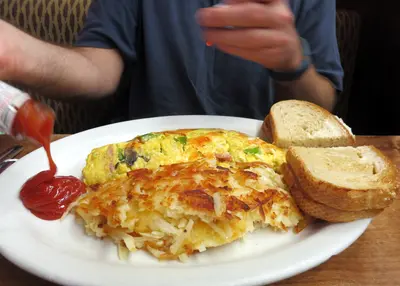
    Ham, green peppers, onions and cheese, often with mushrooms, and on nearly every breakfast menu in town. Its origins are disputed; historians point to egg foo young eaten by Chinese railroad and mining workers as a likely ancestor.
    Rocky Mountain oysters

    Rocky Mountain oysters

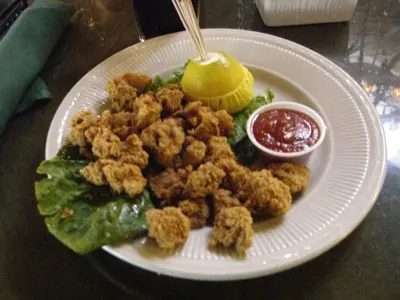
    Deep-fried bull testicles, a holdover from ranching days. The best-known place to try them is the Buckhorn Exchange, Denver's oldest steakhouse, open since 1893 with more than 500 mounted animals and trophies on the walls. You'll find them at Coors Field too.

    Gold rush, rail hub and art

    Denver grew out of the Pike's Peak gold rush. William Larimer laid out the block now called Larimer Square in 1858, and Larimer Street became the city's first main commercial strip. After decades of decline the block was slated for demolition in the 1960s, until Dana Crawford began restoring its Victorian buildings in 1965. In 1971 it became Denver's first historic district.Union Station, whose central hall dates to 1914, has been the heart of downtown again since its 2014 renovation: train station, hotel and the city's living room in the Great Hall. Across from the Capitol, the Denver Art Museum spans two striking buildings, Gio Ponti's Martin Building (1971) and Daniel Libeskind's Hamilton Building (2006), and is known for its collection of Indigenous art.On the first Friday of every month, First Friday art walks fill the galleries of the Santa Fe, RiNo and Golden Triangle districts. In summer, City Park Jazz puts on free Sunday concerts from 6 to 8 p.m.

    Nightlife

    1

    The Cruise Room

    The bar in the Victorian-era Oxford Hotel on 17th Street opened on December 6, 1933, the day after Prohibition ended. It was decorated by Gilbert Charles Jaka, who also designed a lounge on the Queen Mary, and the art deco look survives. A good spot for a martini before or after dinner in LoDo; Union Station is a block away.
    Show on Google Maps
    2

    Bluebird Theater

    Built in 1913 on East Colfax Avenue, the Bluebird was a theater and movie house until 1994 and has been a music venue for about 500 people ever since. According to 5280, the bookings lean toward singer-songwriters and roots acts, and the surrounding business district is named after the venue. Lineup and tickets at bluebirdtheater.net.
    Show on Google Maps
    3

    Ophelia's Electric Soapbox

    Two-story stage with a restaurant on 20th Street, housed in a historic building that was formerly a brothel and later a sex shop, hence the nickname "Gastrobrothel." It features a wide program of local and regional acts, accommodating up to 425 people, plus brunch with entertainment. Approximately a ten-minute walk from Union Station, program available on the website.
    Show on Google Maps

    Getting around Denver

    From the airport: RTD's A Line runs from the station next to the Westin at DEN to Union Station in about 37 minutes (23 miles, eight stops). Trains come every 15 minutes from 5 a.m. to 8 p.m. and every 30 minutes otherwise. It's $10 each way on an Airport Day Pass. The easiest way to buy is the RTD MyRide app, or use the machines on the platform. You have to manage your own bags; there are luggage racks on board.Downtown: The free FreeRide shuttle runs along 16th Street between Union Station and Civic Center. Union Station is the hub for light rail, buses and Amtrak.Red Rocks: The amphitheater is about 10 miles southwest of the city in Morrison. Without a car, take a rideshare or a concert shuttle. Outside of shows, entry and parking are free.Tickets: Besides MyRide, you can buy RTD fares in the Uber and Transit apps.Traveling by RVLeave the RV outside downtown. Parking garages are too low for most rigs, and Denver's street rules (as of 2021) limit RVs over 22 feet to 24 hours next to residential areas, while any vehicle has to move at least 100 feet every 72 hours. At Red Rocks, vehicles 6 feet 5 inches wide or more must use Lower South Lot 2. Chatfield State Park has a 13-foot height limit at the Deer Creek entrance, so taller rigs should use the Plum Creek entrance.

    Accommodations in Denver

    Find perfect stay in Denver

    Booking.com* (Affiliate link)
    Search Hotels
    Agoda* (Affiliate link)
    Search Hotels
    Airbnb
    Vacation Rentals

    * Affiliate link: if you book through it, we earn a small commission. The price stays the same for you.

    Campgrounds in Denver

    Find perfect campground in Denver

    Search via Google Maps
    Campgrounds nearby (15km)
    Camping.info
    Find Campgrounds
    Park4Night
    RV Parks & Camping

    Plan your trip to Denver

    Save places, build a route and plan your city trip, all in one place.

    1. 1
      Sunrise over alpine peaks and a sea of clouds
      1234

      Round trip

      12 days · 4 stops

      Saved

      Pick a route

      Pick a ready-made one or save places and plan your own.

      Open bookmarks
    2. 2

      Trip to Denver

      Live
      • 1Union Station3 days
      • 2Colorado State Capitol4 days
      • 3Denver Art Museum5 days
      Budget

      Plan your trip

      The planner sorts stops, days and budget. Plan together in real time.

      Start trip planning
    3. 3
      9:41 No signal
      Denver
      Available offline

      Use it on the road

      Download the guide to your phone and use it on site, even offline.

    Nearby

    Colorado

    Colorado

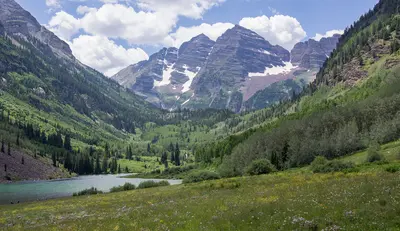
    Colorado sits in the southern Rocky Mountains between Utah and Kansas, with Denver as its capital and largest city. People come for the high mountain roads and trails, the 53 peaks above 14,000 feet, and four national parks ranging from Rocky Mountain to Mesa Verde.About six million people live here, most of them along the Front Range Urban Corridor, the string of cities at the eastern edge of the mountains around Denver. West of that line the Rockies rise fast; the highest summit is Mount Elbert at 14,440 feet. To the east the flat prairie of the High Plains begins.The four national parks are spread out across the state: Rocky Mountain (established 1915) northwest of Denver, Great Sand Dunes (2004), Black Canyon of the Gunnison (1999) and Mesa Verde (1906) in the southwest corner.
    Arches National Park

    Arches National Park

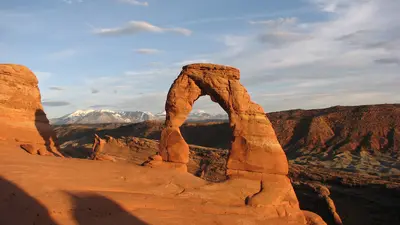
    Arches National Park lies in eastern Utah just north of the town of Moab, about four hours southeast of Salt Lake City. It holds more than 2,000 sandstone arches, and the most famous, including Delicate Arch and Landscape Arch, are within short to moderate hikes of the road.A 19-mile scenic drive runs through the park past the trailheads for the Windows Section, Balanced Rock, Wolfe Ranch and, at the far end, Devils Garden. You'll reach many arches within 15 minutes on foot, but there's almost no shade along the way.Moab as your baseMoab is five minutes from the park entrance and also the base for Canyonlands National Park and Dead Horse Point State Park. It has hotels at every price point, grocery stores, gas and outfitters for jeep, rafting and canyoneering trips. Rooms book up early in the March to October high season.What to know in 2026No timed entry: you don't need an entry reservation in 2026. Expect lines at the entrance on weekends and holidays, and lots that staff close temporarily when they fill up.Still reservation-only: Devils Garden Campground (March through October) and every Fiery Furnace hike, self-guided or ranger-led.Entrance fee: $30 per private vehicle. Arches does not charge the $100 nonresident surcharge. The $55 Southeast Utah Parks annual pass covers Arches, Canyonlands and two national monuments.Heat: July and August highs often pass 100°F. Hike early or late and carry at least two liters of water per person; water is only available at the visitor center.
    Moab

    Moab

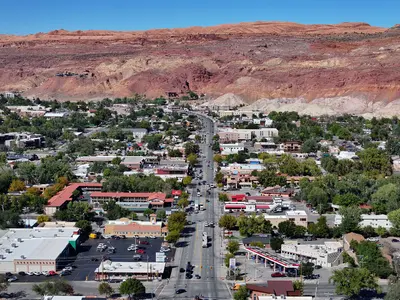
    Moab is a small town of about 5,000 people in eastern Utah, on the Colorado River and US 191, just under four hours' drive southeast of Salt Lake City. It's where you'll stay for Arches National Park, five minutes up the road, and Canyonlands' Island in the Sky district, about 45 minutes away.Main Street doubles as US 191: motels, outfitters, grocery stores and most restaurants are on it or a block or two off it. Jeep, rafting and mountain bike tours leave from here, and in the evening most visitors end up on the Main Street patios after a day on the trail.Good to knowPeak season: March through October, especially around Easter (Jeep Safari) and holiday weekends like Memorial Day and Labor Day. Book rooms and campsites weeks or months ahead.Heat: July and August regularly top 100°F. Hike early in the morning or in the evening.Groceries: City Market on Main Street is the biggest grocery store in the area. Stock up on water and supplies before heading into the parks.
    Wyoming

    Wyoming

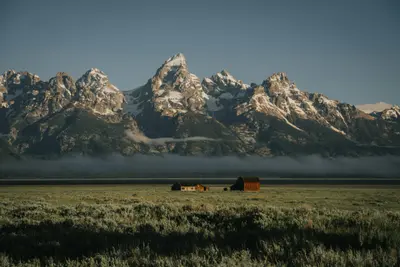
    Wyoming borders Montana, South Dakota, Nebraska, Colorado, Utah, and Idaho, and with about 589,000 residents it's the least populous state in the country. You come for the national parks, the mountains, and the old Western towns, and you drive long stretches of nearly empty country in between.In the northwest, Yellowstone and Grand Teton National Park sit end to end, linked by the John D. Rockefeller Jr. Memorial Parkway. Jackson, at the south end of Grand Teton, is the base for flights, hotels, and restaurants. Gannett Peak, the state's highest summit, rises in the remote Wind River Range.In the northeast, Devils Tower stands 867 feet above its base and 1,267 feet above the Belle Fourche River. Theodore Roosevelt made it the first national monument in 1906. Cody, named for Buffalo Bill, sits on the road to Yellowstone's East Entrance; the capital, Cheyenne, is in the southeast corner.
    Canyonlands National Park (Island in the Sky)

    Canyonlands National Park (Island in the Sky)

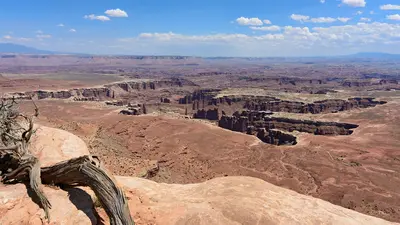
    Island in the Sky is the northern and most accessible district of Utah's Canyonlands National Park, about 32 miles west of Moab. You come for the view: from a mesa top you look roughly 2,200 feet down into the canyons of the Colorado and Green Rivers, and the best overlooks are just minutes from the car.The park splits into three districts that no road inside the park connects. The Needles to the south and the Maze to the west are separate trips; Island in the Sky makes an easy day trip from Moab. One road runs from the visitor center across the mesa to Grand View Point, with a spur to Upheaval Dome.Before you goEntrance fee: $30 per private vehicle. There's no nonresident surcharge here. The $55 Southeast Utah Parks pass also covers Arches.Supplies: no restaurants or gas in the park. Potable water is available at the visitor center only, spring through fall, and there's none on the trails. Fill the tank and pack lunch in Moab.Visitor center: open daily March through December from 9 a.m., with longer summer hours.Combine it: Dead Horse Point State Park is on the way, with its own fee, and its view of the Colorado River's gooseneck is worth the detour.

    Sources & method

    • Photos: Wikimedia Commons, Google Maps. Each photo carries its credit.
    • Place data such as addresses and ratings comes from Google Maps.
    • The content is based on web research from public, traceable sources. How the content is made · The role of AI