Fernweh: Home
ExploreGuideDestinationsMy tripsMy trip
de|en
All Places & RegionsRound tripsNight trains in EuropeAll highlightsAbout FernwehFAQPrivacy PolicyImprint
Download on the App StoreGet it on Google Play
ExploreGuideDestinationsMy tripsMy trip
    • Places in the region
    • Round trips
    • Nearby
    Bahia

    Photo by Caroline Cagnin on Pexels

    Brazil

    Bahia

    Region

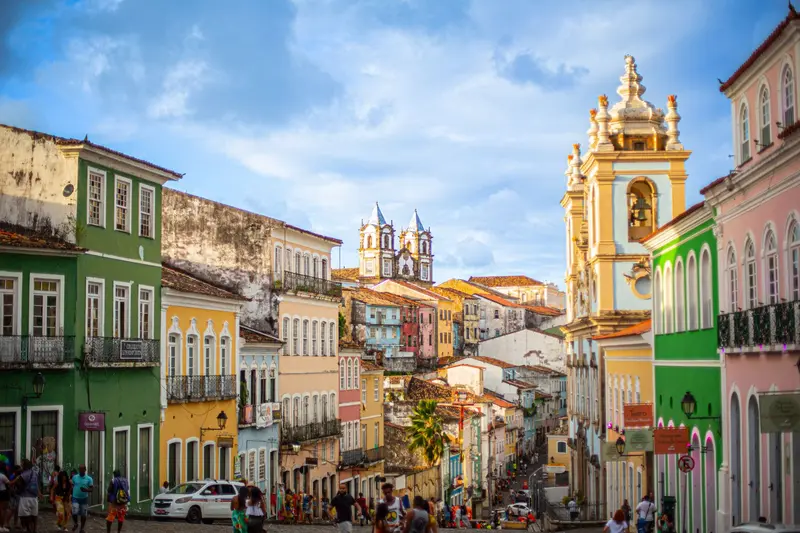
    Bahia is the heart of Afro-Brazilian culture: In the capital Salvador, Brazil's first capital from 1549 to 1763, Candomblé, Capoeira, Samba de Roda, and a cuisine featuring dendê palm oil shape daily life.

    by Felix Gillen

    1. Home
    2. Destinations
    3. Brazil
    4. Bahia
    Bahia is the heart of Afro-Brazilian culture: In the capital Salvador, Brazil's first capital from 1549 to 1763, Candomblé, Capoeira, Samba de Roda, and a cuisine featuring dendê palm oil shape daily life. Inland, the table mountains of Chapada Diamantina rise with waterfalls, caves, and the old diamond town of Lençóis.
    Brazil travel guideSee the round tripPlan a trip with Bahia

    Contents

    • Places in the region
    • Round trips
    • Nearby
    Chapada Diamantina and Lençóis

    Photo by Gabriel Victor on Pexels

    Place 1 of 2

    Chapada Diamantina and Lençóis

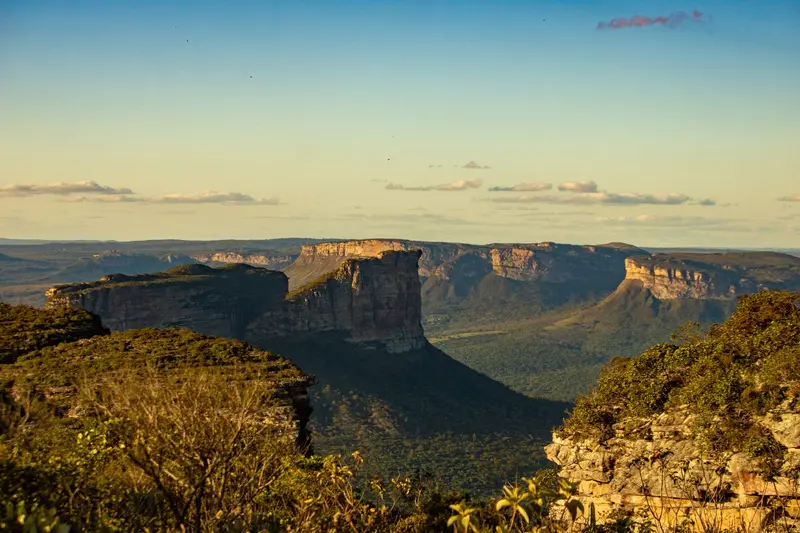
    Chapada Diamantina, in the interior of Bahia, is a plateau with table mountains, waterfalls, caves, and clear spring-fed pools, about six bus hours west of Salvador. The National Park was established in 1985 and covers about 152,000 hectares.

    Discover
    Salvador da Bahia

    Photo by LEONARDO DOURADO on Pexels

    Place 2 of 2

    Salvador da Bahia

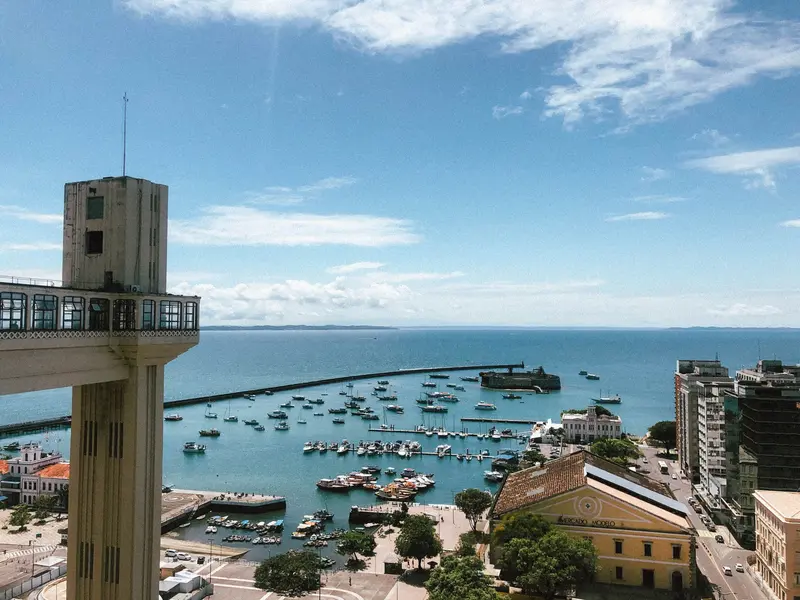
    The Federal Foreign Office explicitly lists Salvador among cities with high crime rates; before your trip, consult the travel advice linked on the country page.

    Discover

    Round trips through this region

    Brazil Classics: Rio, Costa Verde, Iguaçu and Bahia

    Brazil Classics: Rio, Costa Verde, Iguaçu and Bahia

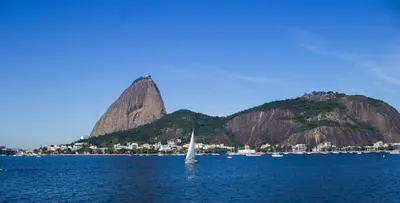
    The route connects the four destinations most travelers come to Brazil for: Rio de Janeiro with Sugarloaf Mountain and Corcovado, the colonial town of Paraty and car-free Ilha Grande on the Costa Verde, the Iguaçu Falls and Bahia with Salvador's historic old town and the table mountains of Chapada Diamantina. You travel the coast by bus, and cover long distances by domestic flight.

    17 Days
    6 stops
    Open jaw

    Arnaldo Silva·Pexels

    Nearby

    Recife and Olinda

    Recife and Olinda

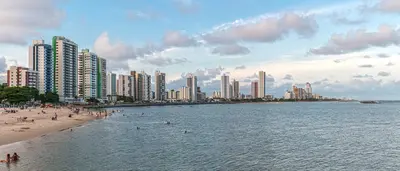
    The Federal Foreign Office lists Recife among major cities with high crime; the warnings are linked on the country page.Recife, the capital of Pernambuco in the northeast, and Olinda, located a few kilometers north, are two sides of a journey: Recife with its port quarter Recife Antigo, museums and Frevo, Olinda with an old town of churches and monasteries on green hills above the sea. Olinda was founded in 1535 and has been a UNESCO World Heritage site since 1982.For Carnival, giant puppets dance through Olinda's alleys; the oldest Boneco, the Homem da Meia-Noite, has participated since 1932. In Recife, the site of America's first synagogue, founded in 1636, is on Rua do Bom Jesus.

    Wilfredor·CC BY-SA 4.0

    Ouro Preto

    Ouro Preto

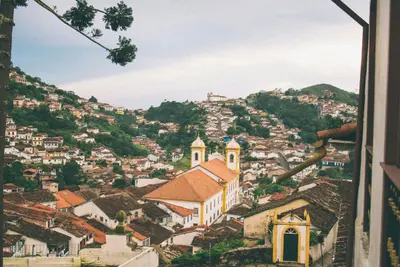
    Ouro Preto in Minas Gerais, southeast of Belo Horizonte, is the most renowned of Brazil's baroque gold cities. Steep cobblestone streets connect squares and hills with numerous churches. In 1980, it became Brazil's first cultural property to be designated a UNESCO World Heritage site.From 1720 to 1897, Ouro Preto served as the capital of Minas Gerais and the heart of the gold rush; in 1789, it was the setting for the Inconfidência Mineira, a conspiracy against the Portuguese Crown. The sculptor and architect Aleijadinho designed the Igreja de São Francisco de Assis here.

    Nathalia Segato·Unsplash

    Minas Gerais

    The state of Minas Gerais, in the hinterland north of Rio, was the center of the Brazilian gold rush in the 18th century. From this period date the baroque mountain towns of Ouro Preto, Congonhas, Tiradentes, and Diamantina, featuring churches by the sculptor and architect Aleijadinho. Four World Heritage Sites are located here: Ouro Preto (1980), the Sanctuary of Congonhas (1985), Diamantina (1999), and Oscar Niemeyer's Pampulha Modern Ensemble in Belo Horizonte (2016).Also found here are the Inhotim Art Park near Brumadinho and a cuisine renowned throughout Brazil, from Pão de queijo to Queijo Minas, whose artisanal production was recognized by UNESCO in 2024 as intangible cultural heritage.
    Brasília

    Brasília

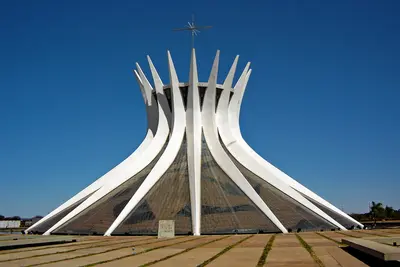
    Brasília, Brazil's capital, is a modernist planned city located on an interior plateau. Built from 1956 to 1960 following Lúcio Costa's Plano Piloto, its government buildings were designed by Oscar Niemeyer. A UNESCO World Heritage site since 1987.You come for the architecture: the Cathedral with its 16 parabolic concrete columns, the National Congress, and the Itamaraty Palace. Both government buildings offer free guided tours of their interiors.

    Mariordo (Mario Roberto Durán Ortiz)·CC BY-SA 4.0

    Downtown and Port

    Centro is Rio's historic heart: Here stand the São Bento Monastery, the Paço Imperial, where King João VI resided from 1808, the Candelária Church, and the Belle Époque halls of Confeitaria Colombo. North of it lies the revamped port district with the Museu do Amanhã and "Pequena África" around Cais do Valongo and Pedra do Sal.The Foreign Office points out that the district is deserted and unsafe after business hours, on weekends, and public holidays; therefore, visit it on weekdays during the day.

    Your next steps

    Bahia is in Brazil. Ways to carry on from here.

    • More in Brazil

      Highlights, areas, routes and the best time to travel for all of Brazil.

      Brazil travel guide
    • Round trips with Bahia

      One route passes through Bahia, with stops, nights and a map.

      See the round trip
    • Plan a trip with Bahia

      The Guide asks about season, length and who is coming, and suggests a trip with Bahia.

      Plan the trip

    Sources & method

    • Photos: Pexels. Each photo carries its credit.
    • The content is based on web research from public, traceable sources. How the content is made · The role of AI