ExploreTravel GuidesMy Trips
    de|en
    All Places & RegionsAbout FernwehFAQPrivacy PolicyImprint
    ExploreTravel GuidesMy Trips
    Borobudur
    Point of Interest

    Borobudur

    Borobudur, located in the Kedu Plain, is the world's largest Buddhist temple complex and a UNESCO World Heritage site.

    More
    1. Home
    2. Destinations
    3. Indonesia
    4. Central Java and Yogyakarta
    5. Borobudur
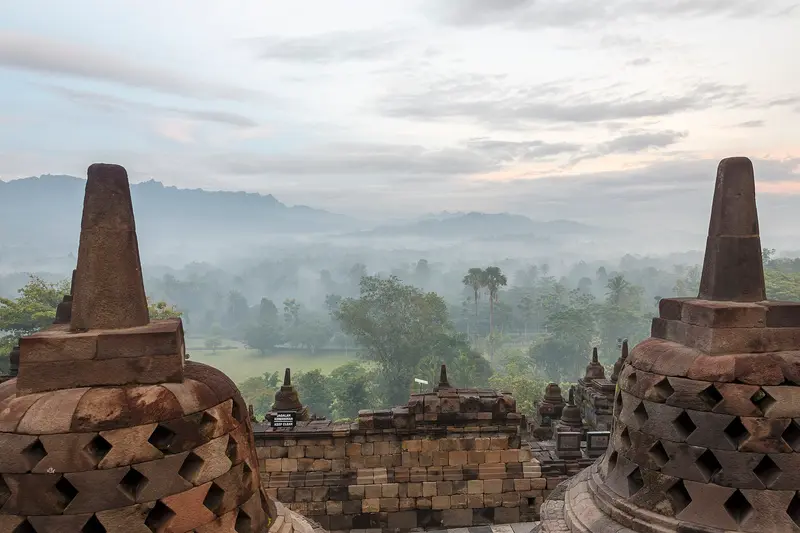
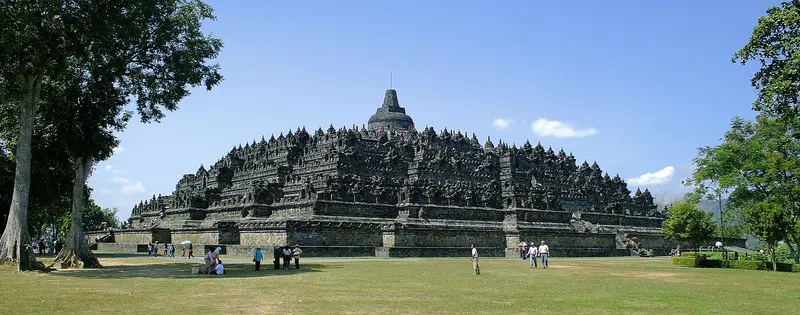
    Borobudur, located in the Kedu Plain, is the world's largest Buddhist temple complex and a UNESCO World Heritage site. Built in the 8th and 9th centuries, the step pyramid features over 2,600 reliefs and 72 openwork stupas, surrounded by volcanoes and rice fields.
    Borobudur is located in the village of the same name in Magelang Regency, about an hour northwest of Yogyakarta. The temple stands on a hill in the middle of a park, surrounded by rice fields, coconut palms, and the volcanoes Merapi, Merbabu, Sumbing, and Sindoro. Two smaller temples, Pawon and Mendut, lie on a line eastward. The village offers guesthouses and Warungs, so you can stay locally for an early visit. The surroundings can be explored well by bike or on village walks.

    Sights in Borobudur

    Discover the most important sights and attractions

    Candi Borobudur
    CEphoto, Uwe Aranas / Wikimedia Commons / CC BY-SA 3.0
    Historic Landmark

    Candi Borobudur

    Buddhist step pyramid from the 8th-9th centuries with nine terraces, over 2,600 reliefs, and 72 openwork stupas containing Buddha statues. Access to the terraces only with an additional ticket within a time slot.
    Open in Google Maps
    Candi Pawon
    Jakub Hałun / Wikimedia Commons / CC BY-SA 4.0
    Historic Landmark

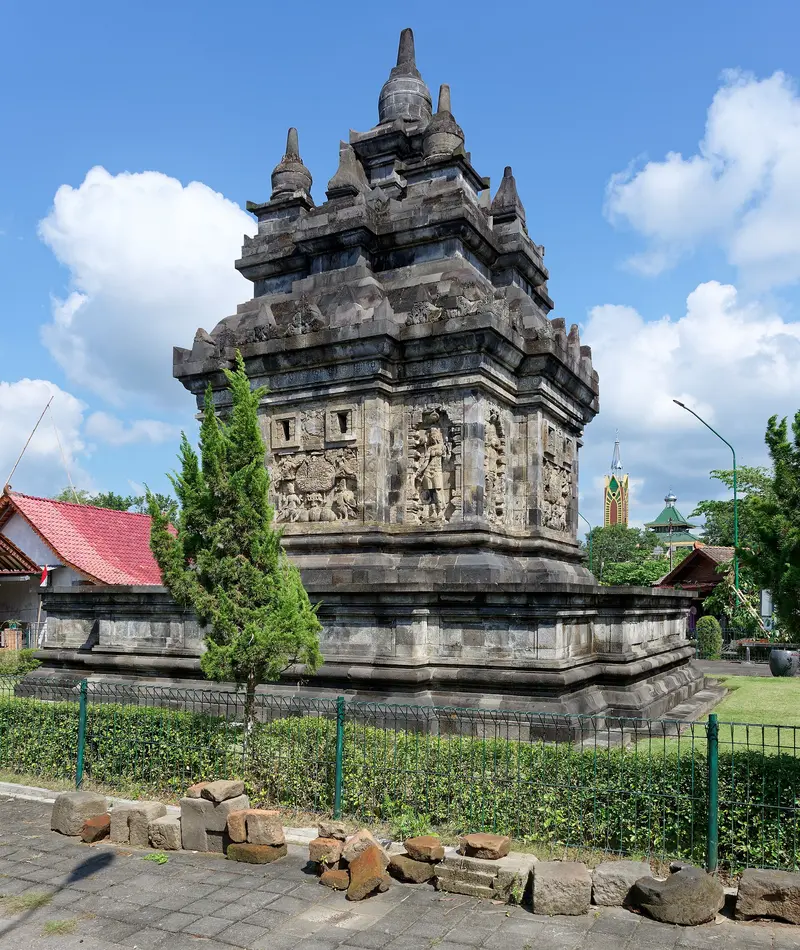
    Candi Pawon

    Small, finely decorated temple between Mendut and Borobudur, which lies on an axis with both. Usually quiet and explored in just a few minutes.
    Open in Google Maps
    Punthuk Setumbu
    Ridwanad / Wikimedia Commons / CC BY-SA 4.0
    Attraction

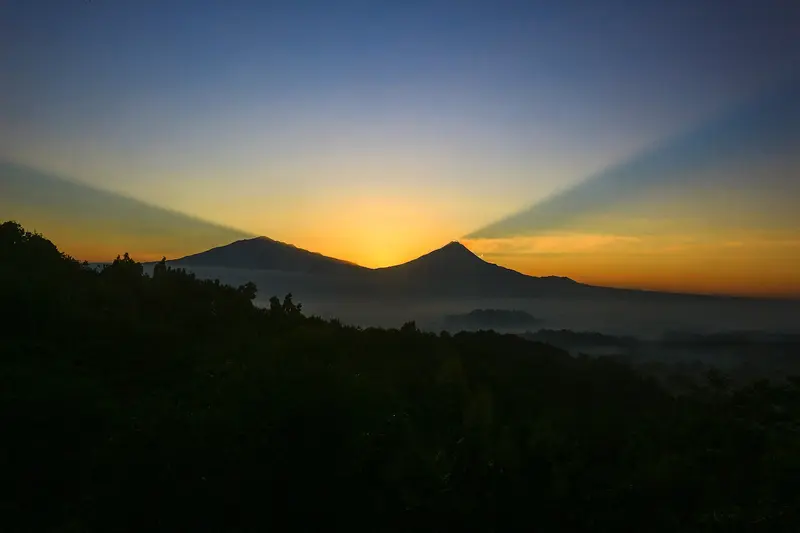
    Punthuk Setumbu

    Viewpoint hill in the Menoreh Hills west of Borobudur. At sunrise, you look out over the misty valley onto the temple and the volcanoes beyond. The short climb takes about 15 minutes.
    Open in Google Maps
    Candi Mendut
    CEphoto, Uwe Aranas / Wikimedia Commons / CC BY-SA 3.0
    Place of Worship

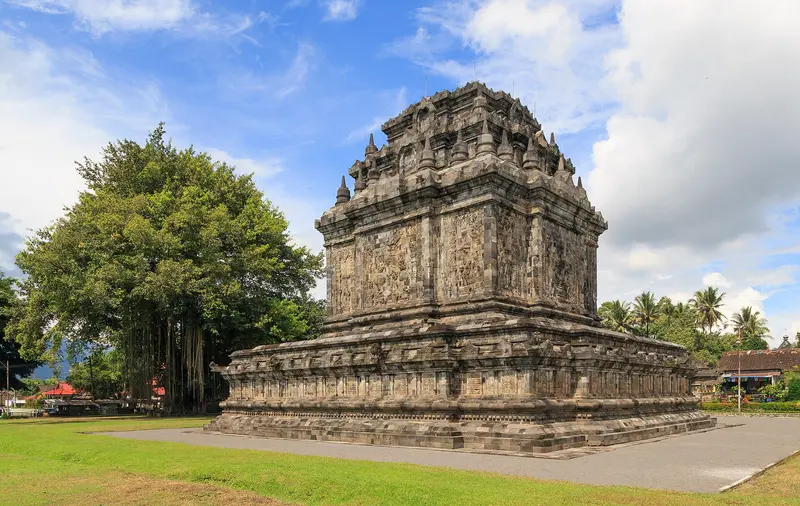
    Candi Mendut

    A small 9th-century Buddhist temple located three kilometers east of Borobudur. Inside, it houses three large stone statues, including a Buddha seated in a European pose. An active monastery lies next door.
    Open in Google Maps

    Sights in Borobudur

    Discover the most important sights and attractions

    Candi Borobudur
    CEphoto, Uwe Aranas / Wikimedia Commons / CC BY-SA 3.0
    Historic Landmark

    1Candi Borobudur

    Buddhist step pyramid from the 8th-9th centuries with nine terraces, over 2,600 reliefs, and 72 openwork stupas containing Buddha statues. Access to the terraces only with an additional ticket within a time slot.
    Open in Google Maps
    Candi Pawon
    Jakub Hałun / Wikimedia Commons / CC BY-SA 4.0
    Historic Landmark

    2Candi Pawon

    Small, finely decorated temple between Mendut and Borobudur, which lies on an axis with both. Usually quiet and explored in just a few minutes.
    Open in Google Maps
    Punthuk Setumbu
    Ridwanad / Wikimedia Commons / CC BY-SA 4.0
    Attraction

    3Punthuk Setumbu

    Viewpoint hill in the Menoreh Hills west of Borobudur. At sunrise, you look out over the misty valley onto the temple and the volcanoes beyond. The short climb takes about 15 minutes.
    Open in Google Maps
    Candi Mendut
    CEphoto, Uwe Aranas / Wikimedia Commons / CC BY-SA 3.0
    Place of Worship

    4Candi Mendut

    A small 9th-century Buddhist temple located three kilometers east of Borobudur. Inside, it houses three large stone statues, including a Buddha seated in a European pose. An active monastery lies next door.
    Open in Google Maps

    Restaurants in Borobudur

    Essen & Trinken

    Village Warungs

    Near the park entrance, local eateries offer Nasi Goreng, Soto, and Gado-Gado.

    Coffee from Magelang

    Coffee and tobacco grow in the area, with some cafés on the village outskirts roasting local beans.

    Geschichte und Bedeutung

    A Mandala of StoneBorobudur was built between approximately 780 and 830 under the Shailendra Dynasty. The complex, built from some two million stone blocks, forms a stone mandala: Six square terraces with over 2,600 reliefs depict the life of Buddha and Buddhist teachings; above these, three circular terraces with 72 stupas surround a central main stupa. Pilgrims circumambulate the temple clockwise from bottom to top, from the worldly to enlightenment.After the decline of the empire, the temple fell into oblivion, buried under volcanic ash and jungle, until the British under Stamford Raffles had it uncovered in 1814. A major restoration, with the support of UNESCO, followed from 1975 to 1982, and since 1991, Borobudur has been a World Heritage site. During the Buddhist festival of Waisak in May or June, monks proceed in a procession from Mendut to the temple.

    Plan a Visit

    Tickets und RegelnAnfahrt: Von Yogyakarta rund eine bis eineinhalb Stunden mit Fahrer oder Bus.Tickets: Das Parkticket erlaubt den Blick vom Fuß des Tempels. Den Aufstieg auf die Terrassen gibt es nur mit Zusatzticket in festen Zeitfenstern und begrenzter Tageszahl, die du online vorab buchen solltest.Vor Ort: Auf den Terrassen sind spezielle Sandalen vorgeschrieben, die ausgegeben werden. Stupas und Reliefs dürfen nicht berührt werden.Zeit: Am frühen Morgen ist es kühler und leerer, am Wochenende und in Schulferien sehr voll.

    Trips & Activities

    Sunrise at Punthuk Setumbu

    Vom Hügel westlich des Tempels siehst du Borobudur bei klarem Wetter aus dem Morgennebel auftauchen, mit Merapi und Merbabu im Hintergrund.

    Mendut and Pawon

    The two smaller temples lie three kilometers east and can be reached on foot or by bike.

    Village ride

    Guided bike tours lead through rice fields to potteries, tofu makers, and small workshops.

    Accommodations in Borobudur

    Find perfect stay in Borobudur

    Booking.com* (Affiliate link)
    Search Hotels
    Agoda* (Affiliate link)
    Search Hotels
    Airbnb
    Vacation Rentals

    * Affiliate link: if you book through it, we earn a small commission. The price stays the same for you.
    Nearby

    Central Java and Yogyakarta

    Central Java and Yogyakarta

    Central Java, including the Yogyakarta Special Region, is the historical heartland of Javanese culture. The Borobudur and Prambanan temples, the Sultan's courts of Yogyakarta and Solo, and the active Merapi volcano are all located here in a compact area.
    Merapi

    Merapi

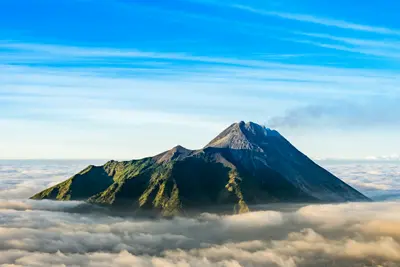
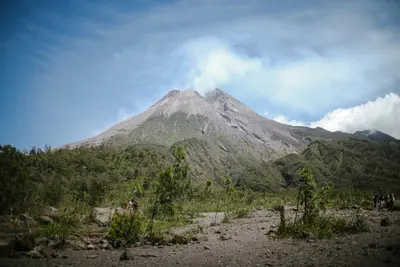
    Merapi, north of Yogyakarta, stands at nearly 2,900 m and is one of Indonesia's most active volcanoes. On its southern flank, museums and traces from the 2010 eruption speak of life and danger on the mountain.
    Yogyakarta
    Crisco 1492 / Wikimedia Commons / CC BY-SA 3.0

    Yogyakarta

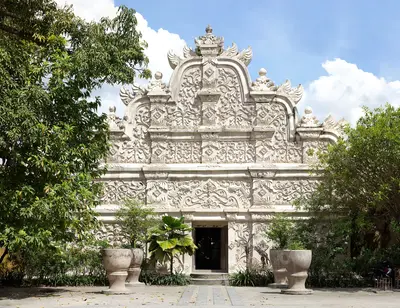
    Yogyakarta, or Jogja for short, is home to a still-reigning Sultan and a hub of Javanese art and education. Kraton, batik workshops, shadow puppetry, and a lively student scene shape the city, which is also the starting point for Borobudur and Prambanan.
    Prambanan
    CEphoto, Uwe Aranas / Wikimedia Commons / CC BY-SA 3.0

    Prambanan

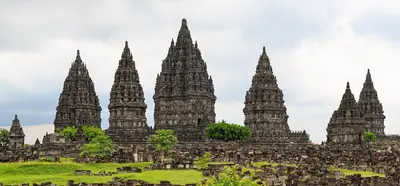
    Prambanan, east of Yogyakarta, is Indonesia's largest Hindu temple complex and a UNESCO World Heritage site. The pointed towers of the 9th-century main complex are dedicated to Shiva, Vishnu, and Brahma; nearby lie other temples such as Sewu and Plaosan.
    Dieng Plateau

    Dieng Plateau

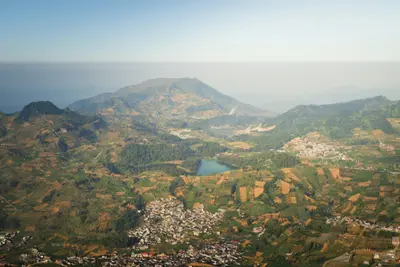
    The Dieng Plateau is located at an altitude of around 2,000 m in an old volcanic caldera in Central Java. Here you'll find some of the island's oldest Hindu temples, steaming craters, colorful crater lakes, and vegetable fields on steep slopes. Nights are cool; during the dry season, it can freeze at night.