ExploreTravel GuidesMy Trips
    de|en
    All Places & RegionsAbout FernwehFAQPrivacy PolicyImprint
    ExploreTravel GuidesMy Trips
    Prambanan
    Point of Interest

    Prambanan

    Prambanan, east of Yogyakarta, is Indonesia's largest Hindu temple complex and a UNESCO World Heritage site.

    More
    1. Home
    2. Destinations
    3. Indonesia
    4. Central Java and Yogyakarta
    5. Prambanan
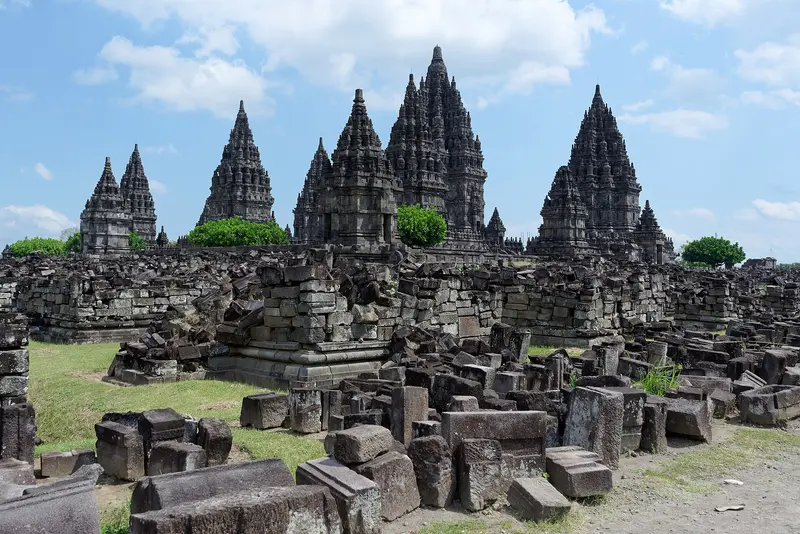
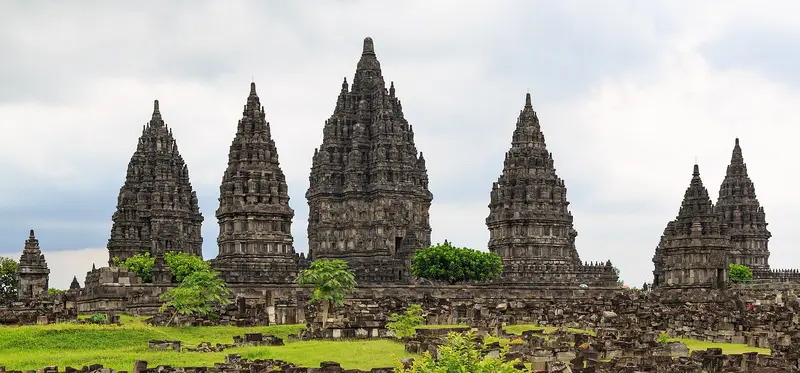
    Prambanan, east of Yogyakarta, is Indonesia's largest Hindu temple complex and a UNESCO World Heritage site. The pointed towers of the 9th-century main complex are dedicated to Shiva, Vishnu, and Brahma; nearby lie other temples such as Sewu and Plaosan.
    Prambanan is located about 17 kilometers east of Yogyakarta directly on the main road to Solo, on the border between the Special Region of Yogyakarta and Central Java. The archaeological park comprises the main Hindu complex as well as the Buddhist temples Lumbung, Bubrah, and Sewu to the north, reachable by a small train and rental bikes. In the wider surroundings are scattered Plaosan, Sari, Kalasan, and the Ratu Boko plateau. For the park alone, you'll need two to three hours; with the surrounding temples, a whole day. In the evenings, the Ramayana Ballet is performed on the open-air stage in front of the illuminated towers.

    Sights in Prambanan

    Discover the most important sights and attractions

    Candi Prambanan
    Jakub Hałun / Wikimedia Commons / CC BY-SA 4.0
    Temple

    Candi Prambanan

    9th-century Hindu main complex with the pointed towers of temples for Shiva, Vishnu, and Brahma, as well as their mounts. The reliefs on the Shiva temple depict the Ramayana.
    Open in Google Maps
    Candi Sewu
    Crisco 1492 / Wikimedia Commons / CC BY-SA 3.0
    Place of Worship

    Candi Sewu

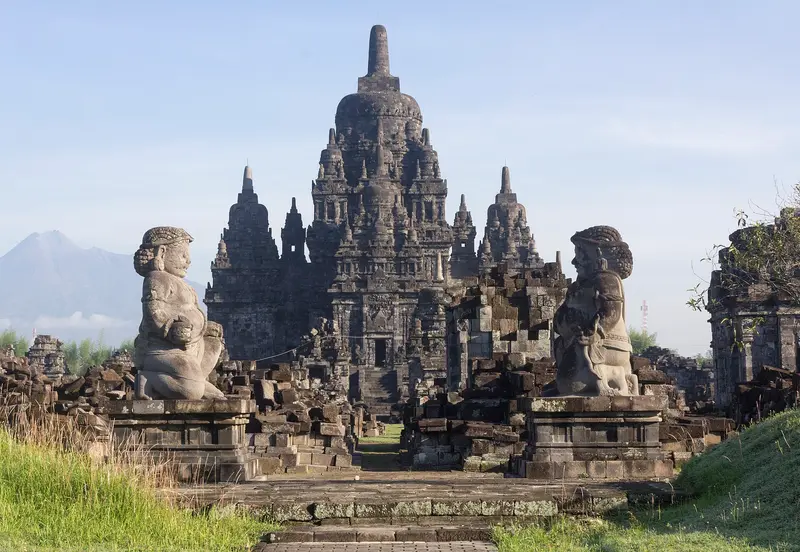
    Buddhist temple complex in the north of the park, Indonesia's second largest after Borobudur. Around the main temple stand rows of smaller shrines, guarded by paired guardian figures at the entrance.
    Open in Google Maps
    Candi Plaosan
    Yasuspade / Wikimedia Commons / CC BY-SA 4.0
    Historic Landmark

    Candi Plaosan

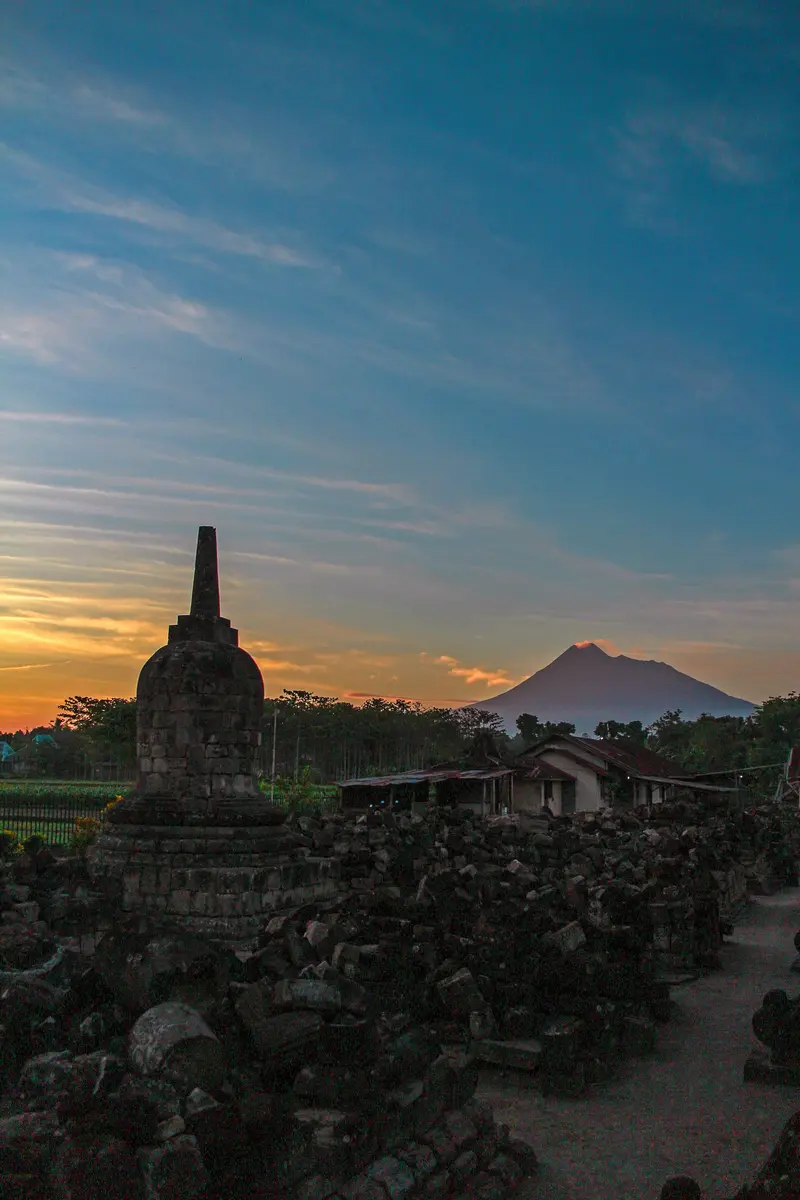
    Buddhist twin temples approximately one kilometer northeast of Prambanan, surrounded by small stupas and rice fields. Mostly quiet, especially beautiful in the early morning.
    Open in Google Maps
    Ratu Boko
    M Yusril Mirza / Wikimedia Commons / CC BY-SA 4.0
    Attraction

    Ratu Boko

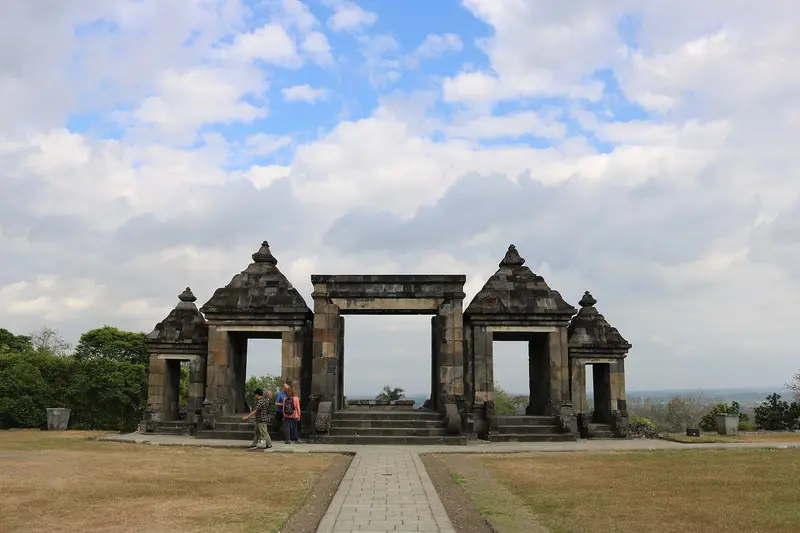
    Ruins of a palace or monastery complex from the 8th and 9th centuries on a plateau south of Prambanan. The double entrance gate, bathing pools, and caves are widely scattered; the view extends to Merapi.
    Open in Google Maps
    Candi Kalasan
    Crisco 1492 / Wikimedia Commons / CC BY-SA 3.0
    Attraction

    Candi Kalasan

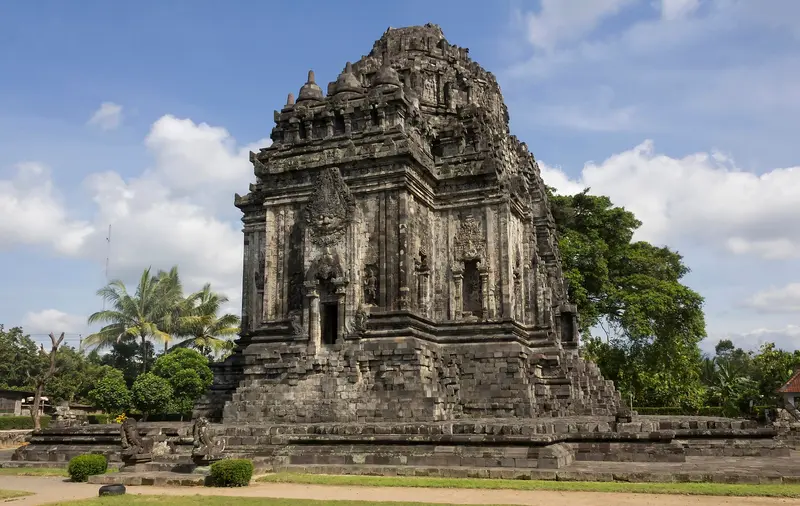
    One of the region's oldest Buddhist temples, located on the road to Yogyakarta and dated by an inscription to 778. Remains of the original stucco layer are preserved on its facade.
    Open in Google Maps

    Sights in Prambanan

    Discover the most important sights and attractions

    Candi Prambanan
    Jakub Hałun / Wikimedia Commons / CC BY-SA 4.0
    Temple

    1Candi Prambanan

    9th-century Hindu main complex with the pointed towers of temples for Shiva, Vishnu, and Brahma, as well as their mounts. The reliefs on the Shiva temple depict the Ramayana.
    Open in Google Maps
    Candi Sewu
    Crisco 1492 / Wikimedia Commons / CC BY-SA 3.0
    Place of Worship

    2Candi Sewu

    Buddhist temple complex in the north of the park, Indonesia's second largest after Borobudur. Around the main temple stand rows of smaller shrines, guarded by paired guardian figures at the entrance.
    Open in Google Maps
    Candi Plaosan
    Yasuspade / Wikimedia Commons / CC BY-SA 4.0
    Historic Landmark

    3Candi Plaosan

    Buddhist twin temples approximately one kilometer northeast of Prambanan, surrounded by small stupas and rice fields. Mostly quiet, especially beautiful in the early morning.
    Open in Google Maps
    Ratu Boko
    M Yusril Mirza / Wikimedia Commons / CC BY-SA 4.0
    Attraction

    4Ratu Boko

    Ruins of a palace or monastery complex from the 8th and 9th centuries on a plateau south of Prambanan. The double entrance gate, bathing pools, and caves are widely scattered; the view extends to Merapi.
    Open in Google Maps
    Candi Kalasan
    Crisco 1492 / Wikimedia Commons / CC BY-SA 3.0
    Attraction

    5Candi Kalasan

    One of the region's oldest Buddhist temples, located on the road to Yogyakarta and dated by an inscription to 778. Remains of the original stucco layer are preserved on its facade.
    Open in Google Maps

    Restaurants in Prambanan

    Food and Drink

    Warungs at Park Entrance

    Around the entrance, stalls sell Soto, Bakso, Gado-Gado, and fresh coconuts.

    Gudeg

    For a proper meal, many drive back to Yogyakarta or eat on the road to Solo.

    History and Significance

    Temples of the TrimurtiPrambanan was built around 850 under King Rakai Pikatan of the Sanjaya Dynasty, shortly after Borobudur. The three main temples are dedicated to Shiva, Vishnu, and Brahma; the Shiva temple is about 47 meters tall. The reliefs on the galleries depict the Ramayana epic. According to legend, the petrified Princess Roro Jonggrang, who sought to deceive an unwanted suitor, stands within the Shiva temple.Earthquakes and volcanic eruptions caused the temples to collapse; reconstruction began in the 1930s and continues to this day. During the 2006 earthquake, parts were damaged again. Since 1991, the complex has been a UNESCO World Heritage site. The juxtaposition of Buddhist and Hindu temples shows the coexistence of both religions in ancient Mataram.

    Plan a visit

    Getting There and TicketsHow to Get There: Approximately 40 minutes from Yogyakarta by Grab or private driver. Trans-Jogja Bus 1A goes directly to the temple.Tickets: The ticket is valid for the main complex and the temples within the park; combo tickets with Borobudur and Ratu Boko are available.Best Time to Visit: Early morning or late afternoon offers the best light and lower temperatures.Ramayana Ballet: Performed on the open-air stage during the dry season, and in the indoor hall during the rainy season. Book tickets in advance.

    Excursions & Activities

    Ratu Boko at Sunset

    From the palace complex plateau, you gaze across the plain to Prambanan and Merapi.

    Plaosan and Sewu by bike

    The Buddhist temples north of the park are quieter and accessible on side roads between rice fields.

    Onward to Solo

    The royal city of Surakarta is located an hour east on the same road.

    Accommodations in Prambanan

    Find perfect stay in Prambanan

    Booking.com* (Affiliate link)
    Search Hotels
    Agoda* (Affiliate link)
    Search Hotels
    Airbnb
    Vacation Rentals

    * Affiliate link: if you book through it, we earn a small commission. The price stays the same for you.
    Nearby

    Yogyakarta
    Crisco 1492 / Wikimedia Commons / CC BY-SA 3.0

    Yogyakarta

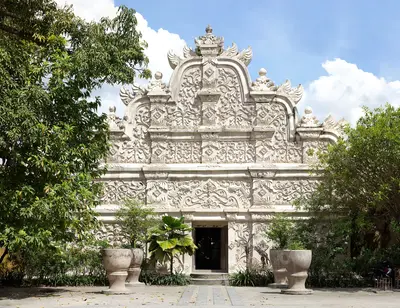
    Yogyakarta, or Jogja for short, is home to a still-reigning Sultan and a hub of Javanese art and education. Kraton, batik workshops, shadow puppetry, and a lively student scene shape the city, which is also the starting point for Borobudur and Prambanan.
    Central Java and Yogyakarta

    Central Java and Yogyakarta

    Central Java, including the Yogyakarta Special Region, is the historical heartland of Javanese culture. The Borobudur and Prambanan temples, the Sultan's courts of Yogyakarta and Solo, and the active Merapi volcano are all located here in a compact area.
    Merapi

    Merapi

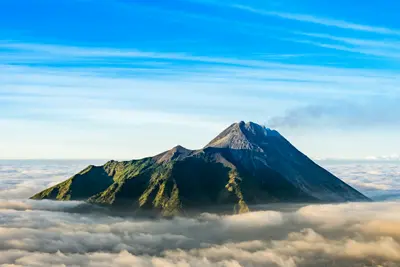
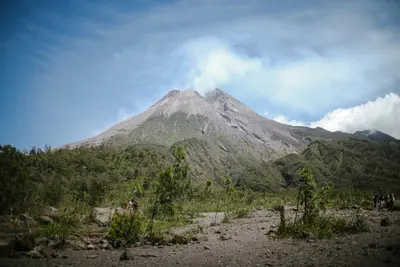
    Merapi, north of Yogyakarta, stands at nearly 2,900 m and is one of Indonesia's most active volcanoes. On its southern flank, museums and traces from the 2010 eruption speak of life and danger on the mountain.
    Borobudur

    Borobudur

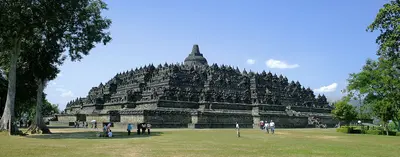
    Borobudur, located in the Kedu Plain, is the world's largest Buddhist temple complex and a UNESCO World Heritage site. Built in the 8th and 9th centuries, the step pyramid features over 2,600 reliefs and 72 openwork stupas, surrounded by volcanoes and rice fields.
    Solo (Surakarta)

    Solo (Surakarta)

    Solo, officially Surakarta, is, alongside Yogyakarta, the second hub of Javanese court culture. Two royal houses, batik districts, and a distinctive cuisine characterize the city, which is quieter and less touristy than its neighbor.