ExploreTravel GuidesPlan a trip
    de|en
    All Places & RegionsAbout FernwehFAQPrivacy PolicyImprint
    ExploreTravel GuidesPlan a trip
    Wilsede & Totengrund
    Mars 2002 / Wikimedia Commons / CC BY-SA 3.0

    Germany

    Wilsede & Totengrund

    Point of InterestNature

    The heath village of Wilsede, a district of Bispingen with 29 inhabitants (as of 2020), is located in the heart of the Lüneburg Heath Nature Reserve and is largely closed to motor vehicles.

    1. Home
    2. Destinations
    3. Germany
    4. Lüneburg Heath
    5. Wilsede & Totengrund
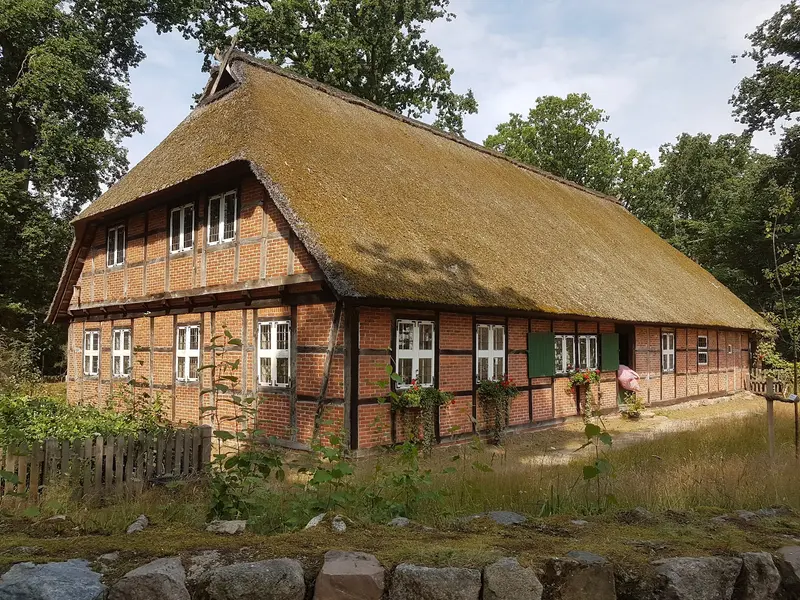
    The heath village of Wilsede, a district of Bispingen with 29 inhabitants (as of 2020), is located in the heart of the Lüneburg Heath Nature Reserve and is largely closed to motor vehicles. You can reach it on foot, by bike, or by horse-drawn carriage from the hiking car parks of the surrounding villages. In the Dat ole Huus Heath Museum, you can see how a heath farm lived around 1850.About one kilometer to the southeast lies the Totengrund, a 30-hectare basin with heathland and numerous juniper bushes. Pastor Wilhelm Bode purchased it in 1906 with donations to protect it from development. Nearby rises the Wilseder Berg, at 169.2 meters, the highest elevation in the Lüneburg Heath.

    Sights in Wilsede & Totengrund

    Discover the most important sights and attractions

    Totengrund
    Attraction

    1Totengrund

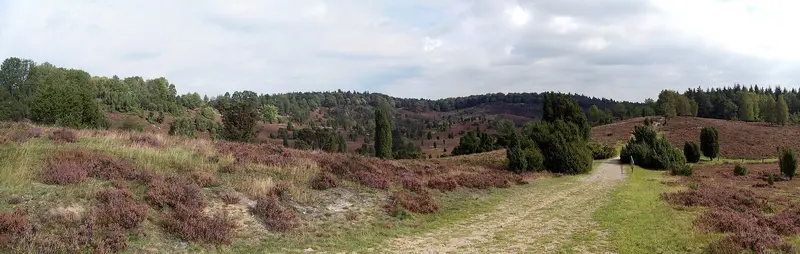
    The 30-hectare valley basin, approx. one km southeast of Wilsede, is covered with heather and many juniper bushes, and during heather bloom in August, you look from the edge over a sea of blossoms. Pastor Wilhelm Bode bought it in 1906 with donations, and cars are not allowed in the nature reserve.
    Open in Google Maps
    Heath Museum Dat ole Huus
    Museum

    2Heath Museum Dat ole Huus

    The farmhouse, moved to Wilsede in 1907, shows life and work on a typical heath farm around 1850.
    Open in Google Maps

    Restaurants in Wilsede & Totengrund

    Accommodations in Wilsede & Totengrund

    Find perfect stay in Wilsede & Totengrund

    Booking.com* (Affiliate link)
    Search Hotels
    Agoda* (Affiliate link)
    Search Hotels
    Airbnb
    Vacation Rentals

    * Affiliate link: if you book through it, we earn a small commission. The price stays the same for you.

    Campgrounds in Wilsede & Totengrund

    Find perfect campground in Wilsede & Totengrund

    Search via Google Maps
    Campgrounds nearby (15km)
    Camping.info
    Find Campgrounds
    Park4Night
    RV Parks & Camping

    Nearby

    Lüneburg Heath

    Lüneburg Heath

    The Lüneburg Heath is located in the northeast of Lower Saxony between the Elbe and Aller rivers, within easy reach of Hamburg, Bremen, and Hanover. Heidschnucken sheep graze the open areas, preventing trees from overgrowing the heath. The heath is in full bloom, especially in August and September.At its heart is the Lüneburg Heath Nature Reserve, founded in 1921, surrounding the Wilseder Berg, which at 169.2 metres is the highest elevation in the heath. On the edge of the heath lies the Hanseatic city of Lüneburg, which grew rich from its salt and today boasts around 1300 listed brick houses.
    Lüneburg

    Lüneburg

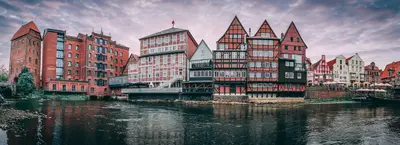
    The Hanseatic city of Lüneburg is located on the Ilmenau, about 50 kilometers southeast of Hamburg, and has around 80,000 inhabitants. For centuries, it was the sole supplier of salt for the North German region, making it wealthy; the saltworks only closed in 1980. Around 1300 listed brick houses tell of this heyday.Stroll across Am Sande square with its stepped and spiral gables, visit Northern Germany's largest medieval town hall, and settle down in the Wasserviertel by the Old Crane and Stintmarkt on the Ilmenau.

    HafenCity & Speicherstadt

    The HafenCity has been developing since its groundbreaking on April 9, 2001, on the former Großer Grasbrook, a port area of approximately 157 hectares, which was released from the Free Port on January 1, 2003, to allow for residential construction. Since March 1, 2008, it has been its own district. To its north lies the Speicherstadt, opened in 1888, for which the residential quarters Kehrwieder and Wandrahm were cleared starting in 1883.You'll walk across the Magellan and Marco Polo Terraces along the water, visit the International Maritime Museum in Kaispeicher B, and learn at the Speicherstadtmuseum how storekeepers stored coffee, tea, and rubber. The U4 stops at the stations Überseequartier, HafenCity Universität, and Elbbrücken.

    St. Pauli

    St. Pauli, located directly on the Elbe between the city center and Altona, has been a Hamburg district since 1894. The former suburb of Hamburger Berg has borne this name since 1833. The Reeperbahn recalls the rope makers who settled here from 1633 and spun ship ropes. Today, the Kiez around Reeperbahn, Große Freiheit and Spielbudenplatz, FC St. Pauli with its Millerntor Stadium, and the harbor define the district, which is considered politically left-leaning, diverse, and tolerant.During the day, you can climb the Grüner Bunker on Feldstraße or visit Beatles-Platz, while evenings offer a choice between the theaters on Spielbudenplatz, live music clubs, and Kiez pubs. The U3 stops at Landungsbrücken, St. Pauli, and Feldstraße stations, and S-Bahn lines S1 and S3 stop at Reeperbahn station.

    Altona & Ottensen

    Altona originated around 1535 as a fishing settlement. On August 23, 1664, it received city rights from Danish King Frederick III and grew into the second-largest city in the Danish realm. It only became part of Hamburg in 1938. Neighboring Ottensen, first mentioned in 1310 as the village of Ottenhusen, developed into an industrial hub after 1866 and became part of Altona in 1889. Today, Ottensen, with some 35,000 residents across 2.9 square kilometers, is a popular district for shopping and going out.From Altona Balcony, you can see across the Elbe to the Köhlbrand Bridge; along the Palmaille stand grand bourgeois buildings from the early 19th century. In Ottensen, you'll find the Fabrik cultural center with its crane and the Zeise Kinos featuring a ship's propeller from the former propeller factory. The S-Bahn lines S1, S2, and S3 stop at Altona Station.