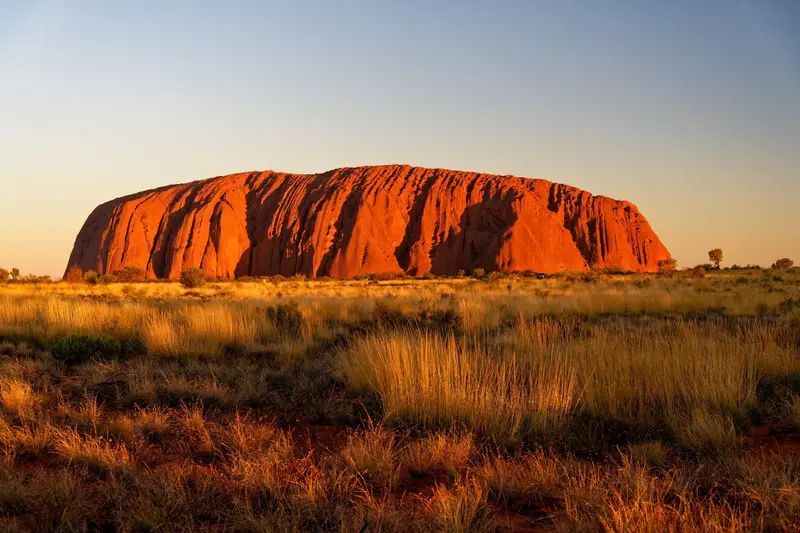
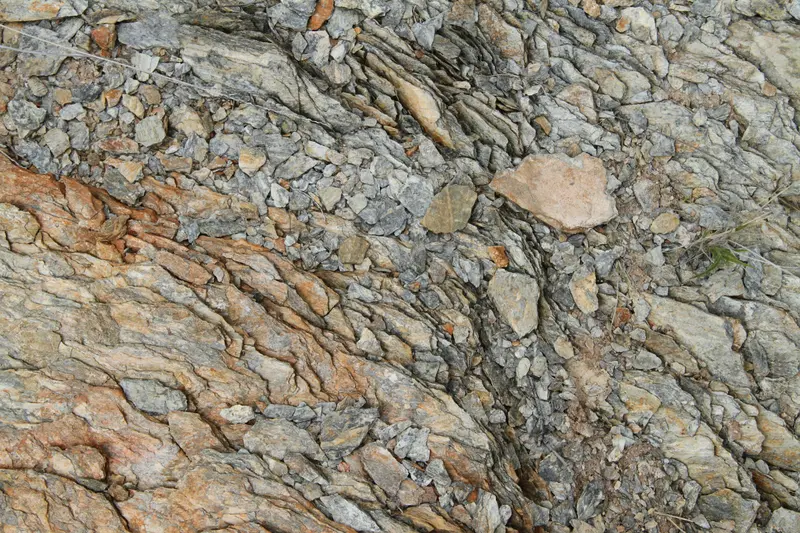
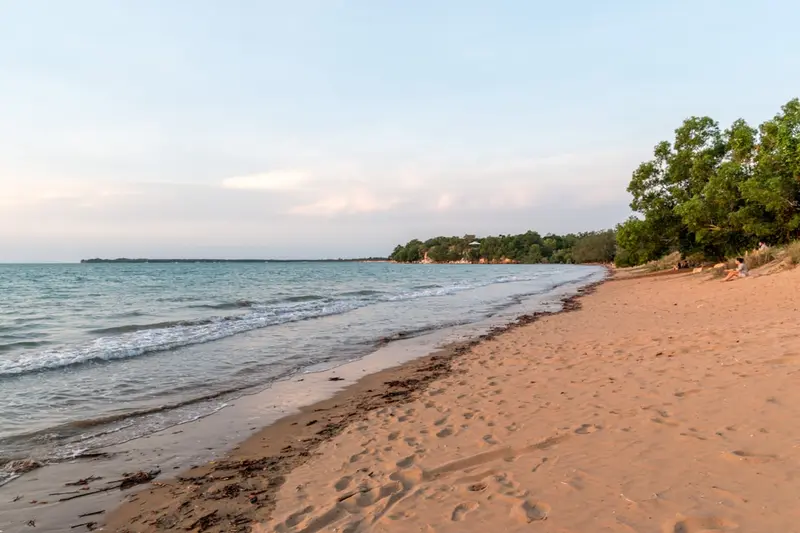
The route runs from Alice Springs through the gorges of the West MacDonnell Ranges to Kings Canyon, Uluru, and Kata Tjuta. You then fly to Darwin in the tropical North, from where Kakadu and Litchfield National Parks are nearby.
14 Days / 13 Nights
May–September
5 stops
Why This Route?
Connects the Red Centre and Tropical North in two weeks, without endless driving days.
Hidden Gems
Ormiston Gorge with waterhole in the West MacDonnell Ranges
Kata Tjuta Dune Viewing Area for sunrise
Mindil Beach Sunset Market in Darwin, Thursdays and Sundays in the dry season
Itinerary
Stop 1 • 2 Nights
Alice Springs
Town
Rich in culture and history. For adventure seekers and Perfect for an exciting city trip.
Alice Springs, Arrernte Mparntwe, is located almost exactly in the center of Australia, nestled between the MacDonnell Ranges. With around 25,000 residents, it is the largest town in the Outback and the starting point for tours to Uluru, Kings Canyon, and the West MacDonnell Ranges.The town itself is compact. Aboriginal art galleries, 1920s pioneer buildings, and the mostly dry riverbed of the Todd River define its center.
14 Sights
7 Restaurants
Culture and Heritage
Centre of Desert ArtThe Arrernte have lived in this place for tens of thousands of years, where several Dreaming tracks intersect. Today, Alice Springs is an important market for Aboriginal art from Central Australia. The Araluen Arts Centre exhibits works by Albert Namatjira and contemporary artists; community-run galleries in Todd Mall and the side streets sell directly. When buying, look for proof of provenance from the artists.European history begins in 1872 with the telegraph station on the Todd River. Institutions like the Royal Flying Doctor Service and the School of the Air demonstrate how life is organised in such isolation, and can be visited.
The West MacDonnell Ranges, known as Tjoritja in Arrernte, stretch approximately 160 km west of Alice Springs. Between the parallel mountain ranges are gorges with permanent waterholes, including Simpsons Gap, Standley Chasm, Ellery Creek Big Hole, and Ormiston Gorge.The Namatjira Drive provides access to most destinations via a sealed road, while the Larapinta Trail leads on foot over the ridgeline.
4 Sights
3 Restaurants
Culture & History
Land of the Western ArrernteThe Ranges are part of the Western Arrernte's land. Gorges, waterholes, and rocks are connected to creation stories, many of which are sacred. At the Ochre Pits, ochre has been mined for generations for ceremonies and body painting. Standley Chasm is located on land managed by the Iwupataka Land Trust and charges an entry fee.The National Park is jointly managed by the Traditional Owners and the NT Parks administration. The painter Albert Namatjira, a Western Arrernte man from Hermannsburg, popularized the colours of this landscape in his watercolors from the 1930s onwards.
For adventure seekers. Stunning nature and outdoors and Perfect for unwinding and relaxation.
Watarrka National Park is located at the western end of the George Gill Range, approximately 300 km northeast of Uluru. Its most famous destination is Kings Canyon, a sandstone gorge with walls up to 100 m high and a spring-fed waterhole inside.The land is home to the Luritja people. Nearby are the Kings Canyon Resort and several farm-stay accommodations.
3 Sights
1 Restaurant
Culture & Nature
The Luritja have used the area for at least 20,000 years. Springs and waterholes like Kathleen Springs were vital in the arid environment and are still connected with stories and obligations today. Some Luritja families continue to live in the park.The geological structure is clearly visible: On the Rim Walk, you walk over fossilized ripple marks of a prehistoric seabed, the domes of the Lost City were formed by erosion.
For adventure seekers. Stunning nature and outdoors and Rich in culture and history.
The Uluru-Kata Tjuta National Park in the southwest of the Northern Territory protects Australia's two most famous rock formations: the monolith Uluru and the 36 domes of Kata Tjuta. The park is a UNESCO World Heritage site for both its natural and cultural heritage and is managed by the Anangu together with Parks Australia.The only accommodation nearby is the Ayers Rock Resort in the town of Yulara, about 20 km from Uluru.
8 Sights
6 Restaurants
Culture & Tjukurpa
Sacred Land of the AnanguFor the Anangu, every rock crevice and waterhole at Uluru is linked to Tjukurpa stories, sharing rules for community life, land, and nature. Some places are reserved for women or men and may not be photographed. Signs along the paths mark these areas.In 1985, the land was returned to the Traditional Owners and immediately leased back to the state. On October 26, 2019, climbing Uluru was permanently closed. The free Ranger tours on the Mala Walk are the best introduction to the park's culture.
Darwin is the tropical capital of the Northern Territory and the gateway to Kakadu and Litchfield. A relaxed coastal town with night markets, sunsets, and rich war history.
5 Sights
3 Restaurants
The Story
The land belongs to the Larrakia. The city was founded in 1869 as Palmerston, renamed Charles Darwin in 1911. On February 19, 1942, Japanese planes attacked Darwin – the largest attack on Australian soil. The story is told at the Darwin Military Museum at East Point and the Oil Tunnels at the Waterfront.On Christmas Day 1974, Cyclone Tracy destroyed much of the city; almost all residents were evacuated. As a result, Darwin today is largely modern. The city is heavily influenced by Asian immigration, especially noticeable at the markets.