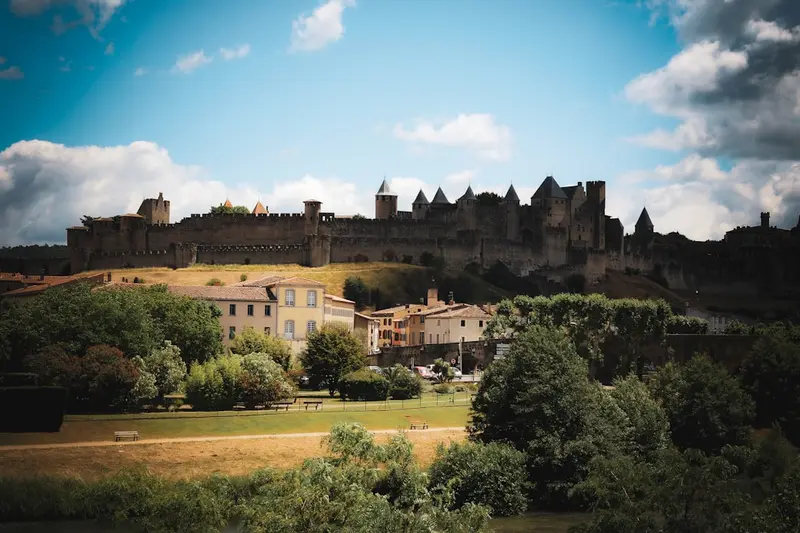
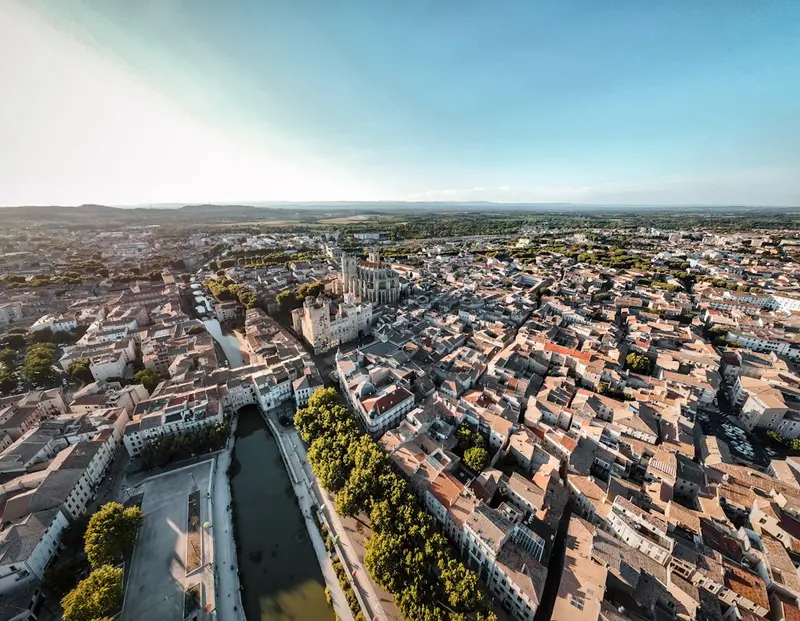
From Toulouse, you drive to the hilltop village of Cordes-sur-Ciel and half an hour further to Albi with its brick cathedral. Afterwards, head south to the fortified city of Carcassonne and finally into the Mediterranean plain to Narbonne; no leg takes longer than about two hours.
11 Days / 10 Nights
April–October
RV Friendly
5 stops
Why This Route?
For all who want to combine history, wine, and landscape on a trip.
Hidden Gems
Jardin de la Berbie at the Bishop's Palace in Albi
Abbaye de Fontfroide, approximately 15 km southwest of Narbonne
Les Halles de Narbonne, market hall on the Canal de la Robine
Itinerary
Stop 1 • 2 Nights
Toulouse
City
Perfect for an exciting city trip. Rich in culture and history and Culinary highlights.
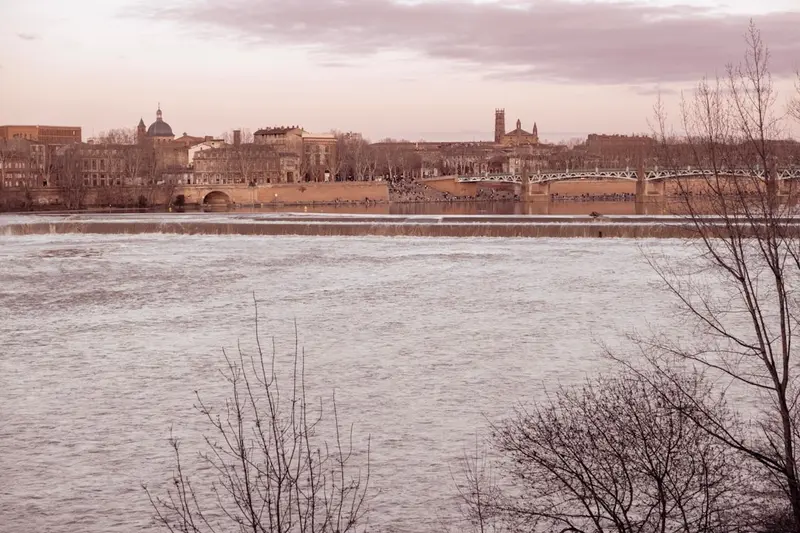
The capital of the Occitanie region is called 'La Ville Rose' because of its buildings made of pinkish-red brick. Toulouse is a lively university city and the centre of the European aerospace industry, with Airbus headquarters located just outside the city.
5 Sights
5 Restaurants
Toulouse: History, Art, and the Occitan Soul
Toulouse, the 'Ville Rose', is a vibrant mosaic of rich history and sparkling creativity. Its unique architecture tells stories from past centuries, while a dynamic art scene fills the city with contemporary flair. Immerse yourself in the cultural heart of Southern France and discover a city that honors its roots while boldly looking forward.
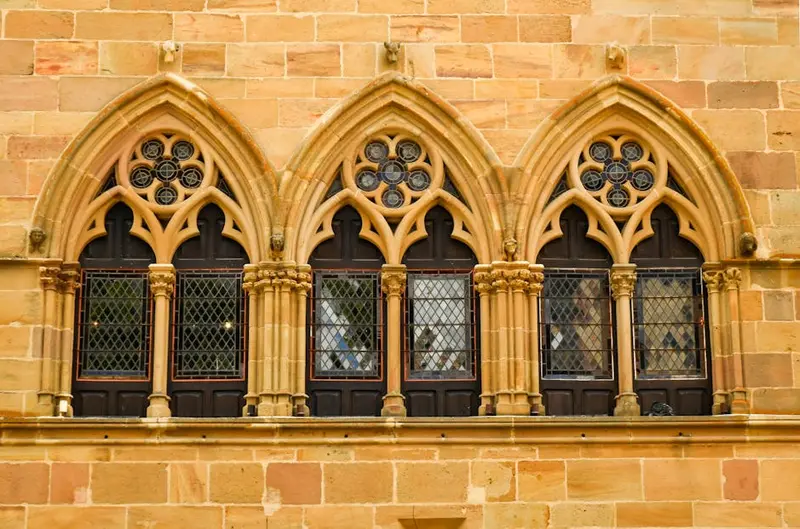
Cordes-sur-Ciel is perched on a hill above the Cérou valley in the Tarn department. Founded in 1222, this Bastide is renowned for its Gothic townhouses, steep cobbled lanes, and views over the rolling hills. It also boasts numerous artisans and galleries. On autumn mornings, the valley is often shrouded in fog, and the town appears to float above it – hence its name.
8 Sights
3 Restaurants
The cultural heritage of Cordes-sur-Ciel
Cordes-sur-Ciel was founded in 1222 by Raymond VII of Toulouse during the Albigensian Crusade as a fortified bastide. Its establishment served to protect the population and secure the region. In the Middle Ages, thanks to its cloth and leather trade, the town experienced an **economic boom**, which is reflected in its architecture.Cordes boasts a remarkable number of Gothic townhouses from the 13th and 14th centuries with ornate facades, pointed arch windows, and sculptures, which cling to the hillside along steep, cobblestone streets. They still shape the **medieval townscape** today and bear witness to the prosperity of their former inhabitants.In the 20th century, Cordes became a **magnet for artists and artisans**, including the painter Yves Brayer. Thus, the town is not only a historical monument but also a vibrant center for art and craft.
Rich in culture and history. Perfect for an exciting city trip and Perfect for relaxed travel without rush.
Albi in southwestern France lies on the Tarn and is known for its red brick buildings. The Episcopal City, the "Cité épiscopale", has been a UNESCO World Heritage Site since 2010. At its heart stands the Cathédrale Sainte-Cécile, a massive brick fortress on the outside, decorated inside with wall paintings and a stone rood screen. Right next to it is the Palais de la Berbie with the Musée Toulouse-Lautrec and a terraced garden above the river. Stroll through the lanes of the old town and across the Pont Vieux; the view of the river and the city is at its best in the late afternoon. Allow plenty of time for the museum on Henri de Toulouse-Lautrec, who was born in Albi.
5 Sights
6 Restaurants
Albis' Cultural Heritage
The history of Albi is closely linked to Occitan culture and the Cathars. The city gave its name to the Albigensian Crusade in the 13th century, which profoundly shaped southern France and strengthened the bishops as secular and spiritual lords.Architecturally, red brick dominates, earning Albi the nickname “the red city”. The most famous example is the Sainte-Cécile Cathedral, a fortified church of Southern French Gothic style, whose austere exterior conceals a fully painted interior with a rood screen. Right next to it is the Palais de la Berbie, the former bishop's palace, now home to the museum dedicated to the painter Henri de Toulouse-Lautrec, born in Albi.In the 15th and 16th centuries, the trade in pastel, the dye from woad used for blue fabrics, brought great wealth to the region, as evidenced by magnificent townhouses. Since 2010, the Episcopal City of Albi has been a UNESCO World Heritage site.
Rich in culture and history. For adventure seekers and Perfect for an exciting city trip.
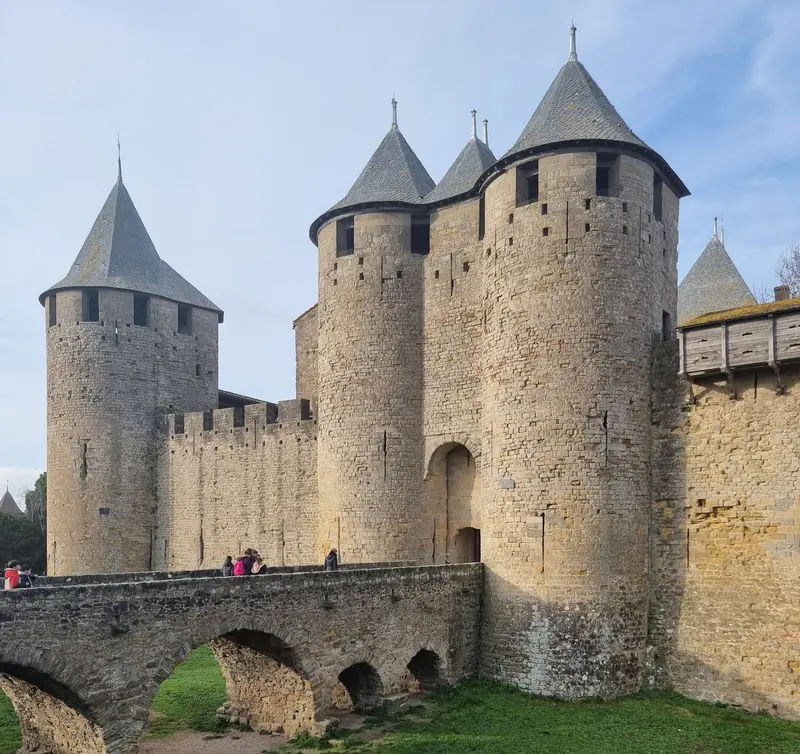
Carcassonne is renowned for its Cité de Carcassonne, an impressive, double-walled fortress city and a UNESCO World Heritage site. You can explore the imposing defensive structures, whose origins date back to Roman times and which were extensively restored in the 19th century by Viollet-le-Duc. At the heart of the Cité are the Château Comtal and the Gothic Basilica Saint-Nazaire, reflecting the region's rich history, particularly during the Cathar Wars. Beyond the historic walls, the Ville Basse, the lower town, offers insights into modern French city life. For a more relaxed experience, visiting during the off-season is recommended to avoid the crowds. A practical tip is to ascend the walls in the late afternoon to witness the sunset over the landscape.
5 Sights
5 Restaurants
Carcassonne: A journey through history
Carcassonne is primarily known for its Cité Médiévale, an imposing fortified city whose origins date back to Roman times. However, it largely acquired its current form in the Middle Ages, particularly during the Crusades against the Cathars in the 13th century. At that time, the city played a key role in the conflict between the French monarchy and the lords of Southern France and was annexed by the French king in 1247, subsequently serving as an important border fortress.Architecturally, the Cité impresses with its double fortification wall featuring 52 towers, a masterpiece of medieval military architecture. Inside are the Château Comtal, the count's castle, and the Basilica of Saint-Nazaire and Saint-Celse, which combines elements of Romanesque and Gothic architecture and is known for its impressive stained-glass windows. In the 19th century, the heavily dilapidated fortress was extensively restored under the direction of architect Eugène Viollet-le-Duc, a measure that saved it from complete decay and shaped its iconic present-day silhouette.Although the Cité itself functions as a living museum of its past, local traditions of the Languedoc-Roussillon region, such as an awareness of Occitan language and culture, are also palpable. Historical events and legends, like that of Dame Carcas, shape the cultural memory and are often featured in local events and guided tours.
Rich in culture and history. Perfect for relaxed travel without rush and Great for exploring on foot.
Narbonne combines Roman history with the everyday life of a southern French town. Running through the heart of the old town is the Canal de la Robine, a branch of the Canal du Midi and part of its UNESCO World Heritage site. Here you'll find an unfinished Gothic cathedral, the Archbishop's Palace, a lively market hall, and Narbo Via, a modern Roman museum. The city is also a great base for excursions to the coast and the Corbières.
10 Sights
4 Restaurants
Narbonne's Cultural Heritage
Narbonne was founded in 118 BC as Colonia Narbo Martius, the first Roman colony in Gaul. The city was an important port and capital of the province Gallia Narbonensis. Its location on the Via Domitia and the Mediterranean Sea made it a hub for trade and culture, later becoming a center for the Visigoths.Its architectural heritage bears witness to this history. The unfinished Cathédrale Saint-Just-et-Saint-Pasteur features a Gothic choir soaring over 40 meters high, ranking among France's tallest. Right next to it stands the Palais des Archevêques, a fortified complex with medieval towers, showcasing the archbishops' power.Beneath the city lies the Horreum, a Roman warehouse with underground galleries. The Pont des Marchands, a built-up bridge over the Canal de la Robine, follows the path of the ancient Via Domitia. Narbonne also nurtures its Occitan traditions, a long viticultural history, and a distinct cuisine.