Fernweh
    ExploreTravel GuidesMy Trips
    de|en
    About FernwehImprintFAQPrivacy Policy
    ExploreTravel GuidesMy Trips
    Cordes-sur-Ciel

    Cordes-sur-Ciel

    City
    1. Home
    2. Destinations
    3. France
    4. Occitania (Occitanie)
    5. Cordes-sur-Ciel
    Welcome to Cordes-sur-Ciel, one of France's most beautiful villages, perched majestically on its rocky outcrop overlooking the Tarn Valley. If you're seeking a journey back in time to the Middle Ages, surrounded by Gothic architecture and breathtaking panoramas, then this bastide in Languedoc is the perfect place for you. Discover winding alleyways, artisan shops, and enjoy a unique atmosphere that will instantly charm you.
    • Neighborhoods & highlights
    • Walking tours
    • Eat & drink
    • Culture
    • Getting around
    • Accommodation
    • Plan trip
    • Nearby
    • Neighborhoods & highlights
    • Walking tours
    • Eat & drink
    • Culture
    • Getting around
    • Accommodation
    • Plan trip
    • Nearby

    Overview

    Cordes-sur-Ciel, a bastide founded in 1222 by Raymond VII of Toulouse, rises strikingly on a rocky spur in the Tarn department. Here you will explore an impressive ensemble of Gothic architecture, characterized by narrow, cobblestone streets and historic buildings. Notable structures include the Halle and numerous medieval townhouses with richly decorated facades, such as the Maison du Grand Fauconnier. Numerous artisans and galleries shape the town's current character and invite you to linger. From the upper parts of the village, you can enjoy expansive panoramic views over the surrounding Tarn Valley. To experience the special atmosphere without large crowds, a visit during the spring or autumn months is recommended. For the ascent to the historic center, it is advisable to wear comfortable shoes or to use the tourist train.

    Places in Cordes-sur-Ciel

    Discover the most important sights and attractions

    Sights in Cordes-sur-Ciel

    1Maison du Grand Fauconnier

    Die Maison du Grand Fauconnier in Cordes-sur-Ciel ist ein herausragendes Beispiel gotischer Zivilarchitektur aus dem 13. Jahrhundert. Du findest sie im oberen Teil der mittelalterlichen Bastide, wo sie sich durch ihre kunstvoll skulptierte Fassade auszeichnet. Der Name, 'Haus des Großfalkners', deutet auf einen einst prominenten Bewohner hin, möglicherweise einen Adligen oder hohen Beamten. Besonders bemerkenswert sind die zahlreichen Steinmetzarbeiten, die fantastische Tiere und menschliche Figuren darstellen und typisch für die reiche Symbolik der Gotik sind. Diese Details erzählen Geschichten aus einer vergangenen Zeit und spiegeln den Wohlstand der Stadt im Mittelalter wider. Beim Betrachten der Fassade wirst du die filigranen Verzierungen und die gut erhaltenen Fensterbögen schätzen. Es ist ein Zeugnis der handwerklichen Meisterschaft jener Epoche. Unser Tipp: Um die Details in Ruhe zu betrachten und gute Fotos zu machen, empfehlen wir dir einen Besuch am frühen Vormittag. So vermeidest du die größten Menschenmassen, die sich später am Tag durch die engen Gassen schlängeln. Ein guter Fotospot ist direkt gegenüber in der schmalen Gasse, um die gesamte Breite der Fassade einzufangen.
    Open in Google Maps

    2Musée d'Art Moderne et Contemporain (MAMC)

    Das Musée d'Art Moderne et Contemporain (MAMC) in Cordes-sur-Ciel bietet dir einen spannenden Kontrast zur mittelalterlichen Architektur der Stadt. Hier entdeckst du eine vielfältige Sammlung von Kunstwerken des 20. und 21. Jahrhunderts, die von der Abstraktion bis zu zeitgenössischen Installationen reicht. Das Museum ist in einem historischen Gebäude untergebracht, was eine besondere Atmosphäre schafft und die Kunstwerke in einen einzigartigen Kontext stellt. Du findest hier oft Werke regionaler Künstler, die die kulturelle Dynamik der Region widerspiegeln, sowie bedeutende nationale und internationale Positionen. Die Ausstellungen wechseln regelmäßig, sodass sich ein wiederholter Besuch lohnen kann. Unser Tipp: Verbinde den Museumsbesuch mit einem Spaziergang durch die Gassen von Cordes-sur-Ciel am Vormittag, bevor die größten Touristenströme eintreffen. Für eine ruhige Betrachtung der Exponate empfiehlt sich ein Besuch außerhalb der Hauptsaison.
    Open in Google Maps

    3Les Halles et der Puits de la Halle

    Die Les Halles und der Puits de la Halle bilden das historische und soziale Zentrum von Cordes-sur-Ciel. Die imposante Markthalle, deren Ursprünge im 13. Jahrhundert liegen, ist ein herausragendes Beispiel mittelalterlicher Profanarchitektur. Unter ihrem mächtigen Dach aus Holz und Stein florierte einst der Handel, und sie diente als zentraler Treffpunkt für die Stadtbewohner. Direkt angrenzend findest du den Puits de la Halle, einen über 100 Meter tiefen Brunnen, der die Wasserversorgung der Bastide sicherstellte. Seine beeindruckende Tiefe war in Zeiten der Belagerung oder Trockenheit von entscheidender Bedeutung und ist bis heute Gegenstand lokaler Legenden. Achte auf die robusten Holzkonstruktionen der Halle und die sorgfältige Steinmetzarbeit des Brunnens. Unser Tipp: Besuche diesen Ort am frühen Vormittag, um die Ruhe der historischen Stätte ungestört zu erleben und die Details der Architektur in aller Ruhe zu betrachten. Von hier aus bieten sich auch hervorragende Fotomotive der umliegenden Gassen.
    Open in Google Maps

    4Église Saint-Michel

    Die Église Saint-Michel thront majestätisch im Herzen der mittelalterlichen Bastide Cordes-sur-Ciel und ist ein beeindruckendes Zeugnis der reichen Geschichte der Stadt. Ursprünglich im 13. Jahrhundert erbaut, wurde sie in den folgenden Jahrhunderten, insbesondere im 14. und 15. Jahrhundert, stark erweitert und befestigt, was ihre Bedeutung während der Blütezeit des Waidhandels unterstreicht. Du wirst eine robuste gotische Architektur vorfinden, die typisch für die befestigten Kirchen der Region ist. Besonders markant ist der imposante Glockenturm, der oft an einen Donjon erinnert und einen weiten Blick über die umliegende Landschaft und das Tal des Cérou bietet. Im Inneren erwarten dich hohe Gewölbe, kunstvolle Skulpturen und einige bemerkenswerte Glasfenster, die Geschichten aus der biblischen Geschichte erzählen. Unser Tipp: Erklimme den Glockenturm am späten Nachmittag, um das goldene Licht auf den Dächern von Cordes-sur-Ciel einzufangen und die Weite der Landschaft zu genießen. Um die Menschenmassen zu vermeiden, empfiehlt sich ein Besuch am frühen Vormittag.
    Open in Google Maps

    5Maison du Grand Fauconnier

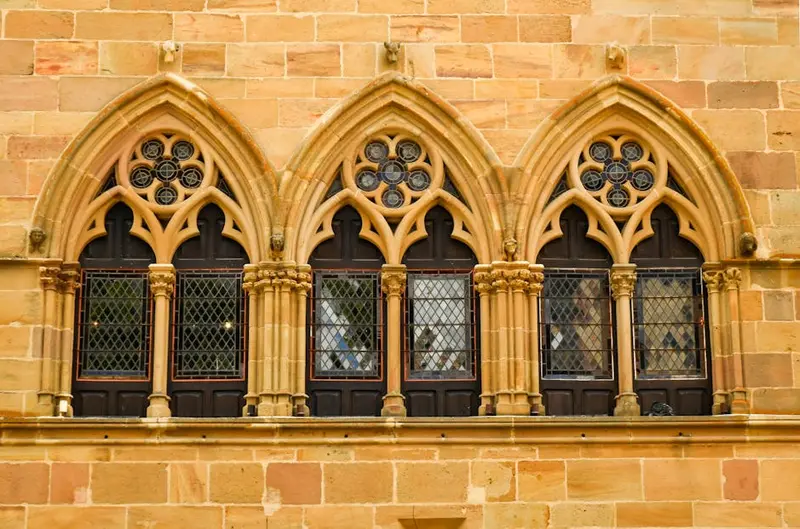
    The Maison du Grand Fauconnier in Cordes-sur-Ciel is an outstanding example of Gothic secular architecture from the 13th or 14th century. You'll find this impressive building in the upper town, where it reflects the rich history and prosperity of the bastide in the Middle Ages. It likely owes its name to a high-ranking falconer or a wealthy citizen who once resided here. The façade is distinguished by its elaborate stonework, pointed-arch windows, and characteristic twin windows, typical of the region's Gothic architectural style. Particularly striking are the detailed sculptures depicting birds and other motifs, which may have given the house its name. Observing the façade offers a profound insight into the craftsmanship of that era. Our Tip: It's best to visit the house early in the morning, when the streets are still quiet, to study the architectural details undisturbed and take photos without crowds. For an optimal perspective, position yourself slightly opposite on the Rue du Grand Fauconnier to capture the façade's full splendor.
    Open in Google Maps

    6Musée d'Art Moderne et Contemporain (MAMC)

    The Musée d'Art Moderne et Contemporain (MAMC) in Cordes-sur-Ciel is a remarkable cultural anchor point, deliberately contrasting with the town's medieval backdrop. Here, you'll delve into a carefully curated collection of modern and contemporary art, showcasing works from the 20th and 21st centuries. The exhibits encompass a wide range of media, including painting, sculpture, and innovative installations, illuminating various art movements and forms of expression. In addition to the permanent exhibition, which offers a comprehensive overview, the museum regularly features rotating special exhibitions. These broaden the spectrum, often focusing on emerging artists or specific themes. Our Tip: Ideally, visit the MAMC in the morning to explore the exhibits at your leisure and fully soak in the special atmosphere of the place. Note the exciting architectural symbiosis between the historic building and the modern artworks – an excellent photo spot for unusual perspectives.
    Open in Google Maps

    City walks in Cordes-sur-Ciel

    Curated walking tours through the city's highlights — handpicked by experienced travel journalists.

    Cordes-sur-Ciel: Historische Gassen und Himmelsblicke

    Erkunden Sie das mittelalterliche Kleinod Cordes-sur-Ciel auf diesem 2-stündigen Spaziergang. Steigen Sie durch verwinkelte Kopfsteinpflastergassen hinauf, bewundern Sie gotische Meisterwerke und genießen Sie atemberaubende Ausblicke, die diesem 'Himmelsstadt' ihren Namen gaben. Tauchen Sie ein in die reiche Geschichte und das einzigartige Flair dieses magischen Ortes.

    In Google Maps öffnen
    Stopps (7)

    Restaurants & Cafes

    The cultural heritage of Cordes-sur-Ciel

    Cordes-sur-Ciel was founded in 1222 by Raymond VII of Toulouse as a fortified bastide during the Albigensian Crusade. This strategic foundation served to protect the population and secure the region. In the Middle Ages, the town experienced an economic boom thanks to the flourishing cloth trade, which is reflected in its magnificent architecture. The architecture of Cordes is an outstanding example of Southern French Gothic. Visitors will find numerous well-preserved Gothic houses here with elaborate facades, arcades, and sculptures that cling to the hillside along steep, cobblestone streets. This construction style continues to give the place its unique medieval flair and bears witness to the prosperity of its former inhabitants. Its historical heritage also shapes Cordes' cultural identity. In the 20th century, the town became a magnet for artists and artisans, who are inspired by its special atmosphere and unique light. Thus, Cordes-sur-Ciel remains not only an architectural monument but also a vibrant center for art and history.

    Getting Around Here

    Exploring Cordes-sur-Ciel is primarily done on foot, an unforgettable experience through the steep, cobbled streets of its medieval center. For travel to the village and excursions into the picturesque surroundings, a private vehicle is the most recommended option, as public transport connections are rather limited and taxis are only sporadically available.

    Accommodations in Cordes-sur-Ciel

    Accommodations in Cordes-sur-Ciel

    Find perfect stay in Cordes-sur-Ciel

    Booking.com
    Search Hotels
    Agoda
    Search Hotels
    Airbnb
    Vacation Rentals
    Hotels.com
    Hotels Worldwide
    Hostelworld
    Hostels

    Campgrounds in Cordes-sur-Ciel

    Find perfect campground in Cordes-sur-Ciel

    Search via Google Maps
    Campgrounds nearby (15km)
    Camping.info
    Find Campgrounds
    Park4Night
    RV Parks & Camping

    Plan your trip to Cordes-sur-Ciel

    Save places, build a route and plan your city trip — all in one place.

    Save places

    Bookmark sights, restaurants and neighborhoods you're interested in.

    Build your route

    Turn your bookmarks into a route — define order, days and budget.

    Refine with AI

    Let Mein Fernweh suggest experiences and put together a tailored daily plan.

    Start trip planningOpen bookmarks

    Locations nearby

    These places are nearby — perfect for additional days or a day trip.

    Albi

    Albi

    The UNESCO-protected city of Albi is famous for its impressive red-brick Sainte-Cécile Cathedral and the museum dedicated to the artist Toulouse-Lautrec.
    Occitania (Occitanie)

    Occitania (Occitanie)

    Welcome to Occitania, a diverse region in Southern France, stretching from the majestic peaks of the Pyrenees to the sun-drenched Mediterranean beaches. Discover a rich history, impressive Roman remains, medieval fortresses, and vibrant cities, all shaped by a lively culture and outstanding gastronomy. Occitania combines cultural treasures with breathtaking nature for unforgettable experiences.
    Toulouse

    Toulouse

    The capital of Occitania, known as 'La Ville Rose' (The Pink City), delights with its terracotta-coloured buildings, its lively student scene, and its significant aerospace industry.
    Carcassonne

    Carcassonne

    Carcassonne is renowned for its Cité de Carcassonne, an impressive, double-walled fortress city and a UNESCO World Heritage site. You can explore the imposing defensive structures, whose origins date back to Roman times and which were extensively restored in the 19th century by Viollet-le-Duc. At the heart of the Cité are the Château Comtal and the Gothic Basilica Saint-Nazaire, reflecting the region's rich history, particularly during the Cathar Wars. Beyond the historic walls, the Ville Basse, the lower town, offers insights into modern French city life. For a more relaxed experience, visiting during the off-season is recommended to avoid the crowds. A practical tip is to ascend the walls in the late afternoon to witness the sunset over the landscape.
    Domme

    Domme

    Domme, a 13th-century bastide, perches on a rocky plateau with expansive views over the Dordogne Valley. Its golden stone houses define the town's character, which you can explore through its narrow streets and the central Place de la Halle, where the Porte des Tours features historical Templar graffiti. A highlight is the Grottes de Domme, a cave system beneath the town, accessible by elevator. The Belvédère de la Barre offers panoramic views of the river's meanders and surrounding villages. Visit Domme in the early morning or late afternoon to savour its special atmosphere in peace.