Fernweh
    ExploreTravel GuidesMy Trips
    de|en
    About FernwehImprintFAQPrivacy Policy
    ExploreTravel GuidesMy Trips
    Albi

    Albi

    CityCultureFor Families
    1. Home
    2. Destinations
    3. France
    4. Albi
    The UNESCO-protected city of Albi is famous for its impressive red-brick Sainte-Cécile Cathedral and the museum dedicated to the artist Toulouse-Lautrec.
    • Neighborhoods & highlights
    • Walking tours
    • Eat & drink
    • Culture
    • Getting around
    • Accommodation
    • Plan trip
    • Nearby
    • Neighborhoods & highlights
    • Walking tours
    • Eat & drink
    • Culture
    • Getting around
    • Accommodation
    • Plan trip
    • Nearby

    Overview

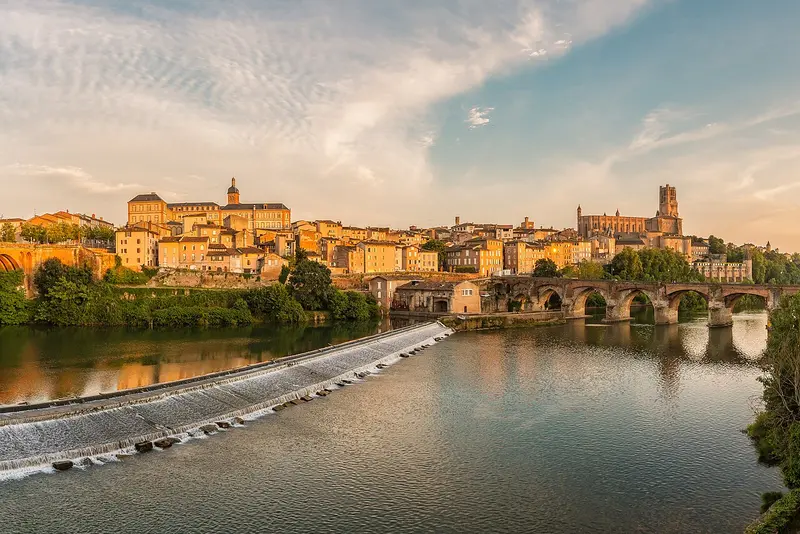
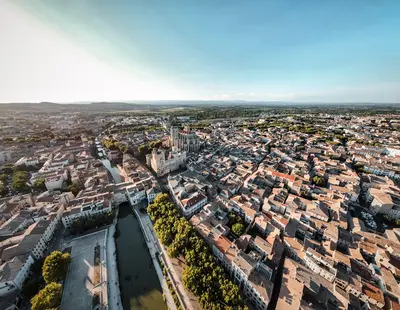
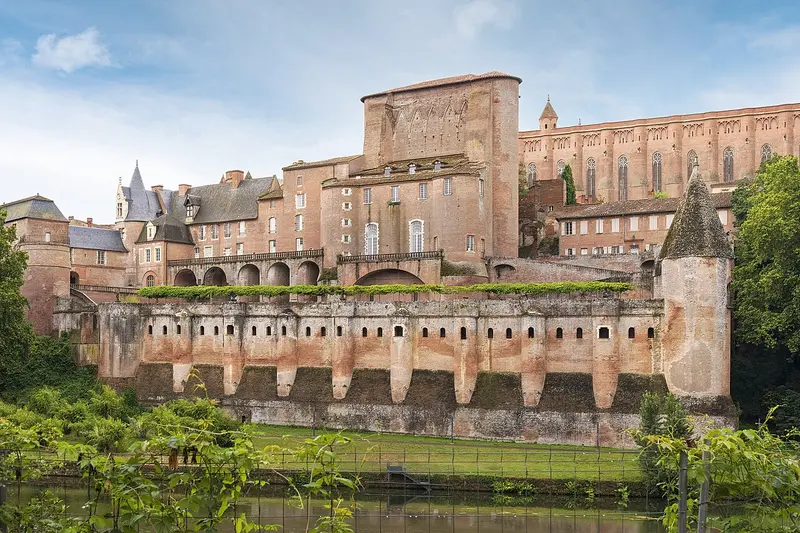
    Albi, in southwestern France, charms with its red brick architecture and picturesque setting on the River Tarn. As a Cité Épiscopale, the city is a UNESCO World Heritage site. The impressive Cathédrale Sainte-Cécile, a massive brick fortress, reveals vibrant frescoes inside. Adjacent lies the Palais de la Berbie, now home to the Musée Toulouse-Lautrec with a magnificent garden. Stroll through the old town or cross the Pont Vieux for the best views. Take your time for the museum. In the late afternoon, the bricks glow in the most beautiful light.

    Places in Albi

    Discover the most important sights and attractions

    Sights in Albi

    1Access to promenade along Tarn

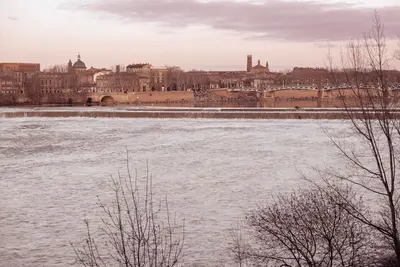
    Der Zugang zur Promenade entlang des Tarn in Albi bietet dir eine einzigartige Perspektive auf die beeindruckende Bischofsstadt. Der Tarn war historisch die Lebensader Albis, lieferte den charakteristischen roten Ziegelton und diente als Transportweg. Beim Spaziergang entlang des Ufers entdeckst du die majestätische Kathedrale Sainte-Cécile und den Palais de la Berbie, die sich eindrucksvoll im Wasser spiegeln. Besonders hervorzuheben ist der Blick auf den Pont Vieux, eine der ältesten Brücken Frankreichs, die seit dem 11. Jahrhundert in Gebrauch ist. Die Promenade ermöglicht es dir, die Stadt von einer ruhigeren Seite zu erleben und die architektonische Einheit der UNESCO-Welterbestätte zu bewundern. Unser Tipp: Für die besten Fotos der roten Ziegelarchitektur im warmen Licht besuche die Promenade am späten Nachmittag oder frühen Abend. Um den Menschenmassen zu entgehen, empfiehlt sich ein Spaziergang am Morgen.
    Open in Google Maps

    2Fontaine "La baigneuse"

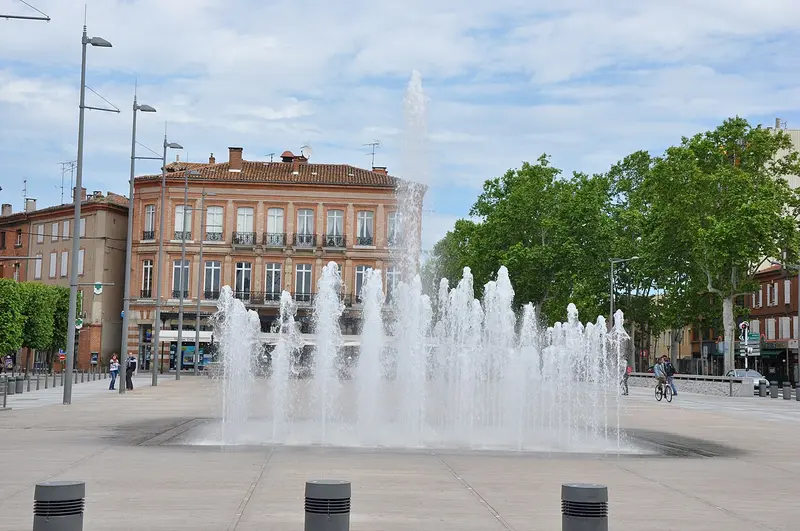
    Die Fontaine \"La baigneuse\" auf dem Place du Vigan in Albi ist ein Werk des renommierten Bildhauers Jean-Antoine Injalbert. Die 1904 installierte Bronzeplastik stellt eine Badende dar, die elegant auf einem Felsen sitzt und sich dem Wasser zuzuwenden scheint. Diese Skulptur ist ein klassisches Beispiel der französischen Bildhauerkunst des späten 19. und frühen 20. Jahrhunderts und prägt das Stadtbild des zentralen Platzes maßgeblich. Du kannst die Details der Figur und die umgebende Brunnenanlage aus nächster Nähe betrachten. Unser Tipp: Besuche die Fontäne am frühen Morgen, um die besondere Lichtstimmung einzufangen und die Ruhe des Platzes vor dem Touristenansturm zu genießen. Für eine interessante Perspektive empfiehlt sich ein Foto vom gegenüberliegenden Café aus.
    Open in Google Maps

    3Casco histórico de Albí

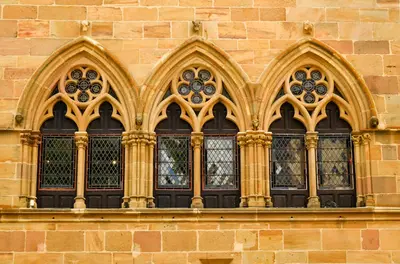
    Das Casco histórico de Albi, ein UNESCO-Weltkulturerbe, beeindruckt dich mit seiner einzigartigen Architektur aus rotem Backstein, der sogenannten Toulouser Backstein. Du findest hier ein gut erhaltenes mittelalterliches Stadtbild, das von der imposanten Cathédrale Sainte-Cécile und dem Palais de la Berbie, dem ehemaligen Bischofspalast, dominiert wird. Diese Festungsarchitektur spiegelt Albis reiche Geschichte wider, insbesondere seine Rolle während der Albigenserkriege im 13. Jahrhundert. Schlendere durch die engen Gassen, entdecke malerische Plätze und genieße die warme Atmosphäre, die durch das Baumaterial entsteht. Unser Tipp: Besuche das Zentrum am frühen Morgen, um die besondere Lichtstimmung auf den Backsteinfassaden einzufangen und den größten Besucherandrang zu umgehen. Für ein umfassendes Panorama der Stadt und ihrer Wahrzeichen bietet sich ein Spaziergang über den Pont Vieux an.
    Open in Google Maps

    4Jardin de la berbie

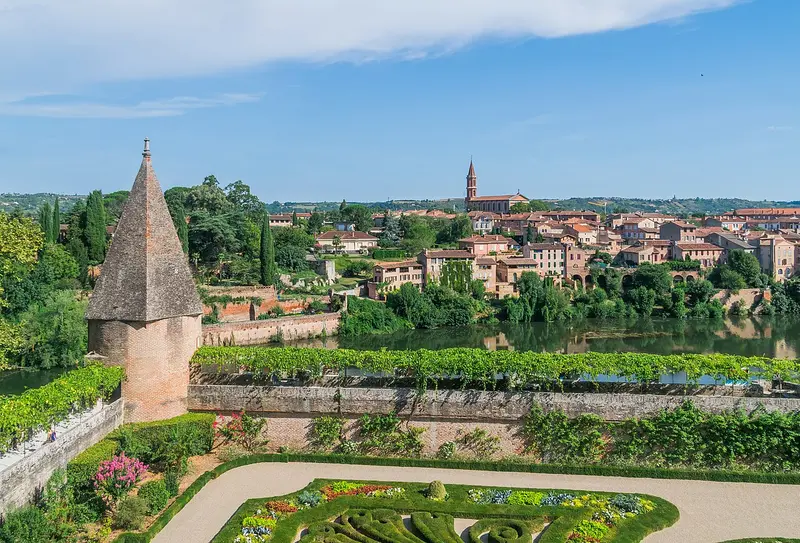
    Der Jardin de la Berbie in Albi ist ein herausragendes Beispiel eines klassischen französischen Gartens und gehört zum beeindruckenden Palais de la Berbie, der ehemaligen Residenz der Bischöfe von Albi. Dieser terrassierte Garten wurde im 17. Jahrhundert angelegt und zeichnet sich durch seine streng geometrische Gestaltung mit akkurat geschnittenen Buchsbaumhecken, farbenfrohen Blumenbeeten und kunstvollen Topiari aus. Er bietet dir eine ruhige Oase und einen spektakulären Panoramablick über den Fluss Tarn, die historische Altstadt und die berühmte Pont Vieux. Die Gartenanlage ist ein integraler Bestandteil des UNESCO-Weltkulturerbes der Bischofsstadt Albi und spiegelt die Ästhetik der damaligen Zeit wider.Unser Tipp: Besuche den Garten am besten am frühen Vormittag oder späten Nachmittag. Dann ist das Licht weicher und die Besucherzahlen sind geringer, was die ideale Atmosphäre für einen Spaziergang und ungestörte Fotos schafft. Besonders von den oberen Terrassen hast du eine ausgezeichnete Perspektive auf den Fluss und die umliegende Landschaft.
    Open in Google Maps

    5Kathedrale von Albi

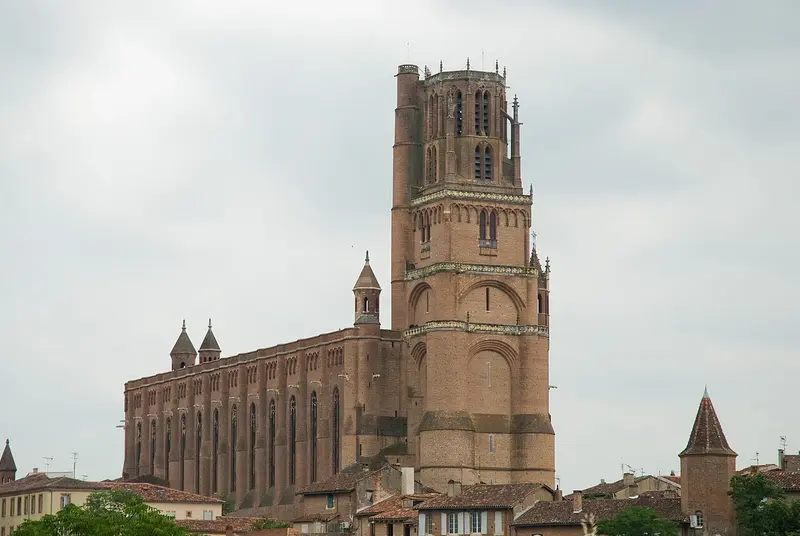
    The Sainte-Cécile Cathedral in Albi is an outstanding example of Southern French Gothic, also known as Albigensian Gothic. Built in the 13th and 14th centuries after the Albigensian Crusade, it served not only as a house of worship but also as a powerful symbol of the Catholic Church and its strength. You will immediately notice its impressive, fortress-like red-brick architecture, which gives it a unique and imposing appearance.Inside, a surprising contrast to its exterior austerity is revealed: you'll discover magnificent decorations featuring France's largest and oldest painted ensemble. Particularly noteworthy are the colossal frescoes, including the monumental Last Judgment, as well as the intricately carved rood screen (Jubé), among the most beautiful Gothic artworks. The Cathedral has been part of the UNESCO World Heritage since 2010.Our Tip: It's best to visit the Cathedral early in the morning or late in the afternoon to avoid the crowds and experience the special play of light on its brick walls. For a stunning panoramic photo of the Cathedral and the Tarn River, the Pont Vieux is the ideal spot.
    Open in Google Maps

    City walks in Albi

    Curated walking tours through the city's highlights — handpicked by experienced travel journalists.

    Albis Roter Faden: Ein Spaziergang durch die UNESCO-Altstadt

    Erkunden Sie Albi, die 'ville rouge', auf diesem zweistündigen Rundgang. Von der beeindruckenden Kathedrale Sainte-Cécile bis zu den malerischen Gassen der Altstadt tauchen Sie ein in die Geschichte und Schönheit dieser südfranzösischen Perle. Genießen Sie atemberaubende Ausblicke auf den Tarn und die roten Ziegelbauten.

    In Google Maps öffnen
    Stopps (5)

    Food and Drink

    Albis' Cultural Heritage

    Albi's history is deeply rooted in Occitan culture and closely tied to the tragic chapter of Catharism. In the 13th century, the city became the focal point of the Albigensian Crusades, which left a profound impact and solidified the bishops' role as both temporal and spiritual rulers.Architecturally, Albi is dominated by its distinctive red brick, which gives the city its characteristic name "the Red City." The most prominent example is the Sainte-Cécile Cathedral, an imposing fortress church in the Southern French Gothic style, whose simple exterior conceals a magnificently painted interior with frescoes and an intricately detailed rood screen. Right next door is the Palais de la Berbie, the former Bishop's Palace, which today houses the museum for the artist Henri de Toulouse-Lautrec, born in Albi, whose work significantly contributes to the city's cultural identity.Albi also preserves the legacy of woad cultivation and trade from the Middle Ages, which once brought great wealth to the region, and whose blue color is still a theme in local craft businesses today. Since 2010, the entire episcopal city of Albi has been recognized as a UNESCO World Heritage Site, underscoring its unique historical and architectural significance.

    Getting Around Here

    Thanks to its compact size, Albi is excellent for exploring on foot, especially the historic center. For longer distances, a well-developed public bus system is available, connecting the various districts. Furthermore, taxis are a practical option, and the city area is also perfect for cycling tours.

    Accommodations in Albi

    Accommodations in Albi

    Find perfect stay in Albi

    Booking.com
    Search Hotels
    Agoda
    Search Hotels
    Airbnb
    Vacation Rentals
    Hotels.com
    Hotels Worldwide
    Hostelworld
    Hostels

    Campgrounds in Albi

    Find perfect campground in Albi

    Search via Google Maps
    Campgrounds nearby (15km)
    Camping.info
    Find Campgrounds
    Park4Night
    RV Parks & Camping

    Plan your trip to Albi

    Save places, build a route and plan your city trip — all in one place.

    Save places

    Bookmark sights, restaurants and neighborhoods you're interested in.

    Build your route

    Turn your bookmarks into a route — define order, days and budget.

    Refine with AI

    Let Mein Fernweh suggest experiences and put together a tailored daily plan.

    Start trip planningOpen bookmarks

    Locations nearby

    These places are nearby — perfect for additional days or a day trip.

    Cordes-sur-Ciel

    Cordes-sur-Ciel

    Welcome to Cordes-sur-Ciel, one of France's most beautiful villages, perched majestically on its rocky outcrop overlooking the Tarn Valley. If you're seeking a journey back in time to the Middle Ages, surrounded by Gothic architecture and breathtaking panoramas, then this bastide in Languedoc is the perfect place for you. Discover winding alleyways, artisan shops, and enjoy a unique atmosphere that will instantly charm you.
    Occitania (Occitanie)

    Occitania (Occitanie)

    Welcome to Occitania, a diverse region in Southern France, stretching from the majestic peaks of the Pyrenees to the sun-drenched Mediterranean beaches. Discover a rich history, impressive Roman remains, medieval fortresses, and vibrant cities, all shaped by a lively culture and outstanding gastronomy. Occitania combines cultural treasures with breathtaking nature for unforgettable experiences.
    Toulouse

    Toulouse

    The capital of Occitania, known as 'La Ville Rose' (The Pink City), delights with its terracotta-coloured buildings, its lively student scene, and its significant aerospace industry.
    Carcassonne

    Carcassonne

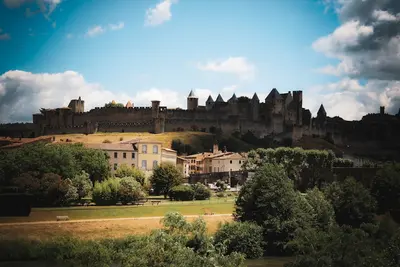
    Carcassonne is renowned for its Cité de Carcassonne, an impressive, double-walled fortress city and a UNESCO World Heritage site. You can explore the imposing defensive structures, whose origins date back to Roman times and which were extensively restored in the 19th century by Viollet-le-Duc. At the heart of the Cité are the Château Comtal and the Gothic Basilica Saint-Nazaire, reflecting the region's rich history, particularly during the Cathar Wars. Beyond the historic walls, the Ville Basse, the lower town, offers insights into modern French city life. For a more relaxed experience, visiting during the off-season is recommended to avoid the crowds. A practical tip is to ascend the walls in the late afternoon to witness the sunset over the landscape.
    Narbonne

    Narbonne

    Welcome to Narbonne, a city where Roman history and Southern French savoir-vivre uniquely blend! Discover this charming city on the banks of the Canal de la Robine, a UNESCO World Heritage site, and let yourself be enchanted by its rich heritage, lively markets, and relaxed atmosphere. Narbonne is the ideal starting point to explore the beauty of Languedoc and simultaneously experience authentic France away from the major tourist crowds.