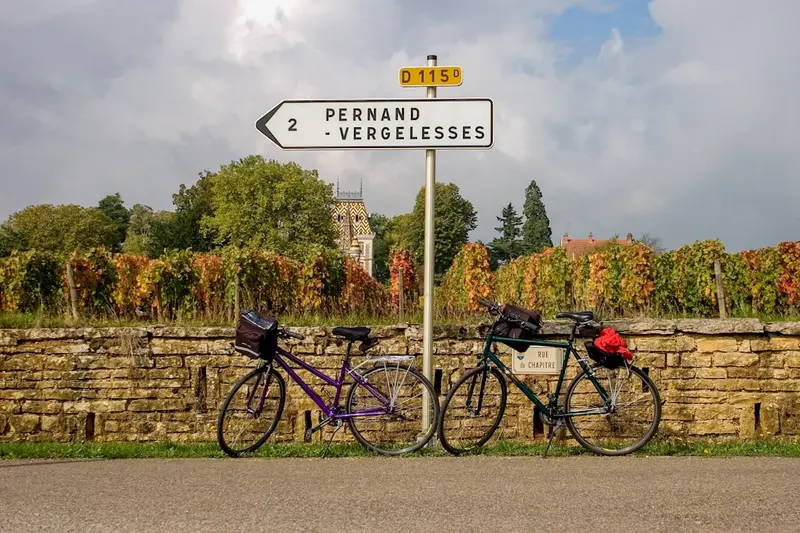
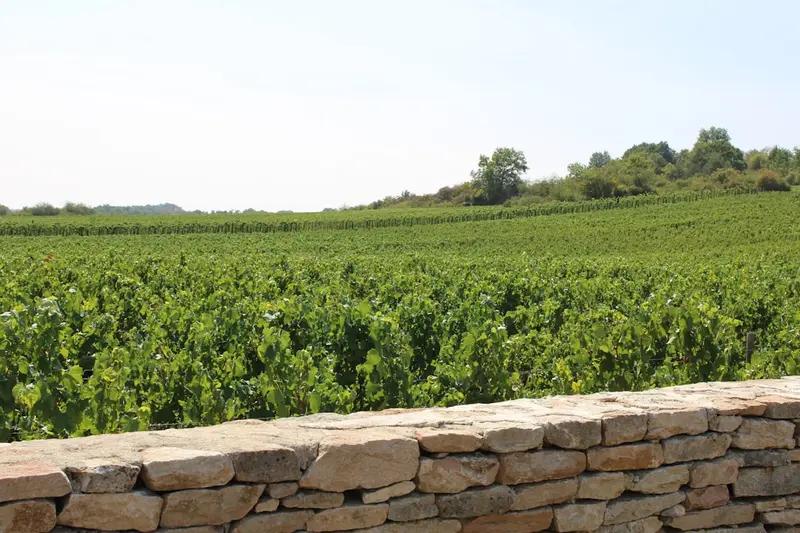
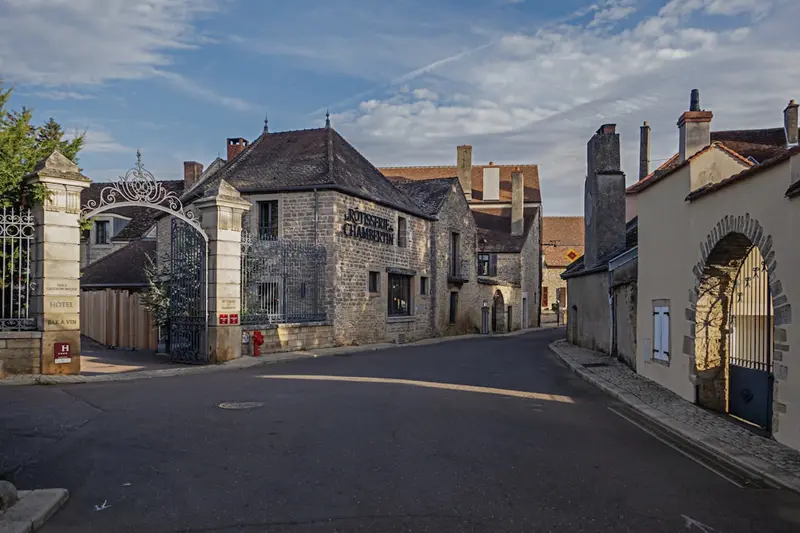
From Dijon, you drive south along the Route des Grands Crus via Gevrey-Chambertin to Beaune and on through the wine villages of Pommard and Meursault. Finally, you reach Chalon-sur-Saône; hardly any stage takes longer than 30 minutes.
9 Days / 8 Nights
April–October
RV Friendly
6 stops
Why This Route?
For foodies and wine lovers who appreciate a leisurely pace and short stages.
Hidden Gems
Combe Lavaux, a nature reserve with a hiking trail above Gevrey-Chambertin
Château du Clos de Vougeot, the Cistercian wine estate on the Route des Grands Crus
Wine cellars of Château de Meursault
Itinerary
Stop 1 • 2 Nights
Dijon
City
Rich in culture and history. Culinary highlights and Perfect for an exciting city trip.
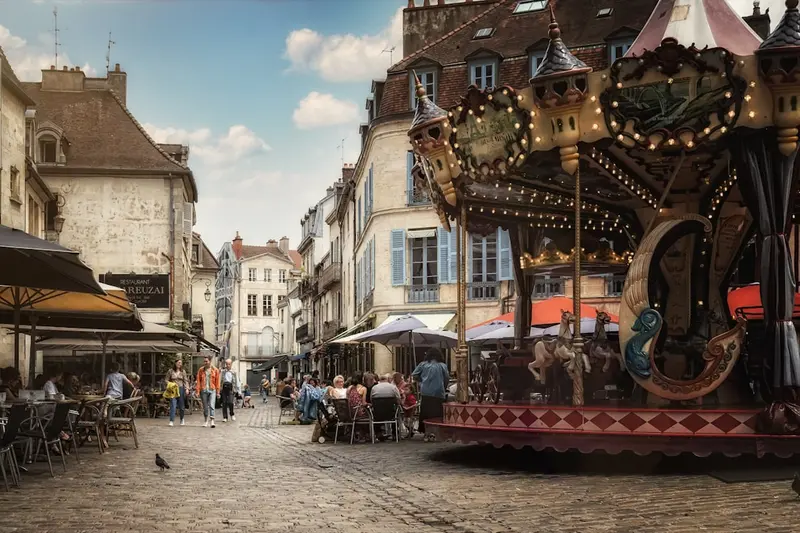
Dijon, Burgundy's historic capital, boasts rich cultural heritage and a distinct food culture. Its focal point is the Palais des Ducs et des États de Bourgogne, home to the Musée des Beaux-Arts. Old Town features half-timbered houses, noble palaces, Notre-Dame Church, and Saint-Bénigne Cathedral. Dijon mustard is integral to the city; taste it in local mustard shops. Les Halles, a cast-iron and glass market hall, was built 1873-1875 by city architect Louis-Clément Weinberger, inspired by Eiffel designs. The "Parcours de la Chouette", marked with owl plaques, offers a good tour of the sights. Spring and autumn are pleasant and less crowded.
5 Sights
4 Restaurants
Dijon: Cultural and Historical Heritage
Dijon, the historic capital of the Duchy of Burgundy, is deeply rooted in art and history. The city gained particular importance in the Middle Ages and early Renaissance under the Dukes of Burgundy, who were patrons of the arts and ruled a major European power. This era profoundly shaped the city as a center for education, art, and trade.Dijon's architecture bears witness to this glorious past. The imposing Palace of the Dukes and Estates of Burgundy, now home to the Musée des Beaux-Arts, is an outstanding example of Gothic and Neoclassical architecture. In addition, numerous well-preserved half-timbered houses, magnificent noble mansions, and religious buildings such as the Notre-Dame Church with its unique owl figure define the historic cityscape.Culturally, Dijon is closely linked to its gastronomic tradition, especially Dijon mustard, whose production has a long history here. The Burgundy wine region also strongly influences local culture. The “chouette” (owl) on the Notre-Dame Church is also a local symbol of luck; it is a popular tradition to stroke it with your left hand.The city preserves its rich heritage through numerous museums, galleries, and annual festivals that keep Burgundy's artistic diversity and history alive and make them tangible for visitors.
Culinary highlights. Rich in culture and history and Perfect for couples and romantic getaways.
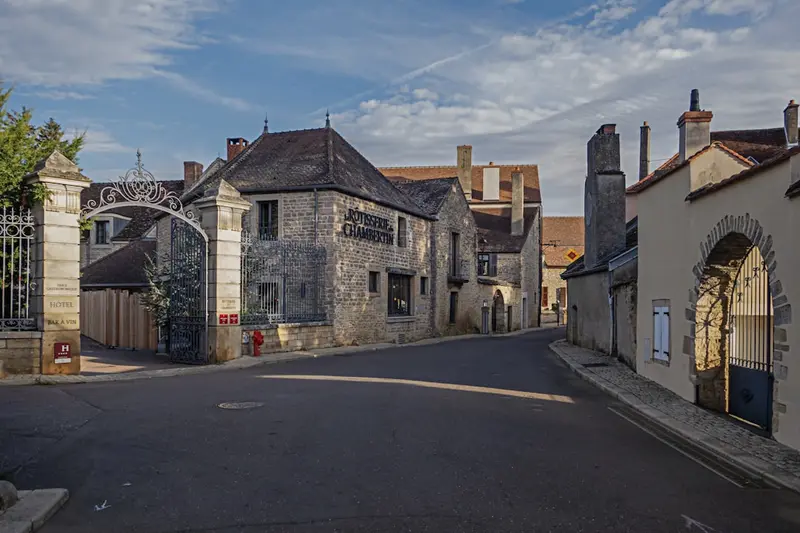
Gevrey-Chambertin is a wine village on the Côte de Nuits, roughly twelve kilometers south of Dijon. The commune boasts nine Grand Cru vineyards, including Chambertin and Chambertin-Clos de Bèze – more than any other village in Burgundy. In the village, you can taste Pinot Noir at numerous wineries and visit a castle of the Cluny Abbey.
8 Sights
3 Restaurants
History and Heritage of Gevrey-Chambertin
Gevrey-Chambertin is closely linked to viticulture. As early as the 7th century, the Abbey of Bèze received land, where today's Clos de Bèze is located; later, the Abbey of Cluny owned land and a castle here. Ecclesiastical orders, and later the Dukes of Burgundy, shaped the development of the village.The monks helped to define the individual plots, today's Climats; since 2015, the Climats of Burgundy have been part of the UNESCO World Heritage. Architecturally, the Château de Gevrey-Chambertin defines the village, a castle to which the Abbots of Cluny gave its present form between 1257 and 1275. The Church of Saint-Aignan dates mainly from the late 13th century and was extended in the 14th and 15th centuries.Local traditions follow the annual cycle of viticulture, from pruning to harvest. Knowledge of the individual plots is passed down from generation to generation in family-run businesses.
Culinary highlights. Rich in culture and history and Perfect for an exciting city trip.
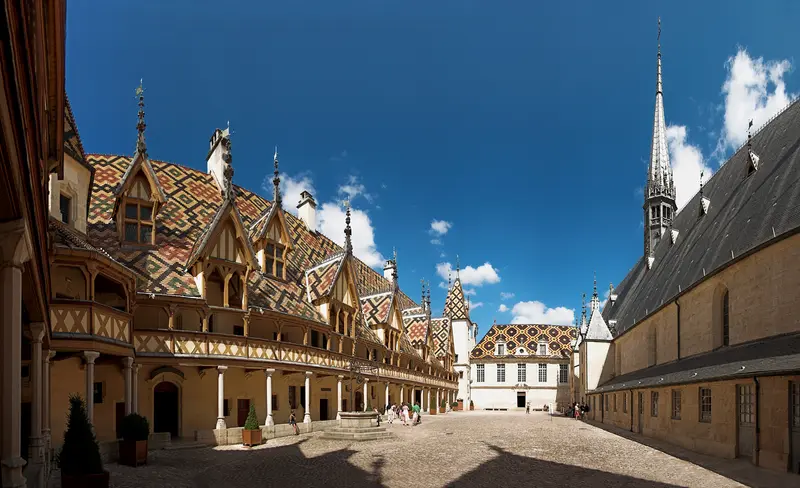
Beaune is the historical centre of the Burgundy wine trade and boasts a well-preserved old town within its ramparts. Its landmark is the Hôtel-Dieu of the Hospices de Beaune, a hospital founded in 1443 with a colourful, glazed tile roof. In its lanes, you'll find numerous wine cellars, wine houses, and shops. The town is an excellent starting point for the vineyards of the Côte d'Or and for tastings. It's quieter in spring and autumn than in summer; the famous Hospices wine auction takes place on the third weekend of November.
4 Sights
5 Restaurants
Beaune's Cultural Heritage: History, Art, and Architecture
Beaune is considered the capital of Burgundy wines. Narrow streets and historic buildings bear witness to a past spanning from the Middle Ages to the Renaissance.The settlement dates back to Gallo-Roman times. In the Middle Ages, Beaune was for a time a residence of the Dukes of Burgundy and developed into the center of the Burgundian wine trade. In 1443, the ducal chancellor Nicolas Rolin, with his wife Guigone de Salins, founded the Hôtel-Dieu (Hospices de Beaune) as a hospital for the poor. The building, in the Flamboyant Gothic style with its glazed tile roofs, is an outstanding example of medieval architecture; inside hangs Rogier van der Weyden's Last Judgment Altarpiece.The Collegiate Church of Notre-Dame, begun in the 12th century, is predominantly Romanesque and houses precious 15th-century tapestries. The ramparts with their bastions still enclose the old town today. Viticulture shapes the city's life, evident, for instance, at the annual Hospices wine auction in November.
Pommard is a wine village on the Côte de Beaune, a few kilometers south of Beaune. It is known for its robust Pinot Noir red wines. Amidst stone houses, wineries, and vineyards, you can taste and stroll.
3 Sights
3 Restaurants
Pommard: History and Cultural Heritage
Pommard, located on the Côte de Beaune, has been shaped by viticulture for centuries.Pommard's origins date back to Gallo-Roman times. Medieval Dukes of Burgundy and monasteries influenced its viticulture, making it famous for red wines today. Its individual plots, the Climats, part of the Burgundian wine landscape, joined UNESCO World Heritage in 2015.The village has vintners' houses and wineries, often with courtyards behind stone walls and extensive cellars. Château de Pommard began in 1726, its vineyard encircled by a roughly two-kilometer wall. The Church of Saint-Pierre was built 1754-1757, replacing a crumbling 14th-century predecessor; its bell tower is from 1778. Local traditions follow the wine's annual cycle.
Meursault is a wine village on the Côte de Beaune, a few kilometers south of Beaune. It is known primarily for its Chardonnay white wines. The village features stone houses, wineries, the Gothic church of Saint-Nicolas with its tall tower, and the town hall with a colorful tiled roof.
3 Sights
3 Restaurants
Cultural heritage and winemaking in Meursault
Meursault has been shaped by viticulture since the Middle Ages. Monasteries like the Cistercian Abbey of Cîteaux owned vineyards here early on and contributed to the development of cultivation. Many estates belonged to nobles and clergy, making wine an important economic factor early on.The architecture reflects this past. The Château de Meursault is now a wine estate with extensive historic cellars. The 15th-century Gothic church of Saint-Nicolas with its striking tower and the traditional winemakers' houses of light limestone with Burgundian roofs define the townscape; many possess old wine cellars.Village life revolves around wine. The best-known festival is the Paulée de Meursault, a winemakers' banquet on the Monday after the Hospices de Beaune wine auction in November, where guests bring their own bottles. It marks the conclusion of the “Trois Glorieuses”.
Rich in culture and history. Ideal for city trips and urban experiences and Great for exploring on foot.
Chalon-sur-Saône, nestled on the banks of the Saône in Southern Burgundy, boasts a history dating back to Gallo-Roman times. The city is the birthplace of Nicéphore Niépce, the inventor of photography, and features an old town with half-timbered houses, a cathedral, and a large weekly market.
6 Sights
3 Restaurants
Culture, Art & History in Chalon-sur-Saône
Chalon-sur-Saône, ancient Cabillonum, has roots in Gallo-Roman times. Its location on the Saône made the city an important trading hub for centuries.In the heart of the old town stands the Cathédrale Saint-Vincent, which was built in Romanesque and Gothic phases from the late 11th to the 16th century; its Neo-Gothic west facade with two towers dates from the 19th century. Around Place Saint-Vincent are numerous half-timbered houses from the 15th and 16th centuries.A special legacy is its connection to photography: The Chalon-born Nicéphore Niépce created the oldest surviving photograph in the 1820s at his estate in nearby Saint-Loup-de-Varennes. The Musée Nicéphore Niépce showcases an extensive collection on the history of photography. Local traditions are closely linked to the river and the Côte Chalonnaise wine region; also well-known is the street theatre festival Chalon dans la Rue in summer.