Fernweh
    ExploreTravel GuidesMy Trips
    de|en
    All Places & RegionsAbout FernwehImprintFAQPrivacy Policy
    ExploreTravel GuidesMy Trips
    Great Britain
    1. Home
    2. /
    3. Destinations
    4. /
    5. Great Britain
    6. /
    7. RV Travel

    Great Britain by RV

    Tips for the perfect motorhome adventure

    RV Infrastructure

    Good facilities for RVs (parking, hookups, etc.)

    Campgrounds & RV Parks

    Many campgrounds and RV parks available for motorhomes.

    RV Routes

    Routes and round trips specifically suitable for RVs.

    Planning an RV trip to Great Britain? Here are valuable tips, the best routes, campgrounds, and everything you need for an unforgettable motorhome journey.

    Recommended RV Routes

    Discover the best round trips and routes in Great Britain that are perfect for RVs.

    Scotland: Highlands and Isle of Skye
    Adventure
    Scotland: Highlands and Isle of Skye
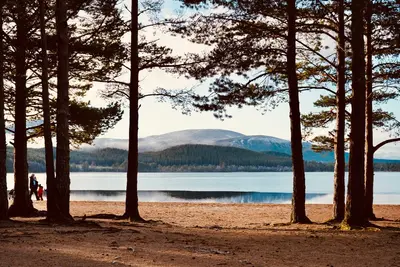
    <p>From Edinburgh across the granite plateau of the Cairngorms and the Valley of Glencoe to the Isle of Skye and back via Glasgow. The route touches Scotland's three landscape types: city, moorland, and Atlantic coast.</p><p>While distances are short, driving times are long. The A82 through Glencoe and the roads on Skye are winding, partly single-track with passing places, and busy in summer. Expect an average of just 50 km/h.</p><p>May, June, and September are the best months: long days, comparatively dry weather, and, crucially, no Midges. Between late June and August, these biting midges make still evenings on the West Coast a torment; a head net costs little and helps.</p><p>This route is suitable for motorhomes, as Scotland has extensive access rights. However, local restrictions apply to wild camping on Skye and around Loch Lomond.</p>
    NaN Days
    RV Friendly
    5 Stops
    Wales: North to South
    Mixed
    Wales: North to South
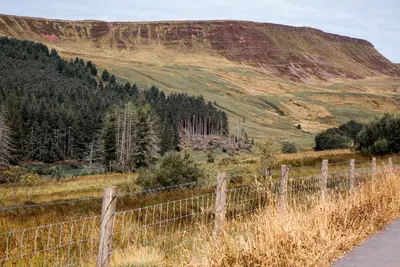
    <p>Wales can be traversed lengthwise in ten days, from Edward I's castles on the north coast, across the Eryri mountain range and the Pembrokeshire coast, to the capital. Distances are short, but the country is mountainous and major transport routes run from east to west, not north to south. Those wishing to travel the route by train will partially pass through England.</p><p>Place names are bilingual, and since 2023, the National Parks officially bear their Welsh names: Eryri instead of Snowdonia, Bannau Brycheiniog instead of Brecon Beacons. In the northwest, Welsh is the everyday language.</p><p>The western slopes of Eryri are among the rainiest areas in Great Britain. Between May and September it is most reliable, but waterproof clothing should still be packed.</p>
    NaN Days
    RV Friendly
    5 Stops
    England's National Parks: Peak District and Lake District
    Adventure
    England's National Parks: Peak District and Lake District
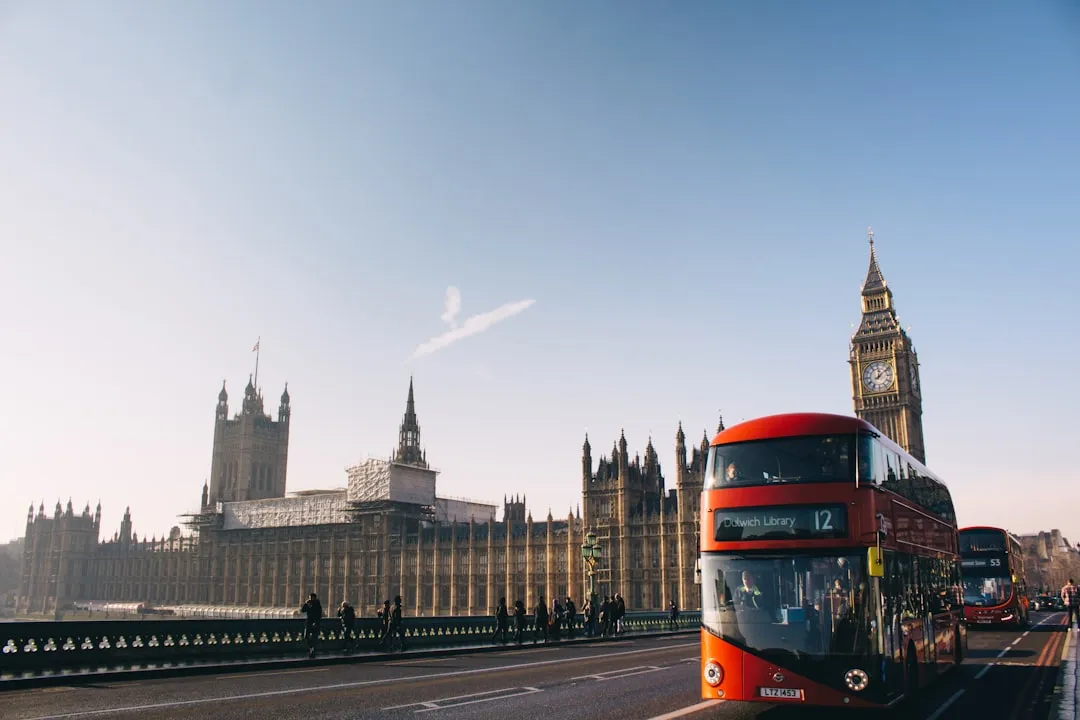
    <p>Two National Parks in northern England, about two hours' drive apart, yet fundamentally different. The Peak District is a cultural landscape of limestone, drystone walls, and stately homes, surrounded by Manchester, Sheffield, and Derby. The Lake District is high mountains in miniature, with deep lakes and fells over 900 metres.</p><p>Both are easily accessible by train, but on the ground, you'll need a car or good nerves for the bus routes. The Peak District was Britain's first National Park in 1951, prompted by the Mass Trespass on Kinder Scout two decades earlier.</p><p>Weather changes in both parks are swift and severe. For upland routes, a map, compass, and waterproof clothing belong in your pack; mobile network coverage isn't everywhere.</p>
    NaN Days
    RV Friendly
    2 Stops

    Places & Regions for RVs

    These places and regions in Great Britain are particularly well-suited for RV travel.
    Pembrokeshire Coast National Park

    Pembrokeshire Coast National Park

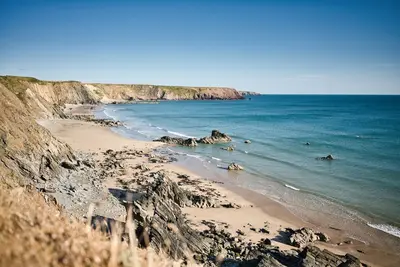
    The Pembrokeshire Coast National Park in southwest Wales is Great Britain's only national park consisting predominantly of coastline. It stretches as a narrow strip for over 400 kilometres of coastline and is in places only a few hundred metres wide.The rock types vary over short distances between Precambrian volcanite, Old Red Sandstone, and limestone, creating bays, rock arches, and sea cliffs in close proximity. The Pembrokeshire Coast Path follows the entire route; whoever walks its full length ascends more metres in elevation than climbing Everest.Off the coast lie Skomer and Skokholm, two islands with one of the world's largest colonies of Manx Shearwaters; in early summer, tens of thousands of puffins also breed here. On land, the density of prehistoric monuments is striking, including the Pentre Ifan Dolmen. The bluestones of Stonehenge demonstrably originate from the Preseli Hills in the north of the park.
    Cairngorms National Park

    Cairngorms National Park

    The Cairngorms National Park, covering 4,528 square kilometers, is Britain's largest national park, roughly twice the size of the Saarland. Its core is a granite plateau, home to five of Scotland's six highest mountains. The high plateau features subarctic tundra, the only significant area of its kind in the British Isles, with snow lingering in sheltered hollows in some places until mid-summer.On its fringes lie the last major remnants of the Caledonian Forest, the original Scottish pine forest that once covered vast areas of the Highlands and has now shrunk to just a few percent of its former extent. Here live capercaillie, ptarmigan, Scottish crossbill, and Britain's only wild reindeer herd, which was reintroduced in 1952.The weather on the plateau is the country's harshest; wind speeds exceeding 280 km/h have been recorded on Cairn Gorm. Anyone heading up needs winter gear and navigation skills, even in spring. In the valleys, however, the park is straightforward: Aviemore, Braemar, and Speyside with its whisky distilleries are easily accessible year-round.
    Bannau Brycheiniog (Brecon Beacons)

    Bannau Brycheiniog (Brecon Beacons)

    Bannau Brycheiniog, known as Brecon Beacons until 2023, is located in South Wales and consists of four distinct mountain ranges of Old Red Sandstone. The characteristic shape is uniform throughout: gently sloping southern slopes and abruptly dropping northern faces, carved out by glaciers. The highest point is Pen y Fan at 886 metres.The reversion to the Welsh name was a deliberate decision by the park authorities: Beacon refers to signal fires and thus to fossil fuels, which no longer seemed appropriate given the park's climate goals. Bannau simply means peaks.To the south, Waterfall Country around Ystradfellte is a zone where limestone and sandstone meet; several waterfalls cascade over rock steps, and behind Sgwd yr Eira, one can walk through. Beneath these lie extensive cave systems. The entire park is designated as an International Dark Sky Reserve, where the Milky Way is visible to the naked eye on clear nights.

    Travel Climate for RV Trips

    Important information about climate, weather, and the best travel time for your RV trip in Great Britain.

    May
    June
    July
    September
    12–17°C·55–70 mm(moderate rain)
    Die Monate Mai, Juni, Juli und September bieten in der Regel die angenehmsten Reisebedingungen in Großbritannien. Die Temperaturen sind mild bis warm, die Tage lang mit vielen Sonnenstunden, und obwohl Schauer jederzeit möglich sind, sind sie seltener und weniger intensiv als in den Herbst- oder Wintermonaten. Im Mai und Juni sind die Touristenmassen geringer als im Hochsommer, während der September noch milde Tage und weniger überfüllte Attraktionen bietet.
    Das Klima in Großbritannien ist typischerweise gemäßigt maritim, geprägt von den Einflüssen des Atlantiks und des Golfstroms. Dies führt zu milden Wintern, kühlen Sommern und ganzjährig wechselhaftem Wetter. Die Redewendung 'vier Jahreszeiten an einem Tag' beschreibt die Wettervariabilität treffend.Regionale Unterschiede: Die Wetterbedingungen variieren erheblich zwischen den Regionen:Norden (insbesondere Schottland und Nordengland): Kälter, windiger und niederschlagsreicher als der Süden.Westen (Wales, Westengland, Westschottland): Erhält durch die vorherrschenden Westwinde und die Nähe zum Atlantik deutlich mehr Niederschlag.Osten (Ostengland): Ist tendenziell trockener und sonniger, da es im Lee der westlichen Gebirgszüge liegt.Süden (Südengland): Ist im Allgemeinen die wärmste und sonnigste Region mit den geringsten Niederschlägen.Niederschlag: Obwohl es keine ausgeprägte Regenzeit gibt, sind Schauer und Regengebiete das ganze Jahr über üblich. Der Herbst und Winter sind tendenziell die feuchtesten Monate.Wind: Windige Tage sind in Großbritannien, insbesondere an den Küsten, häufig.Sonnenschein: Die Sommermonate bieten die längsten Tage und die meisten Sonnenstunden, während die Wintertage kurz und oft bewölkt sind.Schnee: Schnee ist in den tiefer gelegenen Gebieten eher selten und kurzlebig, in Schottland und den Bergregionen Nordenglands jedoch häufiger und anhaltender.Reisende sollten auf alle Wetterlagen vorbereitet sein und stets wetterfeste Kleidung mitführen, unabhängig von der Jahreszeit.

    Seasons

    Jan
    Feb
    Mär
    Apr
    Mai
    Jun
    Jul
    Aug
    Sep
    Okt
    Nov
    Dez
    Hauptsaison
    Zwischensaison
    Nebensaison
    Best Time to Visit
    ▶Show detailed monthly data
    MonthTemp (°C)Rain (mm)Sun (h)
    January4.0851.5
    February4.0602.5
    March6.0553.5
    April9.0505.5
    May12.0556.5
    June15.0607.0
    July17.0656.5
    August17.0706.0
    September14.0704.5
    October11.0803.0
    November7.0902.0
    December5.0901.5

    Warning: In the winter months, it can get very cold. Many campgrounds are closed. Make sure your RV is winter-ready.

    RV Tips for Great Britain

    Motorhome and Camping Trips in Great BritainThe UK is an excellent destination for exploring by motorhome or campervan, offering you flexible travel to truly experience its diverse landscapes and coastlines. From the rugged Scottish Highlands to the picturesque coasts of Cornwall, you'll discover routes often off the beaten track.Infrastructure and CampsitesThe UK's infrastructure for motorhome travellers is well-developed, but requires forward planning, especially during peak season.Campsites: You'll find a wide selection of campsites, ranging from simple natural pitches to luxurious sites with extensive amenities. Popular regions like the Lake District, Cornwall, or the Scottish Highlands have a high density of sites. It is advisable to book in advance, especially during summer months and holidays.Dedicated Motorhome Parking: Special motorhome parking areas (often referred to as “Aires” or “Motorhome Stops”) are rarer than in mainland Europe but are increasing. Some pubs or farms often offer paid pitches with basic facilities.Water and Waste Disposal: Many campsites offer facilities for fresh and grey water disposal, as well as chemical waste. You'll also find these facilities at some petrol stations or dedicated service points.Regulations and Driving in Great BritainBe aware of the specific traffic rules and conditions that affect motorhome driving in Great Britain.Left-hand Traffic: Driving on the left side of the road is the biggest adjustment. Allow extra time to get accustomed to it. Roundabouts require particular attention.Road Conditions: Many country roads, especially in rural or mountainous regions like Wales, Scotland, or the Dales, can be very narrow. There are often only Single Track Roads with specific passing places (Passing Places). With larger motorhomes, you should choose these routes carefully.Wild Camping: Generally, wild camping in England and Wales is not permitted without the explicit permission of the landowner and can lead to fines. In Scotland, the Right to Roam applies, which under certain conditions allows overnight stays in a motorhome away from campsites, but with strict rules regarding waste disposal and minimizing environmental impact. Inform yourself in advance about the exact regulations for the region you plan to visit.Environmental Zones: Major cities like London have Environmental Zones (ULEZ – Ultra Low Emission Zone) which can charge high fees for older or larger vehicles. Before entering cities, check the respective regulations for your vehicle.Costs and RecommendationsThe costs for a motorhome trip in Great Britain can vary.Campsite Fees: Expect to pay approximately 20 to 50 GBP per night for a pitch at a campsite, depending on location, season, and facilities.Fuel: Fuel prices in Great Britain are generally higher than the European average.Recommended Regions:Scotland: The North Coast 500 is a popular scenic route, but the Isle of Skye or the Hebrides also offer spectacular landscapes.Wales: Snowdonia National Park and the coastline of Pembrokeshire are excellent for outdoor activities.England: The Lake District, the Yorkshire Dales, and the coasts of Devon and Cornwall offer charming villages and impressive nature.

    General RV Travel Tips

    Planning Routes

    Choose routes that are suitable for RVs. Pay attention to road width, height restrictions, and parking options.

    Booking Campgrounds

    Especially during peak season, you should book campgrounds in advance. Many RV parks are also available spontaneously.


    Also interesting

    Traveling with kids in Great Britain

    Wohnmobil-Reise planen

    Plan Your RV Trip

    Create your individual RV route for Great Britain now with our free planning tool. Add stops, plan campgrounds, and organize your perfect trip.