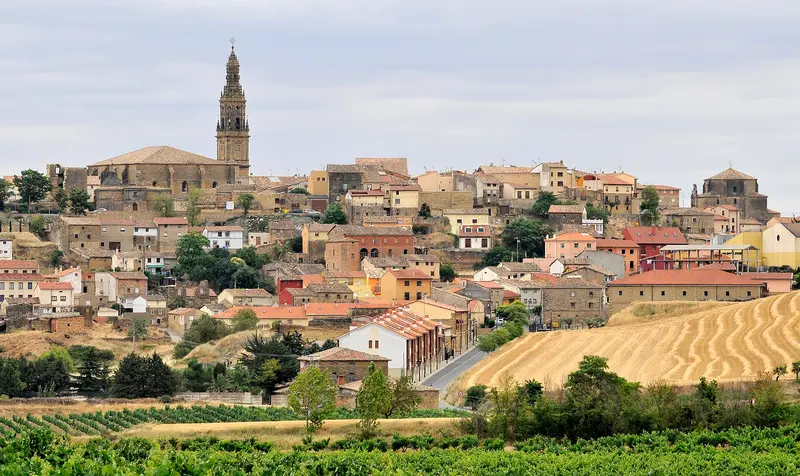
The route begins in Haro in the Rioja Alta wine region and leads to Logroño with its Tapas Street Calle Laurel, then down the Ebro to Calahorra and Tudela in Navarra. The stages rarely last more than an hour. Many bodegas offer guided tours by prior arrangement.
8 Days / 7 Nights
May–June & September–October
RV Friendly
4 stops
Why This Route?
For food and wine lovers who want to combine bodegas, tapas, and small towns on short legs.
Hidden Gems
Barrio de la Estación in Haro, where several traditional bodegas lie side-by-side
Briones near Haro, a hilltop village with the Vivanco Wine Museum
Cerro de Santa Bárbara in Tudela with views over the city and the Ebro
Itinerary
Stop 1 • 2 Nights
Haro
City
Culinary highlights. Rich in culture and history.
Haro, the center of Rioja Alta, is closely tied to Spanish wine culture. Here you'll find the historic Barrio de la Estación, a cluster of traditional bodegas that arose following the railway's arrival in the 19th century. The city center is marked by the Plaza de la Paz and its 18th-century town hall, while the Basílica de Nuestra Señora de la Vega is situated by the Jardines de la Vega. The Church of Santo Tomás impresses with its 1525 portal by Felipe Bigarny and its 18th-century baroque bell tower. An annual highlight is the Batalla del Vino on June 29, a traditional wine battle at the Riscos de Bilibio. In spring or autumn, you'll find pleasant temperatures and fewer crowds in the region. For wine tastings, book tours at the bodegas in the Barrio de la Estación in advance.
Culinary highlights. Perfect for an exciting city trip and Rich in culture and history.
Logroño, capital of the La Rioja region and located on the Way of St. James, is a hub for Spanish wine culture and gastronomy. The Calle Laurel in the historic center is particularly well-known, where you can experience an authentic tapas culture with countless bars and local specialties. Architectural highlights include the Concatedral de Santa María de la Redonda and the Puente de Piedra over the Ebro. Explore the Old Town during the day or visit a Bodega, before enjoying the Pintxos of Calle Laurel in the evening.
Calahorra is the most important town in Rioja Baja, boasting a long history and rich agricultural heritage. To explore La Rioja beyond wine, you'll discover Roman remains, impressive churches, and a culture revolving around the products of its fertile Vega. No wonder Calahorra is known as the "Vegetable Capital".
3 Sights
4 Restaurants
Calahorra: History and Cultural Heritage
Calahorra, one of La Rioja's oldest cities, boasts a history spanning over two millennia. Its past is deeply rooted in the Roman era, influencing the cityscape and local traditions to this day.The city became known as the Roman settlement of Calagurris Nassica Iulia, a strategically important location and the birthplace of the renowned rhetorician Quintilian. Numerous archaeological finds attest to this flourishing period, including remains of Roman baths and sewers. In the 9th and 10th centuries, the city was under Moorish rule, and in 1045, it was conquered by García Sánchez III of Pamplona.The Cathedral of Santa María, whose current construction began in the late 15th century, is located in the lower town on the banks of the Cidacos, where tradition holds that the patron saints Emeterius and Celedonius suffered martyrdom. It combines Gothic, Renaissance, and Baroque elements; the Diocesan Museum in the cloister displays sacred art. The Bishop's Palace and various convents also contribute to the architectural diversity.Culturally, Calahorra is strongly influenced by its fertile surroundings. The annual Jornadas de la Verdura (Vegetable Days) in April celebrate the agricultural tradition and the quality of local produce.
Tudela, in the south of Navarra, is the region's second-largest city and the main town of the Ribera on the Ebro. In the Middle Ages, Muslims, Jews, and Christians lived here side-by-side; their traces can still be found today in the winding streets of the old town. Tudela is also known for the vegetables from its fertile Ribera gardens. The city combines tradition and modern life.