The route starts in Santiago de Compostela, leads to the Atlantic coast to A Coruña, and continues to Ribadeo on the border with Asturias. From there, it's about four hours along the Cantabrian Coast to Bilbao. In summer, it's cooler and quieter here than in southern Spain.
9 Days / 8 Nights
June–September
RV Friendly
4 stops
Why This Route?
For travelers seeking lush coast, fishing villages, and regional cuisine in summer, avoiding southern heat.
Hidden Gems
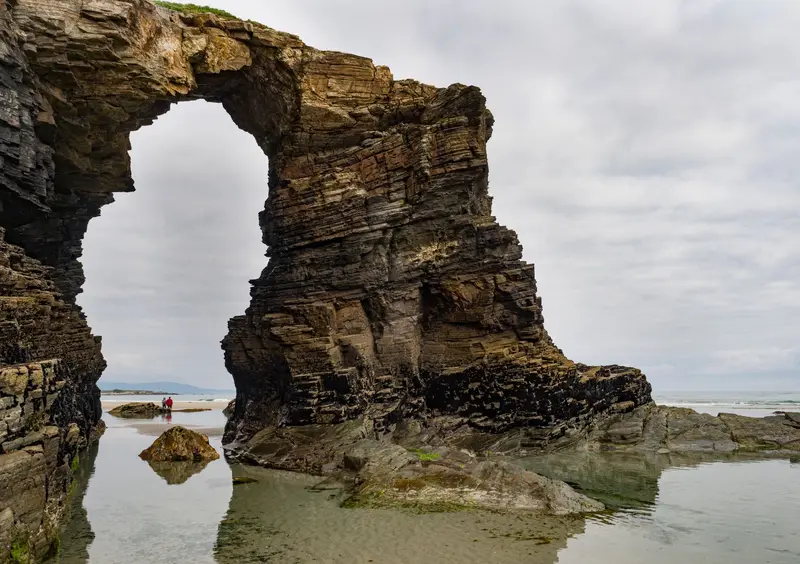
Playa de las Catedrales near Ribadeo early in the morning at low tide, in summer only with pre-booked permission
Illa Pancha near Ribadeo, a small lighthouse island you reach via a pedestrian bridge
Mercado de la Ribera in Bilbao, a market hall on the banks of the Ría with Pintxo stalls
Itinerary
Stop 1 • 2 Nights
Santiago de Compostela
City
Rich in culture and history. Perfect for an exciting city trip and Route highlight.
Santiago de Compostela, the capital of Galicia, is the destination of the Way of St. James and one of Europe's most famous pilgrimage sites. It's worth visiting for the Cathedral above the tomb of Apostle James, with its Romanesque Pórtico da Gloria, and for the Old Town, a UNESCO World Heritage site since 1985. In its alleys, pilgrims, students, and travelers mingle, and Romanesque, Gothic, and Baroque buildings stand close together.
Perfect for an exciting city trip. Rich in culture and history.
This vibrant port city on the Galician Atlantic coast is known for its Roman Tower of Hercules, which is considered the world's oldest continuously operating lighthouse and a UNESCO World Heritage site, as well as for its glazed balconies (Galerías).
7 Sights
5 Restaurants
Culture, Arts, and Heritage
A Coruña boasts a rich and complex history, stretching from pre-Roman settlements like the Castro de Elviña to Roman rule. The Tower of Hercules, a UNESCO World Heritage site and the oldest operating lighthouse in the world, attests to the city's significance as the ancient settlement of Brigantium. Its coastal location shaped its development over centuries as a port and trade center.During the Middle Ages and early modern period, A Coruña was a vital defensive point and port, from where the Spanish Armada departed in July 1588. The Cidade Vella (Old Town) reflects these eras, with narrow streets and the Romanesque Collegiate Church of Santa María do Campo from the 12th and 13th centuries. The cityscape is characterized by the "Galerías," glass-enclosed balconies, especially along the Avenida de la Marina.The city is deeply rooted in Galician culture, reflected in the preservation of the Galician language and local traditions. Figures like María Pita, who distinguished herself in 1589 during the defense against the English fleet under Sir Francis Drake, are firmly embedded in the collective memory.
Ribadeo is a small town on the coast of Galicia and a good starting point to explore the Ría de Ribadeo and the famous Praia das Catedrais. You can expect a mix of maritime history, nature, and good food.
5 Sights
5 Restaurants
Culture, Art, and History of Ribadeo
Ribadeo is located at the mouth of the Río Eo and developed around the port basins of Porcillán and Cabanela. Its development was influenced by seafaring and its border location with Asturias.The town's architecture reflects this past. Particularly striking are the Casas de Indianos, elaborately designed villas belonging to emigrants who had become prosperous in Latin America. The most renowned building is the Torre de los Moreno, dating from 1913 to 1914. The historic core also features the neoclassical Pazo de Ibáñez from the late 18th century, now the town hall, and the Church of Santa María do Campo, originally the church of a Franciscan monastery with Gothic portals, which was rebuilt and extended in 1902.The sea has shaped daily life and cuisine for centuries. On the first Sunday in August, a Romería takes place on Monte Santa Cruz, designated as a festival of tourist interest. In the San Roque quarter, the San Roque festival is celebrated in mid-August. The coastal path of the Camino de Santiago (Camino del Norte) leads over the Puente de los Santos through Ribadeo to Galicia.
Perfect for an exciting city trip. Rich in culture and history and Culinary highlights.
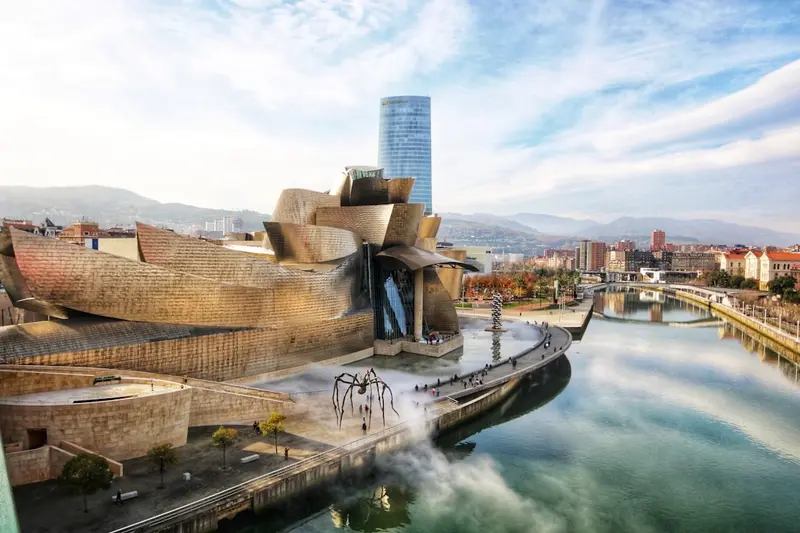
Bilbao is the largest city in the Basque Country and a prime example of successful urban regeneration. The Guggenheim Museum has transformed the former industrial city into a hub for art and culture.
8 Sights
5 Restaurants
Bilbao: Art, Culture and History
Bilbao, long a center of Basque industry, has transformed from a medieval trading port into a modern cultural city. Founded in 1300, the city experienced a boom through iron ore trade and shipbuilding, which significantly shaped its development. Its architecture speaks of tradition and modern design.The spectrum ranges from the winding Casco Viejo with the Gothic Santiago Cathedral to the stately townhouses on Gran Vía in Ensanche, the late 19th-century urban expansion. A turning point was the opening of Frank Gehry's Guggenheim Museum in 1997, which established Bilbao internationally as a destination for contemporary architecture and art. Structures like Santiago Calatrava's Zubizuri Bridge or César Pelli's Iberdrola Tower underscore this transformation.Culturally, Bilbao is rooted in Basque identity, evident in the preservation of the Euskera language and numerous traditions. The Pintxo culture is a central part of social life. Important cultural institutions alongside the Guggenheim include the Museo de Bellas Artes with an extensive collection of classical and modern art, as well as the Arriaga Theatre. The annual Aste Nagusia (Great Week) in August is a celebration of Basque culture with music, dance, and sports.