The route leads from Upington to the Kgalagadi Transfrontier Park with red dunes, lions, cheetahs and oryx, then to the Augrabies Falls on the Orange and via Springbok to Namaqualand. Distances are long: plan full driving days, refuel at every chance.
14 Days / 13 Nights
May–September
5 stops
Why This Route?
For self-drivers: long, empty roads, big cats in Kgalagadi and in late winter the blooming Namaqualand.
Hidden Gems
Lit waterhole at Nossob Camp in Kgalagadi
Moon Rock at Augrabies Falls, a granite dome with panoramic views
Skilpad section of Namaqua National Park at Kamieskroon for the bloom in August and September
Itinerary
Stop 1 • 2 Nights
Upington
City
Upington is the largest city in the north of the Northern Cape, situated on the Orange River, creating a green oasis of vineyards, raisin and date farms in the semi-desert. For travellers, it serves mainly as a supply stop and base for the Kgalagadi and the Augrabies Falls.
4 Sights
1 Restaurant
Chronicle
Founded in 1871 as the Olyvenhoutsdrift mission station on the Orange, Upington was later named after Thomas Upington, then Prime Minister of the Cape Colony. Irrigation canals made the river valley fertile. The historic Schröder House recalls missionary Christiaan Schröder, founder of the station.
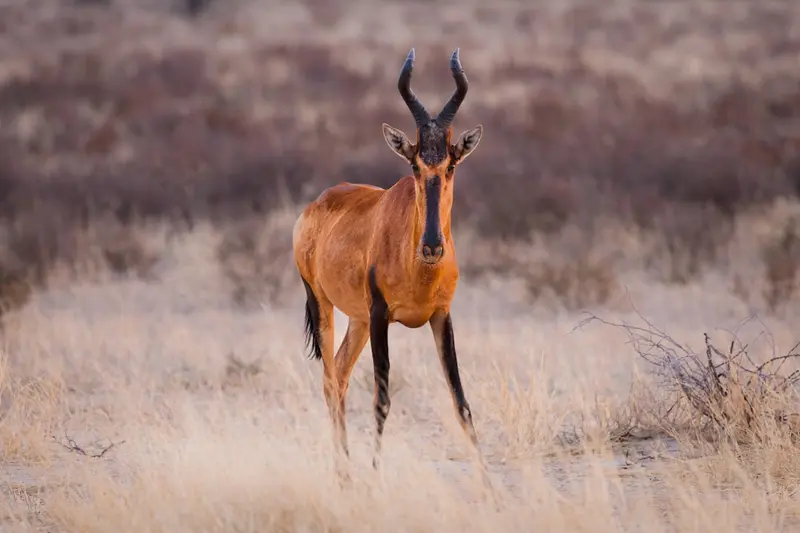
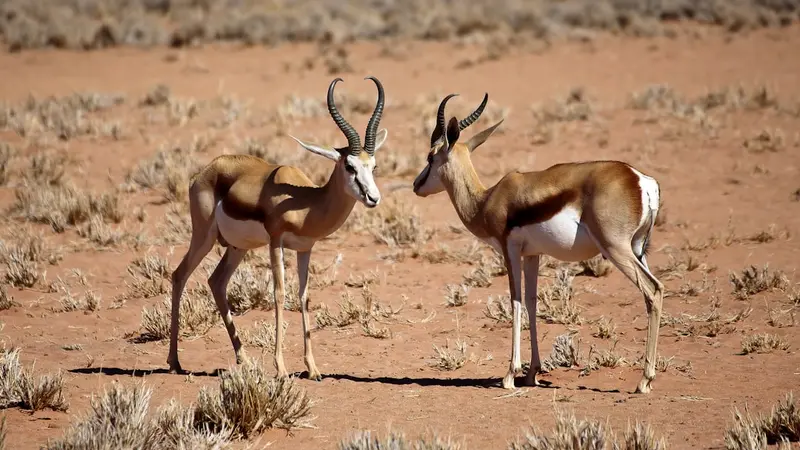
The Kgalagadi Transfrontier Park is located in the far northwest of South Africa on the border with Botswana and Namibia, approximately 250 kilometers north of Upington. Red Kalahari dunes and two dry riverbeds characterize the landscape; here live black-maned lions, cheetahs, oryx, and springboks.
4 Sights
4 Restaurants
The Kalahari People
The Kalahari has been home to the San for millennia, who lived here as hunter-gatherers. Following the end of Apartheid, the ‡Khomani San and the Mier community regained land rights in and around the park in 2002. On the southern edge of the park, they run projects such as the !Xaus Lodge, where you can learn more about their culture.
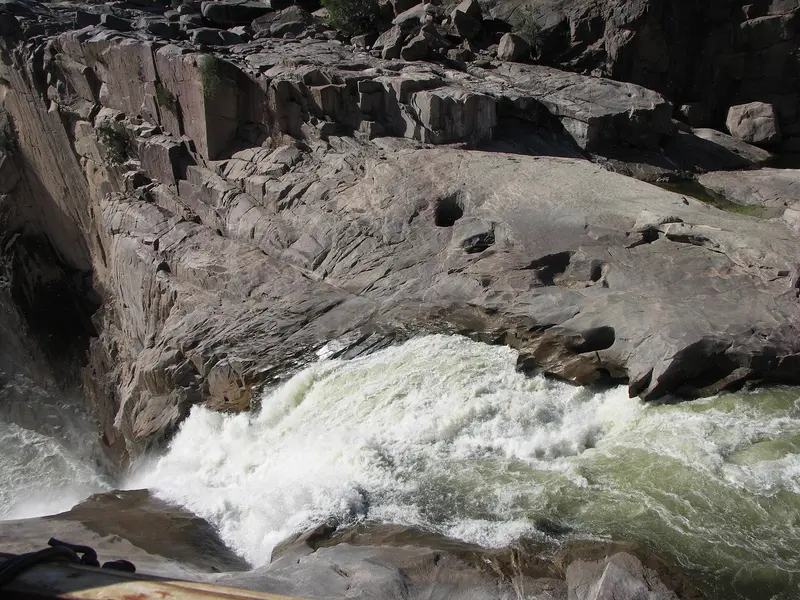
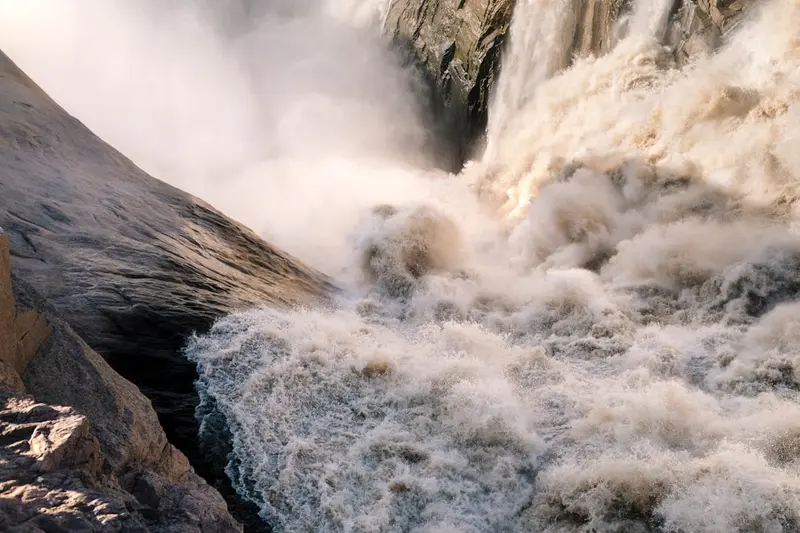
In Augrabies Falls National Park in the Northern Cape, about 120 kilometers west of Upington, the Orange River plunges approximately 56 meters into an 18-kilometer-long granite gorge. Surrounding it is a barren semi-desert with smooth, polished rock domes, quiver trees, and rock hyraxes.
4 Sights
3 Restaurants
The Boisterous Place
The region along the Oranje was long home to Khoekhoe and San. They gave the name Aukoerebis, which later became Augrabies. The National Park was founded in 1966. Today, winegrowing, raisins, and dates characterize the irrigated valley around Kakamas and Keimoes.
Rich in culture and history. For adventure seekers.
Springbok is the main town of Namaqualand on the N7, approximately 550 kilometres north of Cape Town and a good 100 kilometres before the border with Namibia. During the wildflower season, the small town is the most important base for excursions; the rest of the year, it's a practical stopover.
4 Sights
2 Restaurants
Copper and Nama
The town was founded in 1862 during the copper boom, named after the springboks drinking here at a spring. The Nama, the region's original inhabitants, primarily live in the surrounding communities and Richtersveld. Their traditional, mat-covered round huts are called Matjieshuise.
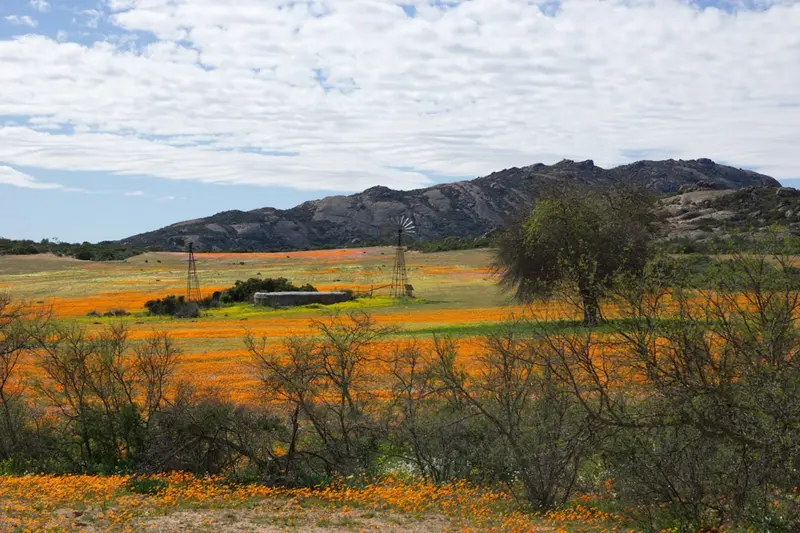
Namaqualand is a barren semi-desert in northwestern South Africa between the Atlantic Ocean and the border to Namibia, about five hours' drive north of Cape Town. Following sufficient winter rains, the landscape transforms in spring, usually from mid-August to mid-September, into a sea of orange, yellow, and white wildflowers.