Ten days in southern Tunisia: from the island of Djerba to the cave dwellings of Matmata, to Douz on the edge of the Grand Erg Oriental, and across the Chott el Djerid salt lake to Tozeur and Nefta. Parts of the route lie in areas covered by specific warnings in the UK FCDO Travel Advice. Check the current advice before you travel and only go into the desert on organised tours with local operators.
10 Days / 9 Nights
November to March
7 stops
Why This Route?
The route shows the full range of the south: island life on Djerba, Berber villages in the hills, palm oases and the salt plain of the Chott. The climate is ideal for it in the winter months.
Hidden Gems
Walk among the Djerbahood murals on Djerba
Spend a night in one of Matmata's cave hotels
Cross the Chott el Djerid when the sun is low
Getting there and back
Round trip, returning to where you started
Arrival
Flight · Djerba-Zarzis (DJE)Djerba has direct flights from Germany, Austria and Switzerland, Tozeur does not, so the route starts and ends on Djerba. You reach the mainland on the car ferry from Ajim to Jorf.
Departure
Flight · Djerba-Zarzis (DJE)
Itinerary
Stop 1 • 3 Nights
Djerba
City
Route highlight
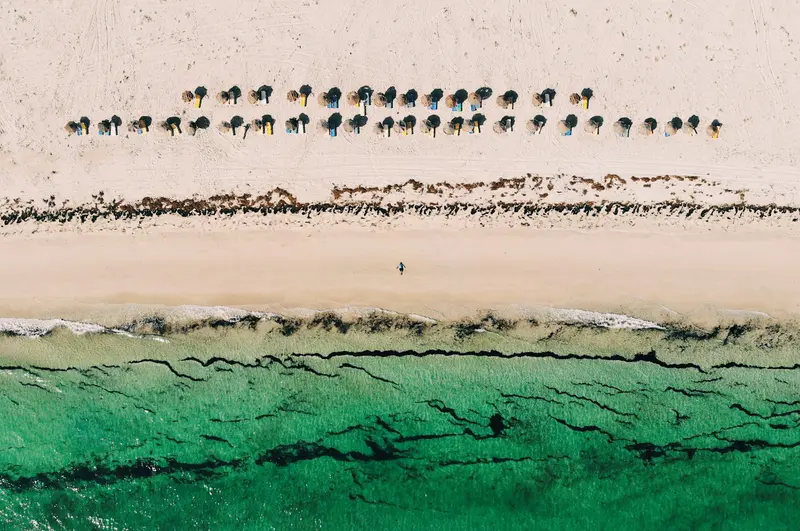
Djerba is a flat island in the Gulf of Gabès, in southeastern Tunisia, and has been a UNESCO World Heritage site since 2023. You go there for long sandy beaches on the northeast coast, the souks of Houmt Souk, and villages like Erriadh and Guellala, where Jewish, Ibadite, and Berber traditions coexist.
The island, covering approximately 514 km², has a population of just under 190,000 (2024 census). Its main town is Houmt Souk in the north, and hotels are primarily located along the coast around Sidi Mahrez. Public transport is limited; most journeys are made by taxi, rental car, or bicycle.
Island capital Houmt Souk, beaches and the Djerbahood street art; the island has been a UNESCO World Heritage Site since 2023
11 Sights
5 Restaurants
Culture
An island World Heritage SiteUNESCO inscribed Djerba in 2023 as testimony to a distinctive settlement pattern. The island is divided into districts (houma) made up of scattered farmsteads (menzel) that were long self-sufficient.Faith communitiesDjerba is still home to a Jewish community, mainly in Erriadh and Houmt Souk. Its centre is the La Ghriba synagogue, the destination of an annual pilgrimage about three weeks after Passover.Many Muslim Djerbans traditionally follow the Ibadi branch of Islam. The plain, whitewashed mosques scattered across the island bear witness to this.Crafts and marketsPottery: many potters still work in Guellala in the south of the islandSouks: textiles, spices, dates, ceramics and silver jewellery in Houmt Souk; bargaining is normalStreet art: since 2014 international artists have painted the house walls of Erriadh as part of the Djerbahood project
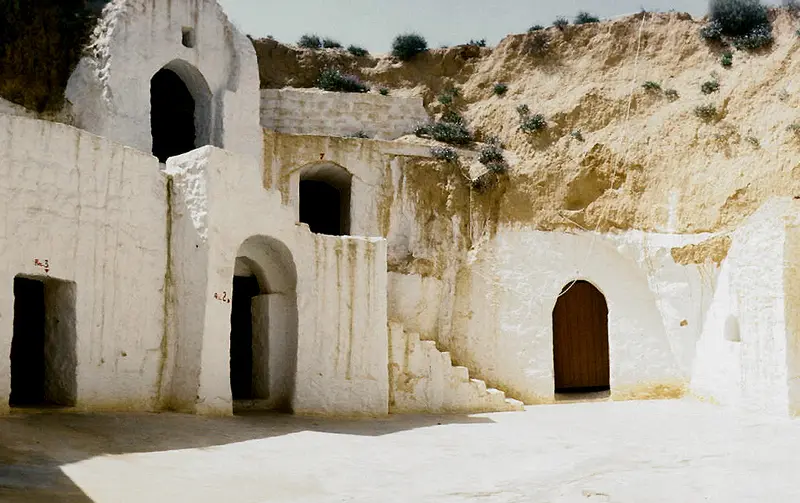
Matmata is a Berber village about 600 m high, 40 km southwest of Gabès in southern Tunisia. You visit to see the dwellings dug into the earth around a deep courtyard, including the Hotel Sidi Driss, a filming location for 'Star Wars'.The old village is small and easily explored on foot. New Matmata, the current main town, is approximately 15 km away.
Cave dwellings around a courtyard, among them the Hotel Sidi Driss from Star Wars
3 Sights
2 Restaurants
Culture
Life Underground
A large pit was dug for Matmata's houses. The rooms are artificial caves arranged around this courtyard; some complexes connect several pits via narrow passages.
Temperatures inside the dwellings remain constant: around 15 °C in January and 23 to 25 °C in July. Some families offer tours of their homes for a tip; your hotel can arrange the visit.
Language and Villages
Berber is still spoken in the neighbouring village of Tamezret, but hardly any more in Matmata itself. The old mountain village is now largely deserted; many residents live in New Matmata.
Security Notice
Matmata is located north of the line for which the German Federal Foreign Office advises against travel to the south, but is already in the country's south. Before your trip, check the current UK FCDO travel advice for Tunisia and, if you travel from Germany, the advice of the German Federal Foreign Office.
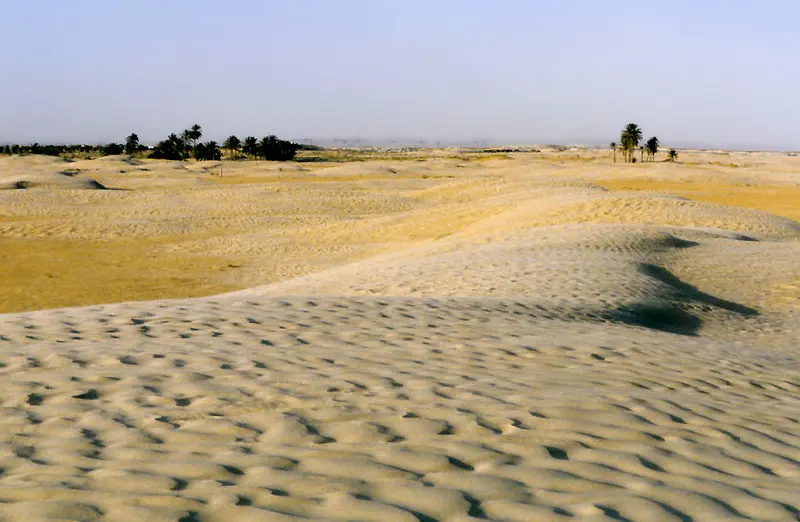
Douz is known as the gateway to the Sahara: the oasis town in Kebili governorate lies about two hours' drive southeast of Tozeur on the edge of the Grand Erg Oriental. You come for the first big sand dunes, organised camel rides and the Festival international du Sahara in December.The town has around 30,000 inhabitants, most of them from the Mrazig tribe. Douz lies on the edge of areas covered by official travel warnings, and independent desert trips are advised against: check the current travel advice, such as the UK FCDO Travel Advice, before you go.
Dunes on the edge of town; desert trips only as organised tours, check the current FCDO Travel Advice
4 Sights
4 Restaurants
Spirit
Mrazig and CaravansDouz was once an important stop for caravans between the Sahara and Northern Tunisia. Today, the Mrazig mostly live a sedentary life; date palms and tourism have replaced oasis trade.Market: daily handicrafts, Thursday animal market with donkeys and dromedariesFestival international du SaharaThe festival lasts four days and brings together nomadic groups from Tunisia and other countries. The program includes dromedary and horse shows, poetry competitions, music, and dance.Date 2026: The 58th edition is announced for December 19 to 22, 2026. Check the date before your tripDunes and DesertAt the edge of the city, the dunes of the Grand Erg Oriental begin. You can book camel rides and off-road vehicle tours with operators in the center. The Federal Foreign Office advises against individual, unorganized desert tours and travel to areas further south.
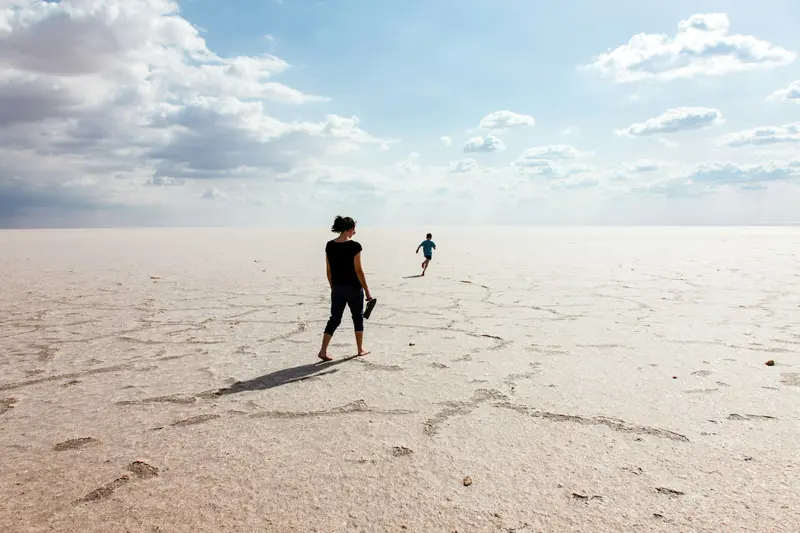
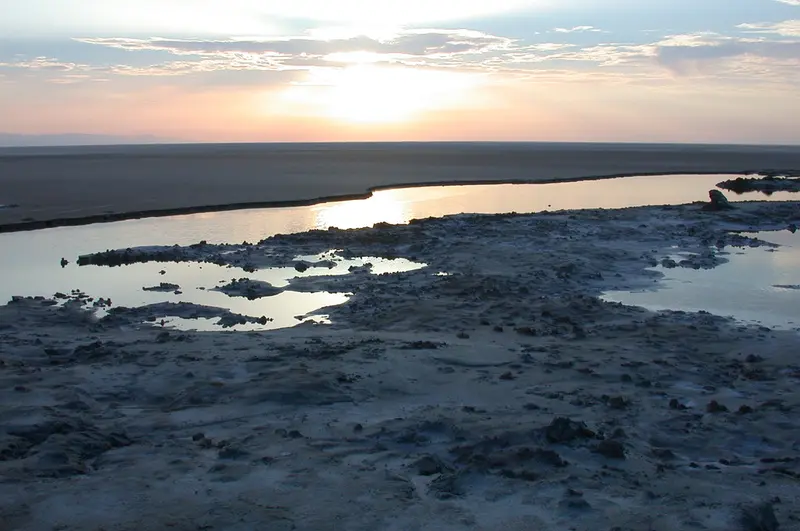
The Chott el Djerid is a vast salt lake between Tozeur and Kebili in southwestern Tunisia, the largest salt flat in the Maghreb. You experience it on the causeway road from Tozeur to Douz, which runs across the white salt crust.Depending on the source and the water level, the lake covers 5,000 to over 7,000 square kilometres. It lies on the edge of areas covered by official travel warnings: check the current travel advice, such as the UK FCDO Travel Advice, before you go.
Along the road across the salt lake to Tozeur
Nature and Film
Salt, Water and ColorsThe surface is a plantless clay crust with salt crystals, approximately 15 to 20 meters above sea level. In winter, a thin layer of water stands in places; in summer, the lake almost completely dries out, leaving behind a salt film.Colors: Parts of the lake temporarily appear white, green, or violetFata Morgana: In summer, when the lake is almost dry, mirages frequently occurFilm SetAt Chott el Djerid, the set of the Lars family's homestead from Star Wars was located. The lake also later served as a filming location for the film series.
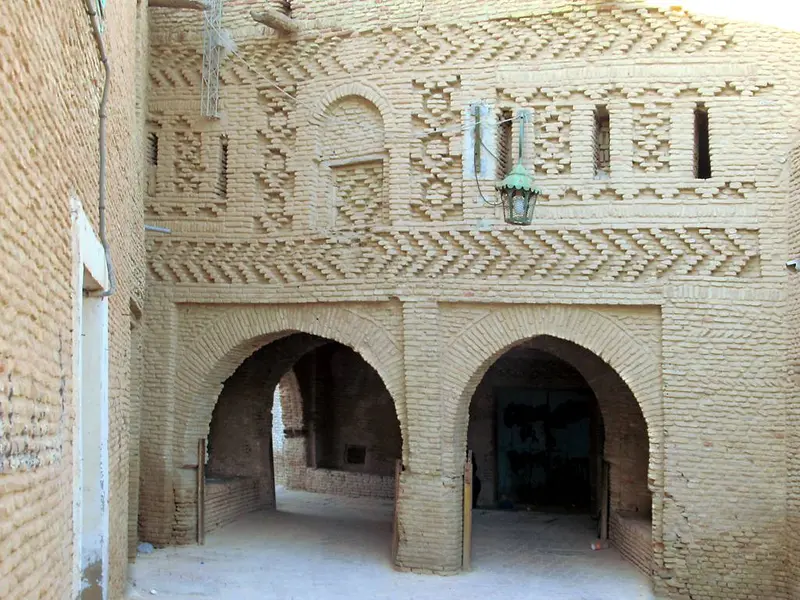
Tozeur is the main town of the Djerid in southwestern Tunisia, about 450 kilometres southwest of Tunis on the northern edge of the Chott el Djerid salt lake. You come for the Ouled el Hadef old town with its patterned brickwork and for the palm grove with around 400,000 date palms.The town has just under 40,000 inhabitants and is easy to explore on foot, by bicycle or by horse-drawn carriage. Tozeur lies on the edge of areas covered by official travel warnings: check the current travel advice, such as the UK FCDO Travel Advice, before you go.
Palm oasis and old town; base for Nefta
7 Sights
5 Restaurants
Culture
Brick architectureThe old town of Ouled el Hadef is built entirely of light, fired clay bricks. The façades show raised geometric patterns reminiscent of carpets and calligraphy. A municipal rule still requires new buildings to be partly clad in local brick.Water and datesThe palm grove covers around 1,000 hectares. Tozeur is known for the Deglet Nour date and supplies about a third of Tunisia's date harvest.Ibn Chabbat: the scholar, born in Tozeur in 1221, is credited with the system for sharing the oasis waterToday: the former 150 to 200 springs have largely dried up, and most irrigation now comes from deep wellsPoet and festivalsTozeur is the home town of the poet Abou el Kacem Chebbi (1909 to 1934). The Belvédère viewpoint (Ras el Aïn) on the west side of town is dedicated to him, with views over the palm grove and the chott.Festival international des Oasis: four days of camel and horse races, music and poetry contests, traditionally in December
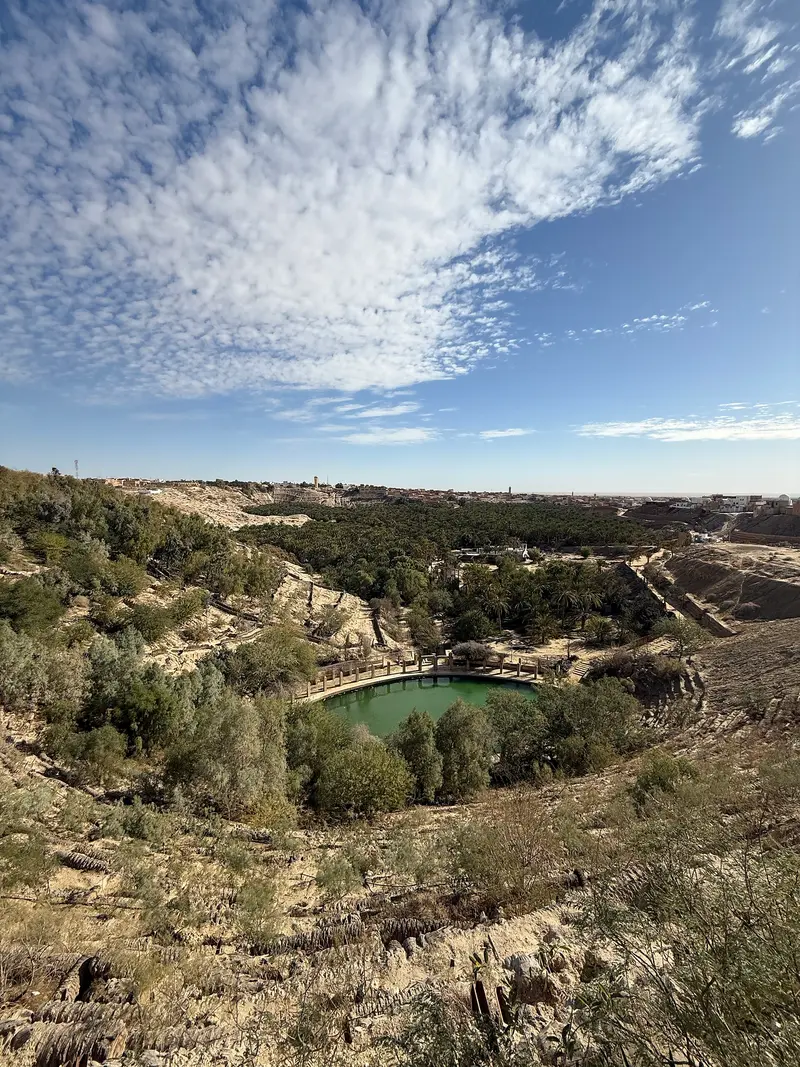
Nefta is the second major oasis of the Djerid, about 25 kilometres west of Tozeur between the Chott el Djerid and the first sand dunes. The town is known for the Corbeille, a palm-filled rocky basin, and as the centre of Sufism in Tunisia.Nefta has just over 20,000 inhabitants and an old town of patterned mud brick. It lies close to the Algerian border on the edge of areas covered by official travel warnings: check the current travel advice, such as the UK FCDO Travel Advice, before you go.
Half-day trip from Tozeur
4 Sights
2 Restaurants
Legacy
SufismFollowing the Islamic conquest, Nefta became a center of Sufism. The town counts around one hundred marabouts.Sidi Bou Ali: This saint is said to have introduced Sunni Islam to Nefta in the 13th century; an annual pilgrimage is made to his zaouia.Great Mosque of Sidi Salem: dating from the 15th century.Oasis and Palm GroveThe palm grove covers a good 1,600 hectares and produces Deglet Nour dates. Previously, 152 springs from the Corbeille irrigated the gardens, but most have dried up since the 1980s.FilmScenes for films like The English Patient and Star Wars were shot around Nefta. The set of Mos Espa is located in the desert near Ong Jemel, off the Nefta–Tozeur road. It lies close to the Algerian border and is visited with organized tours; check the current official travel advice beforehand.
Djerba is a flat island in the Gulf of Gabès, in southeastern Tunisia, and has been a UNESCO World Heritage site since 2023. You go there for long sandy beaches on the northeast coast, the souks of Houmt Souk, and villages like Erriadh and Guellala, where Jewish, Ibadite, and Berber traditions coexist.
The island, covering approximately 514 km², has a population of just under 190,000 (2024 census). Its main town is Houmt Souk in the north, and hotels are primarily located along the coast around Sidi Mahrez. Public transport is limited; most journeys are made by taxi, rental car, or bicycle.
Drive back via Gabès, around 370 kilometres and just over five hours; one night buffer before the flight home
11 Sights
5 Restaurants
Culture
An island World Heritage SiteUNESCO inscribed Djerba in 2023 as testimony to a distinctive settlement pattern. The island is divided into districts (houma) made up of scattered farmsteads (menzel) that were long self-sufficient.Faith communitiesDjerba is still home to a Jewish community, mainly in Erriadh and Houmt Souk. Its centre is the La Ghriba synagogue, the destination of an annual pilgrimage about three weeks after Passover.Many Muslim Djerbans traditionally follow the Ibadi branch of Islam. The plain, whitewashed mosques scattered across the island bear witness to this.Crafts and marketsPottery: many potters still work in Guellala in the south of the islandSouks: textiles, spices, dates, ceramics and silver jewellery in Houmt Souk; bargaining is normalStreet art: since 2014 international artists have painted the house walls of Erriadh as part of the Djerbahood project