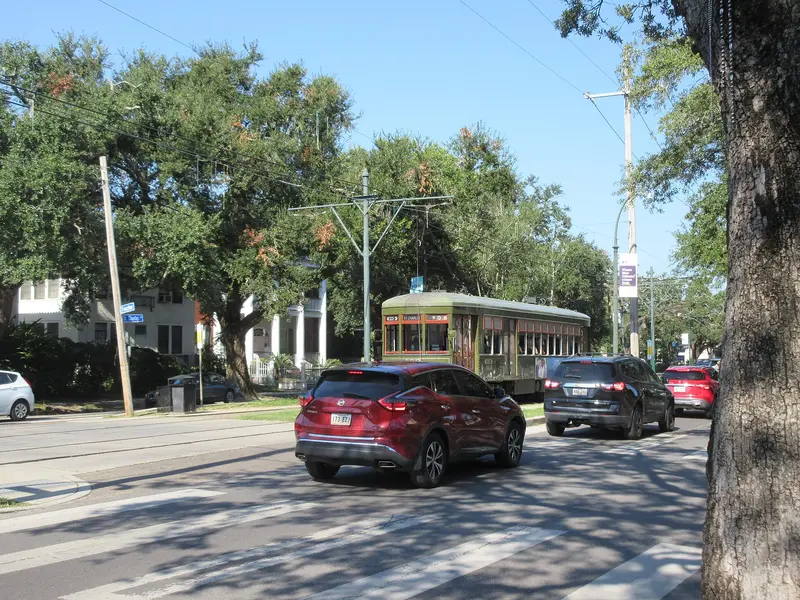
Infrogmation of New Orleans / Wikimedia Commons / CC BY-SA 4.0, mod.
City trip · United States
New Orleans in Four Days
by Felix Gillen
- 5 Days / 4 Nights
Four days in a city where music is part of everyday life: the French Quarter in the afternoon and with jazz at night; Tremé, Bayou St. John and City Park; the Garden District and Uptown by streetcar along St. Charles Avenue; and finally the Marigny, Bywater and the ferry across the Mississippi. New Orleans sits in a bend of the river, so people here don't say north and south but riverside and lakeside, uptown and downtown. Streetcars, buses and walking get you around well; at night take a taxi for longer trips.
At a glance
- Duration
- 5 Days / 4 Nights
- Stops
- 1
- Arrival
- Flight · New Orleans (MSY)
- Best Time to Go
- October to early December and March to May: warm without being oppressive. Jazz Fest is in late April and early May, Mardi Gras fills the city and raises prices
More on when to go
June to September is hot and humid, and hurricane season runs from June to November.
1 stop
Why This Route?
Most visitors stay between Bourbon Street and Jackson Square. This route includes the French Quarter but then heads into the neighbourhoods where jazz, brass bands and Creole cooking come from, Tremé, Mid-City, Bywater and Uptown, with restaurants families have run for decades and music in neighbourhood bars.
Hidden Gems
- The ferry from Canal Street to Algiers Point shows you the skyline from the Mississippi
- On Wednesdays the Treme Brass Band plays at the Candlelight Lounge, with red beans and rice included in the cover
- The Besthoff Sculpture Garden at the New Orleans Museum of Art is open daily at no charge
Getting there and back
Round trip, returning to where you started
- Arrival
- Flight · New Orleans (MSY)There are no direct flights to New Orleans from Germany, Austria or Switzerland; you change at one of the big hubs in the US or Europe. From the airport the RTA 202 Airport Express bus runs roughly hourly, for a normal bus fare, to downtown at Poydras Street and the Union Passenger Terminal; from there the Canal streetcar takes you to the French Quarter.
- Departure
- Flight · New Orleans (MSY)Back to the airport on bus 202 from Poydras Street; it runs only about once an hour, so allow plenty of time. Alternatively take a taxi.
Day by day
Day 1: The French Quarter in the afternoon and with jazz
- The Historic New Orleans CollectionA good first stop on Royal Street: a museum on the history of the city and the Gulf Coast, free with a ticket from the front desk; closed Mondays.
- Napoleon HouseA late lunch of warm muffuletta and a Pimm's Cup at the corner of Chartres and St. Louis Street.
- Jackson Square and St. Louis CathedralThe former Place d'Armes with the cathedral, the Cabildo and the Presbytère; then along Decatur Street towards the French Market.
- New Orleans Jazz Museum (Old U.S. Mint)At the end of the French Market in the old mint; open until 4 pm Wednesday to Sunday, until 6 pm on Tuesdays, closed Mondays. A good introduction before you hear jazz in the evening.
- Preservation HallTraditional jazz without amplification in short sets; buy tickets online in advance.
- The Spotted Cat Music ClubThen on to Frenchmen Street in the Marigny: several live sets every evening, very busy at weekends.
Day 2: Trémé, Bayou St. John and City Park
- Café du MondeBeignets and café au lait with chicory early in the morning, when you get a table faster; then across Rampart Street into Trémé.
- Louis Armstrong Park and Congo SquareOn Congo Square enslaved Africans gathered on Sundays to trade, drum and dance; the park has statues of Louis Armstrong, Sidney Bechet and Buddy Bolden.
- Dooky Chase's RestaurantLunch buffet Tuesday to Friday with fried chicken, gumbo and red beans at Leah Chase's restaurant, which became a meeting place of the civil rights movement.
- City Park and New Orleans Museum of ArtTake the Canal streetcar, City Park/Museum branch, to the museum; the Besthoff Sculpture Garden next door is free, and the park has live oaks that are centuries old.
- St. Louis Cemetery No. 3Along Esplanade Avenue to the cemetery just before Bayou St. John; unlike St. Louis No. 1 you may enter without a guide during the day.
- Liuzza's by the TrackGumbo and a garlic roast beef po'boy at the neighbourhood restaurant by the Fair Grounds racetrack, about ten minutes' walk from the cemetery.
- Candlelight LoungeThe Treme Brass Band plays on Wednesdays; radio station WWOZ announces the other nights. Go there and back by taxi.
Day 3: Garden District and Uptown by streetcar
- Turkey and the WolfSt. Charles streetcar from Canal Street to Jackson Avenue: playful sandwiches ordered at the counter; a line often forms at lunchtime, so come early.
- Magazine StreetThrough the Garden District's streets of mansions to Magazine Street, then a stretch upriver past boutiques, antique shops and the Peaches Records store; bus 11 takes you back.
- Latter Memorial LibraryOn St. Charles Avenue: a 1907 mansion that is now a public library you can see inside; the streetcar stops outside.
- Audubon ParkOn by streetcar to the main entrance opposite Tulane University: a loop path under old oaks around lagoons where herons and ibises nest.
- Commander's PalaceCreole dinner in the 1880 house on Washington Avenue in the Garden District, back on the streetcar to Washington Avenue; book ahead.
- Tipitina'sFunk, brass and R&B at the 1977 club on the corner of Napoleon Avenue and Tchoupitoulas Street, by taxi; buy tickets for big names online in advance.
Day 4: The Marigny, Bywater and across the Mississippi
- Elizabeth'sBreakfast with praline bacon and grits in Bywater, usually without a long wait on weekdays.
- Crescent ParkOver the rusty arched bridge at Piety Street onto the riverside path and downriver towards the Marigny, watching the cargo ships and the skyline.
- Washington SquareThe small park at the end of Frenchmen Street, surrounded by the Marigny's Creole cottages; from here walk through the French Quarter to Canal Street.
- Canal Street Ferry to Algiers PointFrom the foot of Canal Street cross the river with the commuters, stroll along the levee at Algiers Point and take the next ferry back. Bus 202 to the airport leaves from Poydras Street.
Itinerary
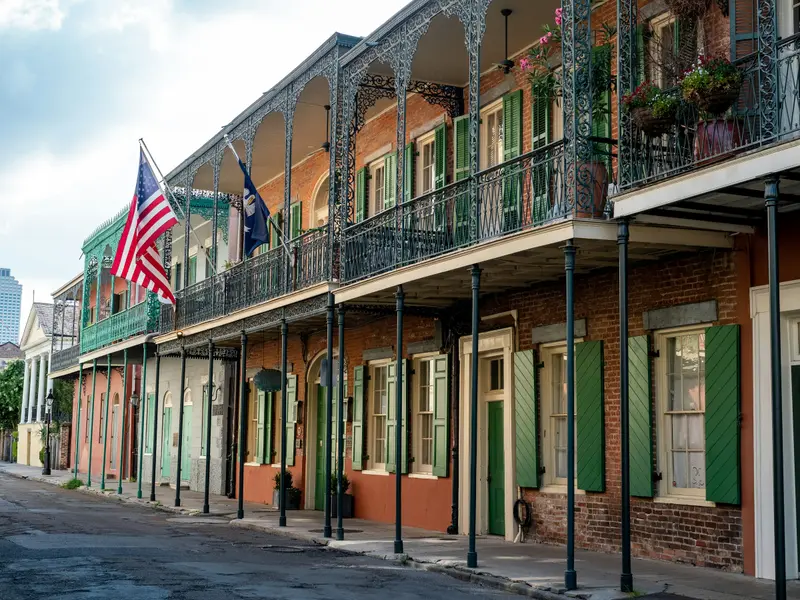
New Orleans
New Orleans sits on the Mississippi in south Louisiana. You come for live music every night of the week, for Creole cooking, and for streets that still show their French and Spanish colonial past.The city was founded in 1718 under Jean-Baptiste Le Moyne de Bienville. Its historic core is the French Quarter, anchored by Jackson Square with St. Louis Cathedral, the Cabildo and the Presbytère. For live music, head to Frenchmen Street in neighboring Faubourg Marigny, where more locals go out than on Bourbon Street.The St. Charles streetcar has been running since 1835 and is considered the oldest continuously operating streetcar line in the world. It rolls from Canal Street through the Garden District to Carrollton, and at $1.25 it's the cheapest city tour you'll find. You don't need a car for the French Quarter, Marigny or Tremé; parking there is scarce and expensive.The neighborhoodsFrench Quarter: the old city, with museums, old-line Creole restaurants and the oldest bars in town, best explored on foot by day.Marigny and Bywater: just downriver, with the Frenchmen Street music strip, colorful cottages, street art and Crescent Park on the river.Garden District and Uptown: mansions along St. Charles Avenue, shopping on Magazine Street, Audubon Park and clubs like Tipitina's.Tremé and Mid-City: Black history around Congo Square, brass bands in neighborhood bars, Bayou St. John and City Park.PlanningWhen to go: February through May and October through November are the most comfortable. June through September is hot and humid, and Atlantic hurricane season runs June 1 to November 30.Big dates: During Carnival season (January through Fat Tuesday) and Jazz Fest (late April into early May), hotels sell out or spike months ahead. Book as early as you can.Where to stay: The French Quarter and Marigny put you closest to music and food; the Garden District and Uptown along the St. Charles line are quieter.
Stay in the Marigny or the lower French Quarter in a small guesthouse: Frenchmen Street is on your doorstep and the money stays with people from the city. For RTA buses and streetcars buy a Jazzy Pass for one or more days in the Le Pass app. Tipping: 18 to 22 percent in restaurants, one or two dollars per drink, and a few dollars in the hat for street musicians. By day the neighbourhoods on this route are relaxed; at night stick to busy streets and take a taxi between neighbourhoods. When a second line passes, walk along at the edge and leave the way clear for the club members and the band.
5 Sights
3 Restaurants
Creole Heritage, Jazz and Carnival
The French Mississippi Company founded New Orleans in 1718, and the city became American with the Louisiana Purchase in 1803. In August 2005, Hurricane Katrina left about 80 percent of the city underwater; Louisiana's official count puts the state's death toll above 1,400. You can still see the scars in neighborhoods like the Lower Ninth Ward.Mardi Gras: Parade season opens on January 6 and builds to Fat Tuesday, which falls on February 9 in 2027. Hotels sell out months ahead, and attractions like the WWII Museum and Mardi Gras World close on Mardi Gras Day.Music: Preservation Hall on St. Peter Street has kept traditional jazz alive since 1961. The clubs on Frenchmen Street have bands every night; bring some cash for drinks and the tip jar.New Orleans Jazz & Heritage Festival: one of the city's big annual festivals, held in spring.Good to know: You can drink on the street, but only from plastic cups; no glass. Bars and clubs are 21 and up and card at the door, so carry a photo ID. If you're visiting from abroad, check the UK FCDO Travel Advice for current safety information.
Plan this route as your trip
All stops, trains and nights go into your trip planner. You adjust dates and places to stay afterwards.
This route is a suggestion from our research. Please check timetables, times in port, opening hours and prices before you book – what your tour operator or carrier says is what counts.
Fernweh is a free travel guide and trip planner: routes researched by people, taken over in one click, used day by day on the road. More about Fernweh
1 stop
Route Summary
Duration5 Days
Stops1 Places
TypeCulture