Fernweh: Home
    ExploreTravel GuidesPlan a tripMy tripLast visited
    de|en
    All Places & RegionsAll highlightsAbout FernwehFAQPrivacy PolicyImprint
    ExploreTravel GuidesPlan a tripMy tripLast visited
    • Neighborhoods & highlights
    • Eat & drink
    • Culture
    • Nightlife
    • Getting around
    • Accommodation
    • Plan trip
    • Nearby
    Tremé and Mid-City
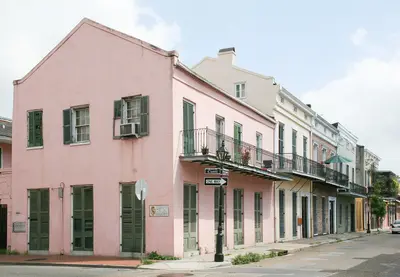
    Infrogmation of New Orleans / Wikimedia Commons / CC BY-SA 4.0

    United States

    Tremé and Mid-City

    City

    Tremé and Mid-City lie inland from the French Quarter, between Rampart Street and City Park. Come for the city's Black history, brass bands in neighborhood bars, and Creole soul food that locals happily line up for.

    by Felix Gillen

    1. Home
    2. Destinations
    3. United States
    4. New Orleans
    5. Tremé and Mid-City
    Tremé and Mid-City lie inland from the French Quarter, between Rampart Street and City Park. Come for the city's Black history, brass bands in neighborhood bars, and Creole soul food that locals happily line up for.Tremé starts right across Rampart and is often called the oldest Black neighborhood in the country: free people of color were buying property here as early as the 1700s. It's home to Louis Armstrong Park and Congo Square, and to St. Augustine Church, founded in 1841. Beyond it, Mid-City is a residential area stretching along Canal Street and Bayou St. John out to City Park.City Park and NOMA, Parkway Bakery and The Broadside are covered on the main New Orleans page. Conditions can change from one block to the next; for current safety guidance, see the UK FCDO Travel Advice.

    Sights in Tremé and Mid-City

    Discover the most important sights and attractions

    Louis Armstrong Park and Congo Square
    Park

    1Louis Armstrong Park and Congo Square

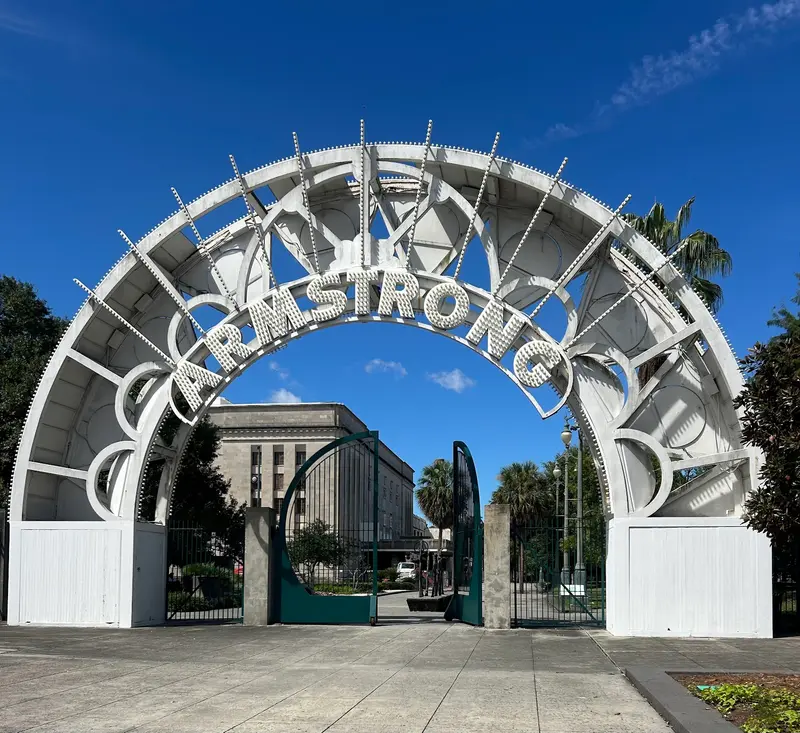
    The approximately 13-hectare park is located opposite the French Quarter on Rampart Street, its entrance a large arch with lettering. At the front is Congo Square, where enslaved Africans gathered on Sundays for market, drumming, and dance. The park features a statue of Louis Armstrong by Elizabeth Catlett and busts of Sidney Bechet and Buddy Bolden. Concerts are held in spring and autumn; visit the park during the day.
    Open in Google Maps
    Backstreet Cultural Museum
    Museum

    2Backstreet Cultural Museum

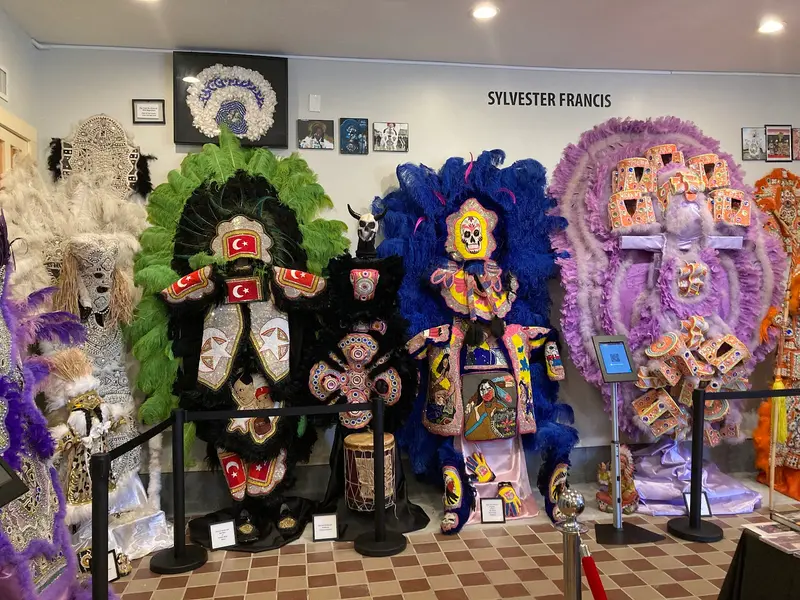
    This small museum, housed in a former funeral home, displays the splendidly embroidered feather costumes of the Mardi Gras Indians, along with objects related to Jazz Funerals, Social Aid and Pleasure Clubs, Baby Dolls, and the Skull and Bone Gangs. Admission approximately 10 US dollars. Opening hours are irregular, so call ahead (504-522-4806).
    Open in Google Maps
    Pitot House
    Museum

    3Pitot House

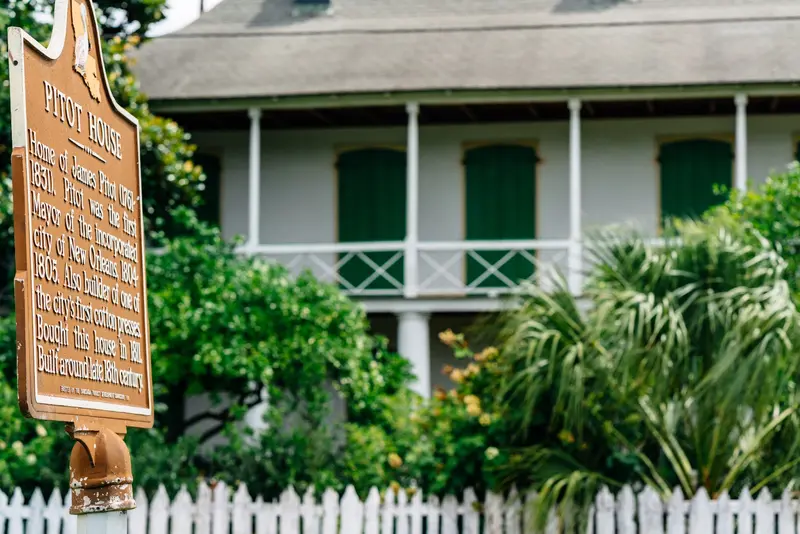
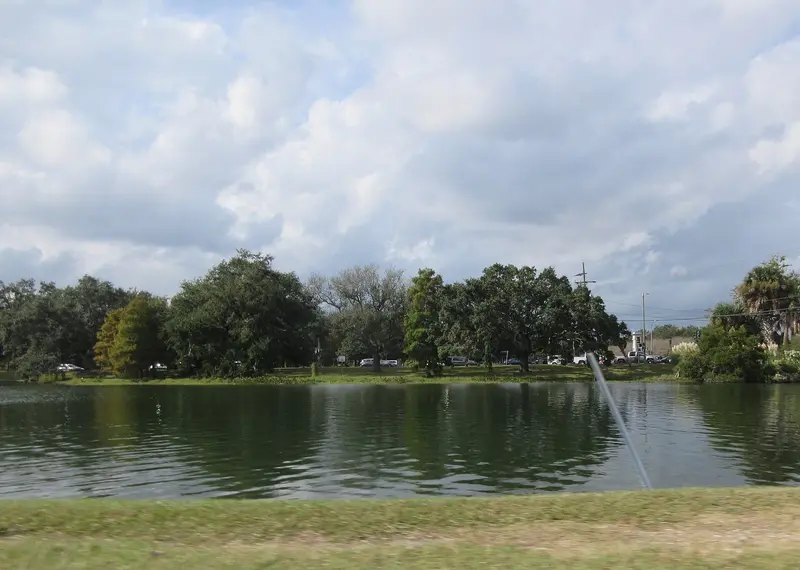
    The 1799 country house, in West Indian style with a wrap-around gallery, stands on the bank of Bayou St. John at 1440 Moss Street, not far from the entrance to City Park. Tours Wednesday to Saturday, 10 AM to 3 PM, last tour 2:15 PM; adults pay 10 US dollars. Afterwards, a stroll along the Bayou is worthwhile.
    Open in Google Maps
    St. Louis Cemetery No. 3
    Attraction

    4St. Louis Cemetery No. 3

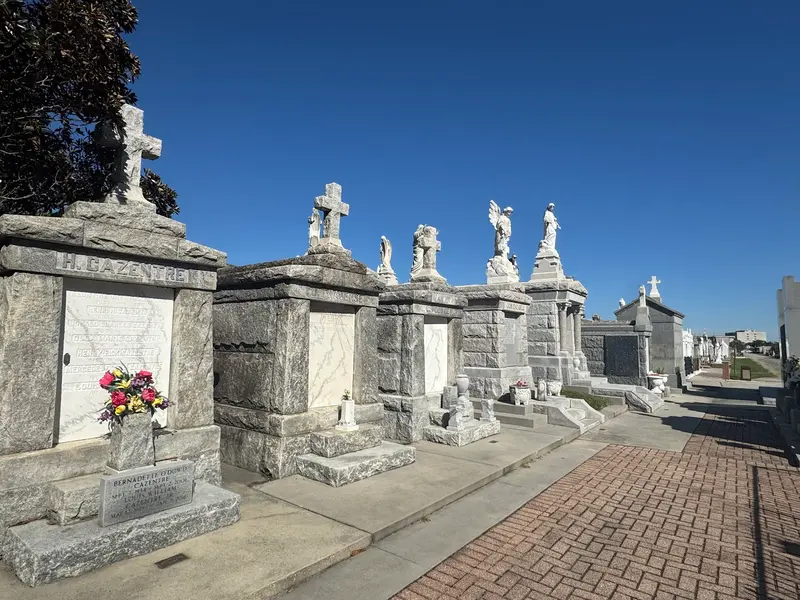
    The cemetery at 3421 Esplanade Avenue, just before Bayou St. John, features the typical above-ground tombs of New Orleans in whitewashed rows. Unlike the older St. Louis Cemetery No. 1, you can enter here during the day without a tour. Easily combined with Pitot House and City Park.
    Open in Google Maps

    Restaurants in Tremé and Mid-City

    1

    Dooky Chase's Restaurant

    The Creole restaurant at 2301 Orleans Avenue has been open since 1941. Chef Leah Chase made it a gathering place for the Civil Rights Movement, and her collection of African American art hangs on the walls. For lunch Tuesday to Friday, there's a buffet for around $25 featuring Fried Chicken, Gumbo, and Red Beans. On weekdays, a reservation is advisable, but not always necessary.
    Show on Google Maps
    2

    Liuzza's by the Track

    Neighborhood spot at 1518 North Lopez Street, one block from Fair Grounds Race Course. Known for Gumbo and the Garlic Roast Beef Po'Boy, plus fried seafood. Simple decor and loud; it's predictably packed during Jazz Fest.
    Show on Google Maps
    3

    Angelo Brocato

    The Sicilian ice cream parlor and patisserie has existed for over a hundred years and is now located at 214 North Carrollton Avenue in Mid-City, near the Canal Streetcar. Order lemon granita, spumoni, or freshly filled cannoli. A perfect finish after an afternoon in City Park.
    Show on Google Maps

    Culture and history

    In the 1700s and 1800s, enslaved Africans gathered on Sundays in Congo Square, now part of Louis Armstrong Park, to trade, drum and dance. Many trace the roots of jazz to this spot, and the very first New Orleans Jazz & Heritage Festival was held in the park in 1970.Tremé is the neighborhood of second lines, the Sunday parades thrown by Social Aid and Pleasure Clubs, and of jazz funerals. The Mardi Gras Indians, with their hand-beaded feathered suits, have deep roots here; the Backstreet Cultural Museum documents these traditions.Mid-City grew after 1900, once drainage pumps made the swampland livable. On Bayou St. John, an old trade route to Lake Pontchartrain, the 1799 Pitot House is one of the last colonial-era country houses left in the city.

    Nightlife

    1

    Kermit's Tremé Mother-in-Law Lounge

    Opened in 1994 by R&B singer Ernie K-Doe (named after his hit “Mother-in-Law”), the bar at 1500 North Claiborne Avenue has a fully painted facade. Today, trumpeter Kermit Ruffins leads it, regularly performing and often grilling himself. Program and hours vary, so check the bar's social media.
    Show on Google Maps
    2

    Candlelight Lounge

    Small neighborhood bar at 925 North Robertson Street, in Tremé, with live music six nights a week. Wednesdays are most popular, when the Treme Brass Band plays; low admission includes a bowl of Red Beans and Rice. WWOZ (90.7 FM) announces the current program. Best to go there and back by taxi or rideshare.
    Show on Google Maps
    3

    Pal's Lounge

    Neighborhood bar at 949 North Rendon Street near Bayou St. John, featuring a mixed crowd of locals, an air hockey table, and well-made simple cocktails. No live music, but a relaxed place for a drink after an evening at the Bayou or before a nearby concert.
    Show on Google Maps

    Getting around Tremé and Mid-City

    Tremé is walkable from the French Quarter: Louis Armstrong Park sits just across Rampart Street. For Mid-City, take the streetcar.Canal streetcar: It runs from the riverfront up Canal Street into Mid-City and splits at Carrollton Avenue. Cars marked "City Park/Museum" end in front of NOMA; "Cemeteries" cars continue to the cemeteries at the end of Canal. Fare is $1.25.Rampart-St. Claude line: Runs along the border between the Quarter and Tremé.Driving: Parking is far easier in Mid-City than downtown, and Esplanade Avenue gets you back to the Quarter quickly.At night: Take a cab or rideshare to bars like the Candlelight Lounge.During Jazz Fest, in late April and early May, the streets around the Fair Grounds jam up; book restaurants ahead.
    Accommodations in Tremé and Mid-City

    Find perfect stay in Tremé and Mid-City

    Booking.com* (Affiliate link)
    Search Hotels
    Agoda* (Affiliate link)
    Search Hotels
    Airbnb
    Vacation Rentals

    * Affiliate link: if you book through it, we earn a small commission. The price stays the same for you.

    Campgrounds in Tremé and Mid-City

    Find perfect campground in Tremé and Mid-City

    Search via Google Maps
    Campgrounds nearby (15km)
    Camping.info
    Find Campgrounds
    Park4Night
    RV Parks & Camping

    Plan your trip to Tremé and Mid-City

    Save places, build a route and plan your city trip, all in one place.

    1. 1
      Sunrise over alpine peaks and a sea of clouds
      1234

      Round trip

      12 days · 4 stops

      Saved

      Pick a route

      Pick a ready-made one or save places and plan your own.

      Open bookmarks
    2. 2

      Trip to Tremé and Mid-City

      Live
      • 1Louis Armstrong Park and Congo Square3 days
      • 2Backstreet Cultural Museum4 days
      • 3Pitot House5 days
      Budget

      Plan your trip

      The planner sorts stops, days and budget. Plan together in real time.

      Start trip planning
    3. 3
      9:41 No signal
      Tremé and Mid-City
      Available offline

      Use it on the road

      Download the guide to your phone and use it on site, even offline.

    Nearby

    New Orleans

    New Orleans

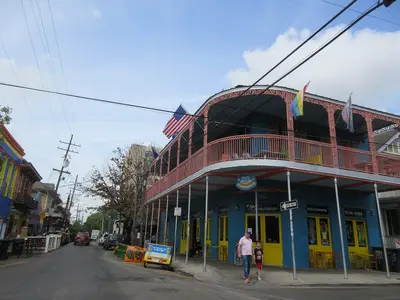
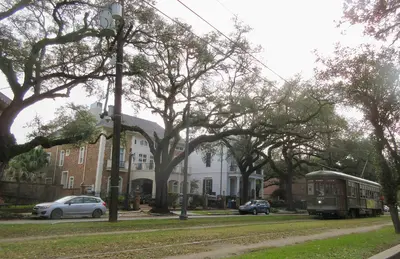
    New Orleans sits on the Mississippi in south Louisiana. You come for live music every night of the week, for Creole cooking, and for streets that still show their French and Spanish colonial past.The city was founded in 1718 under Jean-Baptiste Le Moyne de Bienville. Its historic core is the French Quarter, anchored by Jackson Square with St. Louis Cathedral, the Cabildo and the Presbytère. For live music, head to Frenchmen Street in neighboring Faubourg Marigny, where more locals go out than on Bourbon Street.The St. Charles streetcar has been running since 1835 and is considered the oldest continuously operating streetcar line in the world. It rolls from Canal Street through the Garden District to Carrollton, and at $1.25 it's the cheapest city tour you'll find. You don't need a car for the French Quarter, Marigny or Tremé; parking there is scarce and expensive.The neighborhoodsFrench Quarter: the old city, with museums, old-line Creole restaurants and the oldest bars in town, best explored on foot by day.Marigny and Bywater: just downriver, with the Frenchmen Street music strip, colorful cottages, street art and Crescent Park on the river.Garden District and Uptown: mansions along St. Charles Avenue, shopping on Magazine Street, Audubon Park and clubs like Tipitina's.Tremé and Mid-City: Black history around Congo Square, brass bands in neighborhood bars, Bayou St. John and City Park.PlanningWhen to go: February through May and October through November are the most comfortable. June through September is hot and humid, and Atlantic hurricane season runs June 1 to November 30.Big dates: During Carnival season (January through Fat Tuesday) and Jazz Fest (late April into early May), hotels sell out or spike months ahead. Book as early as you can.Where to stay: The French Quarter and Marigny put you closest to music and food; the Garden District and Uptown along the St. Charles line are quieter.
    French Quarter

    French Quarter

    The French Quarter, or Vieux Carré, is the original 1718 city of New Orleans, set on a bend of the Mississippi. People come for the wrought-iron balconies and hidden courtyards, the old bars, and Creole dining rooms that have served the same dishes for generations.The Quarter is a tight grid between Canal Street, Esplanade Avenue, North Rampart Street and the river, and you can walk across it in about 15 minutes. Despite the name, most of what you see is Spanish colonial: fires in 1788 and 1794 wiped out much of the French town. Jackson Square and St. Louis Cathedral are covered on the main New Orleans page.Bourbon Street gets loud and crowded from late afternoon on. For a nicer stroll, take Royal Street, lined with galleries and antique shops, or Chartres Street. Before 9 a.m. you'll have the streets nearly to yourself and can grab a table at Café du Monde without a line.
    Marigny and Bywater

    Marigny and Bywater

    Faubourg Marigny and Bywater are the two neighborhoods just downriver from the French Quarter, across Esplanade Avenue. Come for the live music on Frenchmen Street, the candy-colored Creole cottages, and an evening under string lights in the wine garden at Bacchanal.The Marigny runs from Esplanade to the railroad tracks along Homer Plessy Way (formerly Press Street); Bywater picks up on the other side. Bernard de Marigny began selling lots on his family's plantation in 1806, so the streets are a little younger and more modest than the Quarter's. Frenchmen Street sits right at the near edge, about a 15-minute walk from Jackson Square.Bywater is quieter and more artsy: murals, small galleries, cash-only dive bars and Crescent Park on the river. The Spotted Cat Music Club on Frenchmen is covered on the main New Orleans page.
    Garden District and Uptown

    Garden District and Uptown

    The Garden District and Uptown are the residential neighborhoods upriver from downtown, strung along the St. Charles streetcar line. Come for the mansions under live oaks, the shops and restaurants of Magazine Street, and music clubs where the crowd is mostly local.Uptown has no hard borders. Most people mean the stretch between the river and Claiborne Avenue, from the Garden District out to Audubon Park and the Tulane and Loyola campuses. In the 1800s St. Charles Avenue was the city's millionaires' row, and many of those houses still stand. Closer to the river, Magazine Street runs parallel, lined with independent boutiques, galleries and places to eat.The Garden District itself and Commander's Palace are covered on the main New Orleans page; this page picks up from there.
    Louisiana

    Louisiana

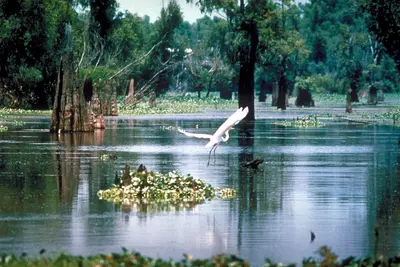
    Louisiana sits on the Gulf of Mexico between Texas, Arkansas and Mississippi, and much of it was built up over millennia by the Mississippi River and its delta. People come for the bayous and swamps, and for a Cajun and Creole culture that runs far deeper than New Orleans.Louisiana is the only state divided into parishes instead of counties, 64 in all. West of Baton Rouge lies the Atchafalaya Basin, the largest swamp in the country. I-10 crosses it between Grosse Tete and Henderson on the 18-mile Atchafalaya Basin Bridge, and the swamp is home to alligators and the Louisiana black bear.Beyond the basin is Acadiana, the heartland of the descendants of Acadians expelled from Canada, centered on Lafayette. Baton Rouge has the tallest state capitol in the U.S. at 450 feet, with an observation deck on the 27th floor. On the Mississippi's west bank in Vacherie is Oak Alley Plantation, whose main house was built by enslaved people between 1837 and 1839.

    Sources & method

    • Photos: Wikimedia Commons, Google Maps. Each photo carries its credit.
    • Place data such as addresses and ratings comes from Google Maps.
    • The content is based on web research from public, traceable sources. How the content is made · The role of AI