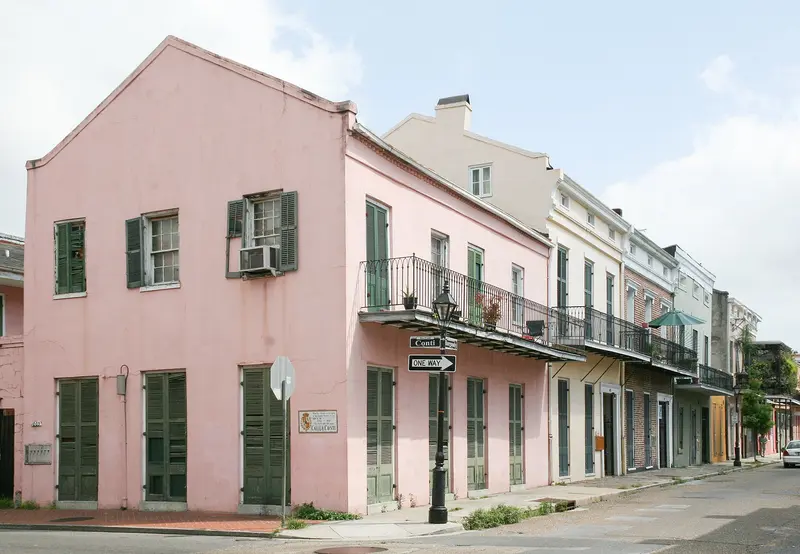
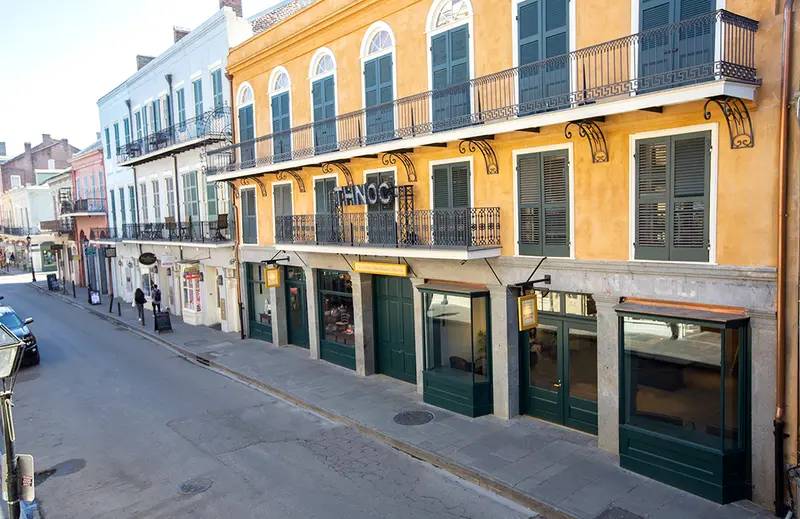
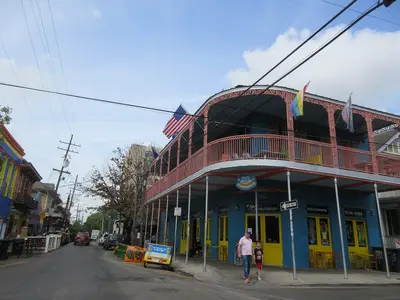
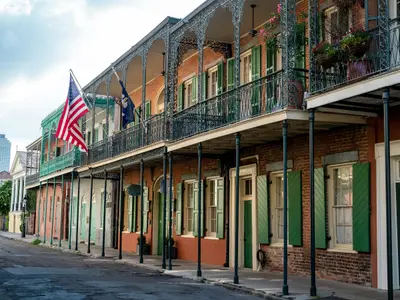
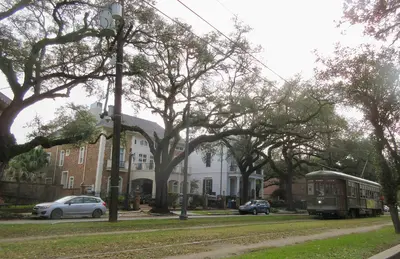
The French Quarter, or Vieux Carré, is the original 1718 city of New Orleans, set on a bend of the Mississippi. People come for the wrought-iron balconies and hidden courtyards, the old bars, and Creole dining rooms that have served the same dishes for generations.The Quarter is a tight grid between Canal Street, Esplanade Avenue, North Rampart Street and the river, and you can walk across it in about 15 minutes. Despite the name, most of what you see is Spanish colonial: fires in 1788 and 1794 wiped out much of the French town. Jackson Square and St. Louis Cathedral are covered on the main New Orleans page.Bourbon Street gets loud and crowded from late afternoon on. For a nicer stroll, take Royal Street, lined with galleries and antique shops, or Chartres Street. Before 9 a.m. you'll have the streets nearly to yourself and can grab a table at Café du Monde without a line.
Sights in French Quarter
Discover the most important sights and attractions
Museum
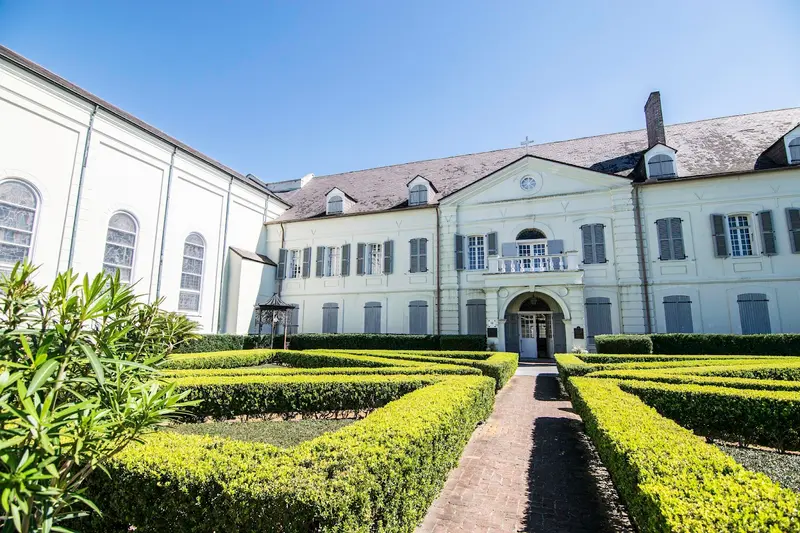
1Old Ursuline Convent Museum
The Ursuline Convent on Chartres Street, completed in 1752, is considered the oldest surviving building in the Mississippi Valley. Visitors can see the convent's rooms, a small garden, and the adjacent St. Mary's Church. Open Monday to Friday 10 AM to 4 PM, Saturday 9 AM to 3 PM, closed Sundays; Admission $8 USD, tickets available on-site only. Allow about an hour.
A museum and research institute exploring the history of the city and Gulf Coast, with its exhibition center at 520 Royal Street. Entry is free, but you'll need a ticket, obtainable at reception or online. Open Tuesday to Saturday 9:30 AM to 4:30 PM, Sunday 10:30 AM to 4:30 PM. A great first stop before you explore the neighborhood independently.
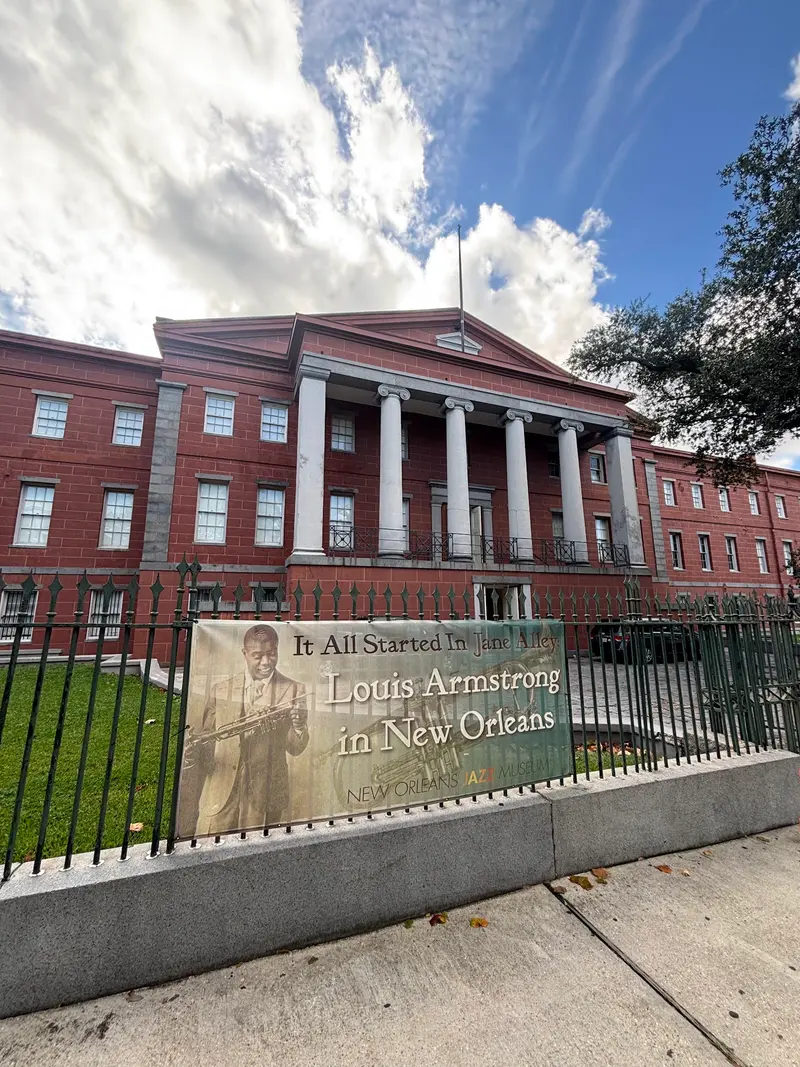
The former mint from 1835, located at the lower end of Esplanade Avenue, houses the Jazz Museum, featuring instruments, recordings, and photos on the history of jazz in the city. It's open Tuesday 9 AM to 6 PM, Wednesday to Sunday 9 AM to 4 PM. Admission is 15 US dollars for adults, 13 for Louisiana residents. Regular concerts are held here; the program can be found in the museum's event calendar.
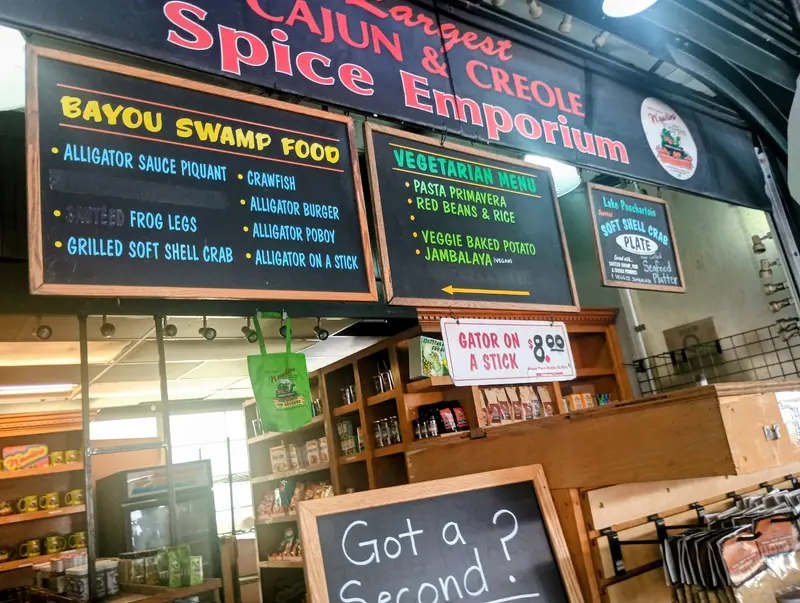
The covered market halls stretch along Decatur Street from Café du Monde towards Esplanade Avenue. In the front section, you'll find food stalls, while further back is the flea market offering handicrafts, spices, and souvenirs. Weekday mornings are the quietest time, and from the market, you can reach the Jazz Museum in the Old U.S. Mint in just a few minutes.
The coffee stand at the French Market dates back to 1862 and serves almost only two things: powdered sugar beignets, three per serving, and chicory coffee, black or as a café au lait. During the day, the line often stretches onto the sidewalk. Early morning or late evening, you'll get a table faster; there's a dedicated window for takeout.
Traditional French-Creole establishment on Bourbon Street, family-owned since 1905. Classics include Shrimp Rémoulade, Soufflé Potatoes, and Fish with Crabmeat. The ground-floor dining room is traditionally walk-in only; you can reserve for the first floor. Friday lunch is a local ritual and accordingly busy; evenings, men wear jackets.
Bar and restaurant on the corner of Chartres and St. Louis Street, in a house whose oldest part is from c. 1800; its name recalls a mayor's offer of exile to Napoleon here. Order the Pimm's Cup and a warm Muffuletta. The worn walls, classical music and courtyard make it a good spot for a break on hot afternoons.
The Vieux Carré was the entire city when the French founded it in 1718. Under Spanish rule, which began in 1763, it burned almost completely in 1788 and 1794, which is why the Quarter today is mostly Spanish Creole: courtyards, arcades and cast-iron galleries.The Old Ursuline Convent, completed in 1752, is considered the oldest surviving building in the Mississippi Valley. In the 1800s Sicilian immigrants settled the lower Quarter, and their groceries gave the city the muffuletta, which Central Grocery has sold since 1906.For background, start at the free exhibits of the Historic New Orleans Collection on Royal Street. The Quarter has been a protected historic district since 1937, and the Vieux Carré Commission still signs off on every facade change.
The bar at Hotel Monteleone at 214 Royal Street has been spinning since 1949: Its counter is a carousel that completes a rotation in about fifteen minutes. This is said to be where the Vieux Carré was invented, a cocktail made from rye, cognac, and vermouth. Seats at the carousel fill up quickly in the evening; your best chances are in the early afternoon.
The small house at the corner of Bourbon and St. Philip Street was built between 1722 and 1732 and is considered one of the country's oldest bars. Inside, it's almost dark, with light coming mainly from candles and the piano in the corner. It's located at the quieter end of Bourbon Street, far from the hustle and bustle around Canal Street. It's known for its Voodoo Daiquiri from the slush machine.
The cocktail bar belongs to Arnaud's Restaurant on Bienville Street and since 2003 bears the name of its most famous drink, the French 75 with Cognac and Champagne. Wood paneling, bartenders in white jackets and a short snack menu with soufflé potatoes. Good for a pre-dinner drink; on weekend evenings, it's worth arriving early.
This is walking territory. Canal Street to Esplanade is about 15 minutes on foot; the riverfront to Rampart is about 8.Streetcar: The Riverfront line runs along the levee and the Rampart-St. Claude line along the Quarter's back edge. A ride costs $1.25 (exact change or the Le Pass app); a one-day Jazzy Pass is $3.Driving: Skip it. Street parking is scarce and time-limited, and garages off Decatur and Canal charge a premium, especially on festival and holiday weekends.Bourbon Street: Parts of it close to cars at night, so meet your cab or rideshare on a cross street.