Fernweh: Home
    ExploreTravel GuidesPlan a tripMy tripLast visited
    de|en
    All Places & RegionsAll highlightsAbout FernwehFAQPrivacy PolicyImprint
    ExploreTravel GuidesPlan a tripMy tripLast visited
    • Neighborhoods & highlights
    • Eat & drink
    • Culture
    • Getting around
    • Accommodation
    • Plan trip
    • Nearby
    Liberia
    Emw / Wikimedia Commons / CC BY-SA 3.0

    Costa Rica

    Liberia

    City

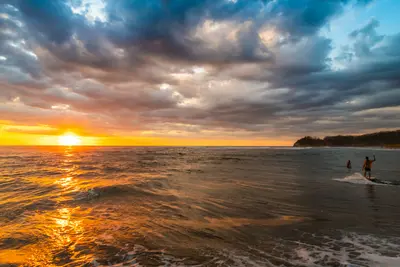
    Liberia, the capital of Guanacaste province, lies about 215 kilometers northwest of San José on the Interamericana.

    by Felix Gillen

    1. Home
    2. Destinations
    3. Costa Rica
    4. Guanacaste
    5. Liberia
    Liberia, the capital of Guanacaste province, lies about 215 kilometers northwest of San José on the Interamericana. Most visitors arrive via Daniel Oduber Quirós International Airport, using the city as a base for exploring Pacific coast beaches and Rincón de la Vieja National Park.Liberia earned its nickname "White City" from the light gravel that once paved its streets and the whitewashed colonial houses. Some of these, along with the 19th-century Ermita de la Agonía, are preserved in the city center.With over 50,000 inhabitants, the city serves as a commercial and administrative hub, not a resort. Around Parque Central, you'll find banks, supermarkets, and simple restaurants, making Liberia a practical stopover before or after onward travel.If you don't head straight to the coast after landing, half a day is enough for a stroll through the center. For Rincón de la Vieja, the city is a good base; access to the Las Pailas sector takes about an hour.

    Sights in Liberia

    Discover the most important sights and attractions

    Hermitage of the Agony
    Church

    1Hermitage of the Agony

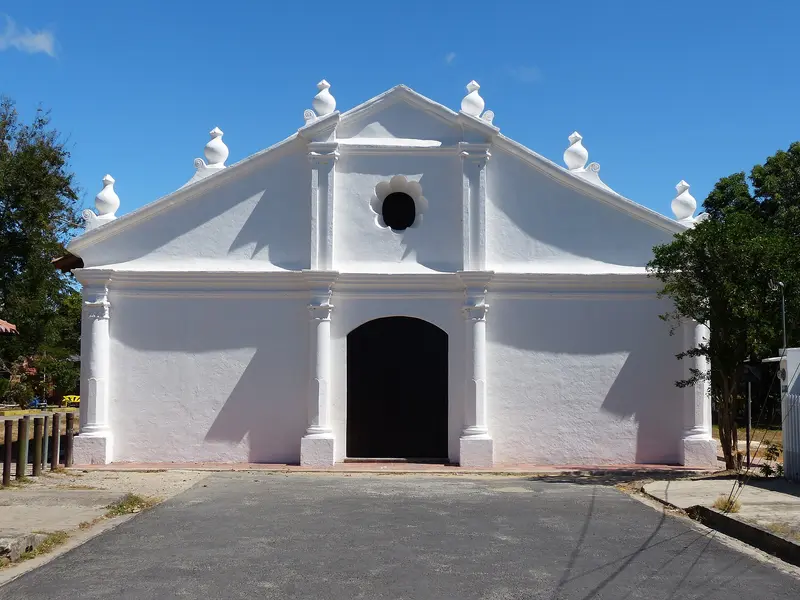
    The small chapel at the end of Avenida 25 de Julio is considered Liberia's oldest preserved building. Don Baltasar Baldioceda began its construction in 1854, and it was completed at the end of 1865. Adobe walls, a brick floor, and a brick roof are typical of Guanacaste's colonial architecture; notable are the rosette in the gable and the pilasters at the entrance. Since 1999, it has been designated a heritage site.
    Open in Google Maps
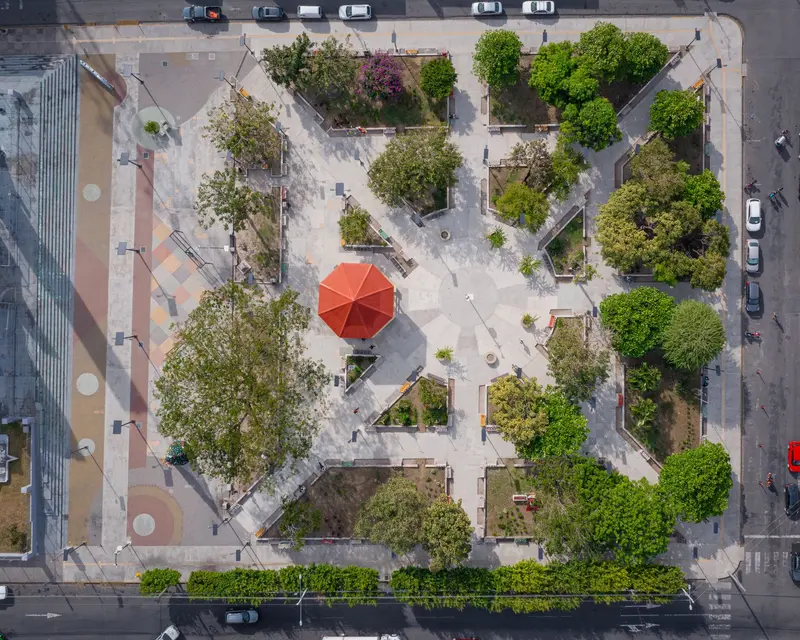
    Parque Central (Parque Mario Cañas Ruiz)
    Park

    2Parque Central (Parque Mario Cañas Ruiz)

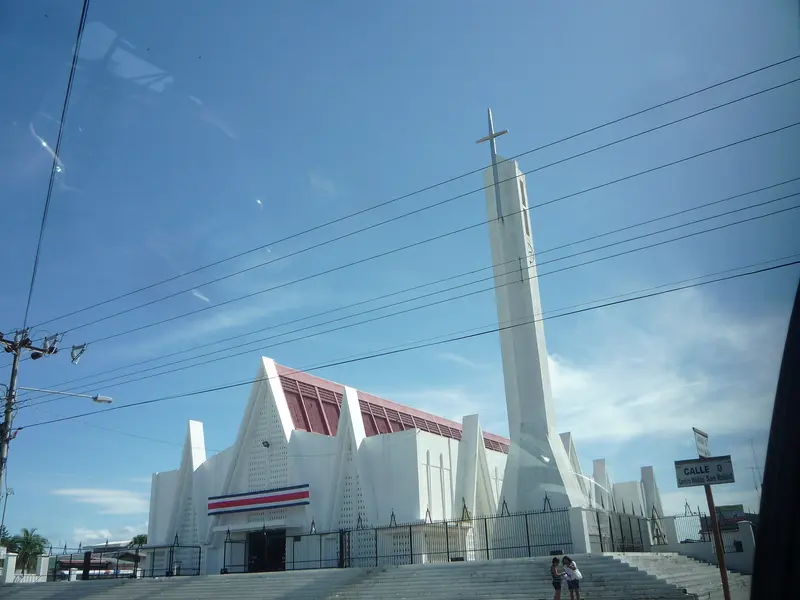
    The central square is the heart of the city and the starting point for a stroll through the center. Opposite it stands the modern Parish Church of the Immaculate Conception, whose three gable peaks symbolize the Trinity; inside, it is free of columns. In the surrounding streets, you'll find banks, shops, and simple restaurants.
    Open in Google Maps
    Museum

    3Museo del Sabanero

    The museum is housed in an 1833 colonial house, which also serves as the Casa de la Cultura. Bahareque walls, wooden elements, and a tiled roof showcase the region's traditional construction style. Following a restoration, the building reopened in January 2026; the permanent exhibition on the Sabaneros, Guanacaste's cattle herders, was announced for the second half of 2026. Before visiting, inquire about the current status and opening hours.
    Open in Google Maps

    Restaurants in Liberia

    1

    Pizza Pronto

    The central pizzeria bakes simple wood-fired pizzas and serves pasta in its courtyard. A relaxed spot for dinner before or after your flight.
    Show on Google Maps
    2

    Cafe Negro Liberia

    The café in the La Victoria district near the center serves Costa Rican coffee, tea, and desserts, as well as breakfast and light lunches. It is closed on Sundays.
    Show on Google Maps

    Culture and History

    From Wayside Stop to Provincial CapitalLiberia emerged in the 18th century at a crossroads between Rivas, Bagaces, and Nicoya, where travelers rested in the shade of Guanacaste trees; the spot was initially named Guanacaste and received the name Liberia in 1854. The Ermita de la Agonía, built from adobe starting in 1854 and completed in 1865, is now a protected monument.Sabaneros and July 25thCattle raising has shaped the province for generations. The Museo del Sabanero, in a colonial house from 1833, displays the cattle herders' tools. On July 25th, Liberia celebrates the annexation of Guanacaste to Costa Rica with parades, folk dances, cattle shows, and marimba music.

    Getting There & Around

    ArrivalDaniel Oduber Quirós Airport lies about 13 kilometers west of the city on the road to Nicoya and is served by many international routes. By car, Liberia can be reached from San José via the Interamericana. From Liberia, regular buses run to the beaches, such as Tamarindo.Getting AroundThe city center around Parque Central is easily explored on foot. For trips to the national parks, you'll need a rental car, taxi or tour; most rental car companies have airport stations.
    Accommodations in Liberia

    Find perfect stay in Liberia

    Booking.com* (Affiliate link)
    Search Hotels
    Agoda* (Affiliate link)
    Search Hotels
    Airbnb
    Vacation Rentals

    * Affiliate link: if you book through it, we earn a small commission. The price stays the same for you.

    Plan your trip to Liberia

    Save places, build a route and plan your city trip, all in one place.

    1. 1
      Sunrise over alpine peaks and a sea of clouds
      1234

      Round trip

      12 days · 4 stops

      Saved

      Pick a route

      Pick a ready-made one or save places and plan your own.

      Open bookmarks
    2. 2

      Trip to Liberia

      Live
      • 1Hermitage of the Agony3 days
      • 2Parque Central (Parque Mario Cañas Ruiz)4 days
      • 3Museo del Sabanero5 days
      Budget

      Plan your trip

      The planner sorts stops, days and budget. Plan together in real time.

      Start trip planning
    3. 3
      9:41 No signal
      Liberia
      Available offline

      Use it on the road

      Download the guide to your phone and use it on site, even offline.

    Nearby

    Guanacaste

    Guanacaste

    Guanacaste is Costa Rica's dry northwestern province on the Pacific coast, approximately 215 kilometers northwest of San José. You come here for the beaches of the Pacific coast, for volcanic landscapes like the Rincón de la Vieja, and for the light blue Río Celeste.From November to April, there's hardly any rain here, which makes Guanacaste the country's most reliable beach destination during this time; from May to October, it usually rains daily. The landscape is characterized by pastureland, dry forest, and volcanic ranges; the Area de Conservación Guanacaste in the north is a UNESCO World Heritage site.The capital is Liberia, home to the country's second international airport, the Aeropuerto Daniel Oduber Quirós. From there, you can reach the beaches around Tamarindo as quickly as the national parks inland.
    Rincón de la Vieja National Park

    Rincón de la Vieja National Park

    Rincón de la Vieja National Park protects its namesake volcanic massif in Guanacaste, about 25 kilometers northeast of Liberia. You come here to hike through tropical forest among fumaroles, bubbling mud pots, and waterfalls.Established in 1973, the 141 sq km park is a UNESCO World Heritage site (Area de Conservación Guanacaste). The volcano is active: repeated minor eruptions occurred in Aug/Sept 2026; early Sept. saw the national emergency agency CNE issue a green alert for surrounding districts. The hiking trail to the crater has been closed for years.Most visitors enter via the Las Pailas sector. A roughly three-kilometer loop trail here passes fumaroles, a steaming lagoon, and mud pots; longer trails lead to La Cangreja and Escondida waterfalls. The quieter Santa María sector further north is only accessible by 4x4 vehicles.The park closes Mondays. Entrance fees and current access rules are published by protected area authority SINAC. Volcanic activity may restrict access short-term; check the current status before visiting and heed foreign office advisories.
    Río Celeste

    Río Celeste

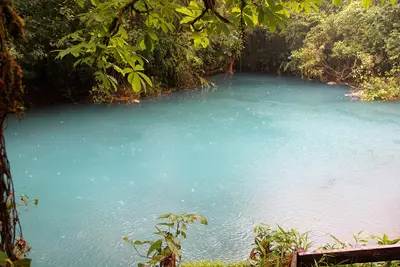
    The Río Celeste is a glowing light blue river in the Tenorio Volcano National Park in Guanacaste, near the town of Bijagua de Upala in the north of the country. You come here for its turquoise waterfall and the spot where two clear rivers mix and the water suddenly turns blue.The color appears when the volcanically influenced Río Buenavista meets the acidic Quebrada Agria: Tiny aluminum silicate particles clump together and scatter sunlight. After heavy rains, the water is murkier and less blue.The Misterios del Tenorio hiking trail starts at El Pilón Station and leads to a viewpoint, Laguna Azul, the Borbollones where gas bubbles from the riverbed, and the Teñideros where the rivers meet. The stairs to the waterfall were only partially open from mid-2025 after damage; check before visiting which sections are open.Swimming is prohibited in the National Park. Tickets are booked online through the protected area authority SINAC, and entry is granted in time slots; in case of bad weather, the park may close at short notice.
    Tamarindo

    Tamarindo

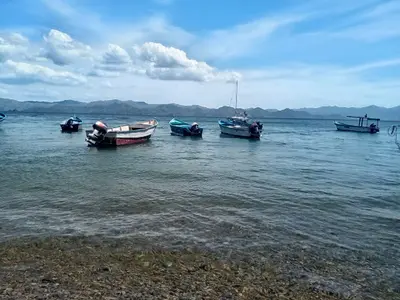
    Tamarindo is Guanacaste's most famous beach resort on the Pacific Coast of the Nicoya Peninsula, about an hour's drive from Liberia International Airport. You come here for the wide surf beach, the mangroves of the Tamarindo Estuary, and the Las Baulas Marine National Park, where leatherback sea turtles lay their eggs.From a small fishing village, it transformed into a resort starting in the mid-1980s; the 1994 surf film The Endless Summer II made its waves internationally famous. Today, surf schools, hotels, restaurants, and bars line the main road parallel to the beach.The main beach, Playa Tamarindo, with its consistent waves, is well-suited for beginner surfers. To the south lies the quieter Playa Langosta, while to the north, beyond the river mouth, is Playa Grande, which belongs to the national park.Tamarindo is heavily tourist-oriented and more expensive than smaller coastal towns. However, you'll find a wide selection of accommodations, restaurants, and evening entertainment here. The best time for swimming is during the dry season, from November to April.
    Nosara

    Nosara

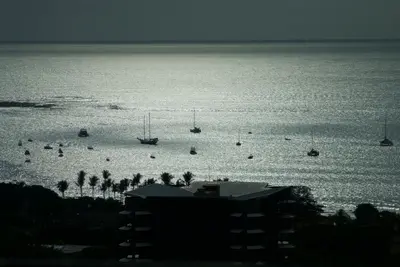
    Nosara is a district on the west coast of the Nicoya Peninsula in Guanacaste Province, about two and a half hours' drive from Liberia Airport and approximately five hours from San José. You come here to surf at Playa Guiones, for yoga classes, and due to its proximity to Ostional's turtle beach.Nosara consists of several parts: the Costa Rican village about six kilometers inland by the Río Nosara, the quieter Playa Pelada, and the area around Playa Guiones, where most accommodations, cafés, and surf schools are located. A tangle of unpaved roads and paths connects the neighborhoods.In the 1960s, a US entrepreneur bought the coastal land to subdivide it for a residential development. The project failed, but the landowners founded the Nosara Civic Association, which to this day ensures that a forested strip is preserved along the beaches. That's why you barely see any buildings from the water.Playa Guiones is an approximately six-kilometer-long sandy beach with very consistent waves, where beginners and advanced surfers can surf. Since the founding of the Nosara Yoga Institute in 1994, the place has also been a center for yoga and retreats.

    Sources & method

    • Photos: Wikimedia Commons, Pexels, Google Maps. Each photo carries its credit.
    • Place data such as addresses and ratings comes from Google Maps.
    • The content is based on web research from public, traceable sources. How the content is made · The role of AI