Plagwitz and Lindenau are located about three kilometers west of the city center, with Karl-Heine-Straße forming the boundary between them.
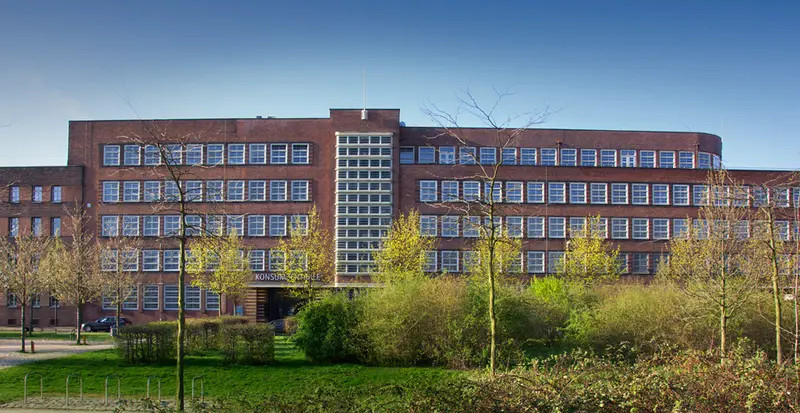
Plagwitz and Lindenau are located about three kilometers west of the city center, with Karl-Heine-Straße forming the boundary between them. From 1854, entrepreneur Karl Heine bought land here, had canals and roads built, transforming the villages into industrial suburbs; in 1891, both were incorporated into Leipzig. After 1989, industry largely collapsed, but since around 2000, start-ups, galleries, and creative businesses have settled in the old factories. With the Spinnerei, Lindenau is considered the center of the New Leipzig School.You can stroll along Karl-Heine-Straße, walk or cycle on the towpath alongside the Karl-Heine-Kanal, which has been navigable for boats up to Lindenauer Hafen since 2015, and discover brick buildings like the Konsumzentrale. In the evenings, venues like the Schaubühne Lindenfels, as well as bars and clubs in old industrial buildings, beckon. You can get there with the S1 to Leipzig-Plagwitz or Leipzig-Lindenau, by tram line 14 via Karl-Heine-Straße, or with lines 7, 8, and 15 to Lindenauer Markt.
Das ehemalige Industrierevier im Westen ist heute Leipzigs Kreativquartier. Zwischen Karl-Heine-Kanal, Spinnerei und Lindenauer Markt findest du Galerien, Ateliers, Theater sowie Bars und Clubs in alten Fabrikbauten. Am Wasser erkundest du die Gegend am besten zu Fuß, mit dem Rad oder vom Boot aus. S-Bahn und Straßenbahn verbinden beide Viertel direkt mit dem Zentrum.
Sights in Plagwitz & Lindenau
Discover the most important sights and attractions
Natural Feature
1Karl-Heine Canal
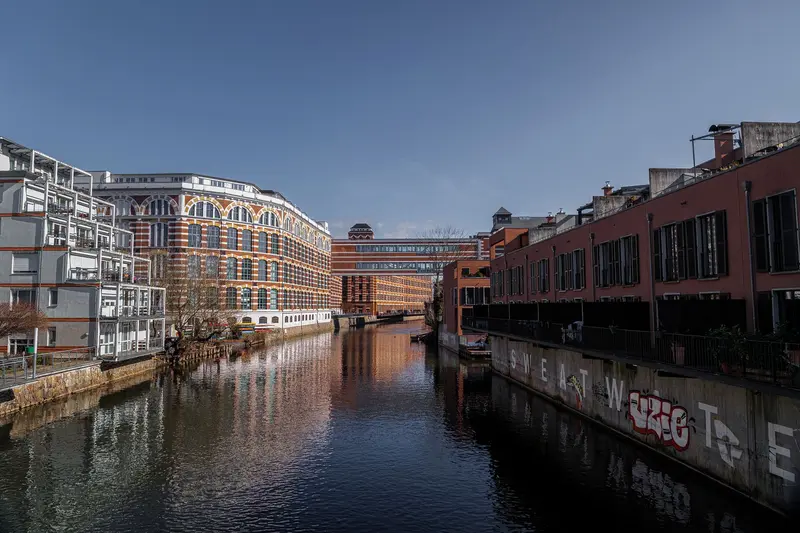
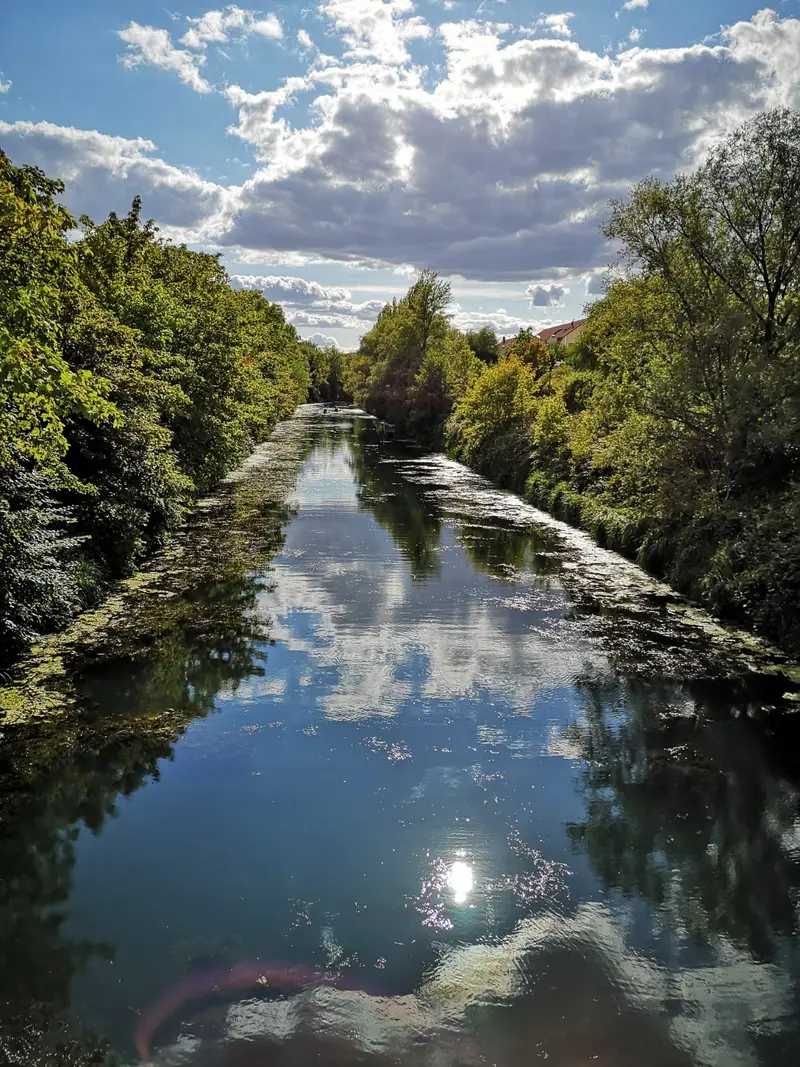
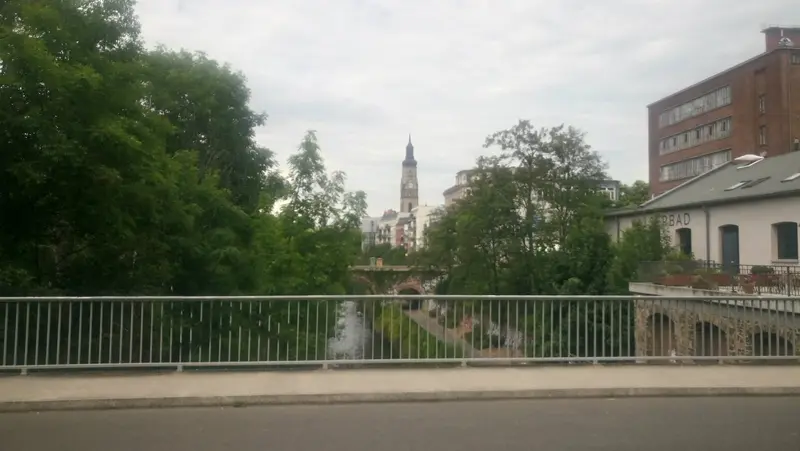
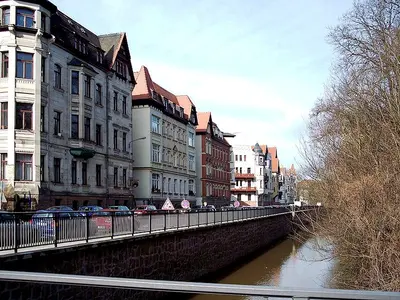
The 3.3 km long canal, conceived by industrial pioneer Karl Heine, was built from 1856 and leads from the Weiße Elster through Plagwitz and Lindenau to the Lindenauer Hafen. 15 bridges cross it, a foot and cycle path runs along its north bank since 1996, and small boats can use it.
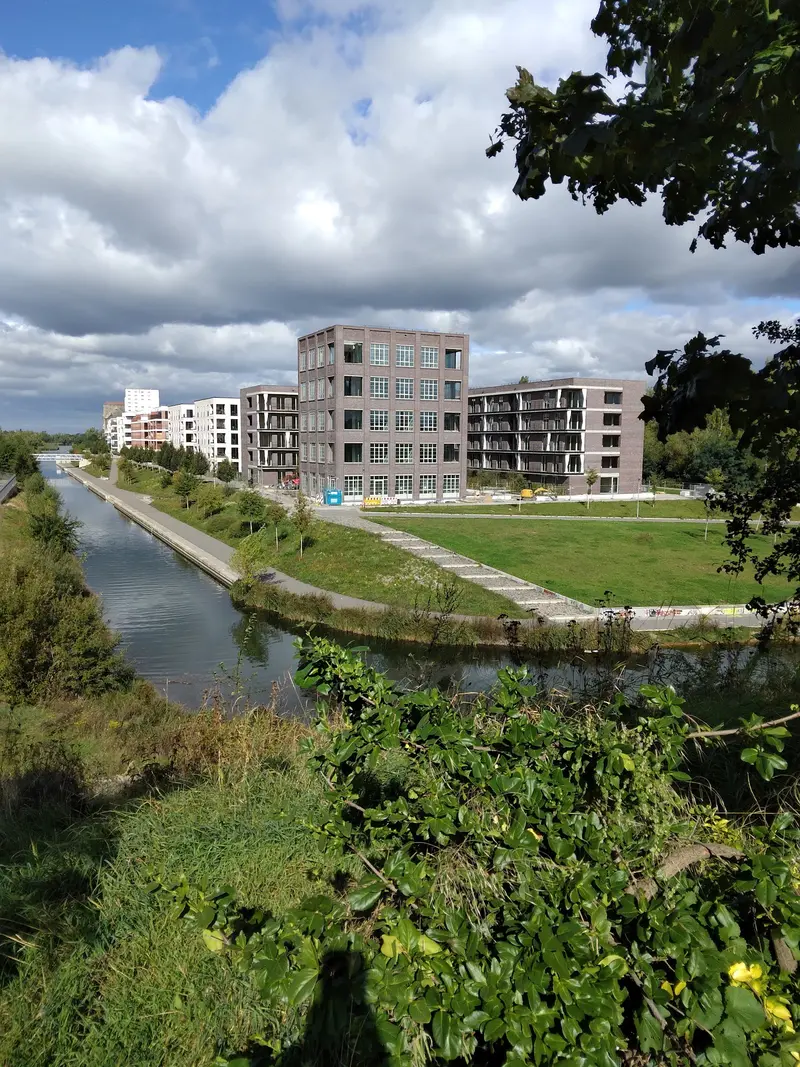
The port, begun in 1938 to connect Leipzig to the network of waterways, saw work halted in 1943. Since 2015, a 665-meter section connects it to the Karl-Heine-Kanal; a new residential quarter and a promenade have been developed on its banks.
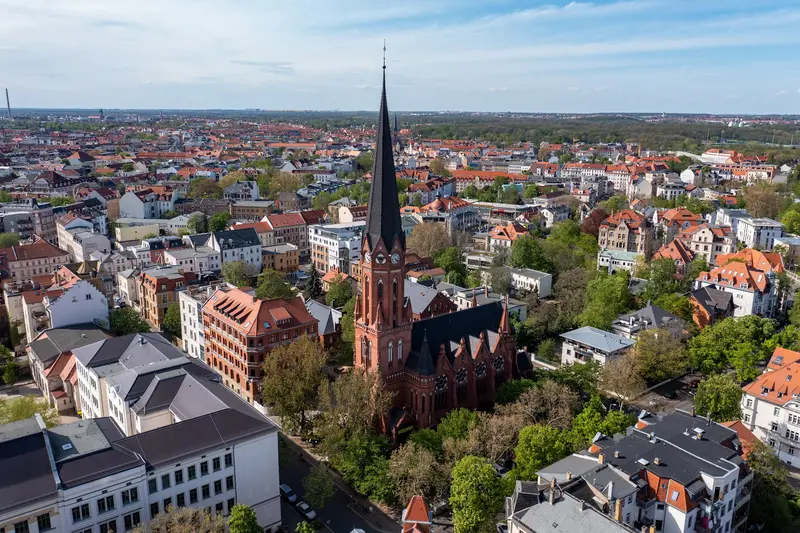
The brick church, built in Historicist Gothic style by Johannes Otzen, was consecrated on August 26, 1888. Its 86-meter-tall tower is, after the Peterskirche's, Leipzig's second-highest church tower.
Fritz Höger designed the brick building on Industriestraße, built from 1929 to 1932, whose reinforced concrete skeleton is around 180 meters long. Ribbon windows, rounded panes, and the funnel-shaped main portal give it a ship-like appearance.
Erected 1937-1939 as Grohmann & Frosch's corrugated iron rolling and galvanizing plant, the building stands directly on the Karl-Heine Canal. Since its 2001/02 renovation, it houses offices, apartments, and a restaurant.
Der neobarocke Saalbau entstand 1890 für die Brauerei Naumann, vor 1933 sprachen hier unter anderem Rosa Luxemburg und Clara Zetkin. Heute ist er Club und Spielstätte für Konzerte, Lesungen und Partys, mit eigenem Restaurant.