Fernweh
    ExploreTravel GuidesMy Trips
    de|en
    About FernwehImprintFAQPrivacy Policy
    ExploreTravel GuidesMy Trips
    Bayeux

    Bayeux

    CityCultureFor FamiliesCulinary
    1. Home
    2. Destinations
    3. France
    4. Normandy
    5. Bayeux
    Bayeux, a charming town in Normandy, transports you straight into the Middle Ages with its cobblestone streets and impressive cathedral. Famous for its UNESCO-listed Bayeux Tapestry and as an ideal starting point for the D-Day beaches, it offers a perfect blend of history, culture, and Norman charm.
    • Neighborhoods & highlights
    • Walking tours
    • Eat & drink
    • Culture
    • Getting around
    • Accommodation
    • Plan trip
    • Nearby
    • Neighborhoods & highlights
    • Walking tours
    • Eat & drink
    • Culture
    • Getting around
    • Accommodation
    • Plan trip
    • Nearby

    Overview

    Bayeux, a historic city in Normandy, is distinguished by its intact medieval architecture, which largely survived World War II unscathed. At the heart of the city stands the imposing Cathédrale Notre-Dame, with origins in the 11th century. The absolute highlight is the Bayeux Tapestry, a UNESCO World Heritage site, which vividly depicts the Norman Conquest of England in 1066 at the Musée de la Tapisserie de Bayeux. The Old Town's cobblestone streets invite strolls among charming half-timbered houses. The Musée Mémorial de la Bataille de Normandie also offers insights into the Allied landings. Ideally, visit the Tapestry in the morning to avoid the largest crowds. Bayeux also serves as a strategic base for excursions to the D-Day beaches.

    Places in Bayeux

    Discover the most important sights and attractions

    Sights in Bayeux

    1Tapisserie de Bayeux

    The Bayeux Tapestry is an outstanding testament to medieval art and historical documentation. It's not a woven wall hanging, but an embroidery, some 70 meters long and 50 centimeters high, meticulously depicting the events before and during the Norman Conquest of England in 1066. This unique document, likely created shortly after the events around 1070-1080, covers over 50 scenes, showing the preparations, the Channel crossing, and the decisive Battle of Hastings, where William the Conqueror defeated the English King Harold.In its specially climate-controlled room, you can view the Tapestry and follow the Latin inscriptions explaining each panel. The delicate embroideries offer deep insight into 11th-century life, clothing, and warfare. Our tip: Definitely use the provided audio guide; it's perfectly aligned with the scenes and offers essential background information. To avoid crowds and study details at leisure, we recommend visiting at opening time in the morning.
    Open in Google Maps

    2Cathédrale Notre-Dame de Bayeux

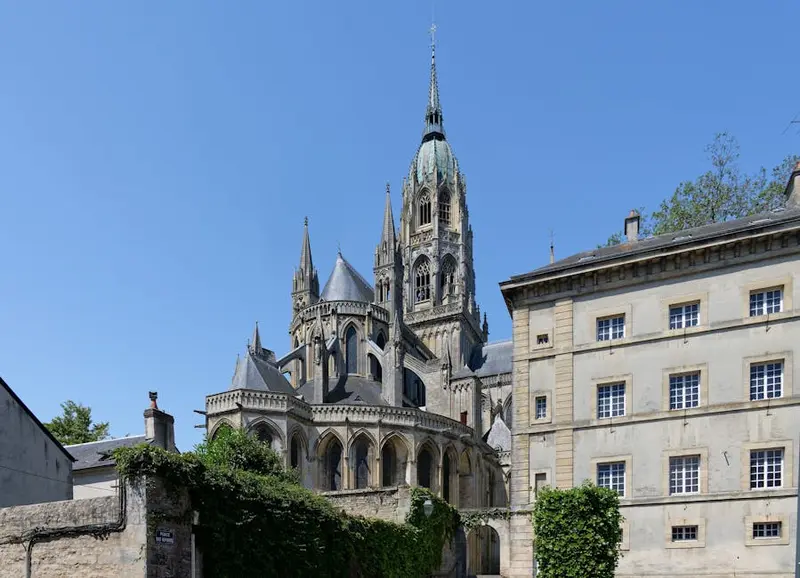
    The Cathédrale Notre-Dame de Bayeux is an outstanding example of Norman architecture and closely linked to the history of William the Conqueror. Here he was consecrated Duke of Normandy in 1047, before conquering England in 1066. The Cathedral originally housed the famous Bayeux Tapestry, which is now displayed in the nearby museum.Here you’ll find an impressive mix of Romanesque and Gothic elements. Construction began in the 11th century (Romanesque), but was transformed into Gothic style after a fire in the 12th century. Note the well-preserved Romanesque crypt with its 15th-century frescoes and the delicate Gothic choir stalls in the main nave. The west facade, with its three richly adorned portals and two striking towers, is particularly worth seeing. Inside, the high vaults and coloured stained-glass windows, which filter the light in a unique way, are impressive.Our Tip: To explore the Cathedral in peace and appreciate its architectural details, a visit in the early morning or late afternoon is recommended. The square in front of the west facade offers an excellent perspective for photos. Please note that the Cathedral is an active parish church; respect church services and quiet moments of contemplation.
    Open in Google Maps

    3Musée Mémorial de la Bataille de Normandie

    The Musée Mémorial de la Bataille de Normandie in Bayeux is comprehensively dedicated to the decisive Battle of Normandy, fought from June to August 1944. It details military operations from the Allied D-Day landings until the liberation of Paris. Here you'll find an impressive collection of authentic exhibits, including military vehicles, uniforms, weapons, and personal items of soldiers from both sides. The chronological presentation of events, complemented by maps, photographs, and a documentary film, offers a deep understanding of the complexity and human cost of this conflict. The exhibition notably highlights logistical challenges and the role of the civilian population. Our Tip: Plan your visit for early morning or late afternoon to avoid the biggest crowds. Allow at least two to three hours to absorb the extensive information and exhibits at your leisure. A combination with the nearby British Military Cemetery rounds off the historical experience.
    Open in Google Maps

    4PETITE REINE NORMANDIE

    Attraction in 19 Bd Sadi Carnot.
    Open in Google Maps

    5Rdpt d'Ornano

    Das Rond-point d'Ornano in Bayeux fungiert als zentraler Verkehrsknotenpunkt und ist ein wichtiger Orientierungspunkt für Besucher. Es verbindet mehrere Hauptstraßen, die dich direkt zu den bedeutendsten Sehenswürdigkeiten der Stadt führen, darunter die berühmte Cathédrale Notre-Dame und das Musée de la Tapisserie. Obwohl es sich primär um eine funktionale Kreuzung handelt, ist der Kreisverkehr oft mit saisonalen Blumenarrangements geschmückt, die das Stadtbild bereichern. Du wirst feststellen, dass er den Verkehrsfluss effizient regelt und somit einen reibungslosen Zugang zum historischen Zentrum ermöglicht. Unser Tipp: Achte auf die Beschilderung am Rond-point d'Ornano, um die besten Parkmöglichkeiten und den schnellsten Weg zu den Museen zu finden. Für einen kurzen Blick auf die umliegende traditionelle Architektur empfiehlt es sich, die angrenzenden Straßen zu Fuß zu erkunden.
    Open in Google Maps

    6Tapisserie de Bayeux

    The Bayeux Tapestry is an outstanding testament to medieval art and historical documentation. It's not a woven wall hanging, but an embroidery, some 70 meters long and 50 centimeters high, meticulously depicting the events before and during the Norman Conquest of England in 1066. This unique document, likely created shortly after the events around 1070-1080, covers over 50 scenes, showing the preparations, the Channel crossing, and the decisive Battle of Hastings, where William the Conqueror defeated the English King Harold.In its specially climate-controlled room, you can view the Tapestry and follow the Latin inscriptions explaining each panel. The delicate embroideries offer deep insight into 11th-century life, clothing, and warfare. Our tip: Definitely use the provided audio guide; it's perfectly aligned with the scenes and offers essential background information. To avoid crowds and study details at leisure, we recommend visiting at opening time in the morning.
    Open in Google Maps

    City walks in Bayeux

    Curated walking tours through the city's highlights — handpicked by experienced travel journalists.

    Bayeux: Spuren der Befreiung und Gedenken

    Dieser Spaziergang widmet sich der entscheidenden Rolle Bayeuxs im Zweiten Weltkrieg als erste befreite Stadt Frankreichs. Er führt Sie zu bewegenden Gedenkstätten, bedeutenden Museen und Orten, die an die Heldentaten und Opfer der Befreiung erinnern, bevor er in einer Oase der Ruhe endet.

    ~2 Std.
    In Google Maps öffnen
    Stopps (6)

    Restaurants & Cafes

    Historical Heritage and Art in Bayeux

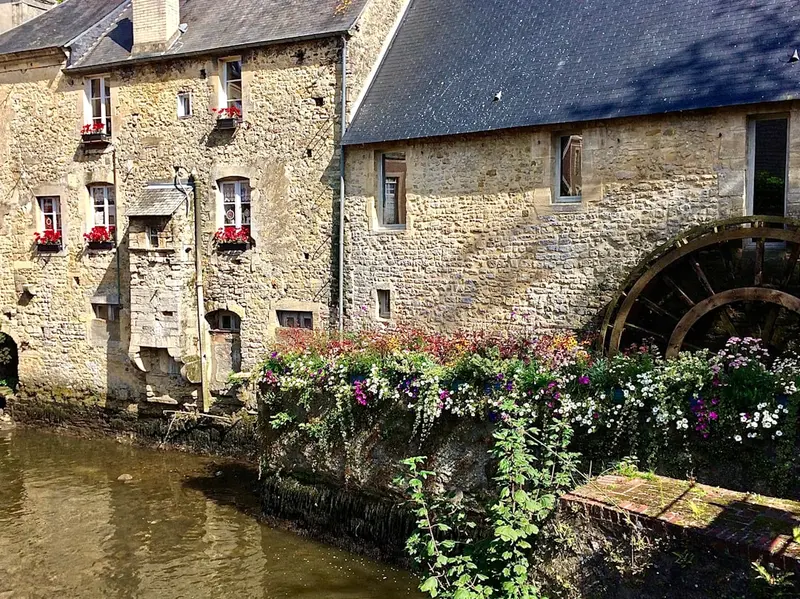
    Bayeux, a city with Roman roots, was already known in antiquity as 'Augustodurum' and developed in the Middle Ages into an important bishopric and a center of the Bessin. Its historical significance became manifest during the Norman Conquest of England, which is inextricably linked with Duke William the Conqueror and the famous Bayeux Tapestry.The city's architecture reflects various eras. The Cathédrale Notre-Dame de Bayeux is an outstanding example of Romanesque and Gothic architecture, whose foundation stone was laid in the 11th century. The old town also preserves a network of narrow streets and well-preserved half-timbered houses, which exude a medieval flair.Culturally, Bayeux is primarily known for the Bayeux Tapestry, a UNESCO Memory of the World Register entry, which meticulously depicts the events before and during the Battle of Hastings. This unique artwork is not only a historical document but also a masterpiece of early medieval embroidery. Traditions such as the production of 'Dentelle de Bayeux' (Bayeux Lace) cultivate the region's artisanal heritage. The city also played a decisive role in World War II as the first liberated city in France, remaining largely undamaged, which protected its historical structures.

    Navigating Locally

    Bayeux is excellent for exploring on foot, as most historical sights are clustered close together in the charming center. For trips to slightly more distant destinations or excursions into the surrounding Normandy, taxis are available. Bayeux train station also offers good train connections for arrival and for exploring the wider region.

    Accommodations in Bayeux

    Accommodations in Bayeux

    Find perfect stay in Bayeux

    Booking.com
    Search Hotels
    Agoda
    Search Hotels
    Airbnb
    Vacation Rentals
    Hotels.com
    Hotels Worldwide
    Hostelworld
    Hostels

    Campgrounds in Bayeux

    Find perfect campground in Bayeux

    Search via Google Maps
    Campgrounds nearby (15km)
    Camping.info
    Find Campgrounds
    Park4Night
    RV Parks & Camping

    Plan your trip to Bayeux

    Save places, build a route and plan your city trip — all in one place.

    Save places

    Bookmark sights, restaurants and neighborhoods you're interested in.

    Build your route

    Turn your bookmarks into a route — define order, days and budget.

    Refine with AI

    Let Mein Fernweh suggest experiences and put together a tailored daily plan.

    Start trip planningOpen bookmarks

    Locations nearby

    These places are nearby — perfect for additional days or a day trip.

    D-Day Landing Beaches

    D-Day Landing Beaches

    The historic beaches of Operation Overlord are a moving testament to World War II, commemorating with museums, memorials, and military cemeteries the decisive Allied landing.
    Caen

    Caen

    Caen in Normandy combines a rich medieval history with an impressive capacity for renewal after the devastations of World War II. You should explore the imposing Château de Caen, a fortress of William the Conqueror, which today houses museums and offers insight into Norman history. Equally significant are the Romanesque abbeys: the Abbaye aux Hommes with William's tomb and the Abbaye aux Dames, both architectural masterpieces. A visit to the Mémorial de Caen is essential to understand the impacts of D-Day and the importance of peace; plan at least half a day for this. Discover the charming Vaugueux district with its traditional half-timbered houses, where you can enjoy authentic Norman cuisine. The best time to visit is spring or autumn, to experience the city at more pleasant temperatures and with fewer tourists.
    Normandy

    Normandy

    The Normandy, a region full of contrasts, charms visitors with its breathtaking coastal landscape, deep green pastures, and rich historical heritage. From the mystical heights of Mont Saint-Michel to the poignant D-Day landing beaches, Normandy offers an unforgettable journey through culture, history, and picturesque beauty.
    Honfleur

    Honfleur

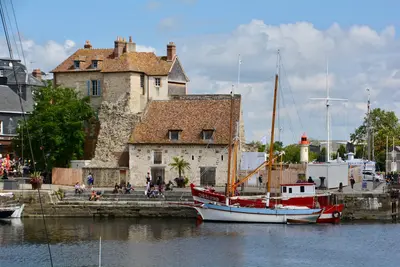
    The charming port town of Honfleur in Normandy captivates with its unique maritime flair. At its heart lies the Vieux Bassin, surrounded by characteristic tall houses with slate facades that define the townscape. The **Sainte-Catherine Church**, built entirely of wood by shipwrights, is an architectural gem and unique in France. Honfleur was an important port and inspired numerous *Impressionists* like Monet and Boudin, whose works you can discover at the Musée Eugène Boudin. Stroll through the narrow cobblestone streets, which host a variety of art galleries and small boutiques. For a more relaxed experience, visiting in late spring or early autumn is recommended to avoid the largest tourist crowds. Also explore the side streets away from the harbor to find hidden studios and charming squares.
    Étretat

    Étretat

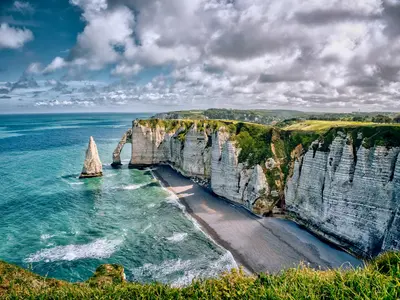
    Étretat, on Normandy's Alabaster Coast, is renowned for its striking chalk cliffs and natural rock arches. Here you'll discover the iconic Falaises d'Étretat, including the Porte d'Aval, the Porte d'Amont, and the impressive Manneporte. Of particular note is the freestanding rock needle, Aiguille Creuse, which gained cultural significance through Maurice Leblanc's Arsène Lupin novels. This unique landscape already inspired artists like Claude Monet and Gustave Courbet. A walk along the cliff paths offers spectacular views. The Jardins d'Étretat combine art and botany with panoramic views of the rock formations. To explore the rock arches on the beach, a visit at low tide is essential. The off-season in spring or autumn is ideal for a quieter experience.