Fernweh
    ExploreTravel GuidesMy Trips
    de|en
    About FernwehImprintFAQPrivacy Policy
    ExploreTravel GuidesMy Trips
    Étretat

    Étretat

    City
    1. Home
    2. Destinations
    3. France
    4. Normandy
    5. Étretat
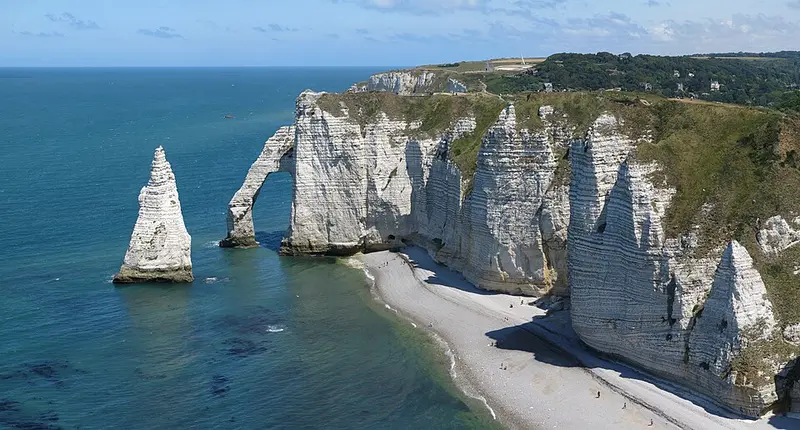
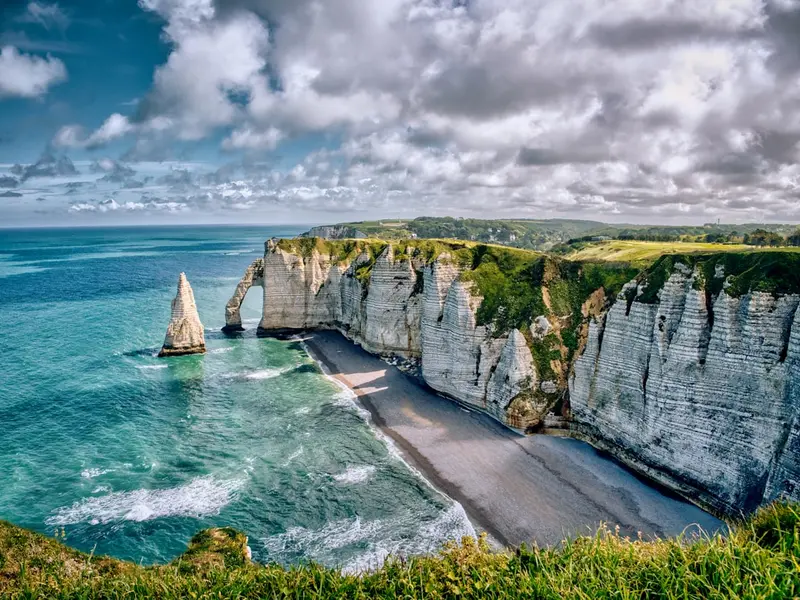
    Étretat, on Normandy's Alabaster Coast, is renowned for its striking chalk cliffs and natural rock arches. Here you'll discover the iconic Falaises d'Étretat, including the Porte d'Aval, the Porte d'Amont, and the impressive Manneporte. Of particular note is the freestanding rock needle, Aiguille Creuse, which gained cultural significance through Maurice Leblanc's Arsène Lupin novels. This unique landscape already inspired artists like Claude Monet and Gustave Courbet. A walk along the cliff paths offers spectacular views. The Jardins d'Étretat combine art and botany with panoramic views of the rock formations. To explore the rock arches on the beach, a visit at low tide is essential. The off-season in spring or autumn is ideal for a quieter experience.
    • Neighborhoods & highlights
    • Walking tours
    • Eat & drink
    • Culture
    • Getting around
    • Accommodation
    • Plan trip
    • Nearby
    • Neighborhoods & highlights
    • Walking tours
    • Eat & drink
    • Culture
    • Getting around
    • Accommodation
    • Plan trip
    • Nearby

    Overview

    Étretat on Normandy's Alabaster Coast is renowned for its spectacular chalk cliffs and natural rock arches like the Porte d'Aval, the Porte d'Amont, and the massive Manneporte, complemented by the striking rock needle L'Aiguille. This impressive coastal landscape already inspired artists like Claude Monet in the 19th century. Beyond its pebble beach, the charming coastal town offers a pleasant atmosphere for relaxed strolls. Above the cliffs, the Jardins d'Étretat feature artistic gardens and expansive panoramic views. For the best impressions, ideally plan your visit during the off-season and observe the tides to safely reach the rock arches on the beach.

    Places in Étretat

    Discover the most important sights and attractions

    Sights in Étretat

    The panoramic view etretat

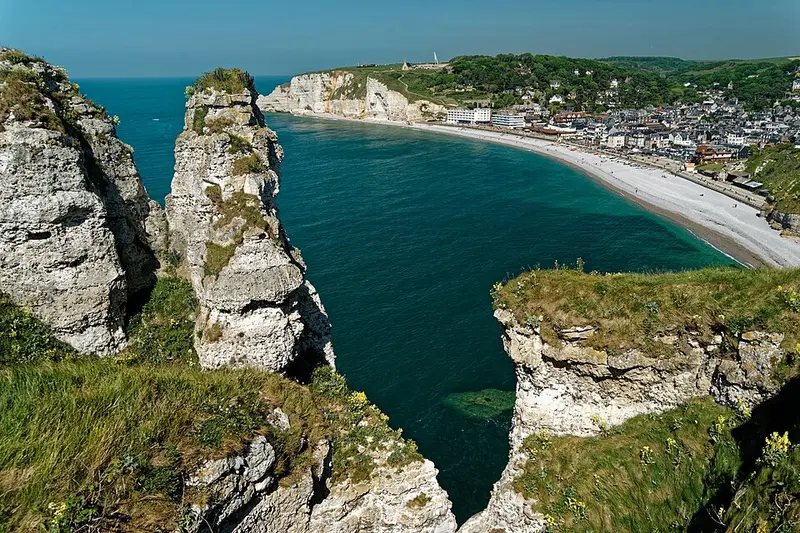
    The panoramic views of Étretat present you with one of France's most iconic coastal landscapes. Here, you gaze upon the famous white chalk cliffs of the Alabaster Coast, rising majestically from the English Channel. Particularly striking are the natural rock arches, the Falaise d'Aval and the Falaise d'Amont, as well as the distinctive sea stack, the Aiguille. This unique geology, shaped by millions of years of erosion, has inspired artists like Claude Monet since the 19th century, who captured the cliffs' changing light conditions in his works.While hiking the paths along the cliffs, new perspectives of the dramatic coastline and the sea constantly unfold before you. The elevated viewpoints above the beaches allow you to survey the entire formation and appreciate the vastness of the landscape. For the best photos and to avoid larger crowds, a visit in the early morning or late afternoon is recommended. The softer light at these times bathes the rocks in warm hues. A walk on the Smugglers' Path (Sentier des Douaniers) also offers varying perspectives. Be sure to wear sturdy footwear.
    Open in Google Maps

    le Pertuiser

    The Pertuiser is one of the fascinating, yet often overlooked, rock formations on the famous Alabaster Coast of Étretat. You’ll find this natural arch just east of the more famous Porte d'Aval, nestled within the dramatic chalk cliff landscape. Over millennia, constant erosion by wind and sea has sculpted an impressive natural artwork here, reflecting the raw power of the elements. This unique coastline has already inspired artists like Claude Monet to create their famous works. From the Pertuiser, you’ll enjoy an unobstructed view of the English Channel and the surrounding cliffs. Our Tip: To fully experience the Pertuiser and reach the beach beneath the arch, be sure to plan your visit for low tide. For the best lighting and to avoid the largest crowds, early morning is recommended.
    Open in Google Maps

    Étretat - Falaise d‘Aval

    The Falaise d‘Aval in Étretat is one of the most striking chalk cliff formations on the Alabaster Coast, significantly shaping the landscape. Here you'll find an imposing natural arch that rises majestically from the sea, along with the famous rock needle L'Aiguille, standing right beside it. These geological wonders are the result of millennia of erosion by wind and waves. The dramatic coastline has inspired numerous artists, including Claude Monet, and is a central motif in art history. During your visit, you can walk through the arch at low tide and view the impressive rock formations up close. Our tip: Be sure to plan your visit at low tide to allow passage under the arch and explore the hidden pebble beaches. For the best photo perspective of the Falaise d'Aval with the Aiguille, we recommend ascending to the Falaise d'Amont on the opposite side of the bay.
    Open in Google Maps

    Sentier panoramique de la Falaise d'Aval

    The Sentier panoramique de la Falaise d'Aval offers one of the most famous views of Étretat's iconic chalk cliffs. From this easily accessible panoramic path, you'll experience the majestic Porte d'Aval and the striking Aiguille rock needle up close. The path winds along the cliffs, offering ever-changing perspectives of the breathtaking coastal landscape that has inspired artists like Claude Monet for centuries. The natural arches and the freestanding needle are the result of millennia of erosion by wind and sea, a fascinating example of geological formation. Here, you can directly feel the raw power of nature and enjoy the vastness of the English Channel. Our Tip: For the best photos and to avoid the largest crowds, we recommend visiting early in the morning or late in the afternoon. Be sure to wear sturdy footwear, as the path can be uneven in places.
    Open in Google Maps

    Cave rock

    The Cave Rock in Étretat is an impressive natural rock formation, majestically rising from the English Channel and part of the world-famous chalk cliffs of the Alabaster Coast. These geological wonders were shaped over millennia by the tireless force of the sea and wind. Here you'll find not just a cave, but often adjacent arches and needles that define the panorama and have been captured by artists like Claude Monet in numerous works.A visit promises a spectacular view of the rugged coastal landscape. Erosion has sculpted unique structures here, often accessible at low tide, allowing you to experience the dimensions of these natural wonders up close. A practical tip: Be sure to plan your visit at low tide to safely explore the beach area and the caves. Pay attention to the tides, as the water can rise quickly. For the best photos of the entire rock formations, we recommend the view from the cliff path above the bay, especially in the late afternoon when the light bathes the rocks in gold.
    Open in Google Maps

    City walks in Étretat

    Curated walking tours through the city's highlights — handpicked by experienced travel journalists.

    Étretat: Malerische Klippen & Künstlerflair

    Entdecken Sie Étretats ikonische Kreidefelsen, die schon Monet inspirierten, und tauchen Sie ein in das charmante Küstenstädtchen. Dieser etwa zweistündige Spaziergang führt Sie zu atemberaubenden Aussichtspunkten auf beiden Klippenseiten und durch das historische Zentrum.

    ~2 Std.
    In Google Maps öffnen
    Stopps (6)

    Food and Drink

    Culture, Art & Étretat's History

    Étretat, originally a humble fishing village, underwent a profound transformation from the mid-19th century onwards. Its picturesque alabaster cliffs and beaches attracted artists, writers, and Parisian society, elevating the town into a popular Belle Époque seaside resort. This era profoundly shaped Étretat's cultural heritage.The spectacular landscape inspired numerous Impressionists, such as Claude Monet, who created some of his most famous cliff and sea paintings here. Literary figures like Guy de Maupassant and Maurice Leblanc, who made Étretat the setting for his master thief Arsène Lupin, also found their muse here. Architecturally, magnificent villas from the late 19th and early 20th centuries bear witness to this golden age, often featuring elements of regional spa architecture and Norman influences.Despite the tourism boom, Étretat preserves parts of its maritime identity, reflected in local festivals and the conservation of its fishing heritage. The deep connection to nature and its artistic past remain palpable pillars of the local culture to this day.

    Exploring Locally

    Étretat is a charming coastal town best explored on foot. The famous cliffs and beach are easily accessible from the town center, making Étretat an extremely pedestrian-friendly destination. There is no metro or tram service here; public transport is limited to regional bus lines connecting the town with larger places like Le Havre. Tickets are usually available directly from the driver or via the regional transport apps of "LIA".For shorter distances or exploring the immediate surroundings, bicycles are a good option and can often be rented locally; e-scooters, however, are less common. Taxis are available for individual journeys, but ride-sharing services are limited due to the small size of the town. Special attention should be paid to the parking situation, which can be very tight during peak season; it is advisable to arrive early or use public car parks on the outskirts of the town.

    Accommodations in Étretat

    Accommodations in Étretat

    Find perfect stay in Étretat

    Booking.com
    Search Hotels
    Agoda
    Search Hotels
    Airbnb
    Vacation Rentals
    Hotels.com
    Hotels Worldwide
    Hostelworld
    Hostels

    Campgrounds in Étretat

    Find perfect campground in Étretat

    Search via Google Maps
    Campgrounds nearby (15km)
    Camping.info
    Find Campgrounds
    Park4Night
    RV Parks & Camping

    Plan your trip to Étretat

    Save places, build a route and plan your city trip — all in one place.

    Save places

    Bookmark sights, restaurants and neighborhoods you're interested in.

    Build your route

    Turn your bookmarks into a route — define order, days and budget.

    Refine with AI

    Let Mein Fernweh suggest experiences and put together a tailored daily plan.

    Start trip planningOpen bookmarks

    Locations nearby

    These places are nearby — perfect for additional days or a day trip.

    Honfleur

    Honfleur

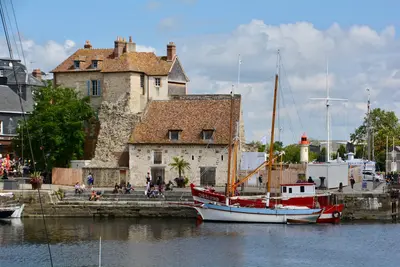
    The charming port town of Honfleur in Normandy captivates with its unique maritime flair. At its heart lies the Vieux Bassin, surrounded by characteristic tall houses with slate facades that define the townscape. The **Sainte-Catherine Church**, built entirely of wood by shipwrights, is an architectural gem and unique in France. Honfleur was an important port and inspired numerous *Impressionists* like Monet and Boudin, whose works you can discover at the Musée Eugène Boudin. Stroll through the narrow cobblestone streets, which host a variety of art galleries and small boutiques. For a more relaxed experience, visiting in late spring or early autumn is recommended to avoid the largest tourist crowds. Also explore the side streets away from the harbor to find hidden studios and charming squares.
    Rouen

    Rouen

    The capital of Normandy captivates with its Gothic cathedral, its historic district of half-timbered houses, and the moving story of Joan of Arc.
    Caen

    Caen

    Caen in Normandy combines a rich medieval history with an impressive capacity for renewal after the devastations of World War II. You should explore the imposing Château de Caen, a fortress of William the Conqueror, which today houses museums and offers insight into Norman history. Equally significant are the Romanesque abbeys: the Abbaye aux Hommes with William's tomb and the Abbaye aux Dames, both architectural masterpieces. A visit to the Mémorial de Caen is essential to understand the impacts of D-Day and the importance of peace; plan at least half a day for this. Discover the charming Vaugueux district with its traditional half-timbered houses, where you can enjoy authentic Norman cuisine. The best time to visit is spring or autumn, to experience the city at more pleasant temperatures and with fewer tourists.
    Normandy

    Normandy

    The Normandy, a region full of contrasts, charms visitors with its breathtaking coastal landscape, deep green pastures, and rich historical heritage. From the mystical heights of Mont Saint-Michel to the poignant D-Day landing beaches, Normandy offers an unforgettable journey through culture, history, and picturesque beauty.
    Bayeux

    Bayeux

    Bayeux, a charming town in Normandy, transports you straight into the Middle Ages with its cobblestone streets and impressive cathedral. Famous for its UNESCO-listed Bayeux Tapestry and as an ideal starting point for the D-Day beaches, it offers a perfect blend of history, culture, and Norman charm.