ExploreTravel GuidesPlan a trip
    de|en
    All Places & RegionsAbout FernwehFAQPrivacy PolicyImprint
    ExploreTravel GuidesPlan a trip
    • Neighborhoods & highlights
    • Eat & drink
    • Food culture
    • Culture
    • Getting around
    • Accommodation
    • Plan trip
    • Nearby
    Hiroshima
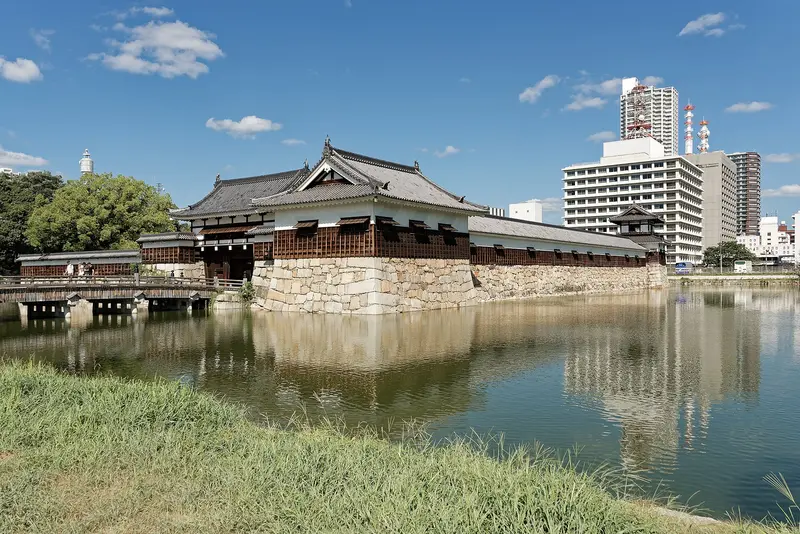
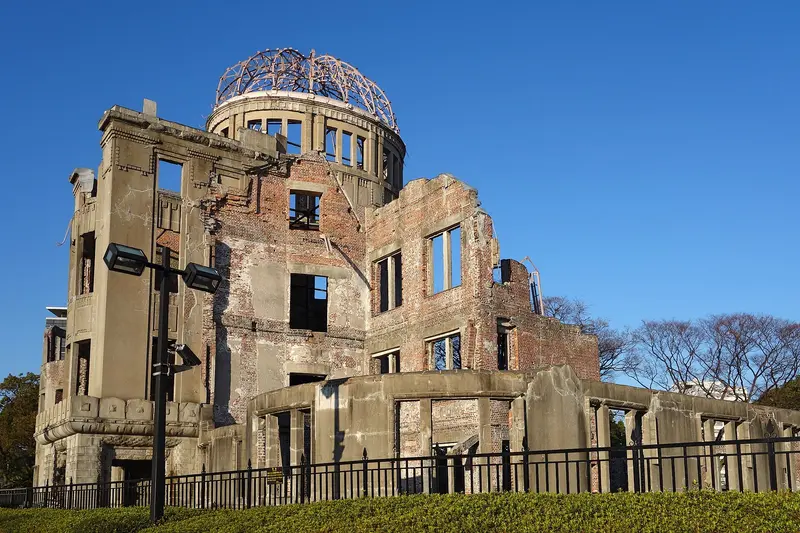
    original photo: Dean S. Pemberton (derivative work: Torsodog) / Wikimedia Commons / CC BY-SA 4.0
    City

    Japan

    Hiroshima

    Hiroshima is a vibrant metropolis on the Seto Inland Sea, known worldwide for the atomic bombing on August 6, 1945.

    1. Home
    2. Destinations
    3. Japan
    4. Setouchi
    5. Hiroshima
    Hiroshima is a vibrant metropolis on the Seto Inland Sea, known worldwide for the atomic bombing on August 6, 1945. The Peace Park with the ruins of the Atomic Bomb Dome serves as a poignant reminder; at the same time, the city, with its streetcars, riverbanks, and unique cuisine, is a pleasant starting point for Miyajima Island.
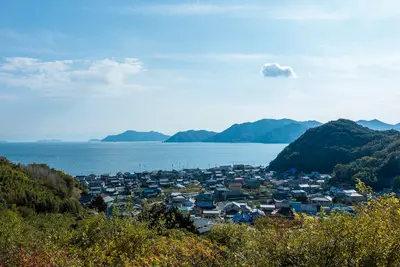
    Hiroshima has approximately 1.2 million inhabitants and is located in the Ōta River delta, whose arms divide the city center into several islands. At the tip of one of these islands lies the Peace Park, just a few minutes' walk from the Hondōdori shopping district. Most attractions can be reached by tram, which is part of one of Japan's largest networks. The city is relaxed, green, and manageable for a large city. It serves well as a base for Miyajima and the islands of the Seto Inland Sea.

    Sights in Hiroshima

    Discover the most important sights and attractions

    Atomic Bomb Dome (Genbaku Dome)
    Attraction

    1Atomic Bomb Dome (Genbaku Dome)

    The ruin of the former Chamber of Industry and Commerce stood only about 160 meters from the hypocenter and was one of the few buildings in the area to remain partially standing. The steel skeleton of its dome has become a symbol of Hiroshima; since 1996, the structure has been a UNESCO World Heritage site.The ruin stands on the bank of the Motoyasu River, opposite the Peace Memorial Park, and is visible from outside at any time. In the evenings, it is illuminated.
    Open in Google Maps
    Museum

    2Peace Park and Peace Museum

    The Peace Park extends across the site of the former city center, which the bomb completely destroyed. Aligned on one axis are the arched Cenotaph with the names of the victims, the Eternal Flame, and behind it the Atomic Bomb Dome; next to it stands the Children's Peace Monument, where paper cranes are still laid today.The Peace Memorial Museum showcases the attack's aftermath with personal items, photographs, and survivor accounts. Allow at least two hours; it is less busy mornings and weekdays.
    Open in Google Maps
    Shukkei-en
    Historic Landmark

    3Shukkei-en

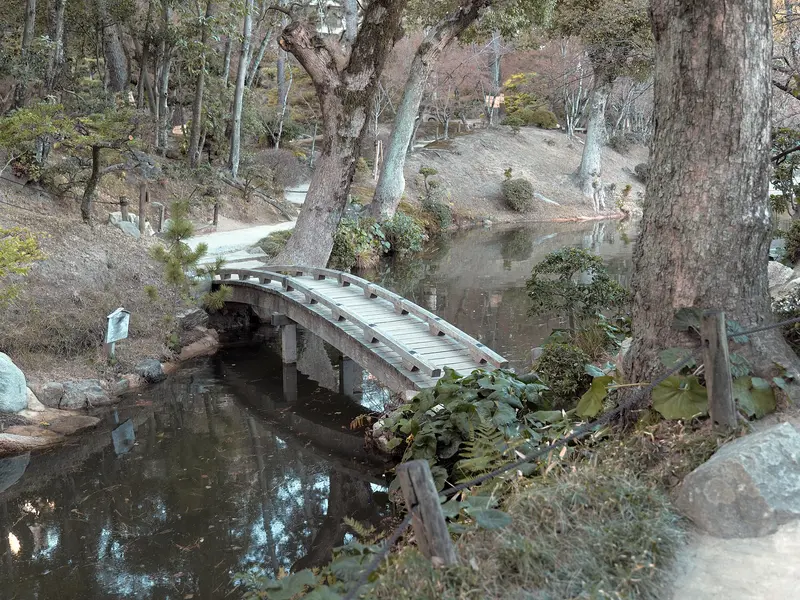
    The landscape garden was created in the early 17th century for the lords of Hiroshima. A circular path leads around a pond with small islands, over bridges, and past teahouses; the landscape recreates scenes from China in miniature.The garden was destroyed in 1945 and faithfully restored. It offers a peaceful contrast to the Peace Memorial Park and is close to the station.
    Open in Google Maps
    Hiroshima Castle
    Castle

    4Hiroshima Castle

    Hiroshima Castle was built in the late 16th century and gave the city its origin. The main keep was destroyed by the blast wave in 1945 and reconstructed in 1958; today it houses a museum on the castle's history and Samurai culture.From the top floor, you look out over the city. The moat and the surrounding grounds are a popular spot for cherry blossom viewing.
    Open in Google Maps

    Restaurants in Hiroshima

    Food & Drink in Hiroshima

    Hiroshima-style Okonomiyaki

    Thin batter, lots of cabbage, pork, fried noodles, and an egg are built layer by layer on the hot plate. At Okonomimura near Hondōdori, dozens of small stalls line several floors.

    Oysters

    Hiroshima Bay is Japan's most important oyster region. From autumn to spring, they are served grilled, fried, or in stews on menus.

    Hiroshima-Tsukemen

    Cold noodles, dipped in a spicy sauce flavored with chili oil. You choose the spiciness level when ordering.

    Momiji-Manjū

    Small, maple-leaf-shaped cakes, filled with bean paste or vanilla cream. Hailing from Miyajima, they are the region's most popular souvenir.

    City of Peacefulness

    August 6, 1945The first atomic bomb used in wartime almost completely destroyed Hiroshima. By the end of 1945, an estimated 140,000 people had died from its effects. The city has since stood as a warning against nuclear weapons. Every year on August 6, a memorial ceremony takes place in the Peace Memorial Park; in the evening, lanterns are floated on the river.ReconstructionIn the decades after the war, Hiroshima was rebuilt as a modern city. The castle and the Shukkei-en landscape garden were reconstructed, whereas the ruins of the Atomic Bomb Dome were deliberately preserved as the explosion left them.Carp and OkonomiyakiIn daily life, two things characterize the city: the Hiroshima Toyo Carp baseball team, whose games at Mazda Stadium are among the most atmospheric in the country, and the layered Hiroshima-style Okonomiyaki.

    Getting there and around

    Getting ThereShinkansen: Hiroshima is on the Sanyō-Shinkansen line, about an hour and a half from Osaka and roughly four hours from Tokyo.Airport: A bus runs from Hiroshima Airport to the main station in just under an hour.In the CityTram: Hiroden lines connect the station, Peace Memorial Park, and city center; payment is by IC card or cash upon exiting.Sightseeing Bus: A loop bus service connects the main attractions, starting from the station.To MiyajimaTake the JR train or tram line 2 to Miyajimaguchi, then transfer to a ferry for a roughly ten-minute crossing. From the Peace Memorial Park, there's also a direct high-speed boat.

    Accommodations in Hiroshima

    Find perfect stay in Hiroshima

    Booking.com* (Affiliate link)
    Search Hotels
    Agoda* (Affiliate link)
    Search Hotels
    Airbnb
    Vacation Rentals

    * Affiliate link: if you book through it, we earn a small commission. The price stays the same for you.

    Plan your trip to Hiroshima

    Save places, build a route and plan your city trip, all in one place.

    1. 1
      1234

      Round trip

      12 days · 4 stops

      Saved

      Pick a route

      Pick a ready-made one or save places and plan your own.

      Open bookmarks
    2. 2

      Trip to Hiroshima

      Live
      • 1Atomic Bomb Dome (Genbaku Dome)3 days
      • 2Peace Park and Peace Museum4 days
      • 3Shukkei-en5 days
      Budget

      Plan your trip

      The planner sorts stops, days and budget. Plan together in real time.

      Start trip planning
    3. 3
      9:41 No signal
      Available offline

      Use it on the road

      Download the guide to your phone and use it on site, even offline.

    Nearby

    Miyajima

    Miyajima

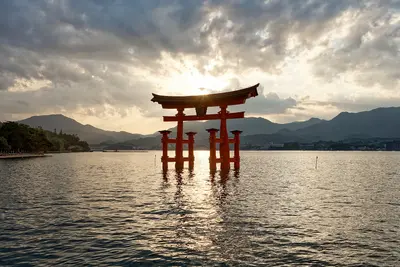
    Itsukushima Island, known as Miyajima, is a short ferry ride from Hiroshima. Its landmark is Itsukushima Shrine's great red Torii, appearing to float in the sea at high tide. Behind the shrine, forested Mount Misen rises, with a cable car and hiking trails to its summit.
    Matsuyama

    Matsuyama

    Die größte Stadt Shikokus ist berühmt für die beeindruckende Burg Matsuyama und das historische Dogo Onsen, eines der ältesten und bekanntesten Thermalbäder Japans, das dich zur puren Entspannung einlädt.
    Uchiko

    Uchiko

    Uchiko is a beautiful town that will captivate you with its immaculately preserved late 19th and early 20th-century atmosphere. Here, you'll delve into an era where wax and paper production shaped the economy, leaving behind a rich culture of commerce that is still palpable today.
    Iya-Tal

    Iya-Tal

    Dieses abgelegene und atemberaubende Tal, tief in den Bergen von Tokushima gelegen, ist bekannt für seine historischen Reetbrücken und dramatischen Schluchten, die dich in eine andere Zeit versetzen werden.
    Setouchi

    Setouchi

    Die Region Setouchi, um das sanfte Seto-Binnenmeer gelegen, verzaubert dich mit ihrer einzigartigen Mischung aus atemberaubender Natur, pulsierender Kunstszene und reicher kulinarischer Tradition. Entdecke eine Welt aus über 3.000 Inseln, von denen viele Heimat von Weltklasse-Kunstinstallationen und traditionellen Fischerdörfern sind.Genieße das milde Klima, die frische Meeresbrise und die exquisite lokale Küche, die die Seele dieses besonderen Ortes widerspiegelt.