Fernweh: Home
    ExploreTravel GuidesPlan a tripMy tripLast visited
    de|en
    All Places & RegionsAll highlightsAbout FernwehFAQPrivacy PolicyImprint
    ExploreTravel GuidesPlan a tripMy tripLast visited
    • Overview
    • Places in the region
    • Round trips
    • Nearby
    Northern Vietnam

    Vietnam

    Northern Vietnam

    Region

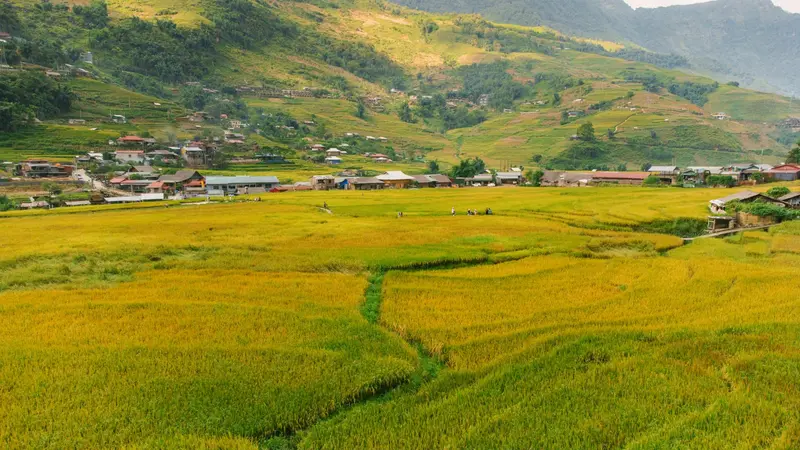
    North Vietnam stretches from the Red River Delta to the mountains on the Chinese border. It is home to the capital Hanoi, the limestone islands of Halong Bay, the karst landscape around Ninh Bình, and the rice terraces around Sa Pa.

    by Felix Gillen

    1. Home
    2. Destinations
    3. Vietnam
    4. Northern Vietnam
    North Vietnam stretches from the Red River Delta to the mountains on the Chinese border. It is home to the capital Hanoi, the limestone islands of Halong Bay, the karst landscape around Ninh Bình, and the rice terraces around Sa Pa.The climate experiences distinct seasons: Winter, from about December to February, is cool and often grey; summer is hot and rainy. The most pleasant time to travel is in spring and autumn.
    The starting point for almost any trip through the North is Hanoi. From here, you can reach all important destinations by train, bus, or car; a domestic flight is not necessary.Hanoi: Old Quarter, Hoan Kiem Lake, Temple of Literature, and Ba Dinh with the Imperial Citadel.Halong Bay: approx. 170 kilometers east, UNESCO World Heritage site since 1994, best with an overnight stay on board.Ninh Binh: about two train hours south, boat trips through the karst landscape of Trang An and Tam Coc.Sa Pa: mountain town in the Northwest, by night train to Lao Cai and an hour by bus, hikes through rice terraces and Fansipan Cable Car.Average monthly temperatures in Hanoi are 16 to 18 °C in winter; May to September is hot and rainy. The most pleasant time to travel is spring and autumn, in Sa Pa especially from September to November.
    Sa Pa

    Place 1 of 4

    Sa Pa

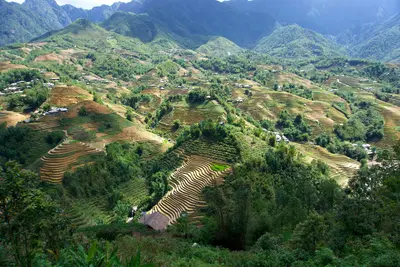
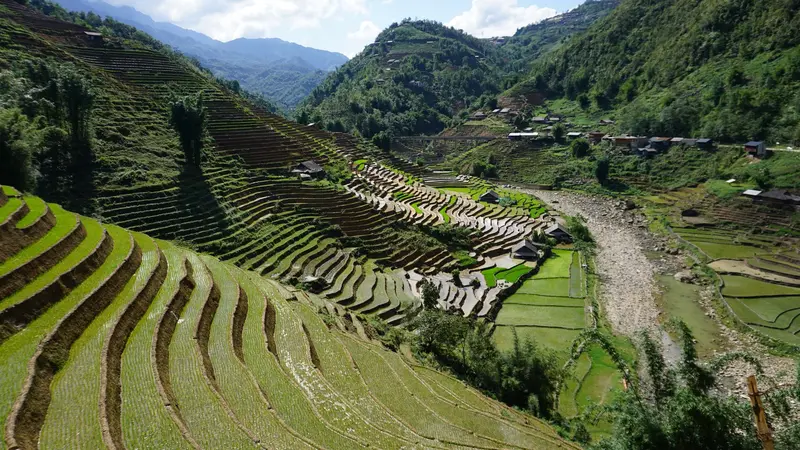
    Sa Pa is a mountain town in Vietnam's far northwest, approximately 250 kilometers from Hanoi and 20 kilometers from the Chinese border.

    Discover
    Ha Long Bay

    Place 2 of 4

    Ha Long Bay

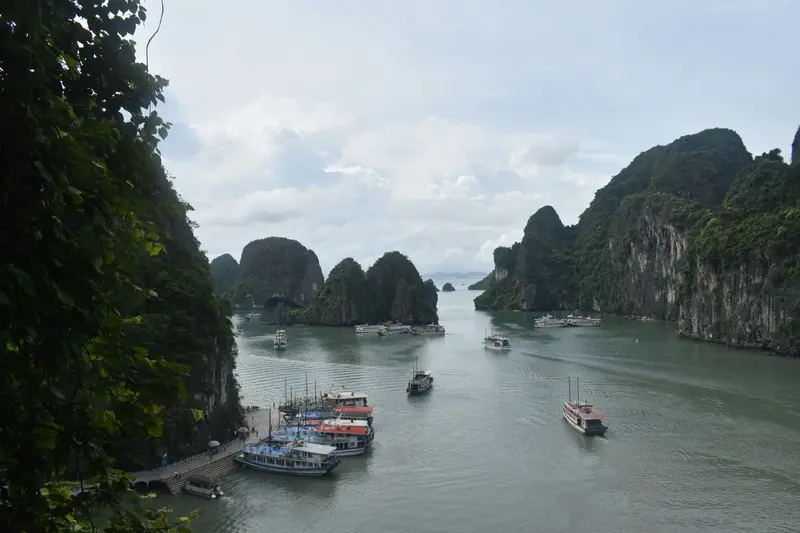
    Halong Bay is a sea bay in the Gulf of Tonkin on Vietnam's northeast coast, about 170 kilometers east of Hanoi. You travel there to cruise by boat among hundreds of forested limestone karsts, visit stalactite caves, and spend a night on board on the water.

    Discover
    Hanoi

    Place 3 of 4

    Hanoi

    Hanoi is the capital of Vietnam and the political and cultural center of the North, situated on the Red River.

    Discover
    Ninh Binh

    Place 4 of 4

    Ninh Binh

    Ninh Bình is a city in the southern Red River Delta, about two hours by bus or train south of Hanoi. You come for the surrounding karst landscape, where you travel by rowboat on rivers and through caves amidst rice paddies and limestone cliffs.

    Discover

    Round trips through this region

    From Hanoi to the Mekong Delta

    From Hanoi to the Mekong Delta

    The classic North-South trip links the country's key destinations: Hanoi with its Old Quarter, an overnight boat stay in Halong Bay, the karst landscape around Ninh Bình, the Imperial City of Huế, and Hoi An's Ancient Town. The South features Ho Chi Minh City, concluding with the Mekong Delta and its floating markets. The overnight train is ideal between Ninh Bình and Huế, while a domestic flight covers Đà Nẵng to Ho Chi Minh City.

    17 Days
    7 stops
    Open jaw
    The North: Mountains, Karst and Sea

    The North: Mountains, Karst and Sea

    The tour focuses on North Vietnam: From Hanoi, travel by overnight train to Lào Cai and on to the mountain town of Sa Pa with its rice terraces and Hmong and Dao villages. Back in Hanoi, explore the karst landscape around Ninh Bình with boat trips through caves, and finally, Halong Bay. The distances are short enough to avoid domestic flights.

    10 Days
    5 stops

    Nearby

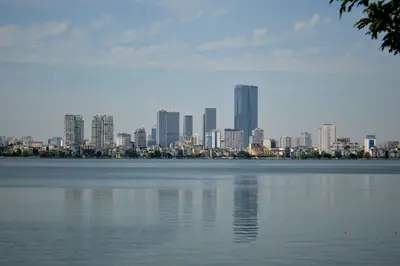
    West Lake (Tây Hồ)

    West Lake (Tây Hồ)

    The Tây Hồ district is located around West Lake, one of Vietnam's largest natural lakes, with approximately 17 kilometers of shoreline. It is quieter than the city center, with villas, cafés, and many Western restaurants, as a large part of Hanoi's foreign population lives here.On a small island near the southeastern shore stands the Trấn Quốc Pagoda, the city's oldest pagoda. Since 1996, the Quảng Bá flower market has taken place nightly in the district, one of the largest in the country. The lakeside is well suited for a bike ride.
    Ba Dinh

    Ba Dinh

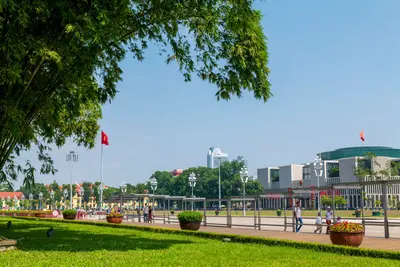
    Ba Đình, west of the Old Quarter, is Hanoi's political center and the district with the most imperial and revolutionary sites. It is home to the Ho Chi Minh Mausoleum, the One Pillar Pagoda, and the Imperial Citadel of Thang Long, a UNESCO World Heritage site since 2010.On today's Ba Đình Square, Ho Chi Minh read the Declaration of Independence on September 2, 1945. Wide avenues, ministries, and embassies characterize the district, which can easily be explored with a stroll from the square to the Citadel.
    Old Town (Phố cổ)

    Old Town (Phố cổ)

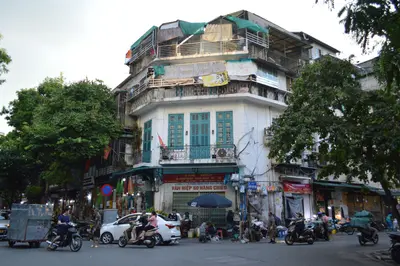
    Hanoi's Old Quarter is the dense maze of alleyways north of Hoàn Kiếm Lake, and the district where most travellers stay. Here, affordable accommodations, street food stalls, and cafés are tightly packed, and the street network has largely been preserved as it evolved over centuries.Locally, the district is known as "36 Gassen" (36 Streets), named after the guilds that once worked here. Many street names begin with "Hàng" (meaning 'goods') and still reveal what was traded there, such as Hàng Bạc after the silversmiths. Most of the narrow shop-houses with sloping tiled roofs date from the 18th and 19th centuries.In the north of the district lies Đồng Xuân Market, dating from the French colonial era, and hidden among the houses is the Bạch Mã Temple. The best way to explore the Old Quarter is on foot.
    Hanoi

    Hanoi

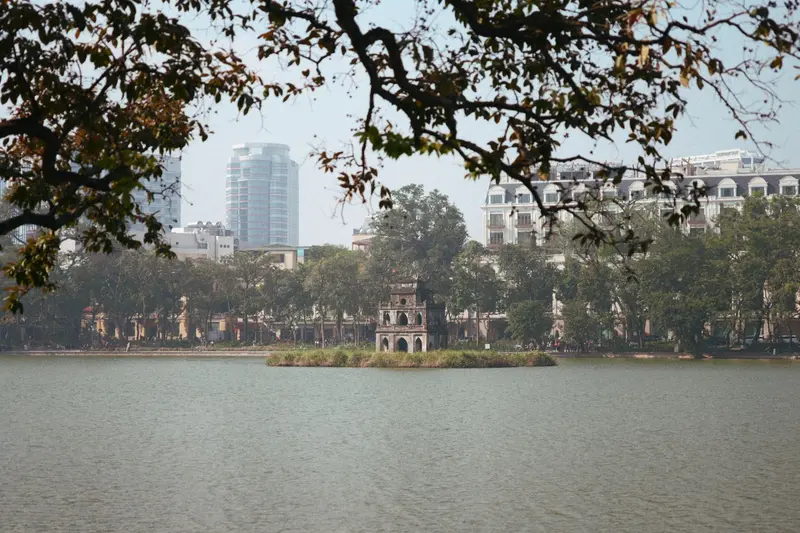
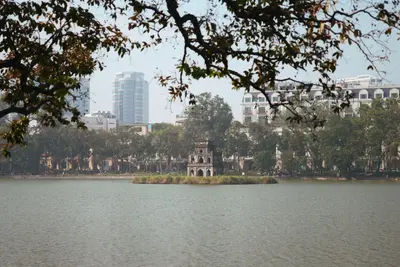
    Hanoi is the capital of Vietnam and the political and cultural center of the North, situated on the Red River. Visitors come for its over a thousand-year history, the vibrant Old Quarter around Hoàn Kiếm Lake, and the street food stalls, which are among the best in the country. In 1010, Lý Thái Tổ, the first ruler of the Lý Dynasty, made the place his capital and named it Thăng Long, "Ascending Dragon." The city has borne the name Hà Nội since 1831. From 1902, it served as the capital of French Indochina, and since 1976, it has been the capital of reunified Vietnam. Buildings from all these eras are preserved, ranging from Confucian temples to colonial villas. Key Neighborhoods Old Quarter: The dense maze of alleys north of the lake has largely preserved its historic street layout. Many streets still bear the names of the goods once traded there, such as Hàng Bạc, named after the silver shops. Most budget accommodations and street food stalls are located here. Hoàn Kiếm Lake: The lake is the heart of the city. Via the red Thê Húc Bridge, you reach Ngọc Sơn Temple on a small island; on another stands the Turtle Tower. French Quarter: South of the lake, wide avenues, colonial villas, embassies, and ministries define the area. Here you'll find the Opera House, the Hotel Metropole, and the National Museum of Vietnamese History. Ba Đình: To the west lie most of the governmental and imperial sites: the Hồ Chí Minh Mausoleum, the One Pillar Pagoda, and the Imperial Citadel of Thăng Long, a UNESCO World Heritage site since 2010. West Lake (Tây Hồ): The city's largest lake boasts approximately 17 kilometers of shoreline. On a small island near its southeastern shore stands the Trấn Quốc Pagoda, Hanoi's oldest pagoda. This district is quieter, featuring cafés, villas, and many foreign residents.
    Ninh Binh

    Ninh Binh

    Ninh Bình is a city in the southern Red River Delta, about two hours by bus or train south of Hanoi. You come for the surrounding karst landscape, where you travel by rowboat on rivers and through caves amidst rice paddies and limestone cliffs. The centerpiece is the Tràng An Landscape Complex, a UNESCO World Heritage Site (mixed cultural and natural) since 2014. It spans around 6,226 hectares, encompassing the ancient capital Hoa Lư, the waterways of Tràng An and Tam Cốc, and protected forests. Discoveries in the caves prove that people have lived here for over 30,000 years. From 968 to 1010, Hoa Lư was the capital of Vietnam before the court moved to Thăng Long, today's Hanoi. The city itself is primarily a transport hub. Many travellers stay overnight in Tam Cốc village, where boat docks, restaurants, and bicycle rentals are located. Good times to visit are September to November and March to May. Local specialties include goat meat from the karst slopes and Cơm cháy, deep-fried crispy rice.

    Sources & method

    • Photos: Pexels. Each photo carries its credit.
    • The content is based on web research from public, traceable sources. How the content is made · The role of AI