Fernweh: Home
    ExploreTravel GuidesPlan a tripMy tripLast visited
    de|en
    All Places & RegionsAll highlightsAbout FernwehFAQPrivacy PolicyImprint
    ExploreTravel GuidesPlan a tripMy tripLast visited
    • Neighborhoods & highlights
    • Videos
    • Eat & drink
    • Food culture
    • Culture
    • Nightlife
    • Getting around
    • Accommodation
    • Plan trip
    • Nearby
    Zakopane

    Poland

    Zakopane

    City

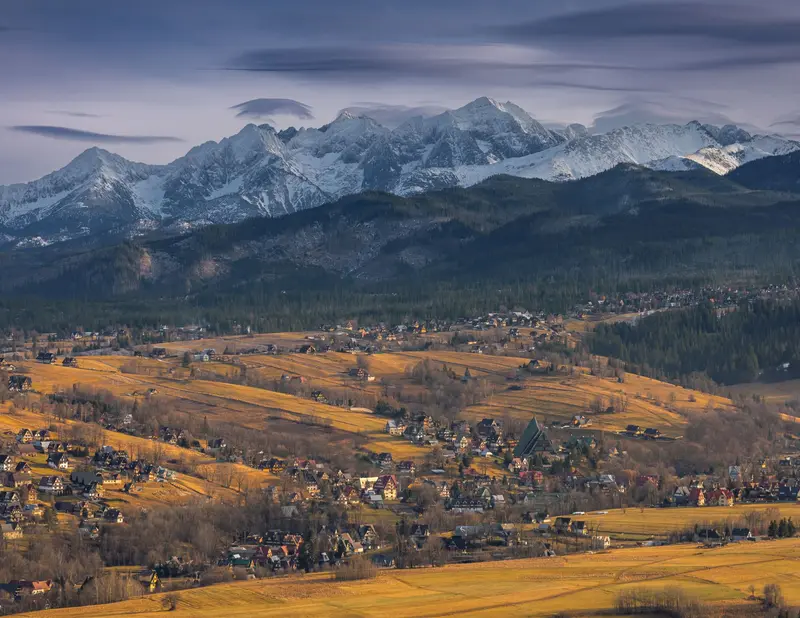
    Zakopane is located at the foot of the High Tatras, at an altitude of around 840 meters, and has a population of over 25,000.

    by Felix Gillen

    1. Home
    2. Destinations
    3. Poland
    4. Małopolska
    5. Zakopane
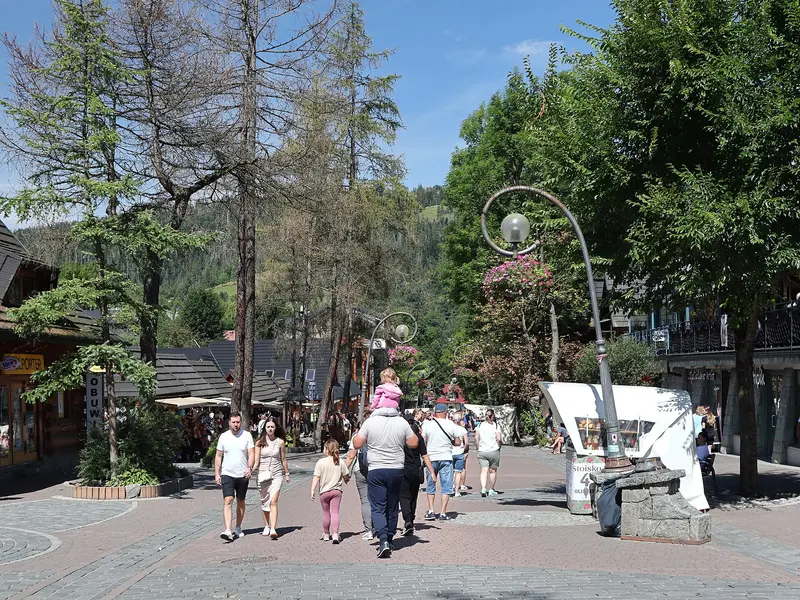
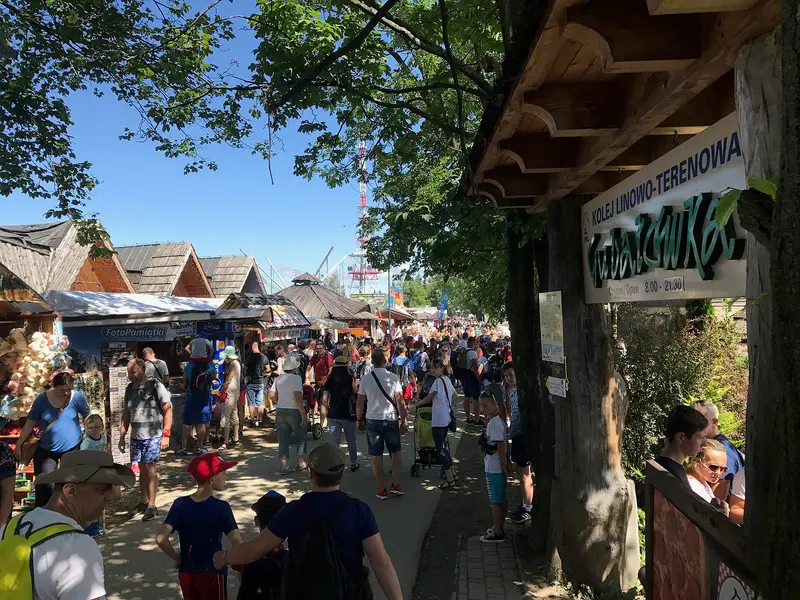
    Zakopane is located at the foot of the High Tatras, at an altitude of around 840 meters, and has a population of over 25,000. The town is considered Poland's winter capital; the railway line from Chabówka, via which you arrive today from Krakow (Kraków), was built starting in 1899; in summer, it is a starting point for hikes in the Tatra National Park, and in winter for skiers and the World Cup ski jumping at Wielka Krokiew.The pedestrian zone Krupówki, with its shops and eateries, forms the town center. From ul. Na Gubałówkę, a funicular railway leads up to the scenic ridge Gubałówka. To the south lies Kuźnice, the valley station for the cable car to Kasprowy Wierch and the starting point for many hiking trails.

    Sights in Zakopane

    Discover the most important sights and attractions

    Villa Koliba
    Historic Landmark

    1Villa Koliba

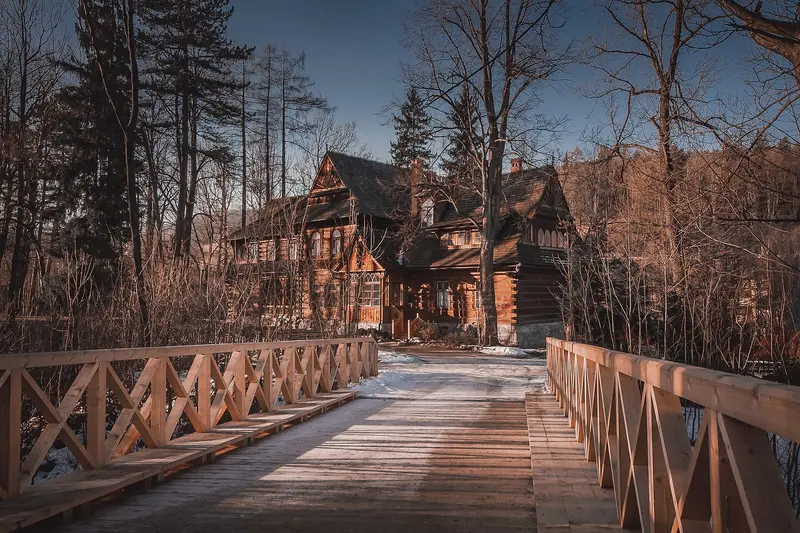
    The villa, built 1892-1893 to Stanisław Witkiewicz's designs, was the first structure in the Zakopane Style. Today, it hosts the Tatra Museum's Museum of Zakopane Style.
    Open in Google Maps
    Krupówki
    Attraction

    2Krupówki

    The pedestrian zone is Zakopane's main axis, lined with shops, restaurants, and cafés. It's about 838m high; at its junction with ul. Kościuszki, the centre begins.
    Open in Google Maps
    Gubałówka
    Attraction

    3Gubałówka

    The funicular, modernized in 2001, has run since 1938 from its lower station on ul. Na Gubałówkę to the Gubałówka ridge. From the top, enjoy views over Zakopane and the High Tatras.
    Open in Google Maps
    Cableway to Kasprowy Wierch
    Attraction

    4Cableway to Kasprowy Wierch

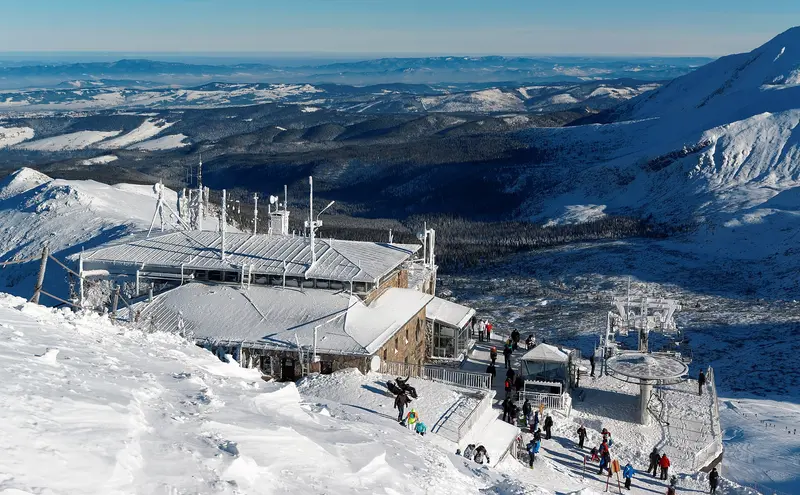
    Built between 1935 and 1936 and modernized until 2007, the cable car is considered Europe's oldest aerial tramway. It runs from Kuźnice, with a change at the intermediate station Myślenickie Turnie, to the mountain station at 1959 meters, just below the summit of Kasprowy Wierch. Wait times can be long; it's best to buy tickets online in advance.
    Open in Google Maps
    Wielka Krokiew Ski Jumping Venue
    Attraction

    5Wielka Krokiew Ski Jumping Venue

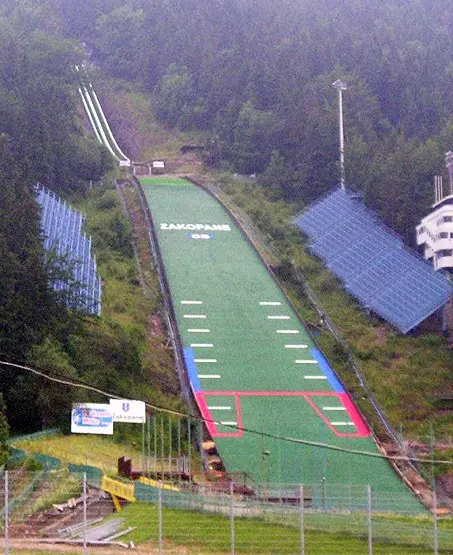
    The Big Hill, opened 1925 on the city's south edge, has hosted the Ski Jumping World Cup since 1980, yearly since 2002.
    Open in Google Maps

    Videos & Travel Reports

    Wunderschön! Polens Süden: Von der Hohen Tatra nach Krakau

    Ramon Babazadeh fährt mit einem Goralen-Floß durch den Dunajec-Durchbruch im Pieniny-Nationalpark, läuft in der Hohen Tatra, trifft in Zakopane Skispringer Kamil Stoch und erkundet anschließend…

    Restaurants in Zakopane

    1

    Stary Niedźwiedź

    Restaurant at ul. Strążyska 33A, with modern cuisine made from regional ingredients such as freshwater fish, cheese, and seasonal vegetables. Since 2025 with a Bib Gourmand in the Michelin Guide.
    Show on Google Maps
    2

    Marilor

    Restaurant with upscale cuisine; the Kwaśnica is prepared here with lamb instead of pork.
    Show on Google Maps
    3

    Bubuja

    Bistro, known for pierogi with Bryndza, seasonally also with goose.
    Show on Google Maps
    4

    Karczma Żabi Dwór

    Traditional Karczma with Goral cuisine, known for its classic Kwaśnica and Pierogi.
    Show on Google Maps

    Food and Beverages

    Oscypek

    Smoked sheep's milk cheese, pressed into decorative wooden molds and registered since 2008 as an EU Protected Designation of Origin. Authentic Oscypek may only be produced from May to September, and is sold until the end of October.

    Kwaśnica

    Sour cabbage soup with meat, often with smoked ribs, a classic of Goral cuisine. Served with potatoes or bread.

    Moskol

    Pancakes made from cooked potatoes, flour and salt, served with butter, garlic sauce or Bryndza, a sheep's cheese.

    Culture of the Gorals

    The Zakopane StyleAround 1890, the painter and architect Stanisław Witkiewicz developed his own architectural style, combining the traditional building methods of the Goral people from Podhale with elements of Art Nouveau. The first building in this style was Villa Koliba (1892 to 1893), which today serves as the Museum of the Zakopane Style, part of the Tatra Museum. The Tatra Museum itself was founded in 1889.MusicThe composer Karol Szymanowski lived in Zakopane from 1930 to 1936; his Villa Atma now houses a museum dedicated to him. In some Karczmas, bands play Goral folk music in the evenings.

    Nightlife

    1

    Karczma Przy Młynie

    Inn with Highlander cuisine, where a band plays on Fridays and Saturdays from 6 PM.
    Show on Google Maps
    2

    Brewery Watra

    Brewery with a restaurant and music club where dance nights and concerts take place.
    Show on Google Maps

    Getting There and Around

    Getting There from KrakowThe fastest PKP Intercity trains take just under two hours from Kraków Główny; other connections take considerably longer. Buses also run from Krakow. The train and bus stations in Zakopane are located together at ul. Chramcówki 35, with the tourist information office right next door. Schedules change with the annual timetable in December, so check them before you travel.Getting AroundFrom the station, city buses take you to the Krupówki stop in a few minutes; the town centre itself can be explored on foot. The Kasprowy Wierch cable car is very popular; on peak days, waiting for tickets can take hours, so purchase them online in advance if possible.

    Accommodations in Zakopane

    Find perfect stay in Zakopane

    Booking.com* (Affiliate link)
    Search Hotels
    Agoda* (Affiliate link)
    Search Hotels
    Airbnb
    Vacation Rentals

    * Affiliate link: if you book through it, we earn a small commission. The price stays the same for you.

    Campgrounds in Zakopane

    Find perfect campground in Zakopane

    Search via Google Maps
    Campgrounds nearby (15km)
    Camping.info
    Find Campgrounds
    Park4Night
    RV Parks & Camping

    Plan your trip to Zakopane

    Save places, build a route and plan your city trip, all in one place.

    1. 1
      Sunrise over alpine peaks and a sea of clouds
      1234

      Round trip

      12 days · 4 stops

      Saved

      Pick a route

      Pick a ready-made one or save places and plan your own.

      Open bookmarks
    2. 2

      Trip to Zakopane

      Live
      • 1Villa Koliba3 days
      • 2Krupówki4 days
      • 3Gubałówka5 days
      Budget

      Plan your trip

      The planner sorts stops, days and budget. Plan together in real time.

      Start trip planning
    3. 3
      9:41 No signal
      Zakopane
      Available offline

      Use it on the road

      Download the guide to your phone and use it on site, even offline.

    Nearby

    Tatra National Park and Morskie Oko

    Tatra National Park and Morskie Oko

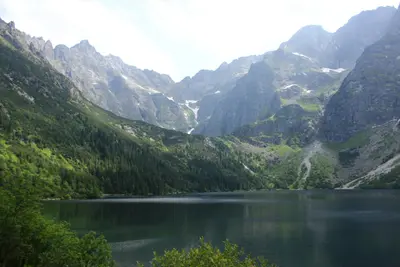
    The Tatra National Park (Tatrzański Park Narodowy, TPN) has protected the Polish part of the Tatra Mountains since 1955, covering over 211 square kilometers. Together with the Slovak National Park, it has formed a cross-border UNESCO Biosphere Reserve since 1993. Here, Rysy (2,499 meters on the Polish side) is Poland's highest peak; chamois, marmots, brown bears, and lynxes live in the forests and cirques.The most famous destination is Morskie Oko, a glacial lake at an altitude of 1,395 meters in the Rybi Potok Valley at the foot of the Mięguszowieckie Szczyty. Covering almost 35 hectares, it is the second-largest lake in the Tatra after Wielki Staw and up to approximately 51 meters deep. From the Palenica Białczańska car park, an approximately 8.5-kilometer-long asphalt road leads up, which is closed to private cars.
    Pieniny and the Dunajec Gorge

    Pieniny and the Dunajec Gorge

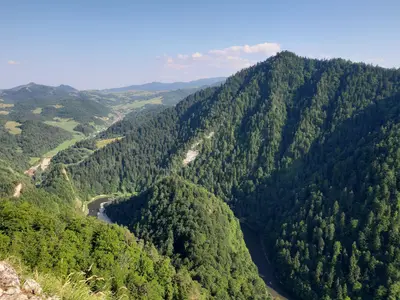
    The Pieniny Mountains are a small limestone range on the border with Slovakia, east of the Tatra Mountains. The Polish Pieniny National Park was established in 1932 as Poland's first national park and covers just over 23 square kilometres. The highest peak of the central massif is Trzy Korony (Three Crowns) at 982 metres, from whose viewing platform on Okrąglica you look deep into the valley.The Pieniny Mountains are primarily known for the Dunajec Gorge: The river has carved its way in loops between steep limestone cliffs. On wooden rafts, the region's rafters take visitors from Sromowce through the gorge to Szczawnica or Krościenko. West of this, the castles of Niedzica and Czorsztyn face each other across the Czorsztyn Reservoir.
    Małopolska

    Małopolska

    Lesser Poland (Małopolska) stretches from the Vistula around Krakow (Kraków) to the peaks of the High Tatras on the Slovakian border. Krakow, capital of the Kingdom of Poland until 1596, serves as the administrative and cultural heart of the Voivodeship; its Old Town, the Wieliczka Salt Mine, and the Auschwitz-Birkenau Memorial together form several UNESCO World Heritage Sites located close by.To the south, the land rises through hills to the Carpathians. Around Zakopane and in the Pieniny, the Goral people define the landscape with their wooden architecture, sheep's cheese, and folk music, and in the villages of Southern Lesser Poland stand Gothic wooden churches that have been World Heritage Sites since 2003.
    Wieliczka

    Wieliczka

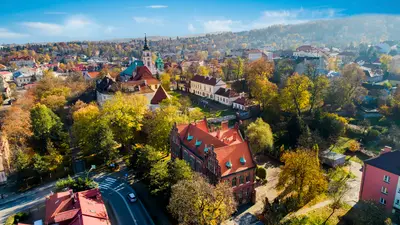
    Wieliczka is located about 13 kilometers southeast of Krakow (Kraków) and has lived from salt since the Middle Ages. The first shafts were dug in the 13th century, and the town was granted city rights in 1290. Salt mining ended in 1996; the mine has been on the UNESCO World Heritage list since 1978, joined by the Bochnia mine in 2008, and the Saltworks Castle in 2013. Together, they form the World Heritage site Royal Salt Mines Wieliczka and Bochnia.Most visitors come for the underground tourist route, but the town itself is also worth a tour. At Rynek Górny, the buildings follow the medieval layout, while Rynek Dolny was once a trading place for salt and is located by the Regis Shaft. The town also features the Saltworks Castle, the wooden St. Sebastian's Church, and a brine graduation tower.
    Krakow (Kraków)

    Krakow (Kraków)

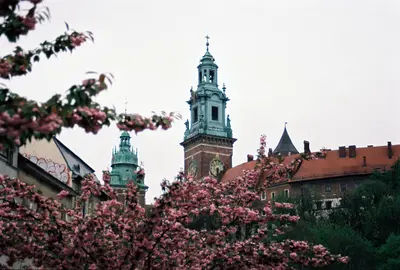
    Krakow (Kraków) lies on the Vistula in southern Poland and, with around 800,000 inhabitants, is the country's second-largest city. Until 1596, it was the capital of the Kingdom of Poland; on Wawel Hill, kings were crowned until 1734 and most of them were interred. Since 1978, its historic center—the Old Town, Wawel, Stradom, and Kazimierz—has been a UNESCO World Heritage site.The Old Town (Stare Miasto) surrounds the Rynek Główny, whose layout dates back to 1257. A green belt, the Planty, occupies the site of the former city fortifications; the historic Royal Route begins at St. Florian's Gate and led coronation processions up to Wawel. South of it lies Kazimierz, founded as a separate city in 1335 and for centuries a center of Jewish life. Today, synagogues, cafés, and bars mingle there.Beyond the Vistula lies Podgórze, where German occupiers established the ghetto in 1941; in the Zabłocie district stands Oskar Schindler's former enamel factory. To the east, Nowa Huta is an industrial city of the socialist era, incorporated in 1951.

    Sources & method

    • Photos: Wikimedia Commons, Pexels, Google Maps. Each photo carries its credit.
    • Place data such as addresses and ratings comes from Google Maps.
    • Video reportages: Wunderschön! Polens Süden: Von der Hohen Tatra nach Krakau
    • The content is based on web research from public, traceable sources. How the content is made · The role of AI