ExploreTravel GuidesMy Trips
    de|en
    All Places & RegionsAbout FernwehFAQPrivacy PolicyImprint
    ExploreTravel GuidesMy Trips
    Batu Caves
    Point of InterestCulture

    Batu Caves

    The limestone caves on the northern edge of Kuala Lumpur are one of the most important Hindu shrines outside India.

    More
    1. Home
    2. Destinations
    3. Malaysia
    4. Kuala Lumpur
    5. Batu Caves
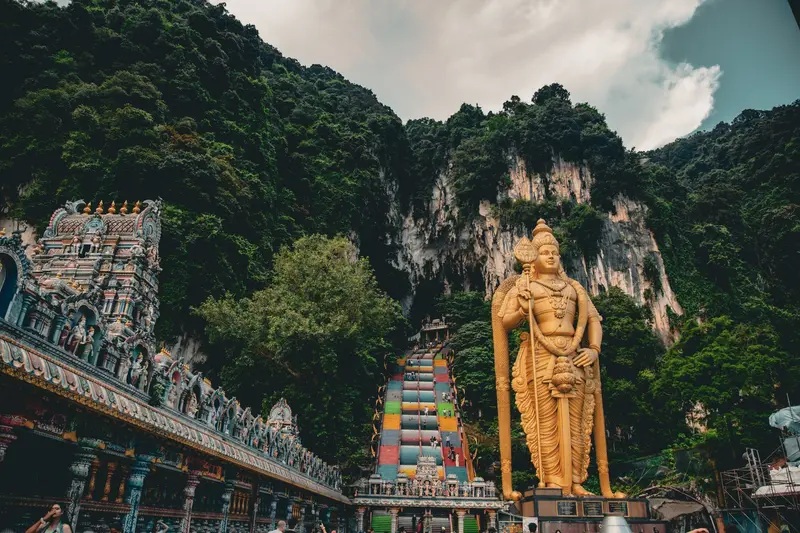
    The limestone caves on the northern edge of Kuala Lumpur are one of the most important Hindu shrines outside India. Before the ascent stands a 42.7-meter-high, gilded statue of the god Murugan, and 272 brightly painted steps lead up to the temple cave. For the Thaipusam festival in January or February, hundreds of thousands of pilgrims flock here. You can reach the caves directly by KTM Komuter train.
    The Batu Caves are located about 13 kilometers north of the center within a limestone massif. Since the late 19th century, they have been an important sanctuary for Tamil Hindus and are dedicated to the god Murugan. The complex includes the Temple Cave at the top of the stairs, the Ramayana Cave, and several smaller shrines at the foot of the rock. Two to three hours are sufficient for a visit. Admission to the Temple Cave is free.

    Sights in Batu Caves

    Discover the most important sights and attractions

    Place of Worship

    Temple Cave and 272 Steps

    Ascend over 272 brightly painted steps into the great temple cave. Daylight streams through ceiling openings onto several Hindu shrines. Macaques roam the stairs: Do not openly carry food or plastic bags. Knees and shoulders must be covered; you can borrow wraps at the foot of the stairs.
    Open in Google Maps
    Place of Worship

    Murugan Statue

    The gilded figure of the god Murugan next to the stairs is around 43 meters high and was unveiled in 2006. It is one of the largest Murugan statues in the world and is the site's main photo attraction. You get the best light in the early morning.
    Open in Google Maps
    Temple

    Ramayana Cave

    The cave to the left of the main entrance depicts the Hindu epic Ramayana with colorful figures and dioramas. In front of it stands a large green statue of the monkey god Hanuman. Admission costs a small fee, but it is significantly quieter here than in the Temple Cave.
    Open in Google Maps

    Sights in Batu Caves

    Discover the most important sights and attractions

    Place of Worship

    1Temple Cave and 272 Steps

    Ascend over 272 brightly painted steps into the great temple cave. Daylight streams through ceiling openings onto several Hindu shrines. Macaques roam the stairs: Do not openly carry food or plastic bags. Knees and shoulders must be covered; you can borrow wraps at the foot of the stairs.

    Open in Google Maps
    Place of Worship

    2Murugan Statue

    The gilded figure of the god Murugan next to the stairs is around 43 meters high and was unveiled in 2006. It is one of the largest Murugan statues in the world and is the site's main photo attraction. You get the best light in the early morning.
    Open in Google Maps
    Temple

    3Ramayana Cave

    The cave to the left of the main entrance depicts the Hindu epic Ramayana with colorful figures and dioramas. In front of it stands a large green statue of the monkey god Hanuman. Admission costs a small fee, but it is significantly quieter here than in the Temple Cave.
    Open in Google Maps

    Restaurants in Batu Caves

    Thaipusam

    For the festival of Thaipusam in January or February, hundreds of thousands of devotees pilgrimage to the caves. The procession begins at night at the Sri Mahamariamman Temple in Chinatown. Many pilgrims carry Kavadis, decorated frameworks, as a sign of penance and gratitude, some with hooks and skewers in their skin.If you come for Thaipusam, plan to arrive early: trains are overcrowded, and the stairs are densely packed. At any other time, a visit in the early morning is most pleasant.

    Travel

    The commuter train KTM Komuter travels from KL Sentral to the terminus Batu Caves, which is right in front of the entrance. The journey takes a good half hour. Alternatively, a Grab car can get you there in about 30 minutes, depending on traffic.

    Accommodations in Batu Caves

    Find perfect stay in Batu Caves

    Booking.com* (Affiliate link)
    Search Hotels
    Agoda* (Affiliate link)
    Search Hotels
    Airbnb
    Vacation Rentals

    * Affiliate link: if you book through it, we earn a small commission. The price stays the same for you.

    Nearby

    Kampung Baru

    Kampung Baru

    Kampung Baru is the Malay village right in the heart of Kuala Lumpur. Just across a river from the Petronas Towers, wooden stilt houses still stand amidst banana trees and corrugated iron roofs. The district was established around 1900 as a settlement where Malays could retain their land and live according to their own traditions.In the late afternoon, street food stalls along Jalan Raja Muda Musa open, serving Nasi Lemak, Satay, and Ikan Bakar. In the evening, you can walk across the Saloma Link to KLCC and enjoy the illuminated skyline stretching before you.
    KLCC and Petronas Towers

    KLCC and Petronas Towers

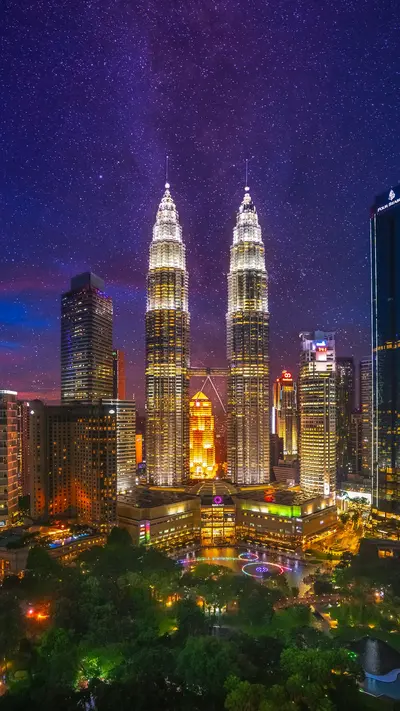
    The Kuala Lumpur City Centre district around the Petronas Towers is the city's modern showpiece. At the foot of the twin towers are the Suria KLCC shopping mall, a large park, and Aquaria. Covered walkways connect KLCC with Bukit Bintang.
    Kuala Lumpur

    Kuala Lumpur

    Malaysia's capital combines the Petronas Towers and modern shopping districts with colonial buildings around Merdeka Square, a vibrant Chinatown, and the hawker stalls of Jalan Alor and Kampung Baru. Malays, Chinese, and Indians equally shape the city's appearance, which is particularly evident in its cuisine.
    Chinatown

    Chinatown

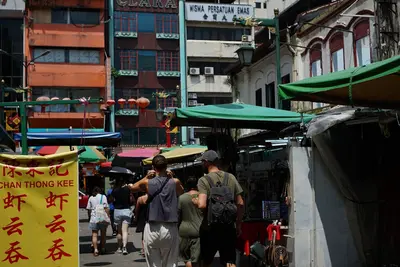
    Chinatown is Kuala Lumpur's oldest district. Around the covered Petaling Street, market stalls, street food vendors, and shophouses from the city's early days jostle for space. Between the stalls, a Taoist and a Hindu temple lie almost side-by-side; a few steps further, the Central Market sells handicrafts from all over Malaysia.By day, explore temples and alleys like Kwai Chai Hong; in the evening, noodle stalls and bars in the restored shophouses come alive. Bargaining is common when shopping at the market.
    Bukit Bintang

    Bukit Bintang

    Bukit Bintang is Kuala Lumpur's shopping and entertainment district. Along the eponymous street are large malls like Pavilion and Lot 10, and behind them lie the food street Jalan Alor and the bar strip Changkat Bukit Bintang. Many of the city's hotels are located here.