Fernweh
    ExploreTravel GuidesMy Trips
    de|en
    About FernwehImprintFAQPrivacy Policy
    ExploreTravel GuidesMy Trips
    Giverny

    Giverny

    CityCulture
    1. Home
    2. Destinations
    3. France
    4. Normandy
    5. Giverny
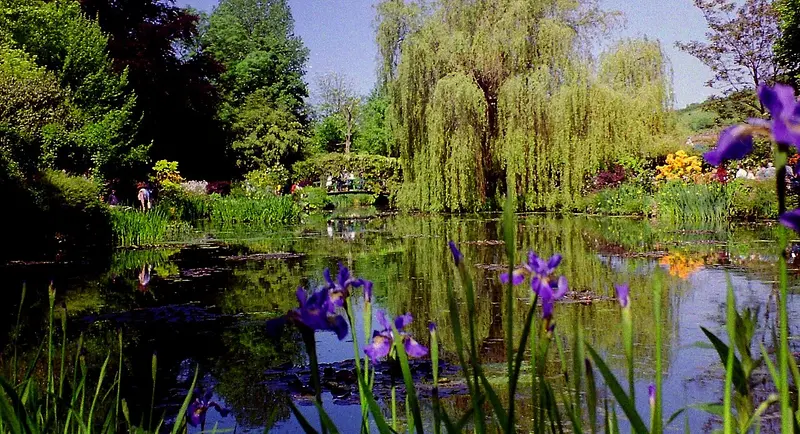
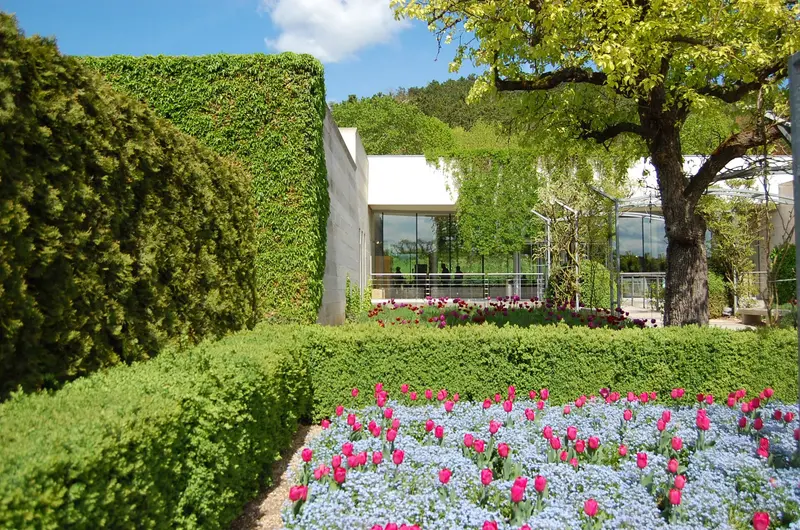
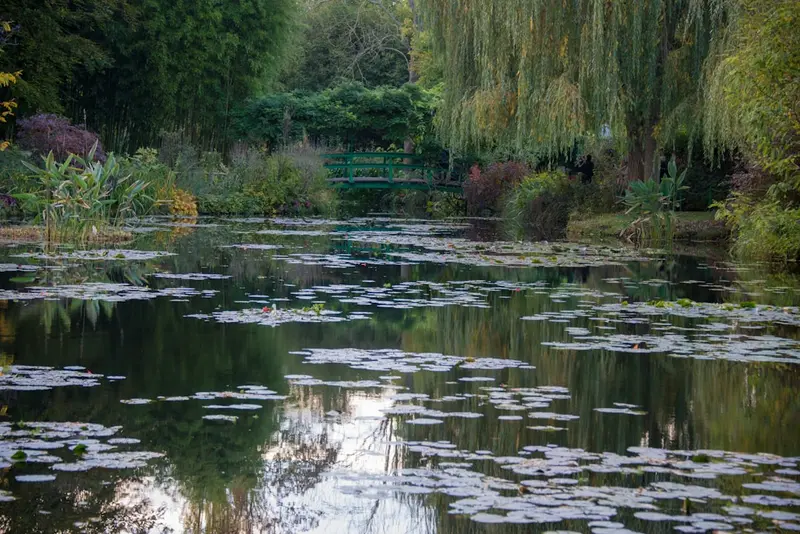
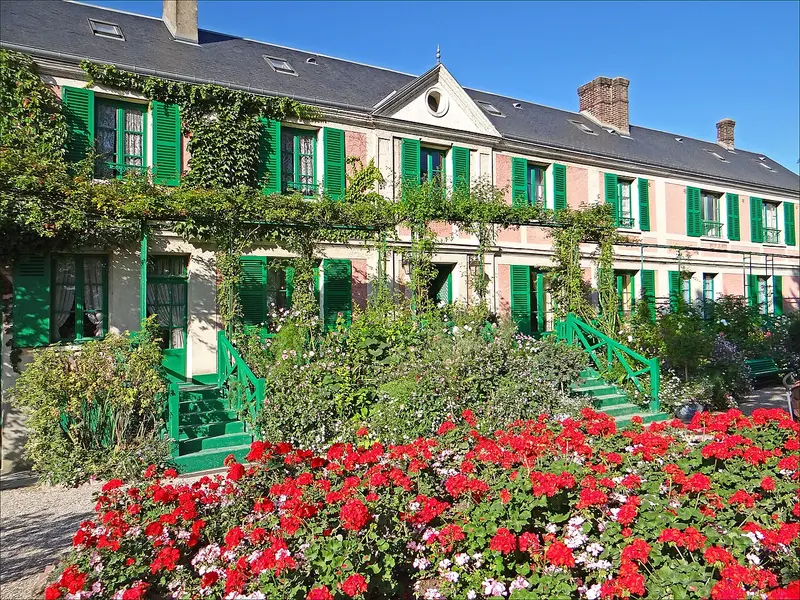
    Giverny, a picturesque village in Normandy, is inextricably linked to the life and work of the Impressionist Claude Monet. Here you'll find the famous House and Gardens of Claude Monet, where the artist lived for over 40 years and created his iconic Water Lilies paintings. The meticulously preserved gardens, especially the Water Garden with its Japanese bridge and water lily ponds, reflect Monet's artistic vision and served as direct inspiration for his masterpieces. The neighboring Musée des Impressionnismes Giverny complements your visit with rotating exhibitions on the history of the Impressionist movement. To fully enjoy the floral splendor and avoid larger crowds, a visit in late spring or early summer is recommended. Be sure to book tickets for Monet's House and Gardens online in advance, especially on weekends and public holidays.
    • Neighborhoods & highlights
    • Walking tours
    • Eat & drink
    • Culture
    • Getting around
    • Accommodation
    • Plan trip
    • Nearby
    • Neighborhoods & highlights
    • Walking tours
    • Eat & drink
    • Culture
    • Getting around
    • Accommodation
    • Plan trip
    • Nearby

    Overview

    Giverny, ein malerisches Dorf in der Normandie, ist untrennbar mit dem Leben und Werk des Impressionisten Claude Monet verbunden. Du besuchst hier die Fondation Claude Monet, sein ehemaliges Wohnhaus mit den berühmten Gärten, die ihm als Inspirationsquelle dienten. Besonders hervorzuheben sind der Clos Normand, ein farbenprächtiger Blumengarten, sowie der Wassergarten mit seinen ikonischen Seerosen und der japanischen Brücke, die du aus vielen seiner Gemälde kennst. Diese Anlagen wurden von Monet selbst gestaltet und bieten einen authentischen Einblick in seine künstlerische Vision und Lebenswelt. Ergänzend dazu kannst du das Musée des Impressionnismes Giverny erkunden, welches die Geschichte des Impressionismus und seine Nachfolger beleuchtet. Um die Menschenmassen zu vermeiden und die volle Blütenpracht zu erleben, empfiehlt sich ein Besuch im späten Frühling oder frühen Sommer. Tickets für Monets Haus und Gärten solltest du unbedingt im Voraus online buchen, um Wartezeiten zu vermeiden.

    Places in Giverny

    Discover the most important sights and attractions

    Sights in Giverny

    1Vernon Sur L'eau Bateau-École - Perfectionnement

    The Vernon Sur L'eau Bateau-École - Perfectionnement near Giverny is a specialized institution dedicated to advanced training in inland navigation. Here you have the opportunity to deepen your existing knowledge and practical skills on the Seine. The focus is on refining your helmsmanship, complex navigation maneuvers, and the safe handling of various boat types under real-world conditions. It is not a historical sight in the classical sense, but rather an active training facility that offers an authentic insight into the importance of river shipping in the region. Practical Tip: As courses often require individual attention, it is advisable to make contact early and check availability. This school is ideal for experienced boat operators who wish to elevate their expertise to a higher level.
    Open in Google Maps

    2Giverny, vernon

    Giverny, a picturesque village in Normandy, is inextricably linked with the name of Claude Monet, the founder of Impressionism. Here, the artist spent the last 43 years of his life, from 1883 until his death in 1926, creating some of his most famous works. You'll visit Monet's former home, now a museum, gaining insights into his private life and working methods. Particularly impressive are the two gardens he designed himself, which served as an inexhaustible source of inspiration: the vibrant Clos Normand in front of the house and the world-famous Water Garden with its water lily pond, Japanese bridge, and weeping willows. These are exact reconstructions of his vision, where the iconic Water Lily paintings were created, shaping Monet's late work. Our Tip: To avoid the crowds and fully enjoy the peaceful atmosphere, it's recommended to visit Giverny right at opening time in the morning or in the late afternoon. The best time to visit is spring (April/May) for the tulip and iris blooms, or summer (June/July) for the water lilies. The Japanese bridge, picturesquely spanning the pond, is an ideal photo spot.
    Open in Google Maps

    3AERONORMANDIE

    The AERONORMANDIE, located near picturesque Giverny, serves as the local general aviation hub in the region. Here, you have the opportunity to experience the fascination of flying up close. The airfield serves as a base for light aircraft and ultralight aircraft, allowing you to often observe take-off and landing maneuvers. Local aviation has a long tradition in the region, serving both the connectivity of rural areas and recreational purposes. A special highlight are the offered scenic flights, which provide you with a unique bird's-eye view of Monet's famous gardens, the gentle hills of Normandy, and the picturesque loops of the Seine. Our Tip: Inquire about current flight times before your visit to experience the most activity on site. Advance booking is essential for participating in a scenic flight to avoid waiting times and secure your spot.
    Open in Google Maps

    4Muséum de Mécanique Naturelle

    The Muséum de Mécanique Naturelle in Giverny offers you a unique insight into the complex workings of nature, interpreted through the lens of mechanics. Originally founded in the late 19th century by a local engineer and naturalist who was fascinated by the intricate details of the Giverny landscape, the museum is dedicated to presenting natural processes as sophisticated mechanisms. Here you'll find an impressive collection of kinetic models, detailed diagrams, and historical instruments that illustrate the principles of growth, movement, and structure in the plant and animal kingdoms. Particularly noteworthy are the interactive exhibits that make the mechanics of insect flight or the hydrology of plant roots tangible. Our Tip: Take your time with the labels to fully grasp the scientific depth of each piece. A morning visit allows you to view the exhibits undisturbed before the main visitor crowds arrive, and often provides better light for photos of the delicate models.
    Open in Google Maps

    5Japanese Bridge

    The Japanese Bridge in Giverny is a central element of Claude Monet's famous garden and an iconic motif in his art. You'll find it in the Water Garden, which Monet himself designed inspired by Japanese gardens and prints. The green wooden bridge, often entwined with wisteria, spans a pond full of water lilies, which played a dominant role in Monet's later works. This bridge is not merely an architectural detail, but a living testament to his artistic vision and his fascination with Japanese aesthetics, which he developed through his extensive collection of Ukiyo-e prints. It offers you a direct insight into the source of inspiration for many of his most famous paintings. Our Tip: The best time to visit the bridge is early morning right after opening or late afternoon to avoid the largest crowds and capture the tranquil atmosphere for photos of the water lilies and the bridge itself. Pay attention to the changing light conditions that Monet loved so much.
    Open in Google Maps

    6Giverny, vernon

    Giverny, a picturesque village in Normandy, is inextricably linked with the name of Claude Monet, the founder of Impressionism. Here, the artist spent the last 43 years of his life, from 1883 until his death in 1926, creating some of his most famous works. You'll visit Monet's former home, now a museum, gaining insights into his private life and working methods. Particularly impressive are the two gardens he designed himself, which served as an inexhaustible source of inspiration: the vibrant Clos Normand in front of the house and the world-famous Water Garden with its water lily pond, Japanese bridge, and weeping willows. These are exact reconstructions of his vision, where the iconic Water Lily paintings were created, shaping Monet's late work. Our Tip: To avoid the crowds and fully enjoy the peaceful atmosphere, it's recommended to visit Giverny right at opening time in the morning or in the late afternoon. The best time to visit is spring (April/May) for the tulip and iris blooms, or summer (June/July) for the water lilies. The Japanese bridge, picturesquely spanning the pond, is an ideal photo spot.
    Open in Google Maps

    City walks in Giverny

    Curated walking tours through the city's highlights — handpicked by experienced travel journalists.

    Auf Monets Spuren: Ein Spaziergang durch Giverny

    Tauchen Sie ein in die malerische Welt Givernys, dem Zuhause des berühmten Impressionisten Claude Monet. Dieser etwa zweistündige Spaziergang führt Sie durch Monets zauberhafte Gärten, das charmante Dorf und zu weiteren inspirierenden Orten, die die Geschichte der Kunst prägten. Entdecken Sie die Landschaften, die Monets Meisterwerke zum Leben erweckten.

    ~2 Std. 25 Min.
    In Google Maps öffnen
    Stopps (6)

    Food and Drink

    Giverny: Picturesque Heritage of Impressionism

    Giverny, a small village in Normandy, gained its global significance primarily through the presence of the painter Claude Monet. Monet's arrival in 1883 marked the beginning of a new era, in which the village became the epicenter of Impressionism and attracted numerous other artists. His gardens and the surrounding landscape served as an inexhaustible source of inspiration for Monet's most famous works, including the Water Lilies series.Giverny's architecture reflects the region's rural charm, with traditional stone houses and half-timbered constructions that remain preserved to this day. Monet's former home, a typical 19th-century building, was transformed by him according to his vision and stands today as a testament to his life and work. Culturally, Giverny is inextricably linked with art and garden art; the maintenance of the gardens according to Monet's original plans is an ongoing tradition that preserves the artist's legacy. Visitors here immerse themselves in the world that was once the birthplace of a revolutionary art movement.

    Getting around

    Giverny, a charming village, is primarily designed for **pedestrian-friendliness**, especially around Claude Monet's House and Gardens. Its compact size allows you to comfortably explore the main attractions on foot, which is often the most pleasant way to experience the village. Public transport like metro, subway, or tram does not exist within the village itself; arrival typically involves taking the train to nearby Vernon.From there, **shuttle buses** run directly to Giverny, representing the easiest and most cost-effective option. Tickets can often be purchased directly from the bus driver. Alternatively, **taxis** are available at Vernon station, although advance booking, especially during peak season, is advisable, as ride-sharing services are hardly prevalent in this rural area. For exploring the picturesque surroundings, **bicycles** are a good option and can be rented in Vernon, while e-scooters play no role. Plan your arrival and transport to the garden carefully, as Giverny does not offer the urban infrastructure of large cities.

    Accommodations in Giverny

    Accommodations in Giverny

    Find perfect stay in Giverny

    Booking.com
    Search Hotels
    Agoda
    Search Hotels
    Airbnb
    Vacation Rentals
    Hotels.com
    Hotels Worldwide
    Hostelworld
    Hostels

    Campgrounds in Giverny

    Find perfect campground in Giverny

    Search via Google Maps
    Campgrounds nearby (15km)
    Camping.info
    Find Campgrounds
    Park4Night
    RV Parks & Camping

    Plan your trip to Giverny

    Save places, build a route and plan your city trip — all in one place.

    Save places

    Bookmark sights, restaurants and neighborhoods you're interested in.

    Build your route

    Turn your bookmarks into a route — define order, days and budget.

    Refine with AI

    Let Mein Fernweh suggest experiences and put together a tailored daily plan.

    Start trip planningOpen bookmarks

    Locations nearby

    These places are nearby — perfect for additional days or a day trip.

    Regional Natural Park Vexin français

    Regional Natural Park Vexin français

    Experience the pristine nature and charming villages in the Regional Natural Park Vexin français, a green refuge northwest of Paris.
    Regional Natural Park of Vexin Français

    Regional Natural Park of Vexin Français

    A regional nature park combining picturesque landscapes of rolling hills, forests, rivers, and charming villages, and rich in cultural heritage.
    Saint-Germain-en-Laye

    Saint-Germain-en-Laye

    Located west of Paris, Saint-Germain-en-Laye combines royal history with an elegant atmosphere and extensive green spaces. The Château de Saint-Germain-en-Laye, once a royal residence and birthplace of Louis XIV, now houses the Musée d'Archéologie Nationale with significant collections. Adjacent to the château, the Grande Terrasse, designed by Le Nôtre, offers breathtaking panoramic views over the Seine loop all the way to Paris. The adjacent Forest of Saint-Germain-en-Laye invites visitors for extensive walks and relaxation, offering a welcome change from city life. Stroll through the charming streets of the old town, such as the Rue du Vieil Abreuvoir, and discover small boutiques and traditional shops. Ideally, plan your visit for a weekday to best experience the tranquility of the town and the château. Take the RER A connection, which brings you directly from central Paris to Saint-Germain-en-Laye, making for a convenient day trip.
    Rouen

    Rouen

    The capital of Normandy captivates with its Gothic cathedral, its historic district of half-timbered houses, and the moving story of Joan of Arc.
    Versailles

    Versailles

    Versailles is inextricably linked with the Palace of Versailles, a symbol of the French monarchy and absolutist power. Here you'll discover the opulent Hall of Mirrors, the royal apartments, and the impressive gardens designed by André Le Nôtre. The estate bears witness to the vision of Louis XIV and was the center of France's political power for over a century. Beyond the main palace, the Grand Trianon, the Petit Trianon, and the Hameau de la Reine invite exploration. Plan at least a full day to visit the entire estate to fully grasp its diversity. To avoid crowds, a visit right after opening or in the late afternoon is recommended. You should always book tickets online in advance to minimize waiting times.