Fernweh: Home
    ExploreTravel GuidesPlan a tripMy tripLast visited
    de|en
    All Places & RegionsAll highlightsAbout FernwehFAQPrivacy PolicyImprint
    ExploreTravel GuidesPlan a tripMy tripLast visited
    Pyrenees National Park

    France

    Pyrenees National Park

    Point of Interest

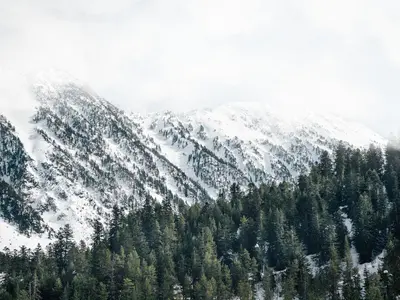
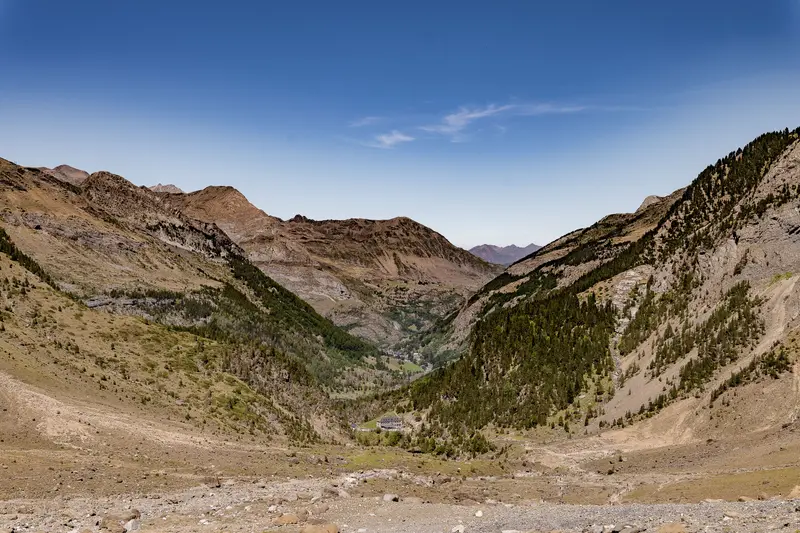
    The Parc National des Pyrénées stretches for about 100 kilometers along the Spanish border, from the Aspe Valley in the west to the Aure Valley in the east, yet in many places, it is only a few kilometers wide.

    by Felix Gillen

    1. Home
    2. Destinations
    3. France
    4. Occitania (Occitanie)
    5. Pyrenees National Park
    The Parc National des Pyrénées stretches for about 100 kilometers along the Spanish border, from the Aspe Valley in the west to the Aure Valley in the east, yet in many places, it is only a few kilometers wide. The core zone lies in the high mountains and reaches up to 3,298 meters at the Pique Longue du Vignemale. Within this narrow strip are the Cirque de Gavarnie, the Pont d'Espagne, and the Pic du Midi d'Ossau.

    Places of Interest

    Discover the most important sights and attractions

    Cirque de Gavarnie

    1Cirque de Gavarnie

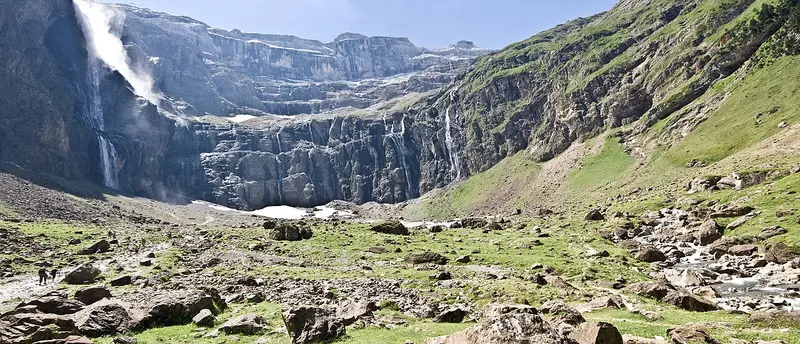
    A rock cirque with walls rising steeply around 1,500 meters: the most iconic image of the French Pyrenees and part of the UNESCO World Heritage site Pyrénées-Mont Perdu. The path from the village of Gavarnie leads along the river, over a stone bridge, and through forest until the cirque opens up. After about an hour and a half, you reach the Hôtel du Cirque, offering views of the wall and the great waterfall, one of the highest in Europe.
    Open in Google Maps
    Pont d'Espagne

    2Pont d'Espagne

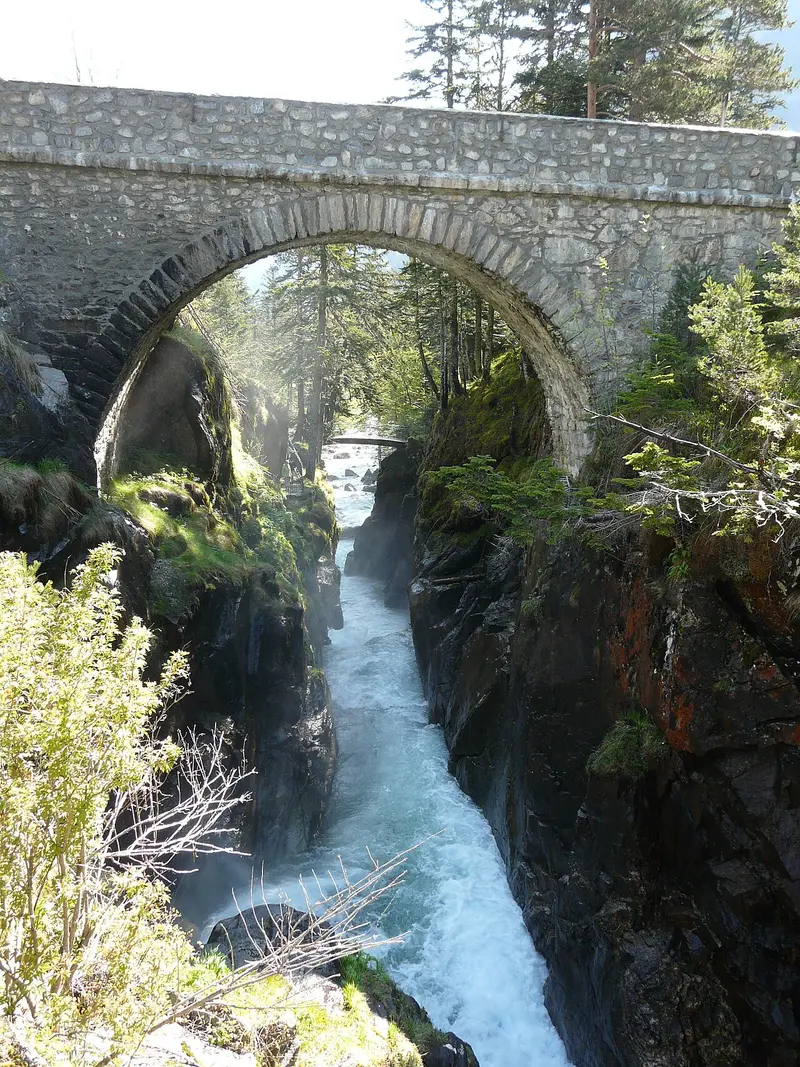
    Above Cauterets, two mountain streams meet and cascade over rocky steps into the depths. An old stone bridge gave the place its name, situated on a former trade and smuggler's route to Spain. From here, most of the area's hikes begin, including those to Lac de Gaube and the Marcadau Valley. A gondola and chairlift cover part of the ascent.
    Open in Google Maps
    Lac de Gaube

    3Lac de Gaube

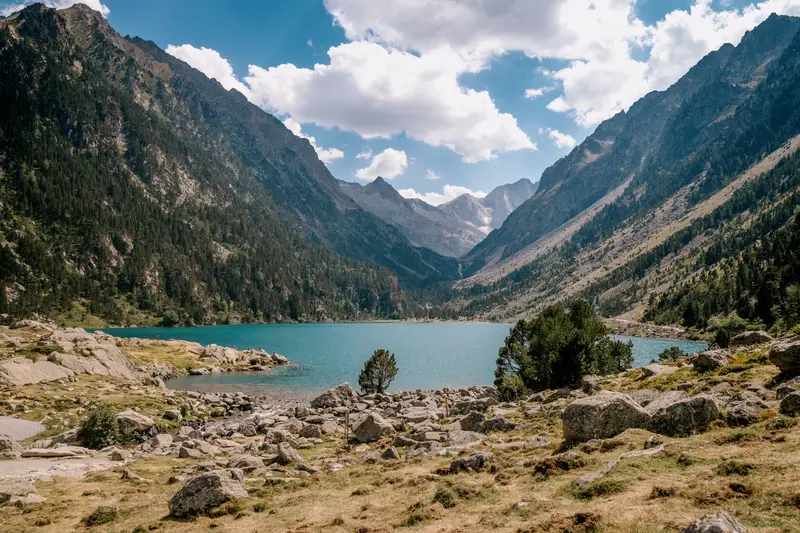
    A turquoise mountain lake below the north face of the Vignemale, reachable from Pont d'Espagne in just over an hour. The ascent is around 250 vertical meters and is also feasible with children; many take the chairlift for the way up. On the shore, there's a hut serving refreshments. A circular path around the lake does not exist; the trail continues along the west bank towards Vignemale.
    Open in Google Maps
    Cirque de Troumouse

    4Cirque de Troumouse

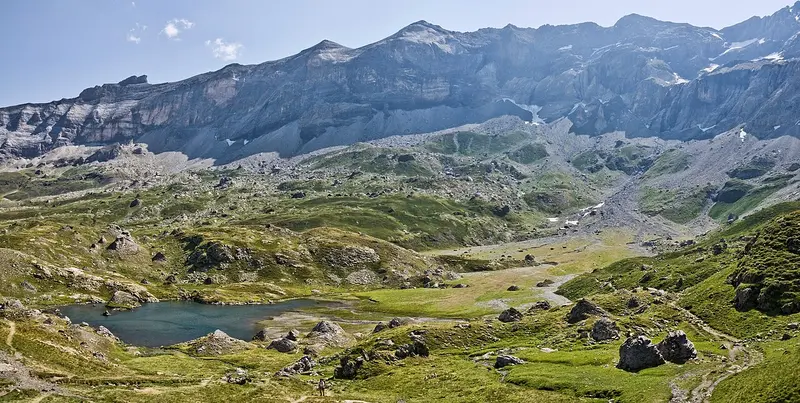
    The quiet counterpart to Gavarnie: a wide, open cirque with alpine meadows, waterfalls, and grazing cows and sheep, significantly less visited. The access road ends at the Auberge du Maillet in the Héas Valley; from there, a small train ascends to the plateau, or you can walk steeply up. At the top, several easy paths lead to the Madonna statue and the lakes of Troumouse.
    Open in Google Maps

    Food and Drink

    Auberge du Maillet

    Restaurant in Hameau de Heas.
    Show on Google Maps

    Auberge de La Munia

    Restaurant in Heas.
    Show on Google Maps

    Unbekannter Ort

    Located at La Raillère above Cauterets, right next to the Cascade du Lutour — you reach the terrace via a bridge, and the waterfall keeps you cool on hot days. Classic French cuisine, noticeably more refined than the location might suggest. Best to reserve during peak season.
    Show on Google Maps

    Food & Drinks

    The cuisine of Bigorre and Béarn features: pasture-fed meat, beans, sheep's cheese. The same dishes repeatedly appear on menus in the valley villages – this is not a lack of imagination, but what grows and grazes here.

    Garbure

    Thick soup made with winter vegetables and Tarbais beans, cooked with duck confit and the Camayou, the bone of air-dried ham. It counts as a full main course, not an appetizer.

    Mouton AOP Barèges-Gavarnie

    Meat from the Barégeoise, an old sheep breed that almost disappeared in the mid-20th century. Only animals that have spent at least two summers on the high pasture are allowed to bear the designation of origin. At the end of September, Luz-Saint-Sauveur hosts the Foire aux Côtelettes.

    Porc noir de Bigorre

    Black free-range pig, fed on acorns and chestnuts, a relative of the Iberian pig. Primarily served as ham and charcuterie.

    Brebis cheese and Madiran

    Sheep's milk Tommes at all stages of ripeness, paired with the robust Madiran red wine from the foothills or a dry Pacherenc du Vic-Bilh.

    Tourte des Pyrénées

    Flower-shaped cake, crispy on the outside, soft on the inside, traditionally plain or with blueberries. Every village has its own version.

    Berlingots of Cauterets

    Angular hard candies, originally invented to mask the sulfur taste of thermal water. From the spa era, now in dozens of flavours.

    Pastoralism & Protected Area

    A Park Where Work HappensUnlike the large North American national parks, this one is not an uninhabited wilderness. The high pastures are still grazed today; in early summer, herds move upwards for transhumance, returning to the valley in autumn. Stone huts, cheese dairies on the alpine pastures, and cattle grids across the road are as much a part of the landscape as the peaks. Those hiking in summer will walk among herds. Herding dogs are active, so keeping your distance is advised.Among others, the protected area is home to the Isard (Pyrenean chamois), marmots, capercaillie, golden eagles, and the bearded vulture, the largest bird of prey in the Pyrenees. Additionally, there are numerous plants found only in the Pyrenees. Brown bears also occasionally roam through the area, but are practically never seen.Gavarnie and the World Heritage SiteThe Cirque de Gavarnie is part of the UNESCO World Heritage site Pyrénées-Mont Perdu, which is designated across the border with Spain and explicitly includes the pastoral cultural landscape, not just the rock. The Maisons du Parc in the valley towns feature exhibitions on this and provide information about routes and regulations.

    Getting Around

    Getting There and Valley RoadsThe usual access from the north is via Lourdes and the Vallée des Gaves. From there, the valley roads branch off: to Cauterets and further to Pont d'Espagne, via Luz-Saint-Sauveur to Gavarnie, and from Gèdre into the Héas Valley to the Cirque de Troumouse. The roads are asphalted, but winding and busy in summer; the last kilometres to Troumouse are narrow.Major access points lead to paid parking areas. At Pont d'Espagne, your parking ticket can be combined with gondola and chairlift rides. If heading to Lac de Gaube, inquire about combined tickets before purchasing separately.Without a CarBuses link Lourdes to Cauterets and Luz-Saint-Sauveur, from Luz, summer shuttles operate to Gavarnie. Schedules are seasonal and sparse, rarely suitable for early departures. The core zone has no roads: from the car park, it's walking only; in Troumouse, a small summer train ascends to the plateau.

    Accommodations in Pyrenees National Park

    Find perfect stay in Pyrenees National Park

    Booking.com* (Affiliate link)
    Search Hotels
    Agoda* (Affiliate link)
    Search Hotels
    Airbnb
    Vacation Rentals

    * Affiliate link: if you book through it, we earn a small commission. The price stays the same for you.

    Campgrounds in Pyrenees National Park

    Find perfect campground in Pyrenees National Park

    Search via Google Maps
    Campgrounds nearby (15km)
    Camping.info
    Find Campgrounds
    Park4Night
    RV Parks & Camping

    Nearby

    Ordesa y Monte Perdido National Park

    Ordesa y Monte Perdido National Park

    The National Park is a UNESCO World Heritage site and is known for its glacier-formed U-shaped valleys, deep gorges, steep rock faces, and Monte Perdido, ideal for hikers and nature lovers.
    Jaca

    Jaca

    Jaca, the first capital of the Kingdom of Aragón until 1096, is nestled in the Pyrenees, blending history with mountain charm. Its striking landmark is the five-sided *Citadel*, built in the late 16th century under Philip II. The **Cathedral of San Pedro**, begun in the last quarter of the 11th century and one of Spain's oldest Romanesque buildings, attests to Jaca's position on the Aragonese *Camino de Santiago*. In its cloister, the Diocesan Museum displays Romanesque murals from surrounding churches. Discover the old town with its alleys and enjoy the local cuisine in traditional establishments. Jaca serves as an excellent base for hiking and winter sports in the surrounding mountains; visit the city ideally in spring or autumn for a relaxed exploration.
    Aínsa

    Aínsa

    Discover Aínsa, a breathtaking medieval fortress majestically perched on a hill in the heart of the Spanish Pyrenees. This historic-artistic gem transports you on an unforgettable journey through time with its cobblestone streets, the imposing castle, and the charming Plaza Mayor. Here, where history meets spectacular nature, you'll feel the spirit of bygone eras and the warm hospitality of the Aragon region.
    Valle de Benasque

    Valle de Benasque

    The valley is often referred to as the "Heart of the Pyrenees" and is surrounded by the highest peaks of the mountain range, including Aneto. It is an important destination for mountaineers and hikers.
    Valle de Arán

    Valle de Arán

    A Pyrenean valley on the north side of the main ridge with its own language (Aranese, a variant of Occitan), known for its villages with Romanesque churches, the Baqueira Beret ski resort, and diverse hiking opportunities.

    Sources & method

    • Photos: Wikimedia Commons, Pexels. Each photo carries its credit.
    • Place data such as addresses and ratings comes from Google Maps.
    • The content is based on web research from public, traceable sources. How the content is made · The role of AI