Fernweh
    ExploreTravel GuidesMy Trips
    de|en
    About FernwehImprintFAQPrivacy Policy
    ExploreTravel GuidesMy Trips
    Ancient Olympia

    Ancient Olympia

    CityCultureFor Families
    1. Home
    2. Destinations
    3. Greece
    4. Peloponnese
    5. Ancient Olympia
    The legendary birthplace of the Olympic Games captivates visitors with its impressive ruins and the archaeological museum.
    • Neighborhoods & highlights
    • Walking tours
    • Eat & drink
    • Culture
    • Getting around
    • Accommodation
    • Plan trip
    • Nearby
    • Neighborhoods & highlights
    • Walking tours
    • Eat & drink
    • Culture
    • Getting around
    • Accommodation
    • Plan trip
    • Nearby

    Overview

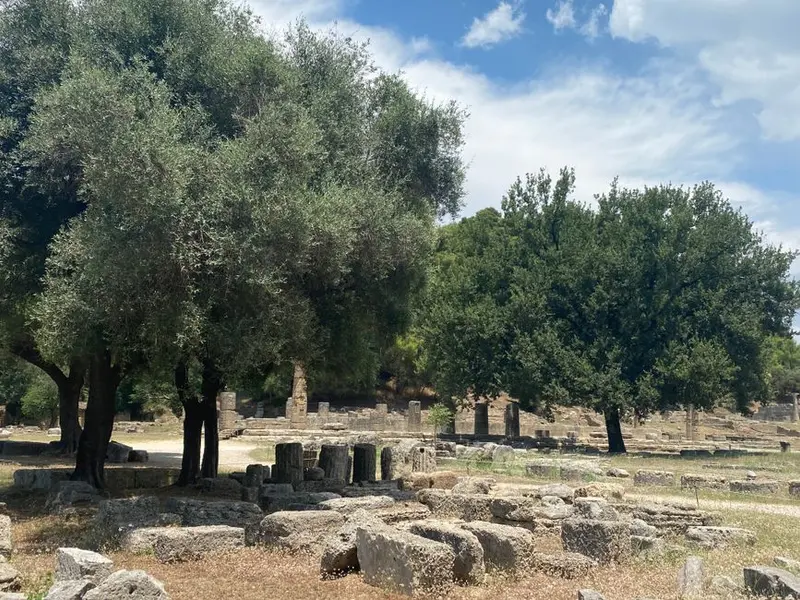
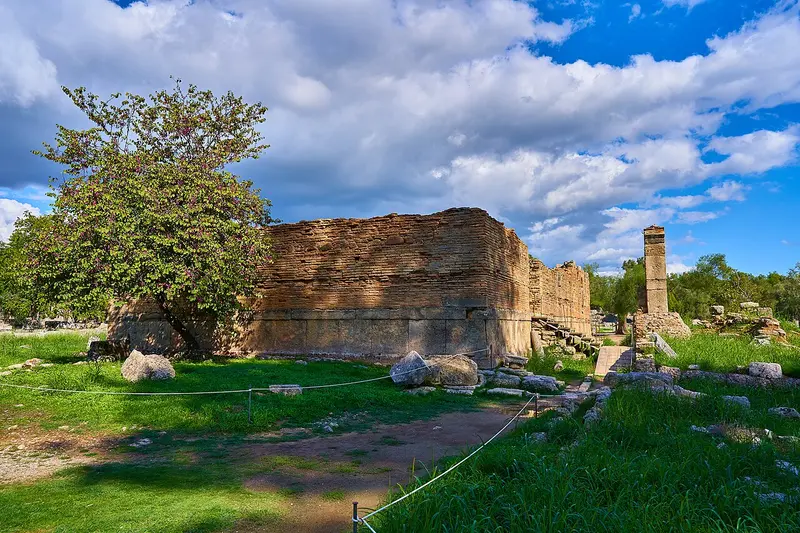
    In Ancient Olympia, you immerse yourself in the origin of the Olympic Games and the world of Greek antiquity. Explore the ruins of the Temple of Zeus, once home to one of the Seven Wonders of the World, and the Hera Temple, where the Olympic flame is lit. The **Ancient Stadium**, which held 45,000 spectators, and the training grounds like the Gymnasium and Palaestra, bear witness to its athletic history. The *Archaeological Museum* complements your visit with significant finds, including the famous Hermes of Praxiteles. A visit in the early morning or late afternoon is advisable to avoid heat and crowds and to explore the sprawling site in peace.

    Places in Ancient Olympia

    Discover the most important sights and attractions

    Sights in Ancient Olympia

    smili art workshop

    The smili art workshop in Ancient Olympia offers you the opportunity to immerse yourself in the world of Greek craftsmanship. Under the guidance of experienced local artists, you can learn traditional techniques and unleash your own creativity. The workshop connects to Greece's rich artistic tradition by combining modern forms of expression with the region's cultural heritage. You can choose from various courses, ranging from crafting small ceramic objects to mosaic art or painting. Local materials are often used, lending an authentic touch to your work. It's a valuable experience that not only imparts knowledge but also provides a personal memento of your visit to Olympia.Our Tip: Be sure to book your workshop in advance, especially during high season, as spots are limited. Plan about two to three hours for a session to fully enjoy the experience. The workshop is located near the archaeological museum, making for a good combination with your visit to the ancient sites.
    Open in Google Maps

    Stadion

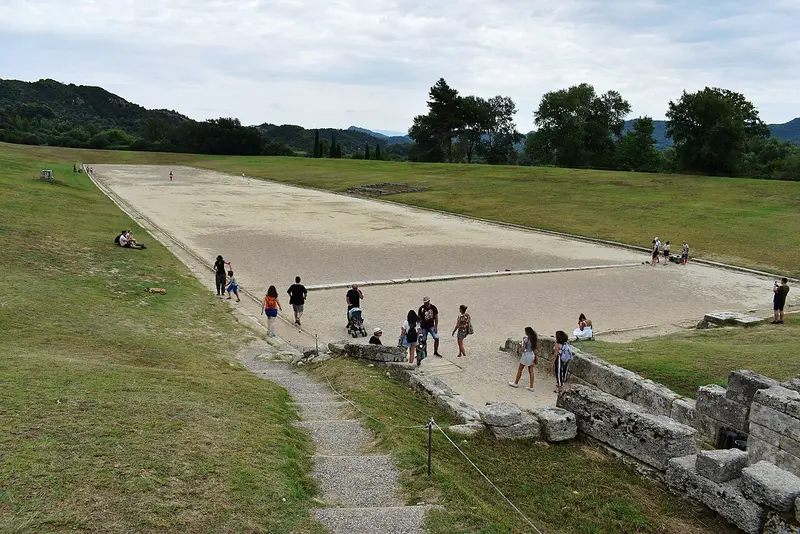
    The Ancient Stadium in Olympia is the historic birthplace of the Olympic Games, which were held here for over a thousand years, from 776 BC to 393 AD. You are stepping onto the original competition ground where athletes from across the Greek world fought for glory and honour. The 192.27-meter long track, known as the 'stadion' length, is still clearly visible, as are the stone start and finish lines, the so-called Hysplex. The spectator stands consisted of natural earth embankments, which offered space for up to 45,000 people who followed the competitions up close. A prominent feature is the stone judges' seat in the middle of the south stand. Our Tip: Visit the stadium early in the morning to experience the special atmosphere in peace and avoid the heat. Stand at the starting line for an authentic photo that captures the dimensions of this historic place.
    Open in Google Maps

    Tempel der Hera

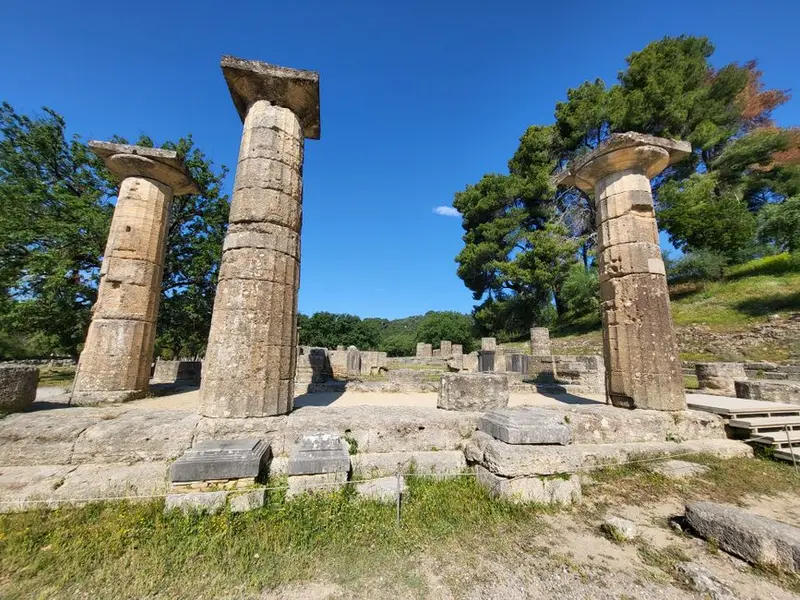
    The Temple of Hera in Olympia is among Greece's oldest and most significant cult sites, dedicated to the wife of Zeus. Built around 600 BCE in the Doric style, it represents an early zenith of Greek temple architecture. Originally featuring 6 columns on the narrow sides and 16 on the long sides, it not only served ritual purposes but also marked the starting point of ancient Olympic running competitions. Its historical significance continues to this day, as the Olympic flame for the modern games is lit before its ruins. Inside the temple, the famous statue of Hermes with the infant Dionysus by Praxiteles was once discovered, which you can see today in the Archaeological Museum of Olympia. On-site, you'll primarily see the impressive foundations, some preserved column bases, and individual column drums, which convey an impression of its former grandeur. Our Tip: Visit the temple in the early morning or late afternoon to capture the best light for photos and avoid the largest tourist crowds. A good photo spot is the elevated ground west of the Altis, from where you have a comprehensive view of the complex.
    Open in Google Maps

    Άλσος Ολυμπιακής Εκεχειρίας

    The Άλσος Ολυμπιακής Εκεχειρίας, the Grove of Olympic Peace, is a modern addition to the historical site of Olympia and serves as a powerful symbol for the ideals of the ancient Olympic Games. Here, the tradition of the Ekecheiria, the Olympic Truce, is kept alive, which in antiquity halted all hostilities during the Games. You'll find a serene, green oasis here that invites contemplation. Numerous trees have been planted by heads of state and government, as well as other dignitaries, to express their commitment to peace and international understanding. It is a place that underscores the timeless message of the Olympic Movement. Our Tip: Visit the grove after exploring the ancient ruins, to process your impressions and enjoy a moment of tranquility. It's just a short walk from the main site and offers a welcome respite from the hustle and bustle. Look out for the commemorative plaques on the trees, which document the planters and their messages.
    Open in Google Maps

    Philippeion

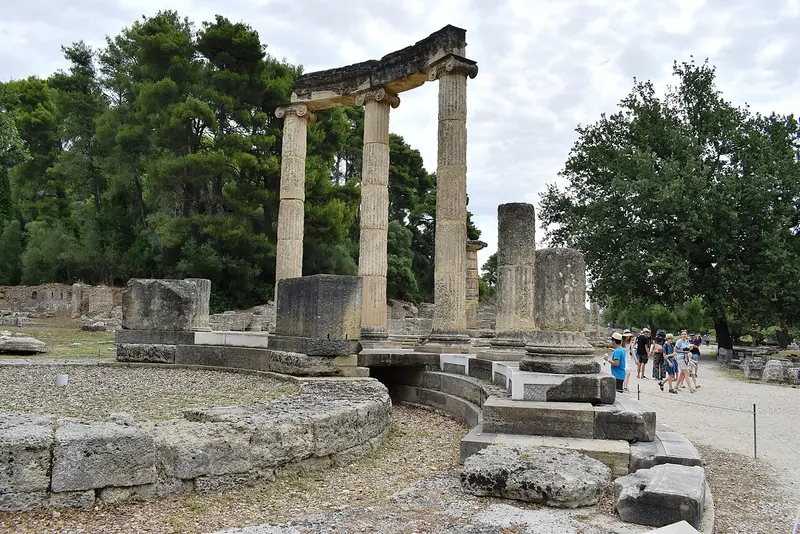
    The Philippeion in Olympia is a historically significant round building, begun by Philip II of Macedon after his victory in the Battle of Chaeronea (338 BC) and completed by his son Alexander the Great. It is the only structure within the sacred Altis precinct exclusively dedicated to the worship of a royal family. Originally, it housed gold and ivory statues of the Macedonian royal family, including Philip II, Olympias, and Alexander the Great. Today, you can see the well-preserved foundations and some partially reconstructed columns of the Ionic peripteros that once surrounded the building. This complex highlights the political and religious significance of the Macedonian rulers in the classical Greek world. Our Tip: Ideally, visit the Philippeion in the early morning hours to enjoy the tranquility of the place and study the architectural details without large crowds. The soft morning light also offers excellent conditions for photos.
    Open in Google Maps

    City walks in Ancient Olympia

    Curated walking tours through the city's highlights — handpicked by experienced travel journalists.

    Antikes Olympia: Auf den Spuren der Götter und Athleten

    Entdecken Sie die Wiege der Olympischen Spiele auf diesem etwa zweistündigen Rundgang. Schlendern Sie durch das Heilige Altis, bewundern Sie die Überreste antiker Tempel und Wettkampfstätten und tauchen Sie ein in die faszinierende Geschichte der Götter und Athleten.

    ~2 Std.
    In Google Maps öffnen
    Stopps (8)

    Dining & Drinks

    Cultural Heritage and Olympic History

    Ancient Olympia is the birthplace of the Olympic Games and a sanctuary of immense cultural significance. Its origins date back to prehistoric times, but its heyday began in 776 BC with the first documented hosting of the Games. As a central cult site for Zeus, Olympia united sport, religion, and art for over a thousand years.The architecture of the site is dominated by monumental Doric temples, including the impressive Temple of Zeus, once home to one of the Seven Wonders – the colossal statue of Zeus by Phidias. The Temple of Hera is also an early and significant example of Greek temple architecture. In addition to these sanctuaries, public buildings such as the Stadium, the Palaestra, and the Gymnasium shaped the appearance of the site. The rich sculpture and votive offerings demonstrate high artistic mastery.The Olympic Games were not only athletic competitions but deeply embedded in religious rituals and the Greek ideal of physical and spiritual excellence. The Ekecheiria, the sacred truce, allowed athletes and spectators safe passage. To this day, Olympia remains a symbol of peace and international competition, reflected in the annual lighting of the Olympic Flame here.

    Getting Around

    Exploring ancient Olympia is primarily done on foot, as the archaeological site and the adjacent modern village of Olympia are compact and exceedingly pedestrian-friendly. Comfortable footwear is essential for this. There is no metro or tram in this historic region; the primary public transport connection to surrounding towns like Pyrgos, the regional transport hub, is provided by local buses of the KTEL network.Bus tickets can be purchased directly from the driver or at the respective bus stations; checking the schedule beforehand is recommended, as frequencies may be limited outside of peak season. For short distances within the village or for exploring the immediate surroundings, bicycles are a good option, often available for local rent, while e-scooters are rarer. Taxis are also available, particularly at the entrance to the archaeological site, whereas ride-sharing services are less common here than in larger metropolitan areas.

    Accommodations in Ancient Olympia

    Accommodations in Ancient Olympia

    Find perfect stay in Ancient Olympia

    Booking.com
    Search Hotels
    Agoda
    Search Hotels
    Airbnb
    Vacation Rentals
    Hotels.com
    Hotels Worldwide
    Hostelworld
    Hostels

    Campgrounds in Ancient Olympia

    Find perfect campground in Ancient Olympia

    Search via Google Maps
    Campgrounds nearby (15km)
    Camping.info
    Find Campgrounds
    Park4Night
    RV Parks & Camping

    Plan your trip to Ancient Olympia

    Save places, build a route and plan your city trip — all in one place.

    Save places

    Bookmark sights, restaurants and neighborhoods you're interested in.

    Build your route

    Turn your bookmarks into a route — define order, days and budget.

    Refine with AI

    Let Mein Fernweh suggest experiences and put together a tailored daily plan.

    Start trip planningOpen bookmarks

    Locations nearby

    These places are nearby — perfect for additional days or a day trip.

    Peloponnese

    Peloponnese

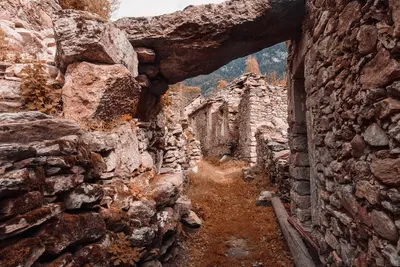
    The Peloponnese is a storied peninsula in southern Greece, considered the cradle of ancient Greek civilization. Here, travelers can expect a fascinating mix of breathtaking archaeological sites, picturesque coastal towns, and a wild, mountainous landscape that invites exploration and is a UNESCO World Heritage site.
    Zakynthos (Island)

    Zakynthos (Island)

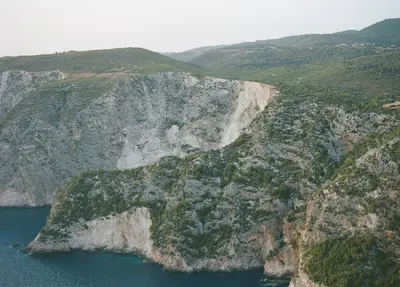
    Known for its dramatic coastal landscape, vibrant blue waters, and the iconic Navagio Beach with its shipwreck, Zakynthos is a paradise for beach lovers and seekers of natural beauty.
    Mycenae

    Mycenae

    The ancient site of Mycenae, once the center of a powerful Bronze Age civilization, transports you into the world of Agamemnon. You enter the Acropolis through the imposing Lion Gate, a masterpiece of Mycenaean architecture. Explore the massive cyclopean walls and the royal tombs in Grave Circle A. Outside the citadel, the monumental Treasury of Atreus captivates. These ruins offer deep insights into the highly developed Mycenaean culture. Plan your visit for early morning to avoid the midday heat and larger crowds.
    Nafplio

    Nafplio

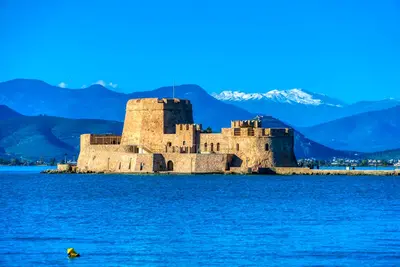
    Immerse yourself in the timeless beauty of Nafplio, one of Greece's most picturesque cities, where Venetian charm meets neoclassical elegance.As the first capital of modern Greece, this place enchants you with its rich history, impressive architecture, and an unparalleled atmosphere that invites you to stroll and linger.
    Galaxidi

    Galaxidi

    Welcome to Galaxidi, a true gem on the Gulf of Corinth, which will immediately captivate you with its unique maritime charm and rich history. Here, where elegant captain's villas line up alongside traditional fishing boats and the sparkling sea is ever-present, you will immerse yourself in an atmosphere of tranquility and authentic Greek living.