Fernweh: Home
    ExploreTravel GuidesPlan a tripMy tripLast visited
    de|en
    All Places & RegionsAll highlightsAbout FernwehFAQPrivacy PolicyImprint
    ExploreTravel GuidesPlan a tripMy tripLast visited
    • Overview
    • Places in the region
    • Food culture
    • Culture
    • Getting around
    • Nearby
    Ionian Islands

    Greece

    Ionian Islands

    Region

    The Ionian Islands, west of the mainland, contrast sharply with the Aegean: more rain, more greenery, a Venetian rather than Ottoman past.

    by Felix Gillen

    1. Home
    2. Destinations
    3. Greece
    4. Ionian Islands
    The Ionian Islands, west of the mainland, contrast sharply with the Aegean: more rain, more greenery, a Venetian rather than Ottoman past. Seven larger islands, from northern Corfu to southern Kythira, feature cypresses, olive groves, and towns with arcades and bell towers. Here, travelers find limestone cliffs, turquoise water, and Italian cuisine.
    The region includes seven main islands, Eptanisa in Greek: Corfu, Paxi, Lefkada, Ithaca, Kefalonia, Zakynthos, and Kythira far to the south, which today belongs to the Attica region. Kefalonia is the largest with nearly 780 square kilometres, Corfu the most populous with around 100,000 inhabitants. Airports are located on Corfu, Kefalonia, and Zakynthos, as well as in Preveza on the mainland for Lefkada, which is accessible via a causeway with a floating bridge. Ferries depart from Patras, Kyllini, Astakos, and Igoumenitsa. Unlike most of Greece, most islands were under Venetian rule for centuries, then briefly under France and under British protection until 1864, which shapes their architecture, music, and daily life. The west receives more rainfall than the rest of Greece, which is why the landscape remains green well into summer. Travel is best in May, June, September, and October; in July and August, Zakynthos in particular is heavily booked.
    Kefalonia (Island)

    Place 1 of 4

    Kefalonia (Island)

    Kefalonia is, at almost 780 square kilometres, the largest of the Ionian Islands and the one with the most rugged relief: Mount Ainos rises to 1,628 metres and is covered with Greek Fir, which is botanically named after the island.

    Discover
    Lefkada (Island)

    Place 2 of 4

    Lefkada (Island)

    Lefkada is accessible without a ferry: A causeway with a floating swing bridge connects the island to the mainland via a narrow canal. It is known for its west coast, where white limestone cliffs plunge steeply into turquoise waters.

    Discover
    Zakynthos (Island)

    Place 3 of 4

    Zakynthos (Island)

    Zakynthos is the southernmost of the larger Ionian Islands and presents two faces: in the north and west, a rugged coastline with caves and Shipwreck Bay Navagio; in the south, flat sandy beaches where loggerhead sea turtles lay their eggs.

    Discover
    Corfu
    Martin Falbisoner / Wikimedia Commons / CC BY-SA 4.0

    Place 4 of 4

    Corfu

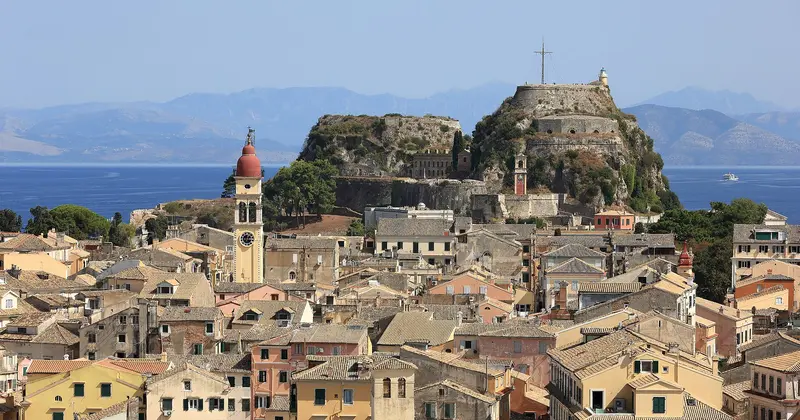
    Corfu is the northernmost of the large Ionian Islands and lies off the coast of Albania and Epirus. Corfu Town's Old Quarter, with its two Venetian fortresses, is a UNESCO World Heritage site.

    Discover

    Sights in Ionian Islands

    Discover the most important sights and attractions

    Myrtos Bay, located on Kefalonia

    Myrtos Bay, located on Kefalonia

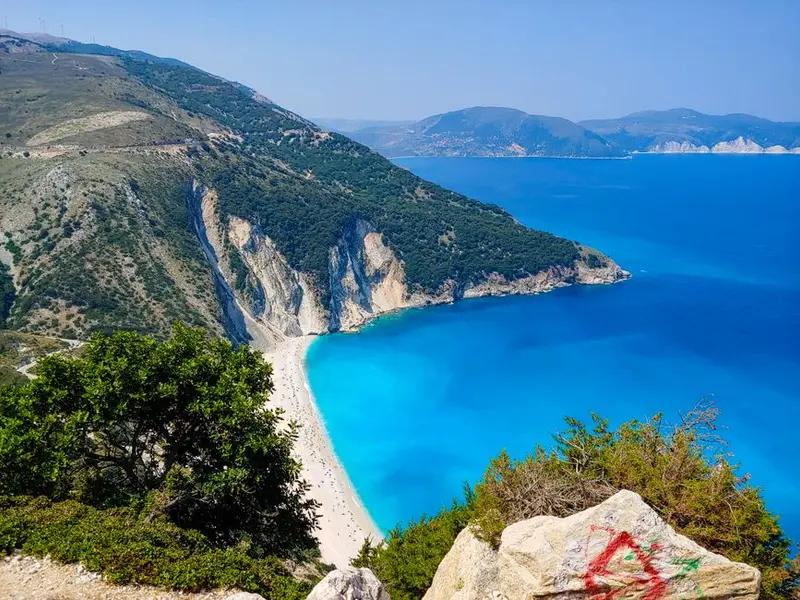
    The Bay of Myrtos is located in the northwest of Kefalonia between two mountain ridges and is the most famous beach of the Ionian Islands. The light pebbles consist of crushed limestone, which floats in the water and gives it its unusual colour.From the coastal road between Divarata and Assos, several viewpoints offer views of the bay; from there, a winding road leads down to the beach. At the bottom, there are sun loungers and a canteen, but no shade.The water drops off steeply and the surf is stronger than images might suggest. The parking spaces at the viewpoints are narrow and located directly on the road; in August, the beach car park fills up early.
    Open in Google Maps

    Gianiskari Cave

    The Gianiskari Cave, nestled into the rugged coastline of the Ionian Islands, is a remarkable natural phenomenon. You typically reach it by boat, which is already part of the experience. Inside, a fascinating world of geological formations awaits you, shaped over millennia by water and erosion. The clear, turquoise water inside the cave reflects the incoming light spectacularly, creating an almost mystical atmosphere. Pay attention to the subtle colour hues on the rock walls, indicating mineral deposits. Our Tip: Visit the cave in the morning when the sun is high and the light optimally enters the cave, to best showcase the vibrant colours of the water and rocks. This also helps to avoid the largest crowds in the afternoon. For underwater photography, a wide-angle lens is recommended.
    Open in Google Maps
    Old Town of Corfu

    Old Town of Corfu

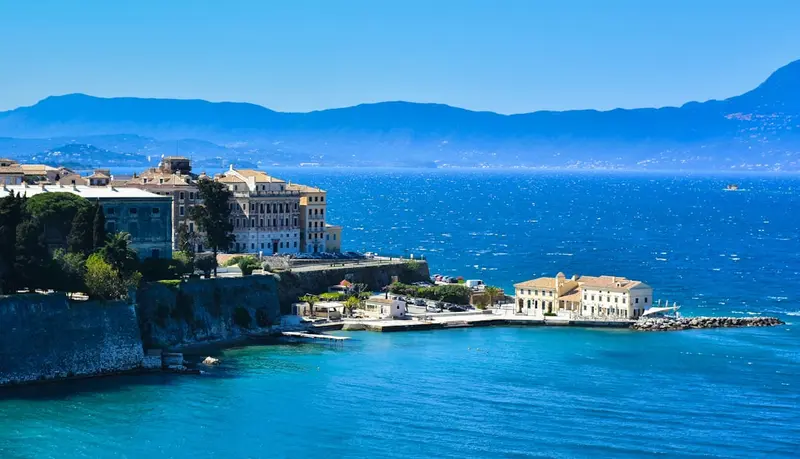
    Corfu Old Town has been on the UNESCO World Heritage List since 2007 because it has almost completely preserved its fortified urban landscape from the Venetian era. Between the Old and New Fortresses lie tall rows of houses and narrow alleys; the Campiello district is the densest part.Along the Esplanade, the arcades of the Liston line up, which were created under French administration modelled after the Rue de Rivoli. Next to it stands the Palace of St. Michael and St. George from the British era, today a Museum of Asian Art.On the Esplanade, cricket is played in summer, a remnant of the British Protectorate era. For the alleys, you'll need sturdy footwear; cars cannot enter the core.
    Open in Google Maps
    Navagio on Zakynthos

    Navagio on Zakynthos

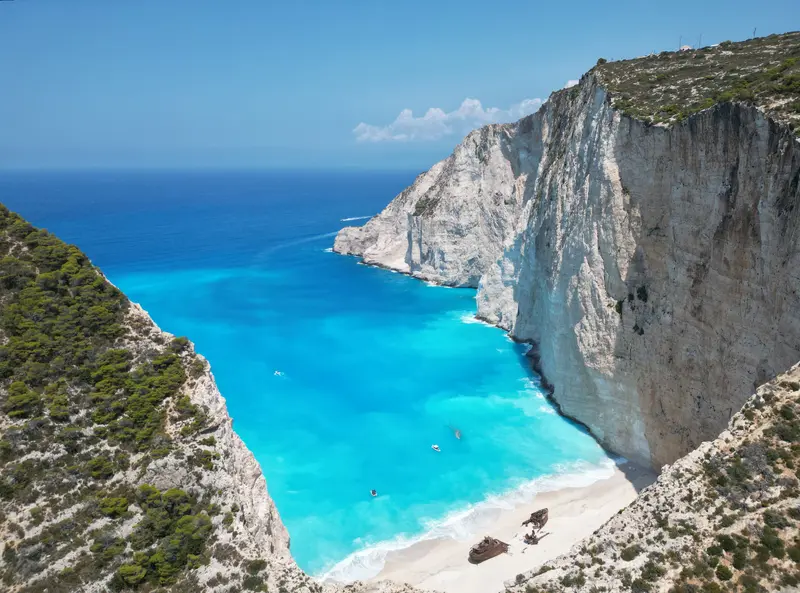
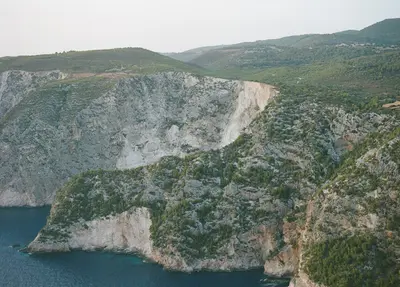
    Navagio, the Shipwreck Bay, is located on the northwest coast of Zakynthos beneath sheer limestone cliffs. On the bright pebbles lies the wreck of the freighter Panagiotis, which ran aground in 1980. There is no land access.Due to rockfalls, the beach has been closed for land access since 2018. For the 2026 season, an entry and swimming ban applies to the beach and bay until October 31st; boats are not permitted to approach the coast closer than 50 meters. Boat trips along the coast still operate, for example from Porto Vromi and Agios Nikolaos.From above, you can view the bay from the Anafonitria viewpoint; the platform is directly above the cliff edge and only accessible with proper safety measures. Before your visit, check the current status.
    Open in Google Maps
    Cave of Melissani

    Cave of Melissani

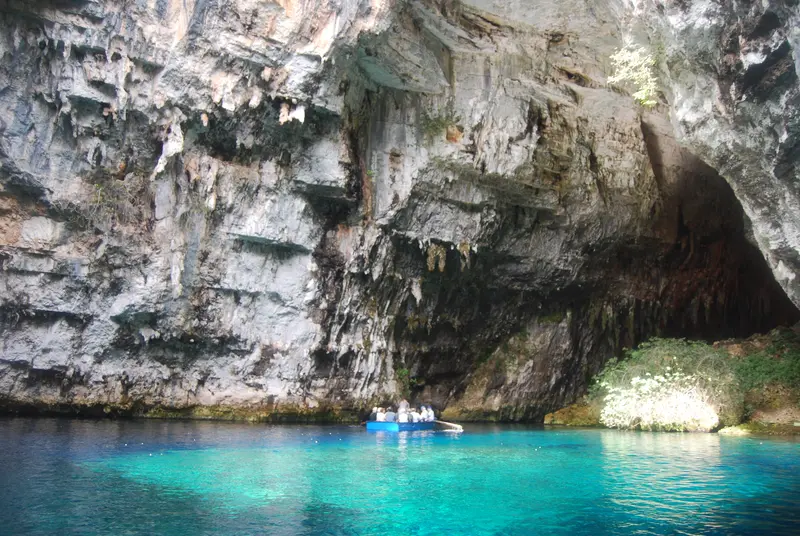
    The Melissani near Sami on Kefalonia is a karst cave with a lake of brackish and fresh water. Part of the ceiling collapsed millennia ago, which is why daylight falls directly onto the water.The lake is fed, among other things, by water that disappears into sinkholes near Argostoli on the other side of the island and flows underground through the limestone. This connection was proven in the 1960s with dye tracer tests.The cave is visited by rowboat, with the trip lasting only a few minutes. It is most impressive around midday, when the sun falls vertically through the opening; however, the queues are also longest then.
    Open in Google Maps
    Porto Katsiki on Lefkada

    Porto Katsiki on Lefkada

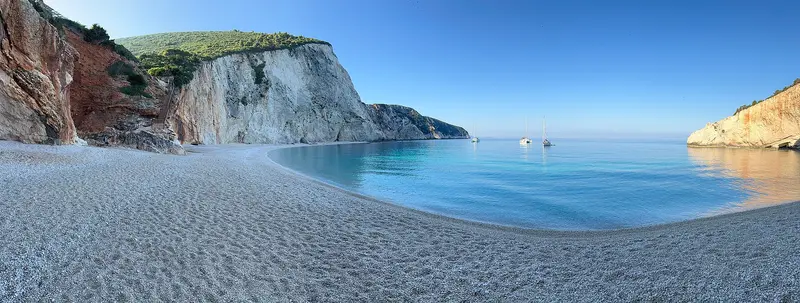
    Porto Katsiki is located on the west coast of Lefkada beneath a bright limestone cliff that drops almost vertically into the sea. The name means Goat's Harbour and refers to the fact that the bay was once only accessible to goats.From the car park above, a long, steep staircase leads down; the return journey is the more strenuous part. The beach is narrow and shrinks when the sea is rough; shade is only available in the early morning at the cliff face.Alternatively, boats from Vasiliki and Nydri visit the bay. The access road is narrow and winding; in high season, the car park is full in the mornings.
    Open in Google Maps

    Food and Drink

    The cuisine of the Ionian Islands is the most Italian in Greece. Tomato sauces, pasta, and pastries arrived via Venice, along with their own grape varieties and a cheese found only here.
    Robola of Kefalonia

    Robola of Kefalonia

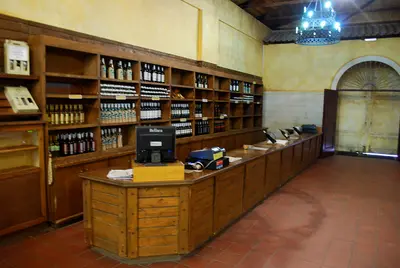
    The white grape variety grows on limestone soils on the slopes of Ainos up to 800m. The wine is dry, acidic and mineral, and carries a protected designation of origin. The cooperative near Omala has a tasting room.
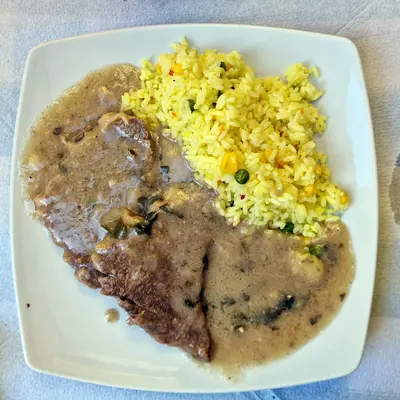
    Pastitsada and Sofrito

    Pastitsada and Sofrito

    Both dishes date back to the Venetian era: Pastitsada is meat stewed in tomato and spices over thick pasta, Sofrito is thinly sliced veal in white wine, garlic, and parsley. On Corfu, they appear on almost every taverna menu.
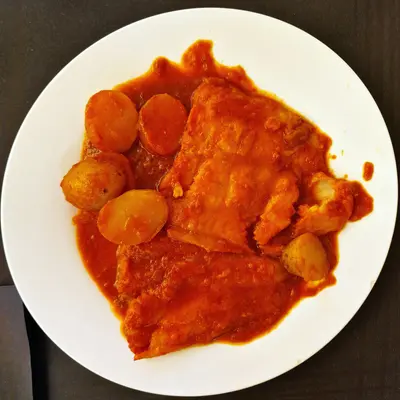
    Bourdeto

    Bourdeto

    The spicy fish stew with plenty of red pepper and onions is one of the region's oldest dishes, originally cooked with inexpensive fish like scorpionfish. It is eaten with bread, not a side dish. The spiciness varies significantly from house to house.
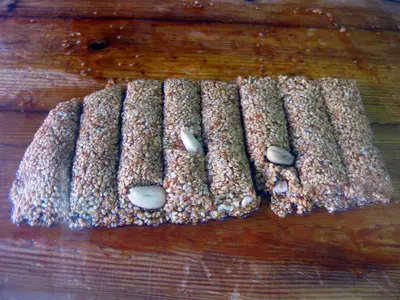
    Mandolato and Pasteli

    Mandolato and Pasteli

    White nougat with almonds is particularly common on Zakynthos and sold in blocks in patisseries. In addition, there is Pasteli, made from sesame and honey. Both derive from Italian models and are sold as souvenirs.
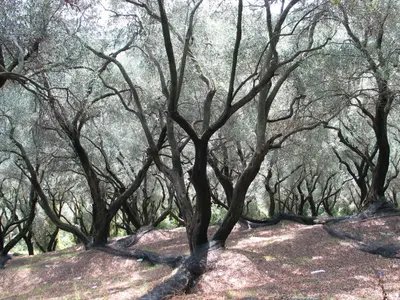
    Olive oil from Corfu and Paxi

    Olive oil from Corfu and Paxi

    The Venetians planted hundreds of thousands of olive trees from the 16th century onwards; many still stand today and have grown very tall. Harvesting is often done with nets that lie under the trees all winter. Small mills sell directly.

    Culture and History of the Ionian Islands

    Venice, France, Great BritainThe Ionian Islands largely escaped Ottoman rule. Corfu was Venetian from 1386, Zakynthos and Kefalonia from the late 15th century; Lefkada, however, was Ottoman from 1479 to 1684. The Venetian era ended in 1797, followed by the French and Russians, and from 1815 the British, establishing a protectorate state. In 1864, the islands joined Greece. This historical tapestry means travellers observe much: arcaded promenades and tall facades instead of whitewashed cubic houses, Catholic alongside Orthodox churches, cricket in Corfu, and Italian loanwords in common speech. Corfu's Old Town has been on the UNESCO World Heritage List since 2007.Kantades and PhilharmonicsThe region's music differs from the rest of the country: Kantades are polyphonic guitar songs of Italian origin. Philharmonic Societies – civic orchestras with music schools – also perform at festivals and processions; Corfu hosts several alone.The 1953 EarthquakeThe 1953 earthquake was a major disruption, destroying much of Zakynthos, Kefalonia, and Ithaca. Rapid, simple rebuilding makes many places seem more modern than their history implies. On Kefalonia, Fiskardo in the north was largely spared; Corfu remained unaffected.

    On the Road in the Ionian Islands

    Between the IslandsUnlike the Aegean, the Ionian Islands lie close to each other and the mainland, making combinations easy. Kefalonia, Ithaca, and Lefkada are connected by short ferry routes; Kefalonia also has a seasonal link to Zakynthos. Corfu and Paxi, however, are tied to Igoumenitsa and are cumbersome to reach from the southern islands. Lefkada doesn't need a ferry: a causeway with a floating bridge links the island to the mainland, opening regularly for boats. Schedules vary significantly by season; in winter, many services become infrequent.On the IslandsA rental car is the practical solution on all larger islands, as KTEL buses connect the main towns but rarely reach the bays. Coastal roads are narrow and winding; on steep sections, such as above Myrtos Bay or on Lefkada's west coast, progress is slow. Many famous beaches are only accessible via winding roads or by boat, and parking is scarce in August. Taxis are available at ports and airports.

    Nearby

    Kefalonia (Island)

    Kefalonia (Island)

    Kefalonia is, at almost 780 square kilometres, the largest of the Ionian Islands and the one with the most rugged relief: Mount Ainos rises to 1,628 metres and is covered with Greek Fir, which is botanically named after the island. Beneath the island lies a karst system where seawater disappears on one side and reappears on the other.In between lie pebble coves like Myrtos, vineyards with the Robola grape variety, and small harbours. The island is large enough for an entire week and can be easily combined with Ithaca.
    Lefkada (Island)

    Lefkada (Island)

    Lefkada is accessible without a ferry: A causeway with a floating swing bridge connects the island to the mainland via a narrow canal. It is known for its west coast, where white limestone cliffs plunge steeply into turquoise waters.Behind this lies a mountainous island interior with lentil fields, embroidery traditions, and villages at over 700 meters altitude. On the quieter east coast, boat trips depart to the offshore islands.
    Zakynthos (Island)

    Zakynthos (Island)

    Zakynthos is the southernmost of the larger Ionian Islands and presents two faces: in the north and west, a rugged coastline with caves and Shipwreck Bay Navagio; in the south, flat sandy beaches where loggerhead sea turtles lay their eggs. In between lies a fertile plain with vineyards and olive groves. The Venetians named the island Fior di Levante.
    Ancient Olympia

    Ancient Olympia

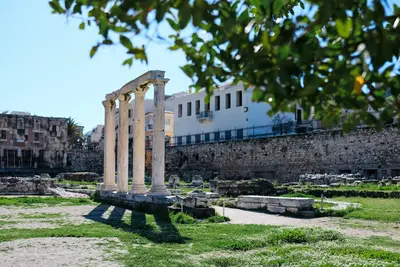
    Ancient Olympia is located in the region of Elis in the west of the Peloponnese, where the Kladeos flows into the Alpheios. From 776 BC to 393 AD, the Olympic Games were held here every four years in honor of Zeus, for almost twelve centuries. Of the sanctuary, foundations, toppled column drums, and the stadium are preserved; the sculptures are in the museum opposite.
    Epirus

    Epirus

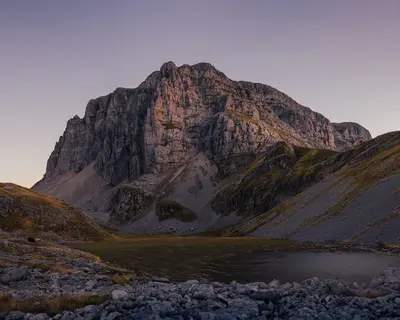
    Epirus, in northwestern Greece, stretches from the Pindos Mountains to the Ionian Sea coast. The mountains are home to the stone villages of Zagorochoria, the Vikos Gorge, and old arched bridges, while coastal towns include Parga and Sivota. Its capital is Ioannina, situated on Lake Pamvotis, featuring an Ottoman-influenced castle town. May, June, and September are ideal for hiking, while summer is best for swimming.

    Sources & method

    • Photos: Wikimedia Commons, Unsplash, Pexels. Each photo carries its credit.
    • The content is based on web research from public, traceable sources. How the content is made · The role of AI