Fernweh: Home
    ExploreTravel GuidesPlan a tripMy tripLast visited
    de|en
    All Places & RegionsAll highlightsAbout FernwehFAQPrivacy PolicyImprint
    ExploreTravel GuidesPlan a tripMy tripLast visited
    • Neighborhoods & highlights
    • Eat & drink
    • Food culture
    • Culture
    • Getting around
    • Accommodation
    • Plan trip
    • Nearby
    Karpathos

    Greece

    Karpathos

    City

    Karpathos, nestled between Crete and Rhodes, lies far from the usual ferry routes, preserving what has vanished elsewhere: a mountain village where older women wear traditional dress daily and a unique dialect is spoken.

    by Felix Gillen

    1. Home
    2. Destinations
    3. Greece
    4. Dodecanese
    5. Karpathos
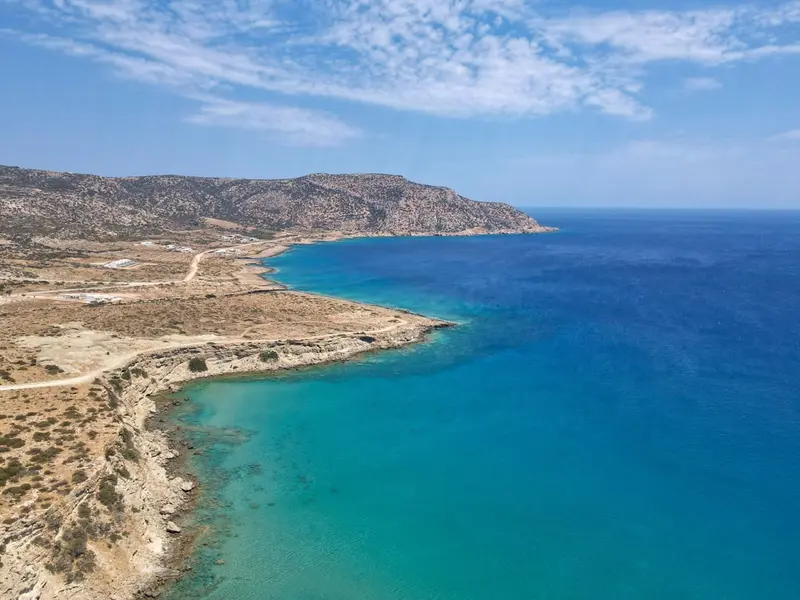
    Karpathos, nestled between Crete and Rhodes, lies far from the usual ferry routes, preserving what has vanished elsewhere: a mountain village where older women wear traditional dress daily and a unique dialect is spoken.The rest of the island consists of a long mountain ridge, inaccessible coves, and a surf bay in the south where the Meltemi wind reliably blows in summer. Visitors come here for the seclusion.

    Sights in Karpathos

    Discover the most important sights and attractions

    Menetes

    1Menetes

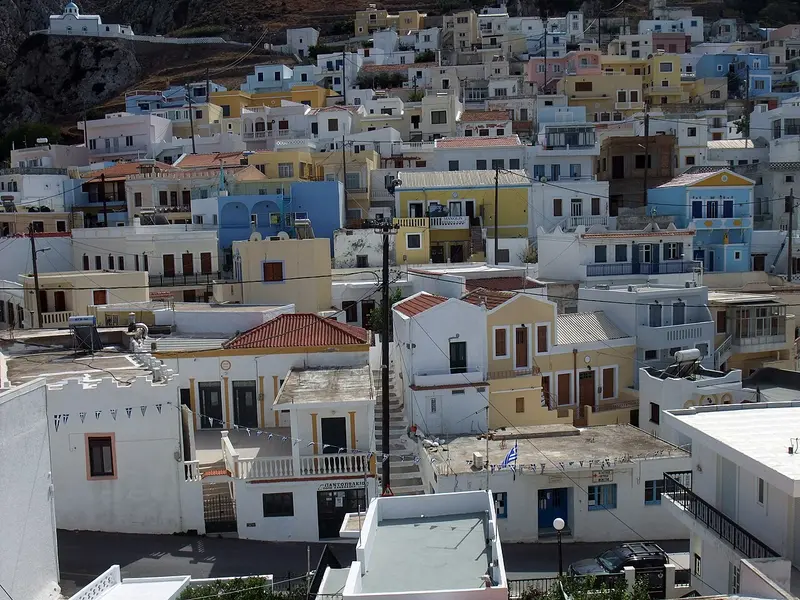
    The mountain village is situated at around 350 meters above Pigadia on the road to the airport and is built into a rocky slope. The houses have painted facades and narrow balconies, and in the center stands the church Panagia Eleftherotria with views over the south of the island. A small folklore museum displays the furnishings of a traditional living space. From here, hiking trails lead to Arkasa on the west coast.
    Open in Google Maps

    2Kamarakia Beach

    Lefkos' small west coast cove has multiple sandy areas between eroded limestone, forming natural arches. Water is shallow and clear; the seabed shifts between sand and rock. Only the rocks provide shade; no infrastructure exists. Westerly winds leave the cove exposed.
    Open in Google Maps
    Basilica Agia Fotini

    3Basilica Agia Fotini

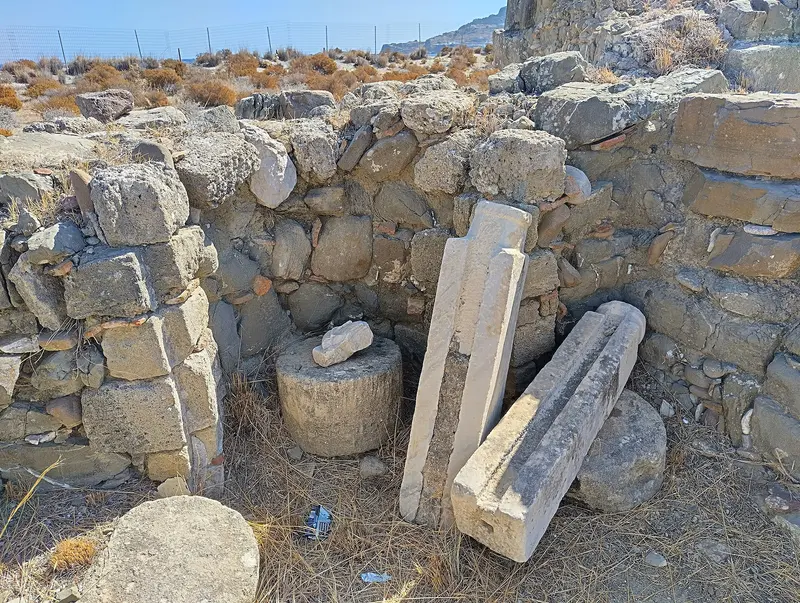
    At the northern edge of Pigadia, directly on the road to Aperi and Olympos, lie the remains of an early Christian basilica from the 5th or 6th century. Preserved are marble columns, doorframes, and building elements with early Christian relief decoration. In the vicinity lay the ancient city of Potidaion, one of the island's most important settlements. The site is fenced, but freely accessible and can be explored in a few minutes; in the evenings, the ruins are illuminated.
    Open in Google Maps
    Diafani

    4Diafani

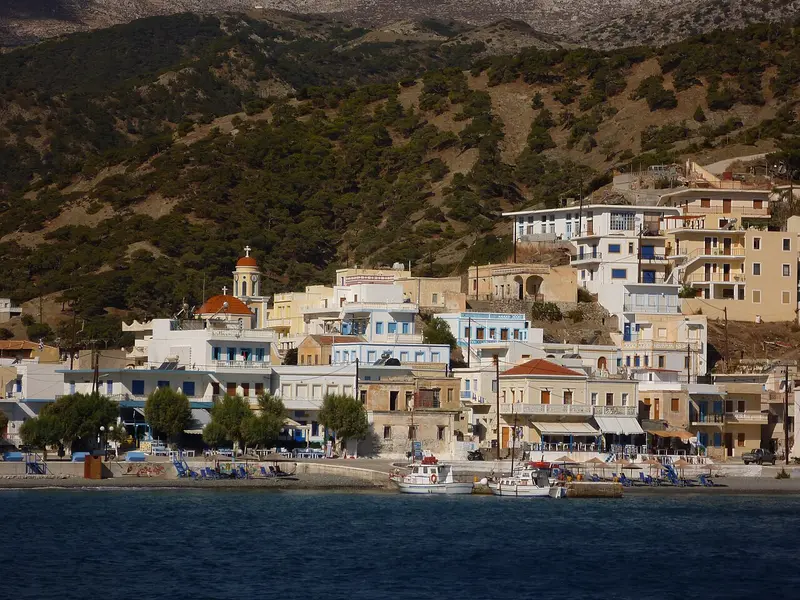
    The small northern harbor provides access to Olympos and is the only settlement on this coast. A daily excursion boat from Pigadia arrives here in summer, along with ferries to Rhodos and Kreta. From Diafani, hiking trails to Olympos, Vroukounta, and Avlona begin – old paths marked with stones. The village itself consists of a waterfront road lined with taverns.
    Open in Google Maps
    Apella

    5Apella

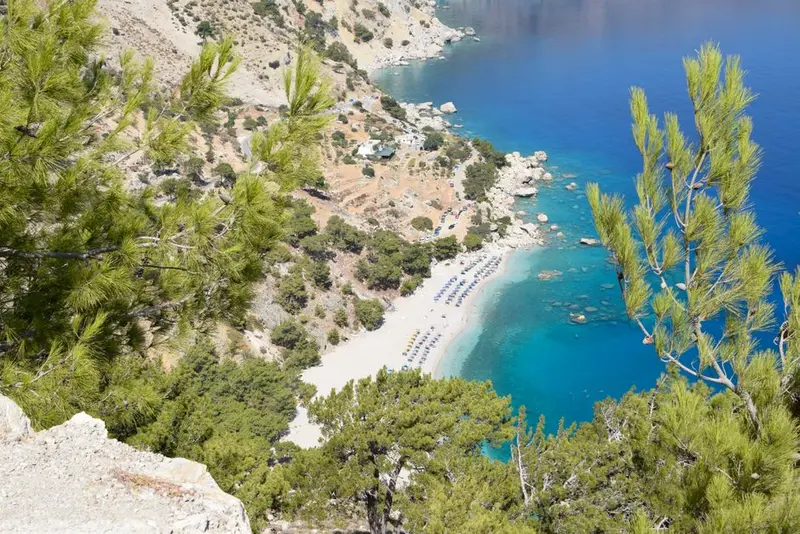
    The bay on the east coast is one of the island's most famous beaches: light pebbles, steeply shelving water, and a pine-clad slope behind. A side road leads down from the main road, from the end of which a short walk remains. A simple taverna serves visitors; otherwise, there's nothing else. When the north wind blows, swells roll into the bay.
    Open in Google Maps
    Pigadia

    6Pigadia

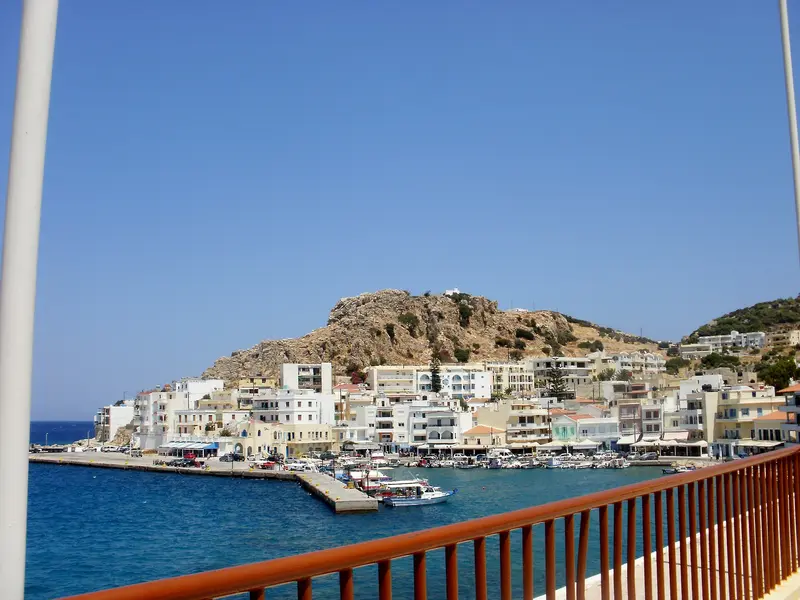
    The main town and ferry port lies on a wide bay in the southeast and has around 3000 inhabitants. The buildings primarily date from the 20th century and were largely funded by emigrated Karpathians. Here are the administration, the Archaeological Museum, and the island's only year-round infrastructure. The town beach stretches several kilometers to the north.
    Open in Google Maps

    Dining & Drinks

    1

    Panorama Cafe Bar

    Café-bar on the island road near Pyles in the island's west. It has coffee, drinks, and small snacks for a stop on your drive through the mountain villages.
    Show on Google Maps
    2

    Mezzaria (Othos)

    Restaurant in the mountain village of Othos on the road to Pyles, one of the island's highest villages. Serving Mezedes and dishes of Karpathian cuisine. Othos is known for its dark red wine, which is openly served in the village's local tavernas.
    Show on Google Maps
    3

    Stacey's Yum-Me Kitchen

    Small restaurant in the main town of Pigadia near the harbour. The cuisine offers Greek dishes and small plates for sharing.
    Show on Google Maps
    4

    Taverna Parthenon (Arkasa)

    Tavern in Arkasa on the island's southwest coast. Menu offers Greek classics, fish & local dishes like Makarounes.
    Show on Google Maps

    Eating and Drinking on Karpathos

    The cuisine of Karpathos has remained self-sufficient: little fish, much goat, handmade pasta, and bread from the communal wood oven.
    Makarounes

    Makarounes

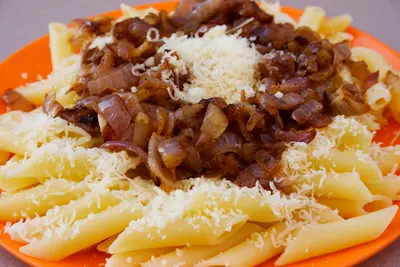
    Hand-rolled noodles of flour, water, and salt, twisted around a stick, served with roasted onions and local fresh cheese. It's the island's signature dish, found on every tavern menu. In Olympos and Diafani, the dough is often rolled at the table.

    Bread from Olympos

    In Olympos, several houses still bake in wood-fired ovens, sometimes by order for the entire village. The sourdough bread keeps well and is served in thick slices with everything. Additionally, rusks and herb pastries are available at the bakery at the village entrance.

    Goat and Lamb

    Island meat is almost exclusively from free-roaming goats and sheep. It is stewed with herbs or oven-baked with potatoes, whole on holidays. Fish, though, is costlier and rarer on Karpathos than on other islands.

    Siserino and local cheese

    Siserino is pork preserved in oil, which is shelf-stable without refrigeration and served as a meze. Served with it are the fresh cheese Myzithra and a hard, salty sheep's cheese from the mountain villages. Both are sold by the small shops in Aperi and Othos.

    Wine from Othos

    In the mountain village of Othos, wine has been pressed for generations by family businesses—a strong, dark red that rarely leaves the island. It is served by the glass in the village taverns. A small wine museum in the village displays the old presses.

    Culture and History on Karpathos

    Olympos and its DialectKarpathos has always been remote: too far from Rhodes for close administration, too small for its own power. This has preserved its northern region. In Olympos, a village perched on a ridge above the northwest coast, its isolation has preserved a unique dialect. Linguists identify ancient sounds and words here that have vanished elsewhere in Greece. To this day, older women there wear traditional attire, including embroidered aprons and headscarves. Following ancient custom, the eldest daughter inherited her mother's house and land, a practice uncommon in Greece.Emigration, Music, and FestivalsDuring the 20th century, particularly after World War II, many Karpathioten emigrated to the East Coast of the USA, sending back money that financed new homes in Pigadia and Aperi. Many return in summer, making the island more crowded in August than tourist numbers might suggest.PanigiriaThese church festivals often last until morning: Music is played on lyra, lute, and bagpipes, accompanied by Mantinades – improvised couplets that singers exchange in turn. The most famous celebration is Easter in Olympos.

    Locally on the go

    A Mountain Range, A RoadKarpathos is long and narrow, and the road to the north follows the mountain ridge with many curves. The journey from Pigadia to Olympos takes a good two hours. The island bus connects Pigadia with the mountain villages in the south and the beaches of Amopi, usually only a few times a day and rarely outside of peak season. Services to the north are sparse; inquire about the current timetable in Pigadia. A rental car is the most practical solution on this island, so book it before you arrive in summer.Boat Instead of CarSeveral coastal sections have no roads. The bays of Apella, Kyra Panagia, and Achata are located on dead-end roads with steep, narrow access; some northern bays are only accessible by boat. From Pigadia, an excursion boat sails daily to Diafani in summer, but it is cancelled if the Meltemi wind is strong.AirportThe airport is located in the south near Afiartis, about 15 kilometers from Pigadia. Taxis await arrivals. Fill up your tank before driving north, as there are few services there.

    Accommodations in Karpathos

    Find perfect stay in Karpathos

    Booking.com* (Affiliate link)
    Search Hotels
    Agoda* (Affiliate link)
    Search Hotels
    Airbnb
    Vacation Rentals

    * Affiliate link: if you book through it, we earn a small commission. The price stays the same for you.

    Campgrounds in Karpathos

    Find perfect campground in Karpathos

    Search via Google Maps
    Campgrounds nearby (15km)
    Camping.info
    Find Campgrounds
    Park4Night
    RV Parks & Camping

    Plan your trip to Karpathos

    Save places, build a route and plan your city trip, all in one place.

    1. 1
      Sunrise over alpine peaks and a sea of clouds
      1234

      Round trip

      12 days · 4 stops

      Saved

      Pick a route

      Pick a ready-made one or save places and plan your own.

      Open bookmarks
    2. 2

      Trip to Karpathos

      Live
      • 1Menetes3 days
      • 2Kamarakia Beach4 days
      • 3Basilica Agia Fotini5 days
      Budget

      Plan your trip

      The planner sorts stops, days and budget. Plan together in real time.

      Start trip planning
    3. 3
      9:41 No signal
      Karpathos
      Available offline

      Use it on the road

      Download the guide to your phone and use it on site, even offline.

    Nearby

    Vai

    Vai

    Vai, on the northeastern tip of Crete, is not a village but a beach backed by a palm grove. Several thousand Cretan Date Palms grow here in a narrow valley, which has been protected since the 1980s. Those staying overnight reside in Palekastro or Sitia and visit for the day.
    Lindos

    Lindos

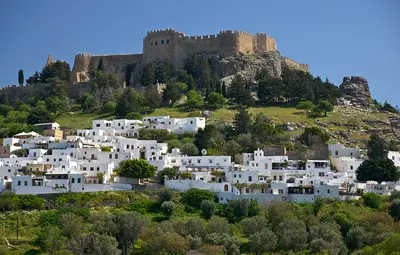
    Lindos is located on the east coast of Rhodes, about 40 kilometers south of the island capital, below a rock featuring an ancient acropolis and a castle of the Knights of St. John. White houses, pebble mosaics in the courtyards, and narrow streets define the village, whose center is closed to vehicles. Below are the main beach and the small St. Paul's Bay.
    Symi

    Symi

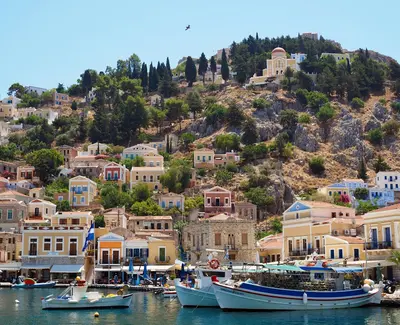
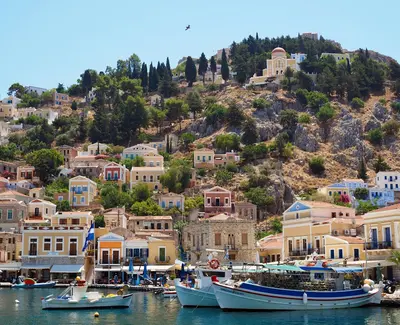
    Symi is located north of Rhodes, close to the Turkish coast, and is known for its harbor town Gialos, whose neoclassical houses in ochre, pink, and blue climb the hillsides. Restorations are subject to the regulations of the State Archaeological Service, which is why the townscape appears cohesive to this day.The town thrived on sponge diving and shipbuilding, which made the island wealthy in the 19th century and allowed its population to grow to over 20,000. Today, around 2,600 people live here. During the day, many excursion boats arrive from Rhodes; in the evenings, it becomes significantly quieter.
    Agios Nikolaos

    Agios Nikolaos

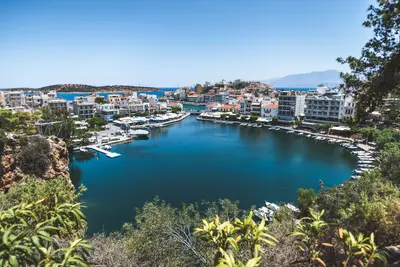
    Agios Nikolaos is the capital of the Lasithi regional unit in eastern Crete and is located on Mirabello Bay. The town's focal point is the small, deep Lake Voulismeni, which is connected to the harbour by a canal. The town is a good starting point for Spinalonga, Elounda, and the surrounding villages.
    Dodecanese

    Dodecanese

    The Dodecanese, a long chain of islands off the Turkish coast, only became part of Greece with the Treaty of Paris in 1947. More than elsewhere, the Knights Hospitaller, Ottomans, and Italians left their mark here, hence the architecture has little to do with the white cube houses of the Cyclades: knightly castles, mosques, fortified monasteries, and Italian administrative buildings.The group ranges from Rhodes, by far the largest and liveliest island, to islets with only a few hundred inhabitants. Visitors will find seaside resorts, ancient sites, and quiet harbour villages often just an hour's ferry ride apart.

    Sources & method

    • Photos: Wikimedia Commons, Unsplash, Pexels. Each photo carries its credit.
    • The content is based on web research from public, traceable sources. How the content is made · The role of AI