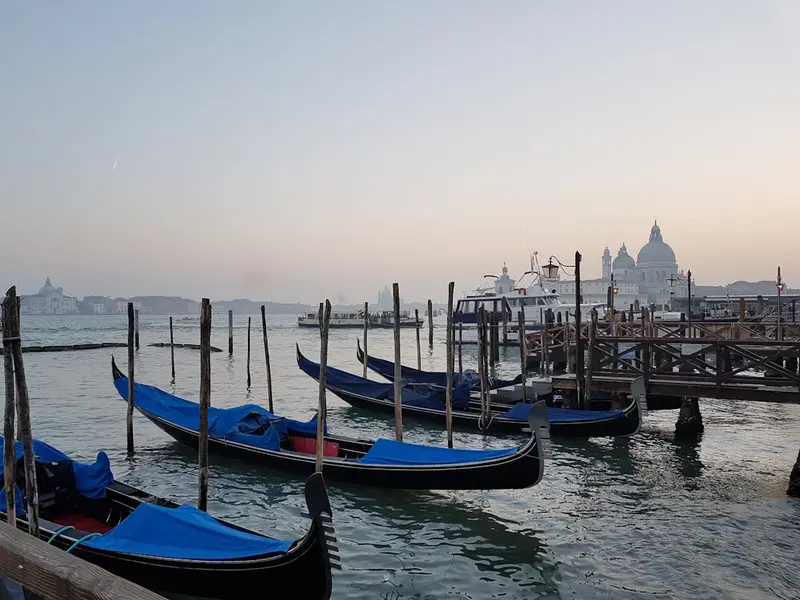
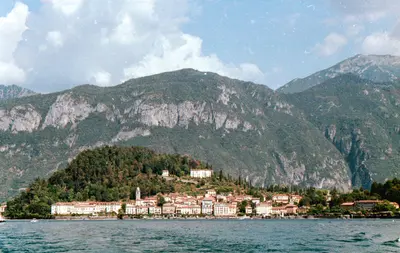
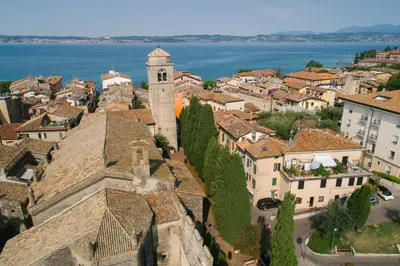
The Veneto stretches from the Adriatic coast with the Venice Lagoon and the Po Delta, across the Po Plain, to the eastern shore of Lake Garda and into the Dolomites.
The Veneto stretches from the Adriatic coast with the Venice Lagoon and the Po Delta, across the Po Plain, to the eastern shore of Lake Garda and into the Dolomites. Around 4.9 million people live here; Venice is the capital, and Verona the largest city. In addition, there are Padua, Vicenza, and Treviso, Palladio's villas, the Prosecco Hills, and winter sports resorts like Cortina d'Ampezzo.
The Veneto is Italy's region with the most tourist overnight stays; many visitors focus on Venice, Verona, and Lake Garda. A car is practical for Palladian Villas, the Prosecco area, and the mountains. In winter, the Dolomites are a ski resort.
Place 1 of 4
Dolomites
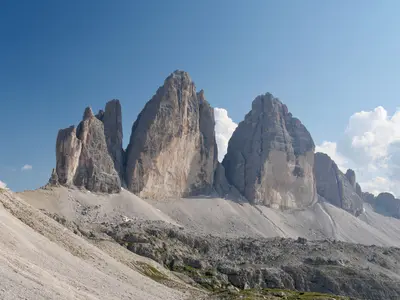
The Dolomites are a mountain range of the Southern Alps in northeastern Italy, spread across South Tyrol, Trentino, Veneto, and Friuli-Venezia Giulia.
The Dolomites stretch across parts of Südtirol, Trentino, Venetien, and Friaul. Key starting points are Cortina d'Ampezzo in the east, Gröden and the Gadertal in the center, and the Fassatal in the southwest.
Cortina d'Ampezzo is situated at around 1,200 meters in a wide valley basin of the Ampezzo Dolomites, surrounded by Tofane, Pomagagnon, Cristallo, Faloria, and Sorapiss.
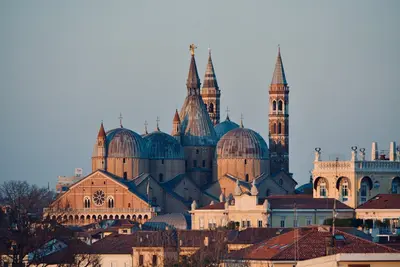
Padua is located about 40 kilometers west of Venice and is a lively university city. Its 14th-century fresco cycles, including the Scrovegni Chapel, have been a UNESCO World Heritage site since 2021; the Botanical Garden has held this status since 1997.
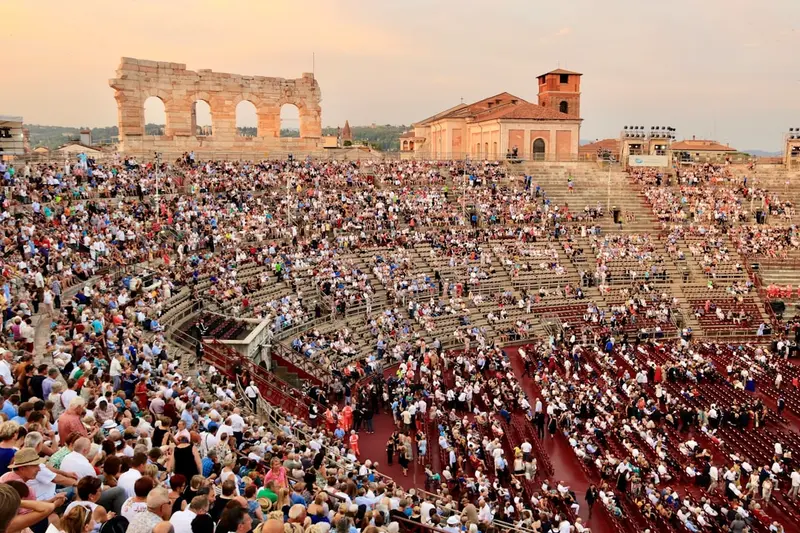
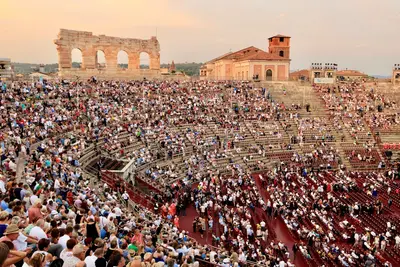
Verona is situated on the Adige River and, with approximately 255,000 inhabitants, is the largest city in Veneto. Its Old Town, featuring Roman and medieval buildings, has been a UNESCO World Heritage site since 2000.Romans and ScaligersFrom Roman times date the Arena and Ponte Pietra, while Piazza delle Erbe lies above the former forum. In the 13th and 14th centuries, the Della Scala family ruled; Castelvecchio, Ponte Scaligero, and the Scaliger Tombs bear witness to their reign. From 1405, Verona belonged to Venice, predominantly to Austria in the 19th century, and joined Italy in 1866.Opera and LiteratureIn summer, the Opera Festival transforms the Arena into an open-air stage. Three of Shakespeare's plays are set in Verona, including “Romeo and Juliet”. The Casa di Giulietta is a popular destination; however, its historical connection is a later attribution, and the balcony was only added in the 1930s.SurroundingsIn the hills north of the city lies the Valpolicella wine region, home to Amarone.
Sights in Veneto
Discover the most important sights and attractions
Museum
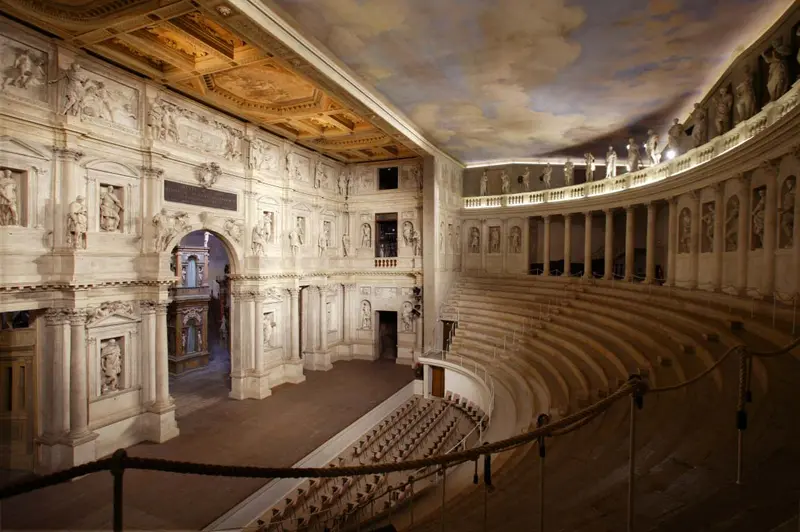
Teatro Olimpico, Vicenza
Vicenza's theatre, Andrea Palladio's final design, was completed by 1585 after his 1580 death. Vincenzo Scamozzi created the stage set of perspective wood-and-stucco streets, depicting Thebes; it's the oldest surviving example. The theatre has been UNESCO World Heritage since 1994.
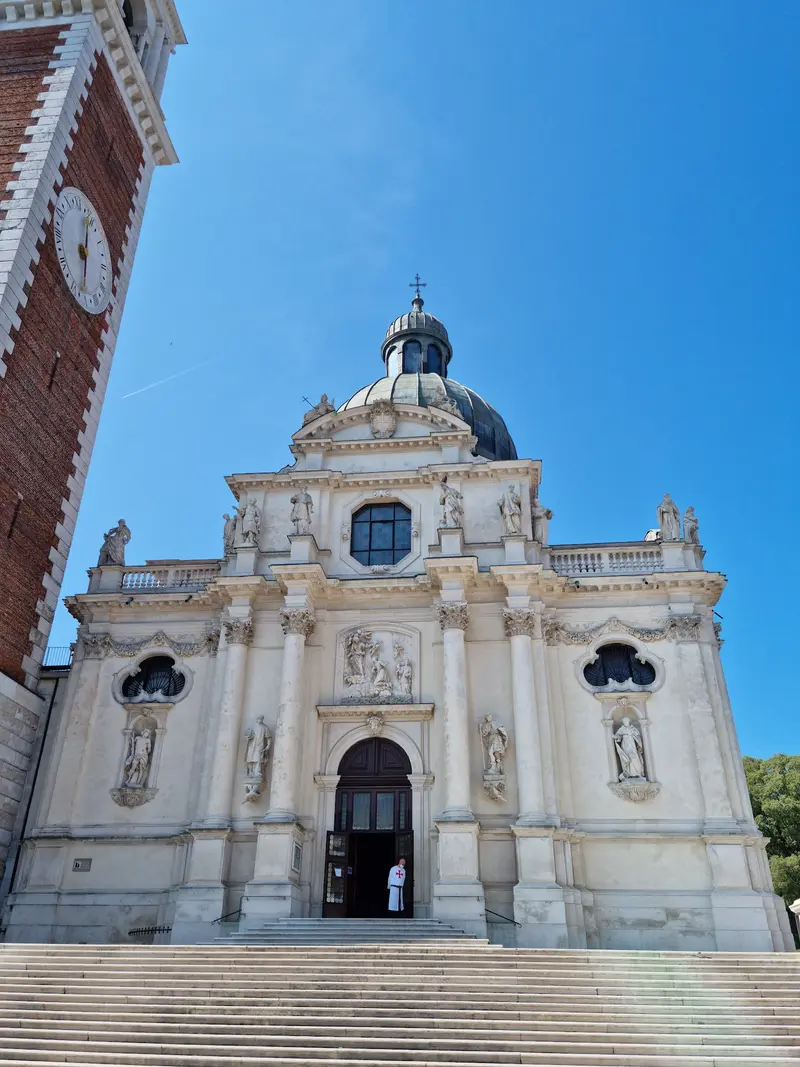
The pilgrimage church on Monte Berico above Vicenza commemorates Marian apparitions in 1426 and 1428. In the former refectory hangs Paolo Veronese's large 1572 painting, 'The Feast of Gregory the Great'. A 1780 arcaded walkway leads up from the city.
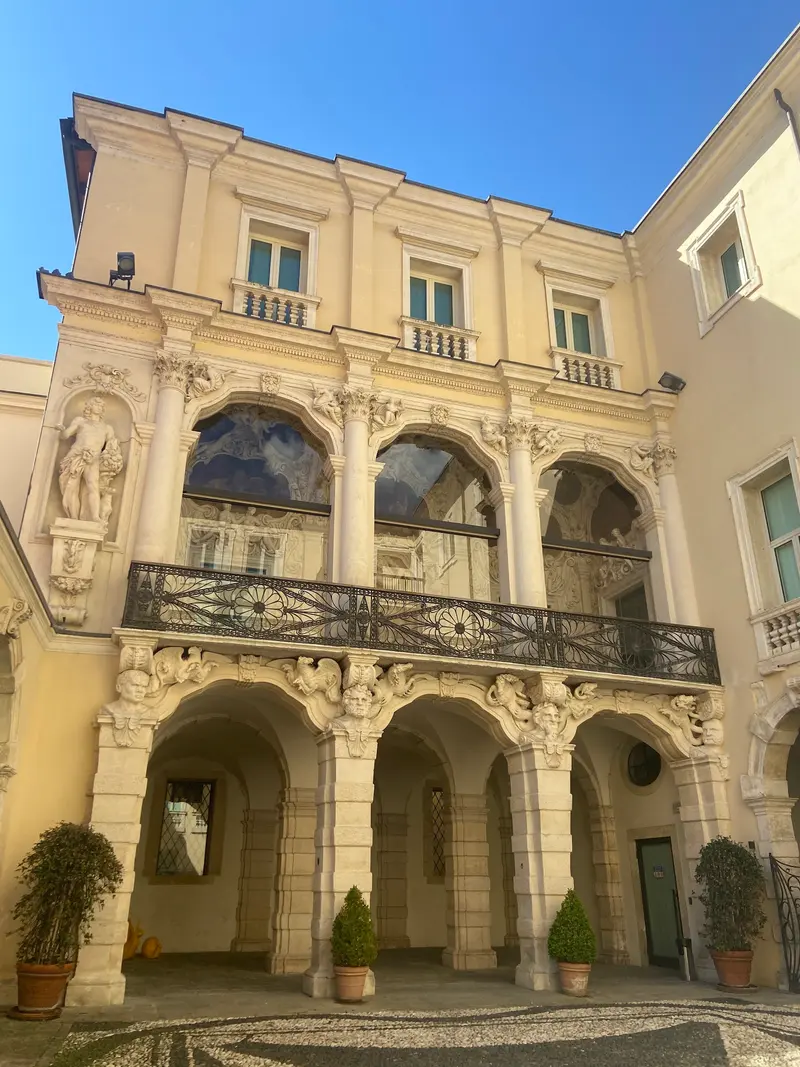
The Museum of Bank Intesa Sanpaolo, housed in the baroque Palazzo Leoni Montanari, showcases 18th-century Venetian painting, including works by Tiepolo, Canaletto, Guardi, and Pietro Longhi, as well as painted Greek vases from Ruvo di Puglia. It also features temporary exhibitions.
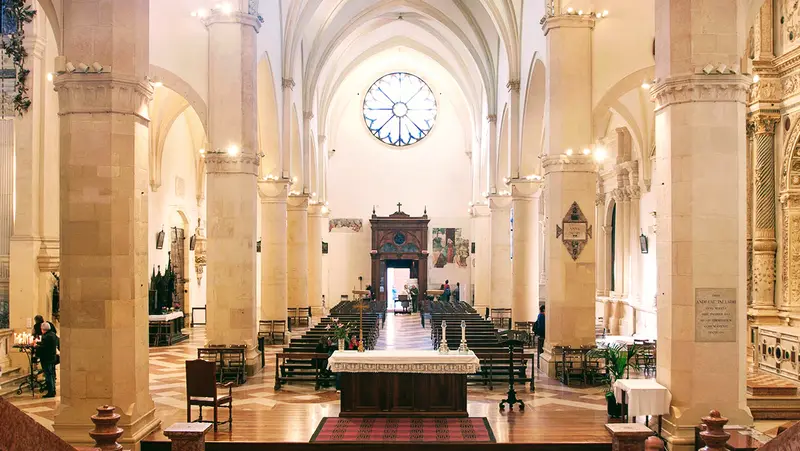
The Gothic church in Vicenza was built from 1261 for a thorn from Christ's Crown of Thorns and handed over to the Dominicans. Inside are Giovanni Bellini's Baptism of Christ and Paolo Veronese's Adoration of the Magi. Palladio designed the Valmarana Chapel in the crypt.
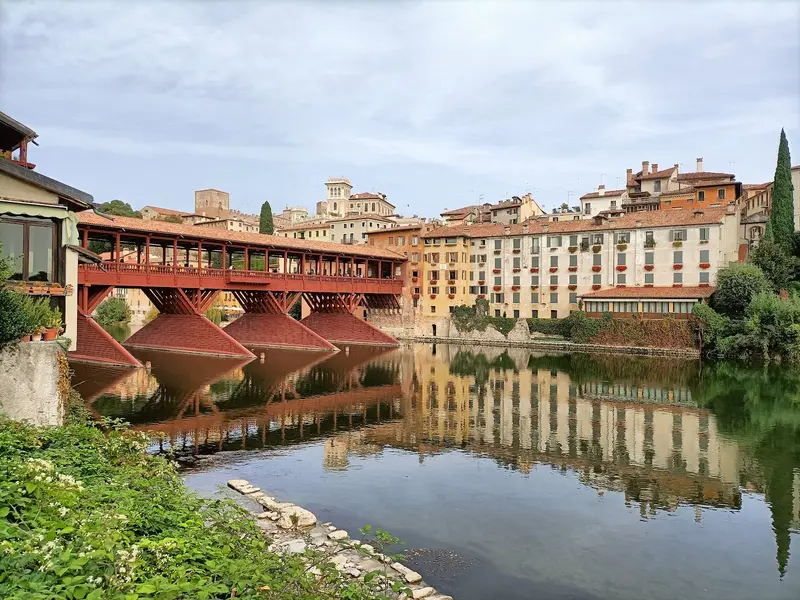
The covered wooden bridge over the Brenta dates back to a design by Palladio from 1569. It was destroyed multiple times and rebuilt according to his plan, most recently in 1948 after its demolition in 1945. Its name honors the Alpini, who crossed it during World War I to the Sette Comuni plateau. Nearby are the Nardini distillery, founded in 1779, and the Poli Grappa Museum.
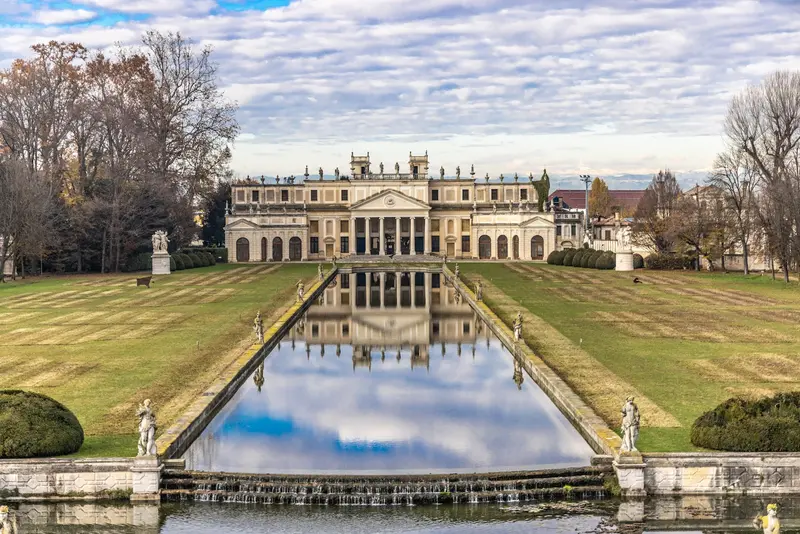
The grand villa on the Brenta Canal, about 30 kilometers from Venice, was built in the early 18th century for Alvise Pisani, who became Doge in 1735. The ballroom is adorned with a ceiling fresco by Giambattista Tiepolo, and a garden labyrinth lies in the park. It is one of the villas of the Riviera del Brenta.
The cuisine of Veneto is versatile, with fish from the lagoon, rice, polenta, and wine.
Risotto
Rice dishes are common in Veneto, in winter, for instance, risotto with radicchio.
Radicchio di Treviso
Red, white-veined winter salad from the Treviso area; the late variety Tardivo is only harvested after two frosts. Raw in salad or cooked.
Tiramisù
The dessert of Savoiardi, coffee, mascarpone, egg yolk, and cocoa presumably originates in Treviso, where Le Beccherie claims its invention.
Prosecco and Amarone
Prosecco comes from the hills around Conegliano and Valdobbiadene; the red wine Amarone comes from Valpolicella north of Verona.
Spritz
Aperitif of Prosecco, soda, and Aperol, launched in Padua in 1919.
Culture and History
Republic of VeniceUntil 1797, Venice was an independent republic, by the 16th century at the latest also ruling the mainland. The Winged Lion of St. Mark can be seen, for example, in Verona or Asolo. After Napoleon, the Veneto belonged to the Austrian Kingdom of Lombardy-Venetia and, following a referendum, joined Italy in 1866.PalladioPadua-born architect Andrea Palladio built numerous palaces and villas in 16th-century Vicenza and its countryside. Vicenza and its Palladian villas are UNESCO World Heritage sites.LanguageBesides Italian, most inhabitants speak Venetian. In parts of the province of Belluno, for example around Cortina, Ladin is spoken.
On the Road in Veneto
TrainTo reach the Dolomites by train, go as far as Calalzo di Cadore, then continue by bus to Cortina.CarFor exploring villas, vineyards, and mountain villages, a car is practical. You won't need one in Venice itself.AirportsThe main airports are Venice Marco Polo, Treviso, and Verona.