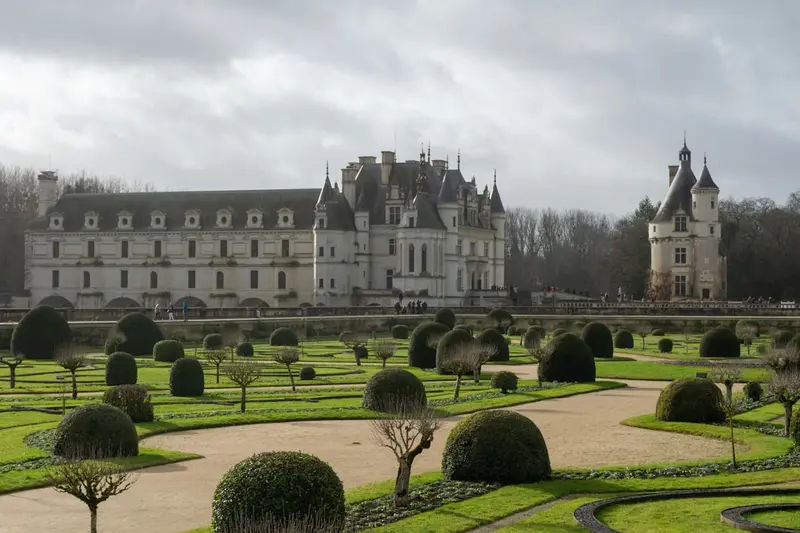
From Orléans, head downstream along the Loire via Chambord and Blois to Amboise, with a detour along the Cher to Chenonceau. Via Tours, you end up in Chinon on the Vienne; stages are usually under an hour.
14 Days / 13 Nights
April–October
RV Friendly
7 stops
Why This Route?
For history buffs and connoisseurs who want to explore castles, gardens, and wine at a leisurely pace.
Hidden Gems
Pagode de Chanteloup with views over the Loire Valley near Amboise
Gardens of Château de Villandry between Tours and Chinon
Caves Painctes de Chinon, wine cellars in the limestone rock beneath the fortress
Itinerary
Stop 1 • 2 Nights
Orléans
City
Rich in history and historical sites
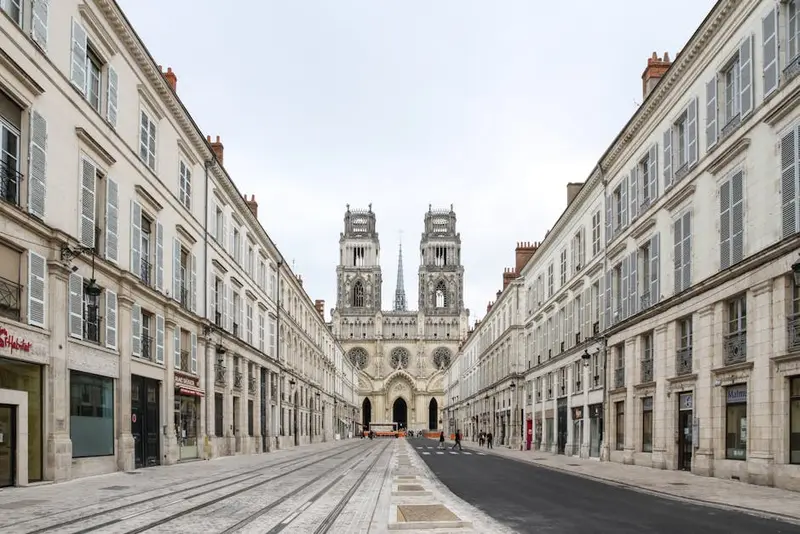
Orléans is located at the northernmost point of the Loire bend and is closely associated with Jeanne d'Arc, who ended the city's siege in 1429. The old town features restored half-timbered houses, a Gothic cathedral, and quays along the Loire. The city makes an ideal base for the eastern part of the Loire Valley, which is a UNESCO World Heritage site here.
4 Sights
4 Restaurants
Orléans: A Rich Heritage of Culture and History
Orléans boasts a history dating back to Roman times as Cenabum. Its location on the Loire made it an important trading hub for centuries. Its identity is still shaped today by its liberation during the 1429 siege by Jeanne d'Arc.The city's skyline is dominated by the Cathédrale Sainte-Croix. After Huguenots largely destroyed it in 1568, it was rebuilt in the Gothic style from the 17th to the 19th century. In the old town, numerous half-timbered houses (maisons à colombages) have been restored and brought to light. Each year in late April and early May, Orléans celebrates the Fêtes johanniques in honour of Jeanne d'Arc, with parades and historical reenactments until May 8th, the anniversary of its liberation. Additionally, the city has museums such as the Musée des Beaux-Arts and a centre for contemporary art, the Frac Centre-Val de Loire.
Rich in culture and history. Stunning nature and outdoors and Romantic atmosphere for couples.
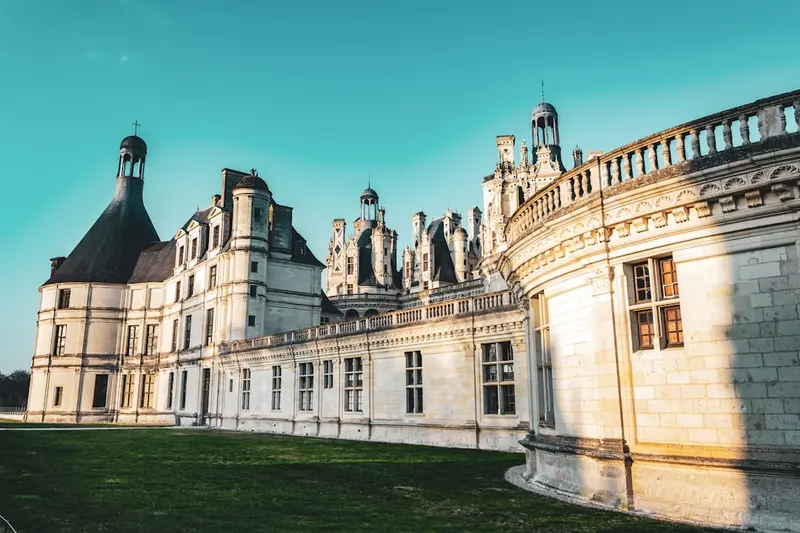
Chambord is the largest castle in the Loire Valley and a masterpiece of the French Renaissance. Francis I had it built as a hunting lodge from 1519. See the double-helix staircase, the rooftop landscape with its towers, and a walled forest park. The castle and estate are UNESCO World Heritage.
8 Sights
5 Restaurants
Chambord: A Monument of the Renaissance
Chambord Castle, begun in 1519 under King Francis I, is a masterpiece of French Renaissance architecture and an expression of royal power. Originally conceived as a hunting lodge, it blends the form of a medieval castle with Italian Renaissance design principles.At the center of the Donjon stands the double-helix staircase, whose design is often attributed to Leonardo da Vinci. Two people can ascend and descend it simultaneously without crossing paths. The roofscape, with its turrets, chimneys, and lanterns, resembles the silhouette of a small town.Chambord was only intermittently inhabited, but served as a setting for hunts, festivals, and receptions, especially under Louis XIV, for whom Molière premiered “Le Bourgeois gentilhomme” here in 1670. The castle showcases the transition from the Middle Ages to the modern era in French architecture.
Perfect for an exciting city trip. Rich in culture and history and Rich in history and historical sites.
Blois is located on the north bank of the Loire and was one of the most important residences of the French kings in the 15th and 16th centuries.The central Château Royal de Blois combines Gothic, Renaissance, and Classicism around one courtyard.The winding old town features half-timbered houses and the Cathédrale Saint-Louis, which was largely rebuilt after a storm at the end of the 17th century.Opposite the castle, the Maison de la Magie Robert-Houdin is dedicated to the history of magic.April, May, or September are ideal for the old town, when fewer visitors are around.
4 Sights
5 Restaurants
Culture, Art & History in Blois
Blois once served as the residence of numerous French kings and queens, becoming a political and artistic hub, especially during the Renaissance.The Château Royal de Blois is the most famous testament to this era: it brings together four periods and architectural styles, from Gothic to Classicism, illustrating the evolution of French royal architecture in one place.Beyond the château, narrow streets, old half-timbered houses, and the Cathédrale Saint-Louis define the cityscape. Blois was the scene of important historical events, including the assassination of Duke Henri de Guise in the château in 1588. Today, the city preserves its heritage as a former royal city with museums and exhibitions.
Perfect for an exciting city trip. Rich in culture and history and Rich in history and historical sites.
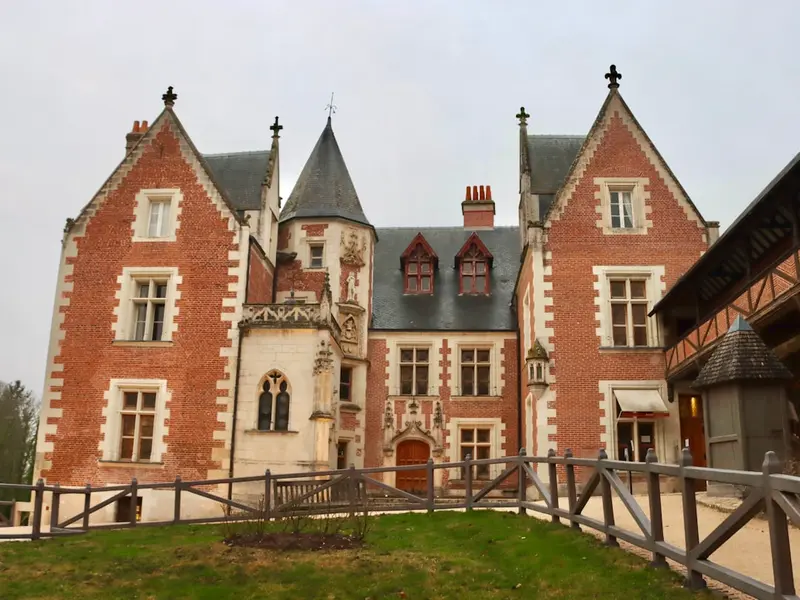
The old royal town of Amboise is situated on the south bank of the Loire, below the Château d'Amboise. It is known as the burial place of Leonardo da Vinci, who spent his final years in the nearby Clos Lucé.
5 Sights
5 Restaurants
Amboise: Regal History and Renaissance Heritage
Amboise is located at an old Loire crossing, its development closely linked to the French Crown. The city was shaped primarily in the late 15th and early 16th centuries, when the court resided here.The Château d'Amboise stands on a rocky spur above the town. Originally a medieval fortress, it was converted and expanded into a royal residence under Charles VIII, Louis XII, and Francis I, combining late Gothic elements with early Renaissance forms.A central part of the city's history is Leonardo da Vinci, who lived at Clos Lucé from 1516 until his death in 1519, at the invitation of Francis I. The house today exhibits his living quarters and models based on his designs; his tomb lies in the Château's Saint-Hubert Chapel.In the surrounding area, cave dwellings and wine cellars carved into the tuff stone, known as troglodyte structures, define the landscape of the slopes.
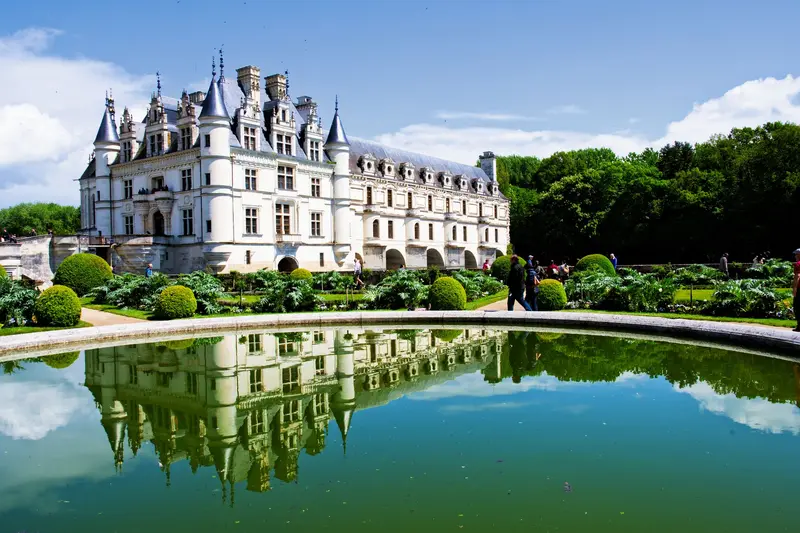
The Château de Chenonceau in the Loire Valley spans the River Cher with its gallery. Its history is closely linked to influential women like Diane de Poitiers and Catherine de' Medici, hence its nickname "Château des Dames". A visit includes the furnished rooms, the gallery over the water, and several gardens.
4 Sights
3 Restaurants
History & Character
The Ladies' ChâteauBuilt, rebuilt, and preserved by women over centuries, Chenonceau earned its nickname Château des Dames. Katherine Briçonnet oversaw the initial construction, Diane de Poitiers had the bridge built, and Catherine de' Medici added the gallery and her own garden. According to tradition, one of France's first fireworks displays was held here in 1560 for the entry of her son, François II. Later, Madame Dupin guided the château through the Revolution without it being plundered.The rivalry of its two most famous residents is still visible in the gardens: Diane's parterre covers around 12,000 square meters, while Catherine's garden is about 5,500. Both are accessible today, along with a labyrinth, a kitchen garden, and a flower garden.Two Wars in One BuildingDuring World War I, owner Gaston Menier financed a military hospital in the château, where over 2,000 wounded were treated until 1919. The hospital wards were located in the two galleries, and the kitchens were equipped with modern facilities. In World War II, the demarcation line ran along the Cher: The entrance was in the occupied zone, while the south door of the gallery led to the free bank, aiding the Résistance in bringing people to the free zone.
Perfect for an exciting city trip. Rich in culture and history and Culinary highlights.
Tours is a vibrant university city on the Loire and an excellent starting point for exploring the châteaux of the Touraine. Experience the city's history in the Old Town, especially around Place Plumereau with its half-timbered houses and café terraces. The Gothic Saint-Gatien Cathedral is known for its stained-glass windows. The Musée des Beaux-Arts is located right next door in the former Bishop's Palace. In the evenings, the terraces at Place Plumereau fill up. Spring and autumn are ideal for exploring the Old Town without large crowds.
5 Sights
5 Restaurants
Tours: Culture, Art & History
Tours lies between the Loire and Cher, a location that early on made the city an important center. From Roman origins to its time as a royal residence, Tours has preserved a multifaceted heritage.The history of Tours stretches back to Roman times, when the city was founded as Caesarodunum. In the 4th century, Saint Martin was bishop here; his tomb made Tours one of Europe's most important pilgrimage sites, later also a centre of Carolingian scholarship. Under Louis XI, who resided in the nearby Château de Plessis, Tours was in the 15th century effectively the seat of the royal court.Architecturally, this past is reflected: The Cathédrale Saint-Gatien has a Gothic facade and stained-glass windows from several eras. In the Old Town, particularly around the Place Plumereau, you'll find 15th-century half-timbered houses and Renaissance town palaces.The Touraine is traditionally considered the region where the purest French is spoken. Honoré de Balzac was born in Tours, François Rabelais near Chinon. The regional identity includes the cuisine of Touraine with its wines, rillettes, and goat cheese like Sainte-Maure-de-Touraine.
Perfect for an exciting city trip. Rich in culture and history and Culinary highlights.
Chinon lies on the Vienne in western Touraine. The Forteresse Royale de Chinon stands on a rocky spur above the town, famous for the 1429 meeting between Joan of Arc and Dauphin Charles VII. Its old town has narrow streets, half-timbered houses, with Rue Voltaire as the main axis. Chinon is also a wine appellation, known for its Cabernet Franc reds, often tasted in tuffeau cellars. It's quieter in spring and autumn. A stroll along the Vienne offers views of the fortress.
5 Sights
5 Restaurants
Chinon: A Journey Through History and Culture
Chinon on the Vienne boasts a long history, ranging from Gallo-Roman settlement traces to its heyday in the Middle Ages. Its cultural heritage is closely linked to the fortress and the old town.In the 12th century, Chinon was one of the favoured residences of the Plantagenets; Henry II of England died here in 1189. After its reconquest by Philip II Augustus in 1205, the city belonged to the French Crown. Particularly significant was the arrival of Joan of Arc in 1429, who met the Dauphin Charles VII here and persuaded him to resist the English, a turning point in the Hundred Years' War.Architecturally, the fortress dominates, the Forteresse royale de Chinon, which stands on a rocky spur above the town and showcases construction phases from the 10th to the 15th century. The narrow streets of the old town are lined with half-timbered houses and city palaces, complemented by religious buildings such as the Collégiale Saint-Mexme. Culturally, the area is also shaped by the humanist François Rabelais, who was born at the estate La Devinière near Chinon and whose work frequently alludes to his homeland.