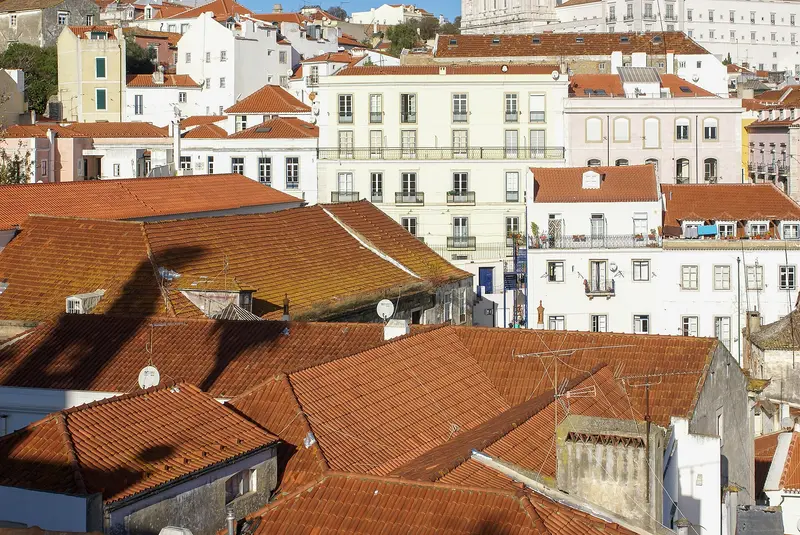
Matti Blume / Wikimedia Commons / CC BY-SA 4.0, mod.
City trip · Portugal
Lisbon in four days
by Felix Gillen
- 5 Days / 4 Nights
Four days, four areas: Baixa, the castle and Alfama, Belém by the river, the hills of Graça and Mouraria, and a day in Sintra. Lisbon sits on seven hills above the Tagus, with the flat Baixa in the middle, Alfama and Graça to the east, Chiado and Bairro Alto to the west and Belém six kilometres downriver. You walk a lot, take the tram, Metro and suburban train like Lisboetas do, and eat where they eat: in tascas, in seafood beer halls and in the dining room of the Alentejo club.
At a glance
- Duration
- 5 Days / 4 Nights
- Stops
- 1
- Arrival
- Flight · Lissabon (LIS)
- Best Time to Go
- March–June and September–November: mild and bright, pleasant evenings at the viewpoints. In June the city celebrates the Santos Populares with grilled sardines in Alfama
More on when to go
July and August are hot and crowded, winter brings more rain but an almost empty Belém and Sintra.
1 stop
Why This Route?
Lisbon is compact enough to understand on foot and layered enough for four days. The route gives each day one part of town so you don't criss-cross, puts busy places like Belém and Sintra in the early morning, and leaves time for viewpoints, fado and long dinners.
Hidden Gems
- The garden of the Museu Calouste Gulbenkian is the quietest place in the city on hot afternoons
- The ferry from Cais do Sodré to Cacilhas crosses the Tagus with commuters and shows you the city from the water
- In June Lisbon celebrates the Santos Populares: grilled sardines and music in every lane of Alfama
Getting there and back
Round trip, returning to where you started
- Arrival
- Flight · Lissabon (LIS)The red Metro line runs from the airport; change at São Sebastião or Alameda and you are in the Baixa in about 30 minutes. At the machine, buy a navegante ocasional card and load Zapping credit or a 24-hour ticket for the Metro, buses and trams.
- Departure
- Flight · Lissabon (LIS)Back to the airport by Metro; allow 40 minutes from the Baixa to the departure area, as security is often busy in the morning.
Day by day
Day 1: Baixa, castle and Alfama
- Casa do AlentejoAfter arriving, lunch in the former Palácio Alverca north of Rossio: migas and petiscos from the Alentejo in the courtyard Taberna, or in the restaurant with its azulejo rooms on the second floor. The door is easy to miss.
- Baixa Pombalina and Praça do ComércioThe district rebuilt on a grid after the 1755 earthquake; walk down from Rossio through the side streets rather than the crowded Rua Augusta to the river.
- Sé de LisboaThe city's oldest church; Roman and Moorish remains are uncovered in the cloister.
- Miradouro de Santa LuziaTerrace with azulejos above the roofs of Alfama, with the Miradouro das Portas do Sol a few metres further on.
- Castelo de São JorgeIn the late afternoon, when the groups have left; ticket online.
- Museu do FadoDown through the lanes of Alfama to Largo do Chafariz de Dentro. A good introduction before the evening.
- Taberna Sal GrossoSmall tavern at the lower edge of Alfama with dishes to share; book for dinner.
- Mesa de FradesFado in a former chapel covered in azulejos: dinner first, singing later. Book ahead.
Day 2: Belém and the river
- Mosteiro dos JerónimosTram 15 from Praça da Figueira or Praça do Comércio, for the 9.30 am opening; closed Mondays. The church is free, the cloister is not.
- Torre de BelémOpen again since May 2026 after restoration, only with a time slot booked in advance; at most 60 visitors get in every half hour.
- O RecantoGrilled fish in a side street, away from the restaurants on the main road.
- MAATBack along the river towards town to the museum of art, architecture and technology; closed on Tuesdays.
- Taberna da Rua das FloresTram 15 to Cais do Sodré, then up into Chiado. Petiscos from old Lisbon recipes on a board that changes daily; bookings are limited and a queue often forms in the evening, so come early.
- A Tasca do ChicoFive minutes up into Bairro Alto: in the evening amateurs and regulars sing fado vadio here, with wine and chouriço. The room is small; arrive late and you listen from the lane.
Day 3: Graça, Mouraria and Intendente
- Miradouro da Senhora do MonteGo up early on tram 28 to Largo da Graça.
- Igreja de Santa Engrácia and Feira da LadraThe National Pantheon with the tomb of Amália Rodrigues; on Tuesdays and Saturdays the Feira da Ladra flea market is held next door.
- MourariaThe district where fado was born, with shops and food stalls run by people from South Asia and Africa around Largo do Intendente.
- Cervejaria RamiroLunch right at the noon opening; closed Mondays, no bookings. Seafood by weight, then a prego to finish.
- Calouste Gulbenkian MuseumBy Metro (green to Alameda, red to São Sebastião). Open again since July 2026 after renovation, closed Tuesdays; the park with its ponds is one of the quietest places in the city.
- Cervejaria TrindadeMetro to Baixa-Chiado. A beer hall in a former monastery with 19th-century azulejos, bacalhau and steak; you usually find a table without booking.
- Bairro AltoIn the evening people drink out in the lanes; keep it down, families live in the houses above. Before that, catch the sunset at the Miradouro de São Pedro de Alcântara.
Day 4: Day trip to Sintra
- SintraSuburban train from Rossio station, about 40 minutes, on Zapping credit. Take one of the first trains and book Pena Palace or Quinta da Regaleira with a time slot; a bus runs between the palaces, and you walk the forest paths.
- Casa PiriquitaTravesseiros and queijadas, Sintra's pastries, on Rua das Padarias; the bakery has been here since 1862.
- Palácio e Jardins de MonserratePark and palace developed by the Englishman Francis Cook from 1856, with gardens full of plants from around the world. Bus 435 from Sintra station.
- A GinjinhaThe train ends at Rossio: on the square next door, a glass of ginjinha standing up.
- Solar dos PresuntosA farewell dinner of Minho cooking, a few minutes from Rossio near Avenida da Liberdade; book ahead.
Itinerary
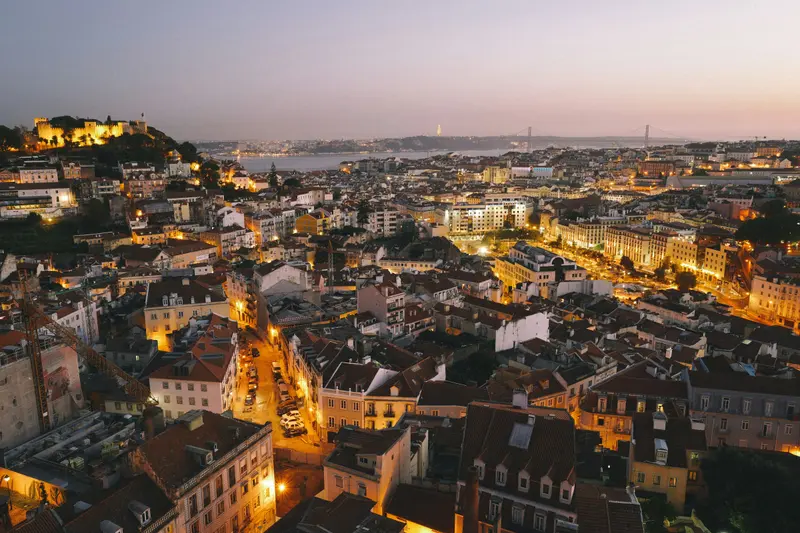
Lisbon
Lisbon is situated on several hills on the north bank of the Tagus Estuary, a good 15 kilometers from the Atlantic. The capital links the winding alleys of Alfama, the Baixa, rebuilt to plan after the 1755 earthquake, and the monuments of the Age of Discoveries in Belém. Viewpoints, yellow trams, and Fado venues are part of the city's everyday life.
Stay in the Baixa, Chiado or Graça, and you reach everything on foot or with one line. Holiday flats have changed the old town a lot; a small hotel or guesthouse run by Portuguese owners keeps the money in the neighbourhood. Lisboetas travel on the monthly navegante pass; you buy a navegante ocasional card at the machine and load Zapping credit for the Metro, trams, buses, ferries and the train to Sintra, or a 24-hour ticket. While fado is sung the whole room falls silent, waiters included.
8 Sights
5 Restaurants
Culture & History
From Olisipo to the EarthquakePhoenicians, Romans, and Moors shaped the city before Afonso Henriques conquered it in 1147. In the 15th and 16th centuries, Lisbon became the centre of a maritime empire; the Manueline style with its ropes, shells, and armillary spheres in stone is visible at the Jerónimos Monastery and Belém Tower. The earthquake of 1 November 1755 destroyed large parts of the city. The Marquês de Pombal subsequently had the Baixa rebuilt in a grid pattern.Fado, Azulejos, and Santos PopularesFado, a UNESCO Intangible Cultural Heritage since 2011, originated in Alfama and Mouraria and is still sung today in small Casas de Fado. Painted tiles adorn churches, train stations, and residential buildings. In June, the city celebrates the Santos Populares, culminating in the night of 13 June in honour of Saint Anthony with grilled sardines in the alleys.
Plan this route as your trip
All stops, trains and nights go into your trip planner. You adjust dates and places to stay afterwards.
This route is a suggestion from our research. Please check timetables, times in port, opening hours and prices before you book – what your tour operator or carrier says is what counts.
Fernweh is a free travel guide and trip planner: routes researched by people, taken over in one click, used day by day on the road. More about Fernweh
1 stop
Route Summary
Duration5 Days
Stops1 Places
TypeCulture