Fernweh: Home
    ExploreTravel GuidesPlan a tripMy tripLast visited
    de|en
    All Places & RegionsAll highlightsAbout FernwehFAQPrivacy PolicyImprint
    ExploreTravel GuidesPlan a tripMy tripLast visited
    Troy
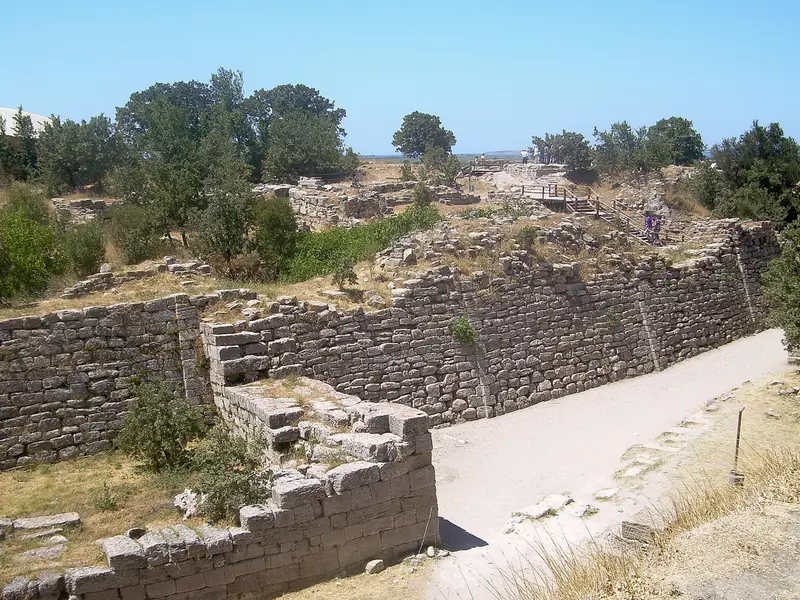
    CherryX / Wikimedia Commons / CC BY-SA 3.0

    Turkey

    Troy

    Point of InterestCultureUNESCO

    Troy is located on Hisarlık Hill, about 30 kilometers southwest of Çanakkale, near the southern entrance of the Dardanelles.

    by Felix Gillen

    1. Home
    2. Destinations
    3. Turkey
    4. Istanbul & Marmara
    5. Troy
    Troy is located on Hisarlık Hill, about 30 kilometers southwest of Çanakkale, near the southern entrance of the Dardanelles. The excavation site reveals settlement layers spanning approximately 4,000 years and has been a UNESCO World Heritage site since 1998. The modern Troy Museum in the village of Tevfikiye complements the visit with its archaeological finds.

    Sights in Troy

    Discover the most important sights and attractions

    Troy Archaeological Site
    Attraction

    1Troy Archaeological Site

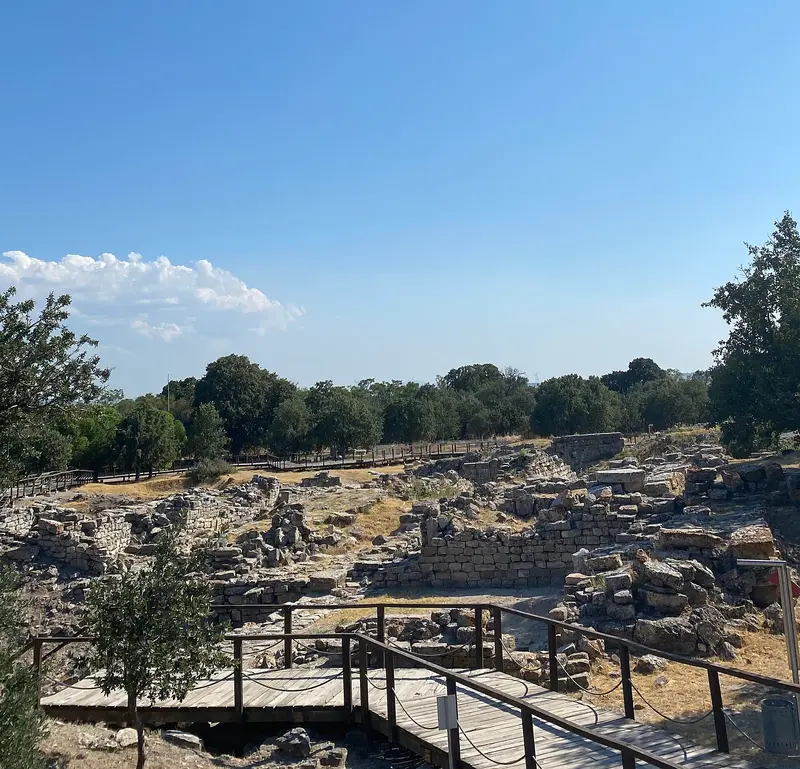
    On Hisarlık Hill, nine settlement layers lie one above the other, dating from approximately 3500 BC to around 500 AD. A circular path leads to walls, gates, and foundations; the walls of Troy VI are visible in cross-section. At the entrance stands a modern replica of the Trojan Horse, which you can climb inside. Since 1998, the site has been a UNESCO World Heritage site.
    Open in Google Maps
    Troy Museum (Troya Müzesi)
    Museum

    2Troy Museum (Troya Müzesi)

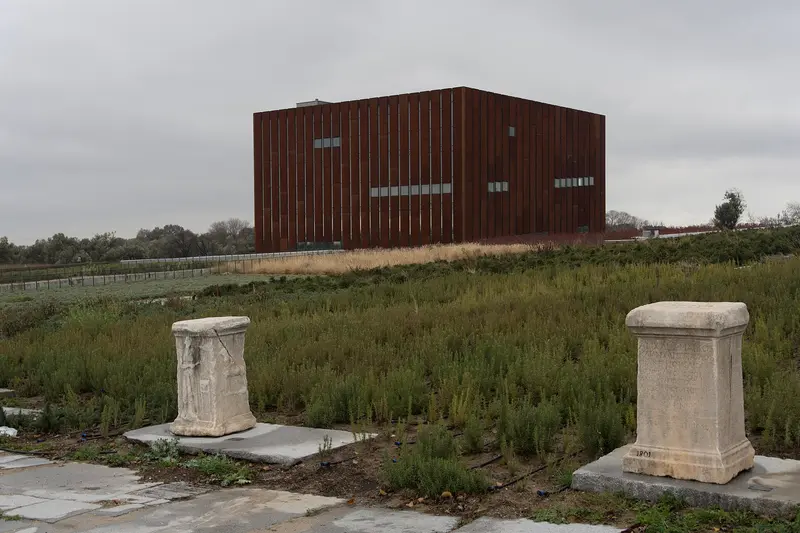
    The museum opened in October 2018, some 800m east of the excavation. The cube-shaped building with a rust-colored steel shell by Yalın Mimarlık is as tall as the excavation is deep. Among over 40,000 objects, some 2,000 are on display, including the Polyxena Sarcophagus. The museum received the European Museum of the Year Award's Special Prize in 2020.
    Open in Google Maps

    Restaurants in Troy

    Eating & Drinking

    Around Troy, you'll eat country-style. The Çanakkale region's cuisine features cheese from Ezine and fish from the Dardanelles.

    Ezine Peyniri

    White cheese from cow's, sheep's, and goat's milk from the region, with EU PDO.

    Village brunch

    At the eateries in Tevfikiye, breakfast with eggs and sausage from their own farm is served.

    Peynir Helvası

    Warm dessert made from unsalted white cheese, flour, and sugar, typical of the Çanakkale region.

    Culture & History

    Nine Cities Built on Top of Each OtherArchaeologists have identified nine main layers, Troy I to IX, plus an older layer, Troy 0. The settlement spans from roughly 3500 BC to around 500 AD. The walls of Troy VI are clearly visible in the cross-section.The ExcavatorsFrank Calvert began excavating in 1863, Heinrich Schliemann in 1870/71, later followed by Wilhelm Dörpfeld and Carl Blegen. From 1988 to 2005, Manfred Korfmann led the excavations. Today, a team from Çanakkale University is excavating under Rüstem Aslan.World Heritage Site and National ParkThe site has been on the UNESCO World Heritage List since 1998 and is part of the Historical National Park of Troy. Since 2018, the Troy Museum in the village of Tevfikiye has displayed the finds.

    Getting There & Around

    Getting ThereDolmuş: Minibuses travel from Çanakkale to Tevfiviye and Troy, but not very frequently. Arrange your return trip upon arrival.Car or Taxi: It's about 30 kilometers from Çanakkale.Tour: Many operators in Çanakkale offer day trips.On SiteA circular path leads through walls, gates, and foundations. The Troy Museum is located about 800 meters east of the excavation site.TipAllow three to four hours for the excavation site and about two hours for the museum. Many remains are underground, so visiting the museum beforehand will aid understanding.

    Accommodations in Troy

    Find perfect stay in Troy

    Booking.com* (Affiliate link)
    Search Hotels
    Agoda* (Affiliate link)
    Search Hotels
    Airbnb
    Vacation Rentals

    * Affiliate link: if you book through it, we earn a small commission. The price stays the same for you.

    Campgrounds in Troy

    Find perfect campground in Troy

    Search via Google Maps
    Campgrounds nearby (15km)
    Camping.info
    Find Campgrounds
    Park4Night
    RV Parks & Camping

    Nearby

    Çanakkale

    Çanakkale

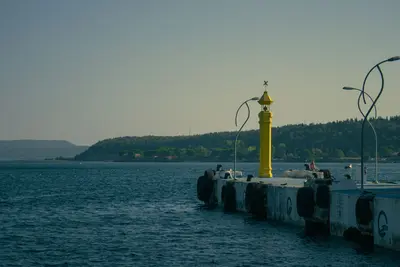
    Çanakkale lies at the narrowest point of the Dardanelles, on the Asian side of the strait connecting the Marmara and Aegean Seas. This lively student city is the starting point for the battlefields of Gallipoli and the excavations of Troy. Life unfolds on the Kordon, the waterfront promenade with the Trojan Horse, and in the alleys around the Clock Tower. Opposite, on the European side, are Kilitbahir and Eceabat, connected by short ferry rides.
    Molyvos (Mithymna)

    Molyvos (Mithymna)

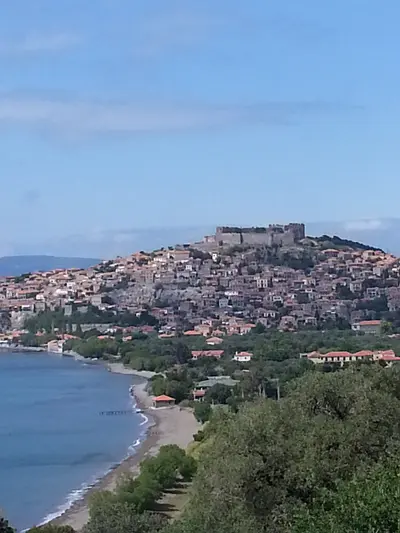
    Molyvos, officially Mithymna, is the best-known town on the north coast of Lesbos. Stone houses with red tiled roofs stretch from a small fishing harbour up to a medieval castle, from which the view extends across the strait to the Turkish coast.You come for the castle, the harbour tavernas, and the combination with Petra, Eftalou, and the beaches of the north coast. The town is ideal as a base for exploring the north of the island.
    Lesbos (Lesvos)

    Lesbos (Lesvos)

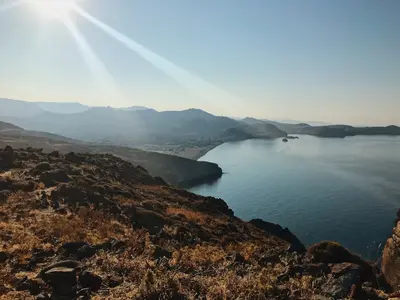
    Lesbos, at approximately 1,630 square kilometers, is Greece's third-largest island and still thrives on olive oil, ouzo, and sheep's cheese. Between Mytilini in the east and the Petrified Forest in the west lie extensive olive groves, two large bays, and a landscape that becomes increasingly barren and volcanic towards the west.You'll come for the ouzeries of Mytilini and Plomari, the mountain villages around Olymbos, the birdwatching at the Gulf of Kalloni, and the UNESCO Geopark in the west. For the entire island, you'll need at least a week.
    North Aegean Islands

    North Aegean Islands

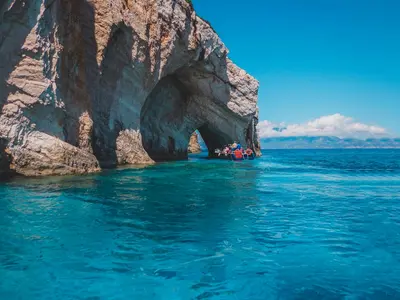
    The North Aegean Islands lie close to the Turkish coast and are among Greece's least crowded island groups. Lesbos, Chios, Samos, Ikaria, and Limnos are large enough for their own mountain ranges, wine regions, and port towns that remain inhabited even in winter. You travel here for mastic, ouzo, hot springs, and empty pebble coves, not for a postcard backdrop.
    Limnos (Lemnos)

    Limnos (Lemnos)

    Limnos is located in the northern Aegean, roughly halfway between Mount Athos and the Turkish coast. The island is volcanic, but only hilly: instead of high mountains, grain fields, vineyards, salt lakes, and dunes define the scenery.You come for the quiet sandy beaches, the wind for surfing, and the Early Bronze Age settlement of Poliochni, one of Europe's oldest urban sites. Plus, there's Myrina with its castle, Muscat wine, and Kalathaki cheese.

    Sources & method

    • Photos: Wikimedia Commons. Each photo carries its credit.
    • Place data such as addresses and ratings comes from Google Maps.
    • The content is based on web research from public, traceable sources. How the content is made · The role of AI