Fernweh: Home
    ExploreTravel GuidesPlan a tripMy tripLast visited
    de|en
    All Places & RegionsAll highlightsAbout FernwehFAQPrivacy PolicyImprint
    ExploreTravel GuidesPlan a tripMy tripLast visited
    • Neighborhoods & highlights
    • Eat & drink
    • Culture
    • Getting around
    • Accommodation
    • Plan trip
    • Nearby
    Katong and Joo Chiat
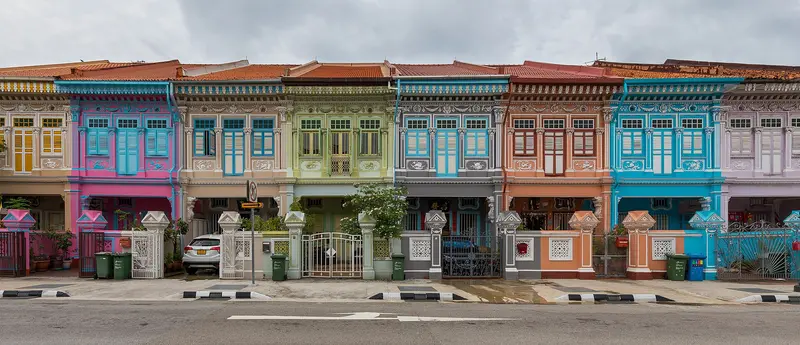
    Firzafp / Wikimedia Commons / CC BY 4.0

    Singapore

    Katong and Joo Chiat

    City

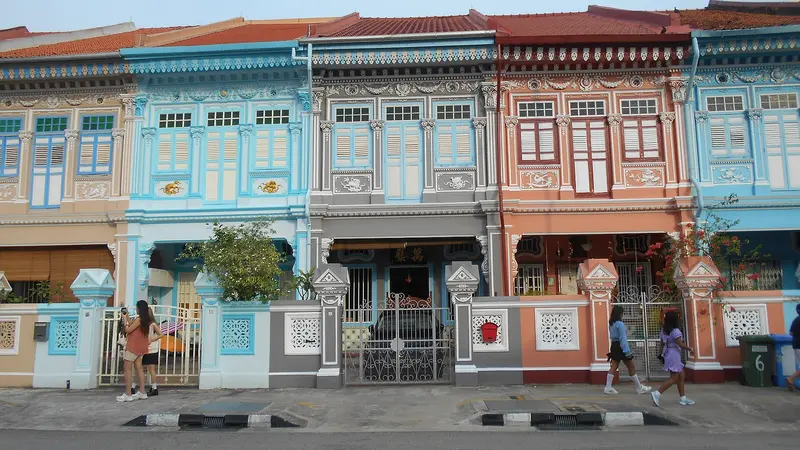
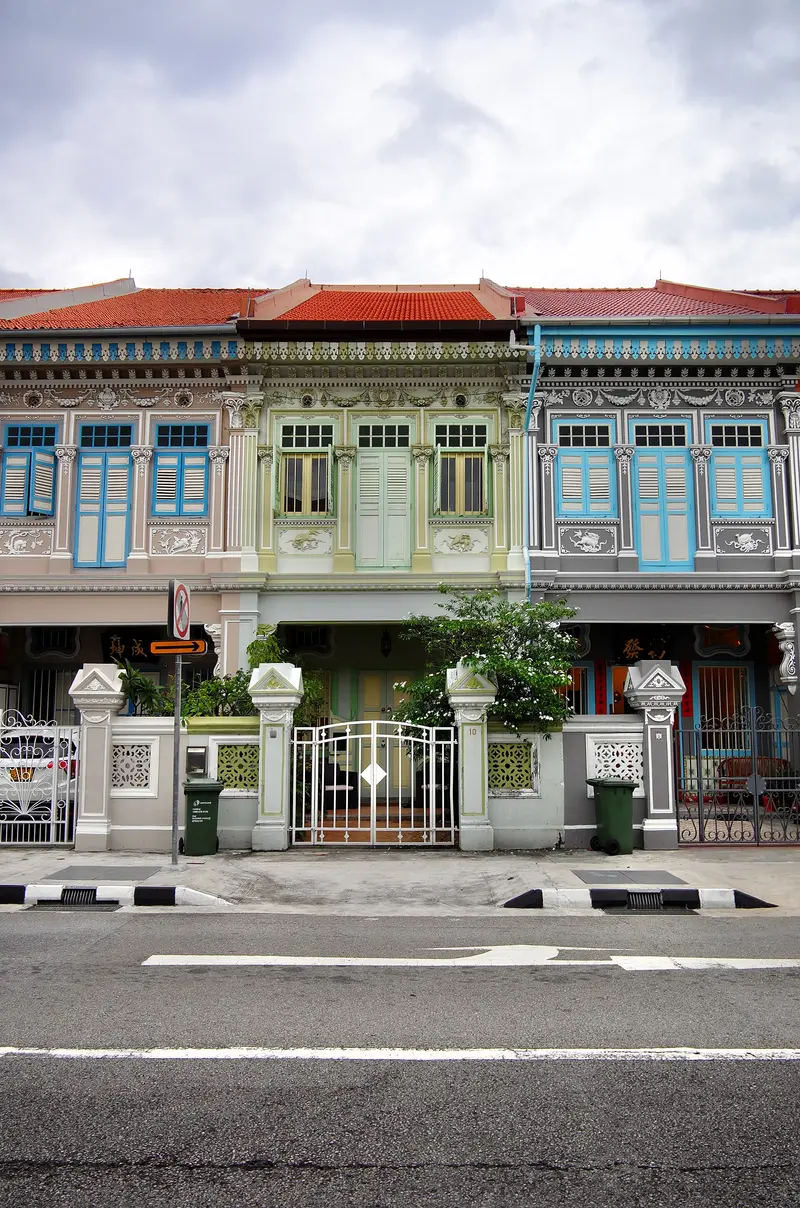
    Katong and Joo Chiat form Singapore's eastern Peranakan district, a residential area of vibrantly decorated shophouses, old coffee houses, and small family businesses.

    by Felix Gillen

    1. Home
    2. Destinations
    3. Singapore
    4. Singapore
    5. Katong and Joo Chiat
    Katong and Joo Chiat form Singapore's eastern Peranakan district, a residential area of vibrantly decorated shophouses, old coffee houses, and small family businesses. You come here to see the shophouses along Koon Seng Road and eat Peranakan cuisine like Katong Laksa and Nyonya rice dumplings right where it originated.Until the 19th century, this area housed coconut and cotton plantations. Entrepreneur Chew Joo Chiat, dubbed the 'King of Katong,' acquired vast tracts of land, gifted the city the street now bearing his name in 1917, and sold plots to developers. In the early 20th century, wealthy Peranakan families settled, constructing the district's characteristic houses. In 2011, Joo Chiat was designated Singapore's first 'Heritage Town'. Since 2024, you can easily reach the district via the Thomson-East Coast Line.

    Sights in Katong and Joo Chiat

    Discover the most important sights and attractions

    Joo Chiat Road

    1Joo Chiat Road

    The district's main street was formerly called Confederate Estate Road and was named after Chew Joo Chiat, who donated it to the city in 1917. It passes by shophouses with bakeries, kueh shops, and cafes from Geylang Serai to Marine Parade MRT Station.
    Open in Google Maps
    Koon Seng Road
    Attraction

    2Koon Seng Road

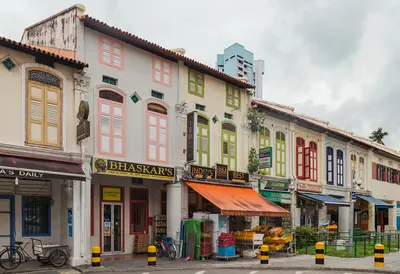
    According to the URA, the vibrantly painted terraced houses on Koon Seng Road are considered some of the finest examples of the Straits Eclectic style in the district, featuring Chinese, Malay, and European decorative elements. The street was named in 1934 after auctioneer Cheong Koon Seng, and since 1993, Joo Chiat has been a conservation area.
    Open in Google Maps
    Sri Senpaga Vinayagar Temple
    Temple

    3Sri Senpaga Vinayagar Temple

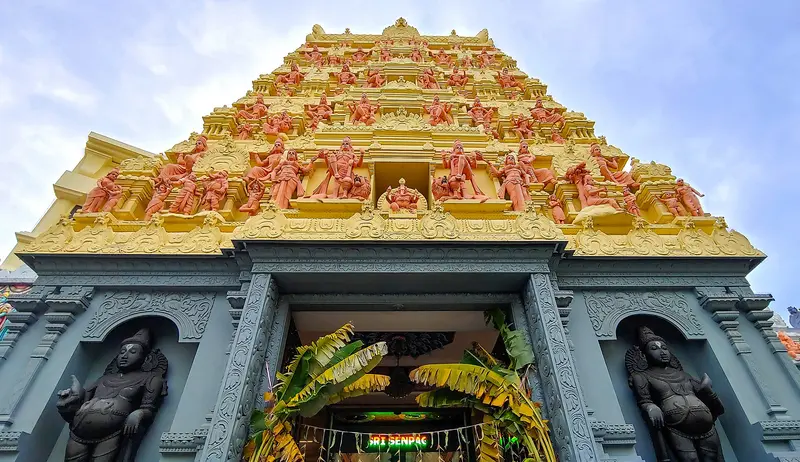
    The Hindu temple on Ceylon Road, dedicated to the god Ganesha, dates back to the 1850s, when Ceylonese Tamils found a statue by a pond under a Chempaka tree. The current structure, in Dravidian style, features a 21-meter-high gate tower (Raja Gopuram); since 2003, the temple has been designated as a Historic Site.
    Open in Google Maps
    Geylang Serai Market
    Market

    4Geylang Serai Market

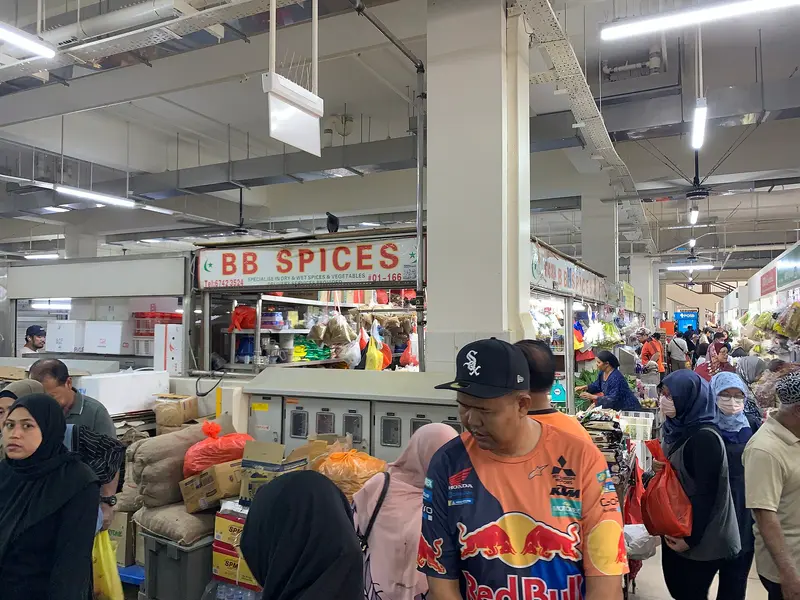
    Prime Minister Lee Kuan Yew opened the market in 1964; it was rebuilt in the late 2000s. Its façade and tiered roof are modeled after a Malay Kampung house. Besides the wet market, there's a food centre with Malay stalls such as Sinar Pagi Nasi Padang.
    Open in Google Maps

    Restaurants in Katong and Joo Chiat

    1

    328 Katong Laksa

    The laksa eatery opened in 1998 at 49 East Coast Road and moved soon after to No. 51 because of lease problems. It serves Katong Laksa with short-cut noodles, cockles and prawns, a laksa you eat with a spoon only.
    Show on Google Maps
    2

    Chin Mee Chin Confectionery

    The coffee house at 204 East Coast Road, founded in 1925, celebrated its centenary in 2025 and is known for Kaya Toast with soft-boiled eggs. It now also offers savory dishes such as Hainanese Pork Chop and Curry Chicken, and is generally open from 8 AM to 4 PM.
    Show on Google Maps
    3

    Kim Choo Kueh Chang

    Lee Kim Choo started in 1945 with a stall under a banyan tree at the corner of Joo Chiat Place and Everitt Road; in the 1970s, she moved into a shophouse at 60 Joo Chiat Place. Handcrafted Nyonya rice dumplings (Kueh Chang) and Kueh for takeaway are still sold there today.
    Show on Google Maps
    4

    Chilli Padi Nonya Restaurant

    The Peranakan restaurant Chilli Padi at 11 Joo Chiat Place serves classics such as Ayam Buah Keluak, Nonya Chap Chye, Curry Assam Fish Head and claypot Buah Keluak Fried Rice. As of September 19, 2026, a Peranakan High Tea is available on Saturdays and Sundays from 2 PM to 5 PM, featuring 14 Kueh and savoury bites.
    Show on Google Maps

    Peranakan Heritage Amidst Laksa and Temples

    Straits Chinese HousesThe Peranakan, descendants of Chinese immigrants who absorbed Malay influences in language, dress, and cuisine, shaped Katong from the early 20th century. Their terraced houses blend Chinese, Malay, and European elements; the URA calls the houses on Koon Seng Road some of the finest examples of the Straits Eclectic style in the district. Peranakan families lived there until the 1970s. Parts of the area have been under conservation since July 1993.Laksa, Kueh, and KopitiamKatong Laksa, a spicy coconut milk noodle soup with dried prawns, cockles, and fishcake, is served with short-cut noodles and eaten only with a spoon. In the 1940s, brothers Ng Juat Swee and Ng Chwee Seng sold it on the streets, making it famous; today, several laksa eateries are located side by side along East Coast Road. Traditional establishments like Kim Choo Kueh Chang (since 1945) and Chin Mee Chin (around 100 years old) showcase their history in small exhibitions that are part of the heritage authority's Street Corner Heritage Galleries program.Diverse CommunitiesThe district isn't solely Peranakan: the Sri Senpaga Vinayagar Temple traces its origins to Ceylonese Tamils, and at the northern end of Joo Chiat lies Geylang Serai, the heart of the Malay community in the east of the city.

    Getting There and Around

    Katong and Joo Chiat are residential districts with wide sidewalks; it's best to explore on foot between Koon Seng Road, Joo Chiat Road, and East Coast Road.MRT Marine Parade: Thomson-East Coast Line (since June 23, 2024). Joo Chiat Road ends right next to the station; Chin Mee Chin on East Coast Road is about an eight-minute walk.Other TEL stations: Tanjong Katong, Katong Park, and Marine Terrace opened on the same day, providing access to the west and east of the area.MRT Paya Lebar: Interchange station for the East-West Line and Circle Line at the northern end, convenient for Geylang Serai.Tip: A loop from Geylang Serai via Joo Chiat Road and Koon Seng Road to East Coast Road links the main sights.

    Accommodations in Katong and Joo Chiat

    Find perfect stay in Katong and Joo Chiat

    Booking.com* (Affiliate link)
    Search Hotels
    Agoda* (Affiliate link)
    Search Hotels
    Airbnb
    Vacation Rentals

    * Affiliate link: if you book through it, we earn a small commission. The price stays the same for you.

    Plan your trip to Katong and Joo Chiat

    Save places, build a route and plan your city trip, all in one place.

    1. 1
      Sunrise over alpine peaks and a sea of clouds
      1234

      Round trip

      12 days · 4 stops

      Saved

      Pick a route

      Pick a ready-made one or save places and plan your own.

      Open bookmarks
    2. 2

      Trip to Katong and Joo Chiat

      Live
      • 1Joo Chiat Road3 days
      • 2Koon Seng Road4 days
      • 3Sri Senpaga Vinayagar Temple5 days
      Budget

      Plan your trip

      The planner sorts stops, days and budget. Plan together in real time.

      Start trip planning
    3. 3
      9:41 No signal
      Katong and Joo Chiat
      Available offline

      Use it on the road

      Download the guide to your phone and use it on site, even offline.

    Nearby

    Kampong Glam

    Kampong Glam

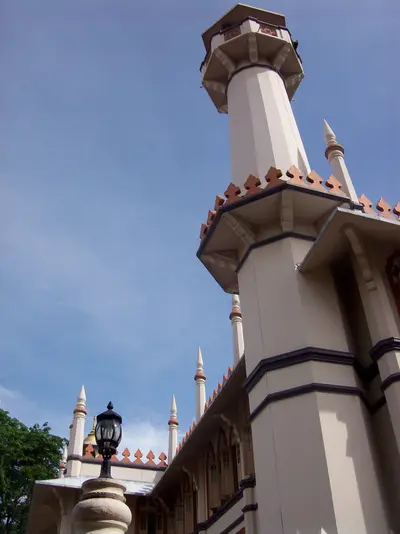
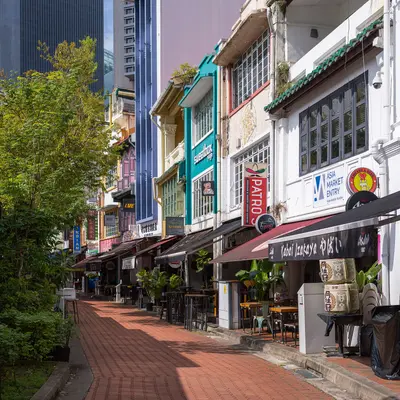
    Kampong Glam is Singapore's historic Malay-Muslim quarter, located north of the Singapore River. You come here for the Sultan Mosque, the fabric shops on Arab Street, the murals in Haji Lane, and the murtabak eateries along North Bridge Road. Following the 1819 treaty between the East India Company, Sultan Hussein Shah of Johor, and Temenggong Abdul Rahman, the Sultan settled here with his entourage. The 1822 town plan allocated the area to the Sultan's court and to Malay, Arab, and Bugis traders; street names like Arab Street, Bussorah Street, and Muscat Street serve as a reminder of this.The golden domes of the Sultan Mosque are the focal point, surrounded by restored shophouses housing cafés and boutiques. The Malay Heritage Centre in the former Sultan's palace reopened in April 2026. Kampong Glam is a few minutes' walk from Bugis MRT station.
    Little India

    Little India

    Little India along Serangoon Road is Singapore's historic Indian quarter. You come for the Hindu temples, the biryani eateries, the Tekka Centre, and the 24-hour Mustafa Centre. It began as a cattle trading district: Indian immigrants, many of them cattle farmers, settled here, and in 1915, the Kandang Kerbau Market, named after the cattle trade, was established. The area was only named Little India in the 1980s at the initiative of the Singapore Tourism Board; in 1989, it was heritage listed. Many Singaporeans still call it Tekka today.Between the temples, eat at the Tekka Centre or Bismillah Biryani on Dunlop Street; afterwards, the Indian Heritage Centre is worth a visit. During Deepavali and Thaipusam, the district becomes a festival ground. The Little India MRT station is located on the North East Line and the Downtown Line.
    Marina Bay

    Marina Bay

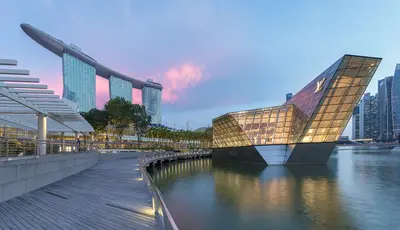
    Marina Bay is Singapore's iconic skyline district: The Marina Bay Sands hotel, the ArtScience Museum, the Supertrees of Gardens by the Bay, and the towers of the financial district frame the bay here. You'll come for the gardens, the view from the SkyPark, and in the evening for the light shows on the water. The approximately 360-hectare area was reclaimed from the sea starting in 1971; the last 38 hectares at Bayfront were added in 1994. Since the construction of the Marina Barrage in 2008, the bay has been a freshwater reservoir.The best way to explore here is to walk along the waterfront promenade around the bay, from the Merlion across the Helix Bridge to the gardens. Five MRT lines serve the district; the most important stations are Bayfront, Marina Bay, Gardens by the Bay, and Esplanade.
    Civic District

    Civic District

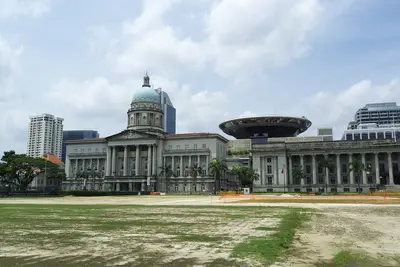
    The Civic District on the north bank of the Singapore River is Singapore's government and museum quarter. You come for the National Gallery, the Asian Civilisations Museum, and the colonial buildings around the Padang, including St Andrew's Cathedral and the Raffles Hotel. The city's history began here: a port settlement existed by the river as early as the 13th and 14th centuries, and in 1819, the British settled at the same spot. The Padang, a sports field fronting the colony's former administrative buildings, was declared the 75th National Monument in 2022.The National Gallery occupies the former Supreme Court and City Hall, while the Asian Civilisations Museum is situated directly by the river. Fort Canning Park, located on the former King's Hill, is green and shady. Key MRT stations are City Hall (North-South and East-West Line), plus Esplanade on the Circle Line.
    Singapore River

    Singapore River

    The Singapore River is the city's historic lifeline. Along its banks today, the three quays, Boat Quay, Clarke Quay and Robertson Quay, brim with restaurants, bars, and clubs. You come here to stroll along the promenades and historic bridges, take a bumboat ride, and dine and drink by the water in the evening.In the 19th century, the river served as Singapore's port: in the 1860s, Boat Quay handled three-quarters of all ship trade, with lighters transporting goods to warehouses upstream. After a ten-year cleanup from 1977 to 1987, trade and pollution disappeared. The warehouses and shophouses were placed under conservation and repurposed starting in 1989. Three colonial-era bridges have been national monuments since 2019.

    Sources & method

    • Photos: Wikimedia Commons, Google Maps. Each photo carries its credit.
    • Place data such as addresses and ratings comes from Google Maps.
    • The content is based on web research from public, traceable sources. How the content is made · The role of AI