Fernweh: Home
    ExploreTravel GuidesPlan a tripMy tripLast visited
    de|en
    All Places & RegionsAll highlightsAbout FernwehFAQPrivacy PolicyImprint
    ExploreTravel GuidesPlan a tripMy tripLast visited
    • Neighborhoods & highlights
    • Walking tours
    • Eat & drink
    • Culture
    • Getting around
    • Accommodation
    • Plan trip
    • Nearby
    Kampong Glam
    Philip Nalangan / Wikimedia Commons / CC BY 4.0

    Singapore

    Kampong Glam

    City

    Kampong Glam is Singapore's historic Malay-Muslim quarter, located north of the Singapore River.

    by Felix Gillen

    1. Home
    2. Destinations
    3. Singapore
    4. Singapore
    5. Kampong Glam
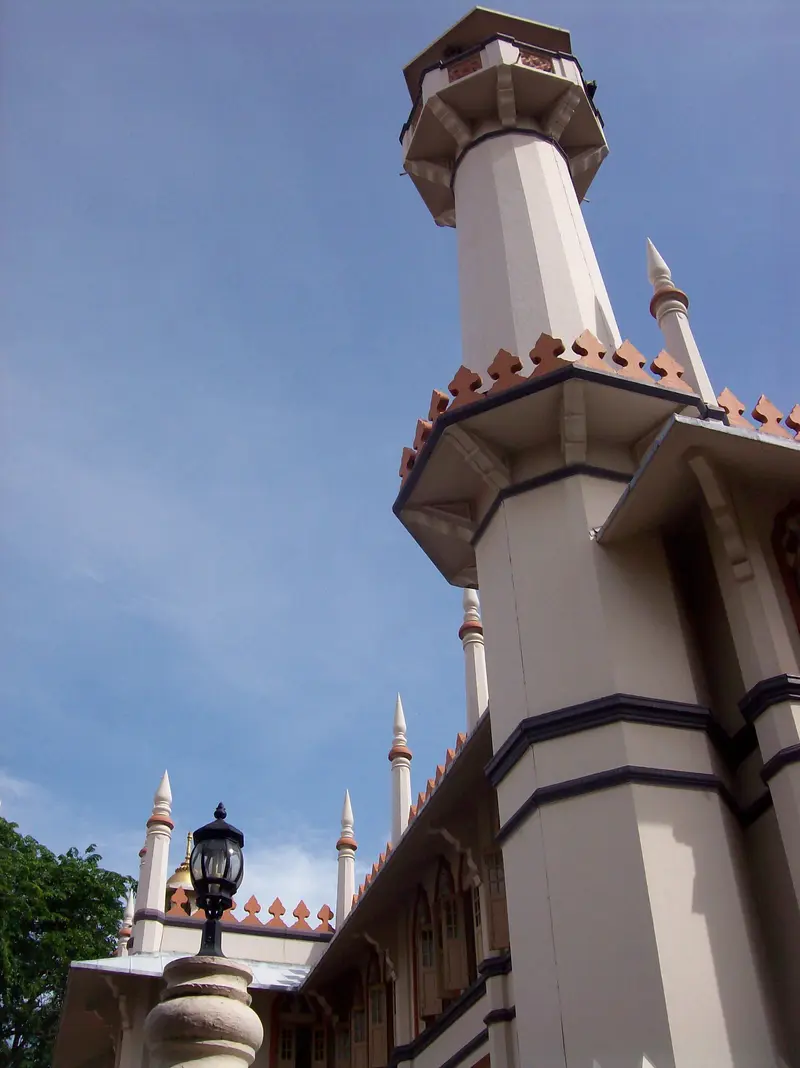
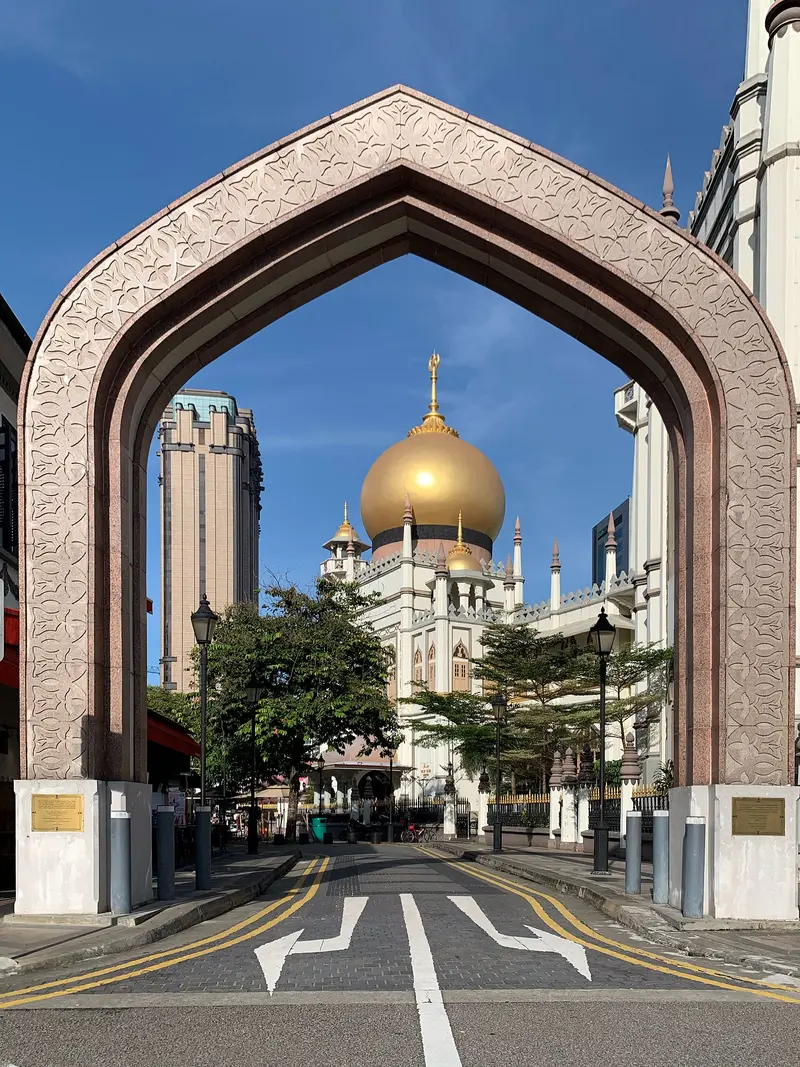
    Kampong Glam is Singapore's historic Malay-Muslim quarter, located north of the Singapore River. You come here for the Sultan Mosque, the fabric shops on Arab Street, the murals in Haji Lane, and the murtabak eateries along North Bridge Road. Following the 1819 treaty between the East India Company, Sultan Hussein Shah of Johor, and Temenggong Abdul Rahman, the Sultan settled here with his entourage. The 1822 town plan allocated the area to the Sultan's court and to Malay, Arab, and Bugis traders; street names like Arab Street, Bussorah Street, and Muscat Street serve as a reminder of this.The golden domes of the Sultan Mosque are the focal point, surrounded by restored shophouses housing cafés and boutiques. The Malay Heritage Centre in the former Sultan's palace reopened in April 2026. Kampong Glam is a few minutes' walk from Bugis MRT station.

    Sights in Kampong Glam

    Discover the most important sights and attractions

    Sultan Mosque (Masjid Sultan)
    Mosque

    1Sultan Mosque (Masjid Sultan)

    The first mosque on this site was completed in 1826; the current structure, designed by Denis Santry (Swan & Maclaren), followed in 1932. The bases of its two onion domes are decorated with the bottoms of glass bottles donated by local residents at the time; since 1975, the mosque has been a National Monument.
    Open in Google Maps
    Malay Heritage Centre
    Museum

    2Malay Heritage Centre

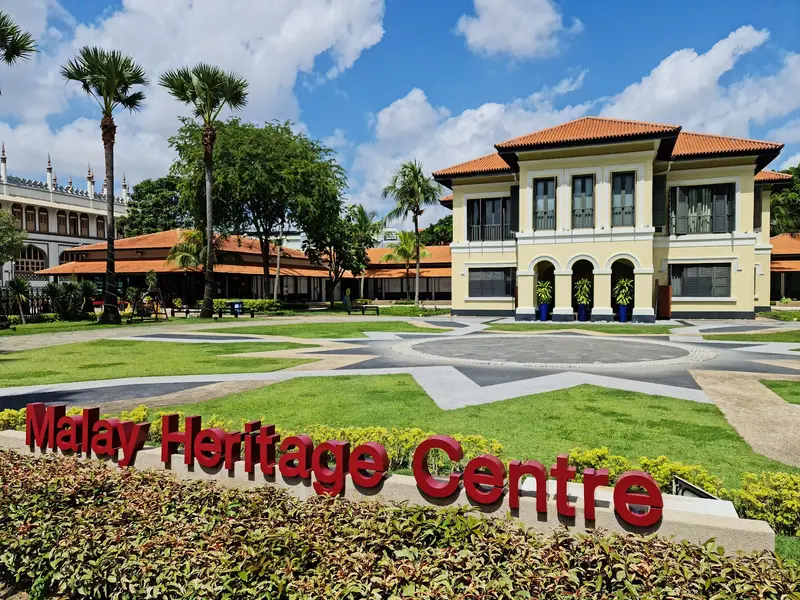
    The museum in the former Sultan's Palace Istana Kampong Gelam was closed from October 2022 and reopened on April 25, 2026, with six redesigned permanent exhibitions. It is open Tuesday to Sunday from 10 AM to 6 PM, with an admission fee for foreign visitors.
    Open in Google Maps
    Haji Lane
    Attraction

    3Haji Lane

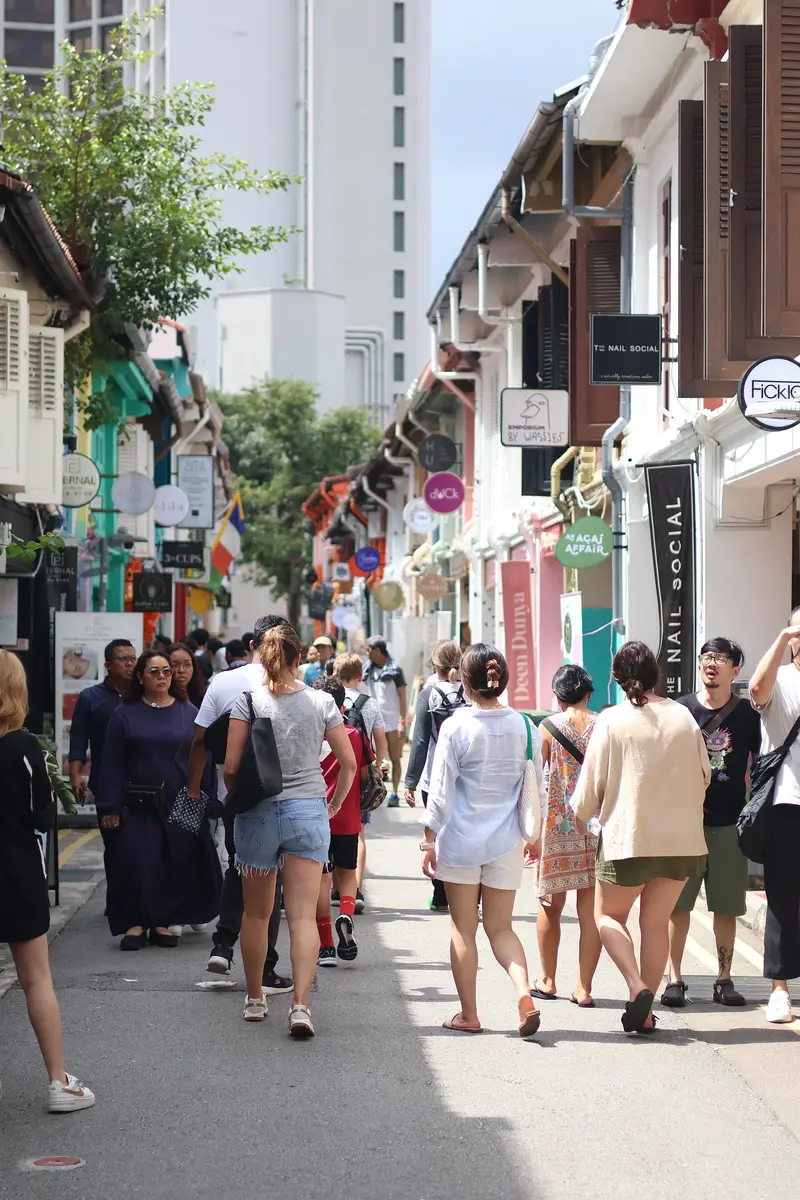
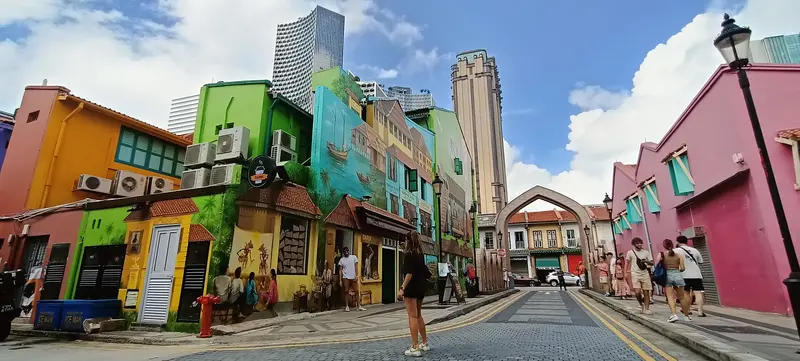
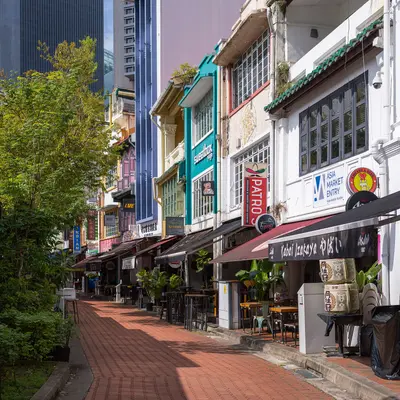
    The narrow alley with pre-war shophouses is named after the Mecca pilgrims who used to find lodging here. Since the mid-2000s, independent boutiques, cafés, and bars have settled in, and the facades feature large-format murals.
    Open in Google Maps
    Bussorah Street
    Attraction

    4Bussorah Street

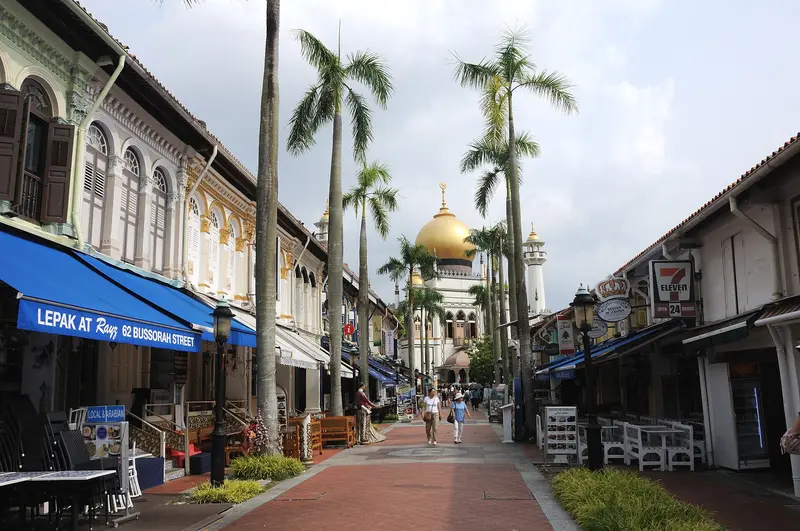
    The pedestrian street with restored shophouses leads directly to the facade of the Sultan Mosque. The shops offer religious items, souvenirs, and small cafés.
    Open in Google Maps
    Arab Street

    5Arab Street

    The street was Singapore's textile trade center in the 1970s and 1980s and still boasts many shops selling silk, batik, and carpets today. Osman Silk House at number 104 was founded in 1935 and is considered one of the oldest textile shops on the street.
    Open in Google Maps

    City walks in Kampong Glam

    Curated walking tours through the city's highlights, handpicked by experienced travel journalists.

    Pilgrim Quarter to Sultan's Palace

    Start is Bugis MRT Station, from there it's a short walk to Haji Lane; the destination is the Malay Heritage Centre at Sultan Gate. The route is about 1 km long, actual walking time around 15 minutes; with mosque, museum, and food, you should allow a good 3 hours.

    Open in Google Maps
    Stops (6)

    Restaurants in Kampong Glam

    1

    Singapore Zam Zam

    This Indian-Muslim eatery at 697 North Bridge Road, opposite the Sultan Mosque, has been in business since 1908. It is known for Murtabak, a filled flatbread with mutton, onions, and egg, served with curry sauce.
    Show on Google Maps
    2

    Victory Restaurant

    The neighbor and long-standing competitor of Zam Zam at 701 North Bridge Road was founded in 1910. Its specialties include Murtabak with mutton, chicken, or beef, as well as Biryani.
    Show on Google Maps
    3

    Hjh Maimunah

    The Nasi Padang restaurant at Jalan Pisang 11 serves Malay and Indonesian dishes such as Beef Rendang, Sambal Telur, and Sayur Lodeh from the buffet. It has been awarded the Michelin Bib Gourmand multiple times and is open Monday to Saturday.
    Show on Google Maps

    Sultan's Court, Traders & Pilgrims

    From Sultan's Palace to MuseumSultan Ali Iskandar Shah, son of Sultan Hussein, commissioned the construction of the Istana Kampong Gelam palace; its building history is currently being re-examined, as evidence emerged in 2026 suggesting completion around 1890. After an inheritance dispute in 1896, the estate became state property. Since 2005, it has housed the Malay Heritage Centre, which, following a redesign from October 2022 to April 2026, now presents six new permanent exhibitions under the title "Dari Rantau Ke Rumah". In the adjacent Gedung Kuning, the "Yellow House", Malay cuisine is served today.Fabrics, Pilgrims, and MurtabakIn the 1970s and 1980s, Arab Street was the hub of textile trade; shops like Osman Silk House (established 1935) still sell silk and batik today. Haji Lane is named after the Mecca pilgrims who once found accommodation here. Indian-Muslim family businesses like Zam Zam (1908) and Victory (1910) have shaped the culinary scene on North Bridge Road for over a hundred years. For mosque visits: shoulders and knees must be covered, and women must also cover their hair; cloaks are available at the entrance.

    Getting There and Around

    Kampong Glam is compact and best explored on foot. Lanes around Bussorah Street and Haji Lane are partly pedestrian.MRT Bugis: Interchange for the East-West Line (green) and Downtown Line (blue); about an 8-minute walk to the Sultan Mosque.MRT Lavender: East-West Line, access to the district's eastern edge.MRT Rochor: Downtown Line, convenient for the district's north.Malay Heritage Centre: 85 Sultan Gate, Tuesday to Sunday 10am–6pm; Singaporeans & residents free, tourists have paid admission since late June 2026 (adults S$10).Sultan Mosque: Non-Muslim visits usually Saturday to Thursday mornings and afternoons, Fridays only afternoons (check visitor guides); restricted during prayer.

    Accommodations in Kampong Glam

    Find perfect stay in Kampong Glam

    Booking.com* (Affiliate link)
    Search Hotels
    Agoda* (Affiliate link)
    Search Hotels
    Airbnb
    Vacation Rentals

    * Affiliate link: if you book through it, we earn a small commission. The price stays the same for you.

    Plan your trip to Kampong Glam

    Save places, build a route and plan your city trip, all in one place.

    1. 1
      Sunrise over alpine peaks and a sea of clouds
      1234

      Round trip

      12 days · 4 stops

      Saved

      Pick a route

      Pick a ready-made one or save places and plan your own.

      Open bookmarks
    2. 2

      Trip to Kampong Glam

      Live
      • 1Sultan Mosque (Masjid Sultan)3 days
      • 2Malay Heritage Centre4 days
      • 3Haji Lane5 days
      Budget

      Plan your trip

      The planner sorts stops, days and budget. Plan together in real time.

      Start trip planning
    3. 3
      9:41 No signal
      Kampong Glam
      Available offline

      Use it on the road

      Download the guide to your phone and use it on site, even offline.

    Nearby

    Little India

    Little India

    Little India along Serangoon Road is Singapore's historic Indian quarter. You come for the Hindu temples, the biryani eateries, the Tekka Centre, and the 24-hour Mustafa Centre. It began as a cattle trading district: Indian immigrants, many of them cattle farmers, settled here, and in 1915, the Kandang Kerbau Market, named after the cattle trade, was established. The area was only named Little India in the 1980s at the initiative of the Singapore Tourism Board; in 1989, it was heritage listed. Many Singaporeans still call it Tekka today.Between the temples, eat at the Tekka Centre or Bismillah Biryani on Dunlop Street; afterwards, the Indian Heritage Centre is worth a visit. During Deepavali and Thaipusam, the district becomes a festival ground. The Little India MRT station is located on the North East Line and the Downtown Line.
    Civic District

    Civic District

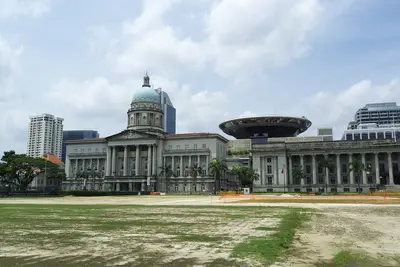
    The Civic District on the north bank of the Singapore River is Singapore's government and museum quarter. You come for the National Gallery, the Asian Civilisations Museum, and the colonial buildings around the Padang, including St Andrew's Cathedral and the Raffles Hotel. The city's history began here: a port settlement existed by the river as early as the 13th and 14th centuries, and in 1819, the British settled at the same spot. The Padang, a sports field fronting the colony's former administrative buildings, was declared the 75th National Monument in 2022.The National Gallery occupies the former Supreme Court and City Hall, while the Asian Civilisations Museum is situated directly by the river. Fort Canning Park, located on the former King's Hill, is green and shady. Key MRT stations are City Hall (North-South and East-West Line), plus Esplanade on the Circle Line.
    Singapore River

    Singapore River

    The Singapore River is the city's historic lifeline. Along its banks today, the three quays, Boat Quay, Clarke Quay and Robertson Quay, brim with restaurants, bars, and clubs. You come here to stroll along the promenades and historic bridges, take a bumboat ride, and dine and drink by the water in the evening.In the 19th century, the river served as Singapore's port: in the 1860s, Boat Quay handled three-quarters of all ship trade, with lighters transporting goods to warehouses upstream. After a ten-year cleanup from 1977 to 1987, trade and pollution disappeared. The warehouses and shophouses were placed under conservation and repurposed starting in 1989. Three colonial-era bridges have been national monuments since 2019.
    Marina Bay

    Marina Bay

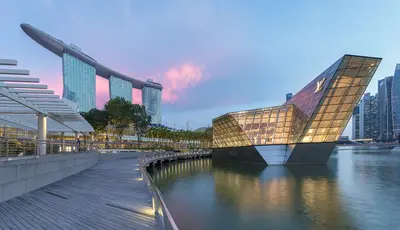
    Marina Bay is Singapore's iconic skyline district: The Marina Bay Sands hotel, the ArtScience Museum, the Supertrees of Gardens by the Bay, and the towers of the financial district frame the bay here. You'll come for the gardens, the view from the SkyPark, and in the evening for the light shows on the water. The approximately 360-hectare area was reclaimed from the sea starting in 1971; the last 38 hectares at Bayfront were added in 1994. Since the construction of the Marina Barrage in 2008, the bay has been a freshwater reservoir.The best way to explore here is to walk along the waterfront promenade around the bay, from the Merlion across the Helix Bridge to the gardens. Five MRT lines serve the district; the most important stations are Bayfront, Marina Bay, Gardens by the Bay, and Esplanade.
    Chinatown

    Chinatown

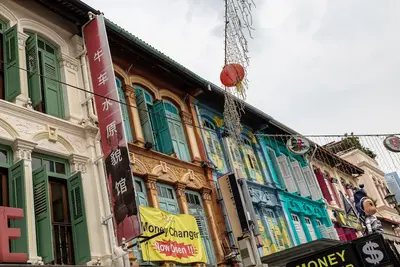
    Chinatown is Singapore's historic Chinese quarter southwest of the Singapore River. You come for its temples of three religions, the restored shophouses, and the Maxwell and Chinatown Complex Hawker Centres. Raffles' 1822 town plan allocated the area to Chinese immigrants; the Chinese name Niu Che Shui, 'Bullock-Cart Water', recalls the water carts that supplied the district in the 19th century. Since 1989, it has been a conservation area; the urban planning authority URA divides it into four districts: Kreta Ayer, Telok Ayer, Tanjong Pagar, and Bukit Pasoh.Standing close together are the Buddha Tooth Relic Temple, the Hindu Sri Mariamman Temple, and the Masjid Jamae Mosque. The district is accessible via Chinatown and Maxwell MRT stations.

    Sources & method

    • Photos: Wikimedia Commons, Google Maps. Each photo carries its credit.
    • Place data such as addresses and ratings comes from Google Maps.
    • The content is based on web research from public, traceable sources. How the content is made · The role of AI