Fernweh: Home
ExploreGuideDestinationsMy tripsMy trip
de|en
All Places & RegionsRound tripsNight trains in EuropeAll highlightsAbout FernwehFAQPrivacy PolicyImprint
Download on the App StoreGet it on Google Play
ExploreGuideDestinationsMy tripsMy trip
    • Neighborhoods & highlights
    • Eat & drink
    • Culture
    • Getting around
    • Accommodation
    • Plan trip
    • Nearby
    Tønder & Møgeltønder

    Photo by Joerg Mangelsen on Pexels

    Denmark

    Tønder & Møgeltønder

    City

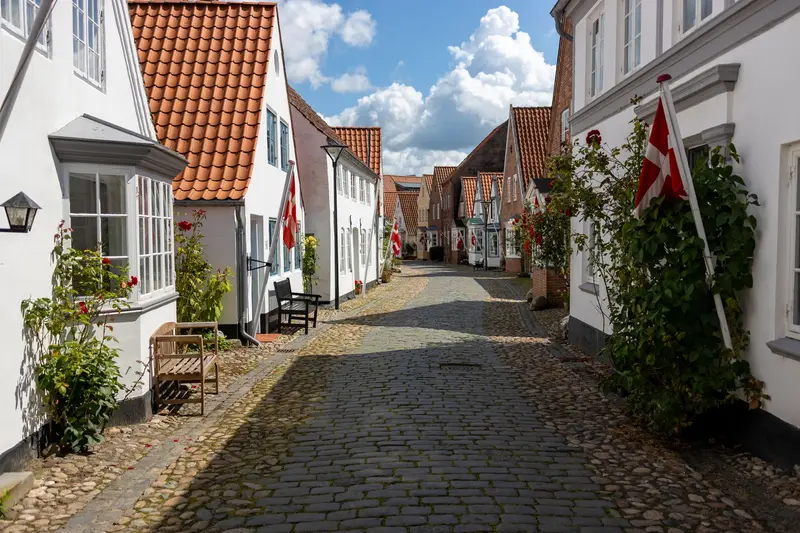
    Tønder ist eine kleine Marschstadt im Süden Jütlands nahe dem Wattenmeer, Møgeltønder liegt rund vier Kilometer westlich. Hierher kommst du für Giebelhäuser, Tønder-Spitzen und die Slotsgade von Møgeltønder vor Schloss Schackenborg.

    by Felix Gillen

    1. Home
    2. Destinations
    3. Denmark
    4. Vadehavet (Wadden Sea)
    5. Tønder & Møgeltønder
    Tønder ist eine kleine Marschstadt im Süden Jütlands nahe dem Wattenmeer, Møgeltønder liegt rund vier Kilometer westlich. Hierher kommst du für Giebelhäuser, Tønder-Spitzen und die Slotsgade von Møgeltønder vor Schloss Schackenborg.In Tønder führt die Kopfsteingasse Uldgade an den schönsten Giebelhäusern der Stadt vorbei. Die alte Apotheke hat ein barockes Portal von 1671 mit zwei Löwen, die Kristkirken von 1592 wurde mit Geld aus Vieh- und Spitzenhandel ausgestattet. Das Tønder Museum und das Drøhses Hus zeigen Tønder-Spitzen und Kunsthandwerk.In Møgeltønder legte Lensgraf Schack um 1680 die Slotsgade an, ein geschlossenes Ensemble aus Backsteinhäusern des 18. und 19. Jahrhunderts. Dazu gehören der Schlosspark von Schackenborg und die Dorfkirche mit Orgel von 1679 und bemalter Decke. Ende August findet das Tønder Festival statt.
    Denmark travel guideRound trips in DenmarkPlan a trip with Tønder & Møgeltønder

    Contents

    • Neighborhoods & highlights
    • Eat & drink
    • Culture
    • Getting around
    • Accommodation
    • Nearby

    Sights in Tønder & Møgeltønder

    Discover the most important sights and attractions

    1Kristkirken

    The Town Church of Tønder dates back to 1592. Its lavish furnishings were paid for with money from the cattle and lace trade, which made the town prosperous at the time.
    Open in Google Maps

    2Uldgade

    In the cobblestone alley in the center, the city's most beautiful gabled houses stand closely together. It's just a few steps from Kristkirken and Drøhses Hus.
    Open in Google Maps

    3The Old Pharmacy

    The old pharmacy in Østergade stands out with its Baroque portal from 1671, flanked by two lions.
    Open in Google Maps
    Museum

    4Drøhses Hus

    The Civic House from 1672 is now part of Museum Sønderjylland. It displays Tønder lace and handicrafts.
    Open in Google Maps
    Castle

    5Schackenborg Castle

    The small Baroque castle in Møgeltønder was built by Hans Schack in the 17th century. Prince Joachim has lived here since 1995; the south wing is the family's private residence. You can visit the castle park year-round, and there are also guided tours of the garden.
    Open in Google Maps
    Church

    6Møgeltønder Church

    The chancel and nave of the village church are late Romanesque, the nave dating to around 1180. Inside, the organ from 1679 and the ceiling painting from 1737 stand out.
    Open in Google Maps

    Restaurants in Tønder & Møgeltønder

    Culture and History

    Lace and TradeThe interior of Kristkirken from 1592 was paid for with money from cattle and lace trade. From the same period date the baroque portal of the old pharmacy from 1671 and Drøhses Hus from 1672, which today displays lace and handicrafts.Møgeltønder and SchackenborgSchackenborg is a small baroque castle from the 17th century, built for the Schack family. In 1995, Prince Joachim moved here; the south wing remains the private residence of the princely family to this day. The castle park is open to visitors. Møgeltønder Church features a late Romanesque chancel and nave, an organ from 1679, and ceiling paintings from 1737.Tønder Festival and MarshThe Tønder Festival takes place at the end of August, in 2026 from August 26 to 29. In the Tøndermarsch, large flocks of starlings gather temporarily, a spectacle known in Denmark as Sort Sol, or Black Sun. To the west begins the Wadden Sea, which is a UNESCO World Heritage site.

    Out and about in Tønder

    Getting ThereTønder is on the railway line from Esbjerg via Ribe. From the station, walk to the Old Town around Uldgade and Kristkirken.To MøgeltønderMøgeltønder is about four kilometres west of Tønder, a short trip by bike or car. In the village itself, explore Slotsgade, the church, and the castle park on foot.

    Accommodations in Tønder & Møgeltønder

    Find perfect stay in Tønder & Møgeltønder

    Booking.com* (Affiliate link)
    Search Hotels
    Agoda* (Affiliate link)
    Search Hotels
    Airbnb
    Vacation Rentals

    * Affiliate link: if you book through it, we earn a small commission. The price stays the same for you.

    Campgrounds in Tønder & Møgeltønder

    Find perfect campground in Tønder & Møgeltønder

    Search via Google Maps
    Campgrounds nearby (15km)
    Camping.info
    Find Campgrounds
    Park4Night
    RV Parks & Camping

    Plan your trip to Tønder & Møgeltønder

    Save places, build a route and plan your city trip, all in one place.

    1. 1
      Sunrise over alpine peaks and a sea of clouds
      1234

      Round trip

      12 days · 4 stops

      Saved

      Pick a route

      Pick a ready-made one or save places and plan your own.

      Open bookmarks
    2. 2

      Trip to Tønder & Møgeltønder

      Live
      • 1Kristkirken3 days
      • 2Uldgade4 days
      • 3The Old Pharmacy5 days
      Budget

      Plan your trip

      The planner sorts stops, days and budget. Plan together in real time.

      Start trip planning
    3. 3
      9:41 No signal
      Tønder & Møgeltønder
      Available offline

      Photo by Joerg Mangelsen on Pexels

      Use it on the road

      Download the guide to your phone and use it on site, even offline.

    Nearby

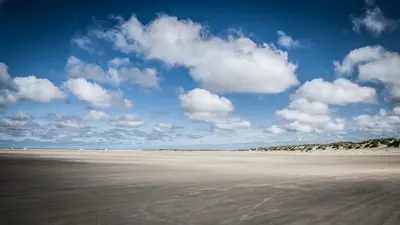
    Föhr

    Föhr

    Föhr, covering almost 83 square kilometers, is the second-largest North Frisian island, sheltered in the Wadden Sea behind Sylt and Amrum. Due to its mild climate and marsh meadows, it is known as "the green island."The only town is Wyk in the southeast, a seaside health resort featuring the Sandwall beach promenade. In 1819, Schleswig-Holstein's first seaside resort was founded here. From 1842 to 1847, the Danish King Christian VIII spent his summers in Wyk. The island's interior and western parts are home to Frisian villages with thatched-roof houses and medieval churches.

    Ralf Heinecke·Pexels

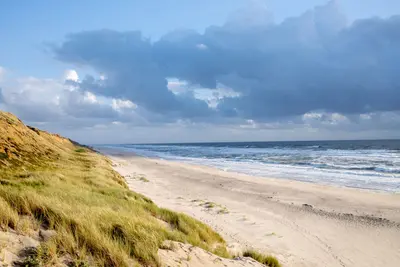
    Rømø

    Rømø

    Rømø is the southernmost Danish island in the Wadden Sea, directly north of Sylt. To the west lies Lakolk's kilometre-wide beach, where cars are permitted, and to the east, the mudflats. In between are dune heath, pine forest, and small villages with thatched captain's houses from the whaling era.

    Wolfgang Weiser·Pexels

    Sylt

    Sylt

    Sylt is the largest North Frisian and northernmost German island, 38 kilometers long and 12.6 kilometers wide at its broadest point. You reach it via the 11 km Hindenburgdamm (opened 1927) by train or car shuttle from Niebüll, or by ferry from Rømø to List.An almost 40-kilometer-long sandy beach stretches along the west side. Between Wenningstedt and Kampen, the approx. 30-meter-high Red Cliff glows, with the Uwe-Düne, the island's highest point, rising directly behind it. Westerland is the main town, while Keitum boasts old captain's houses.

    Filipp Romanovski·Pexels

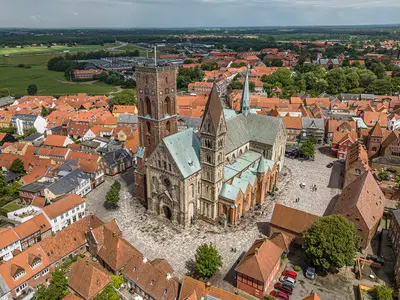
    Ribe

    Ribe

    Ribe is considered Denmark's oldest town; a Viking Age trading post emerged here in the 8th century. Its old town, with cobblestones, half-timbered houses and cathedral, lies on the Ribe Å river amid the flat marsh. The Wadden Sea begins a few kilometers west.

    Arne Müseler·CC BY-SA 4.0

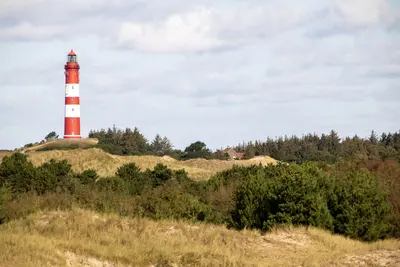
    Amrum

    Amrum

    Amrum is a small North Frisian island of about 20 square kilometers, primarily known for the Kniepsand: an approximately 10-square-kilometer sandbank situated off its western coast, reaching up to 1.5 kilometers in width. Behind it stretches a dune belt, while the interior features heathland and forest.The five villages of Norddorf, Nebel, Süddorf, Steenodde, and Wittdün line the eastern coast. Its landmark is the red-and-white lighthouse, and in Nebel, you'll find St. Clemens Church with the "speaking gravestones" of seafarers and thatched Frisian houses. Amrum is best explored by bicycle.

    Frank Rietsch·Pexels

    Your next steps

    Tønder & Møgeltønder is in Denmark. Ways to carry on from here.

    • More in Denmark

      Highlights, areas, routes and the best time to travel for all of Denmark.

      Denmark travel guide
    • Round trips in Denmark

      Ready-made routes through Denmark, with stops, nights and a map.

      See the routes

    Sources & method

    • Photos: Pexels. Each photo carries its credit.
    • Place data such as addresses and ratings comes from Google Maps.
    • The content is based on web research from public, traceable sources. How the content is made · The role of AI