Fernweh: Home
    ExploreTravel GuidesPlan a tripMy tripLast visited
    de|en
    All Places & RegionsAll highlightsAbout FernwehFAQPrivacy PolicyImprint
    ExploreTravel GuidesPlan a tripMy tripLast visited
    • Neighborhoods & highlights
    • Videos
    • Eat & drink
    • Food culture
    • Culture
    • Getting around
    • Accommodation
    • Plan trip
    • Nearby
    Nikolaiken (Mikołajki)
    Marek and Ewa Wojciechowscy / Wikimedia Commons / CC BY-SA 3.0

    Poland

    Nikolaiken (Mikołajki)

    City

    Nikolaiken (Mikołajki) is a small town with over 3,300 inhabitants in the heart of the Masurian Lake District.

    by Felix Gillen

    1. Home
    2. Destinations
    3. Poland
    4. Warmian-Masurian
    5. Nikolaiken (Mikołajki)
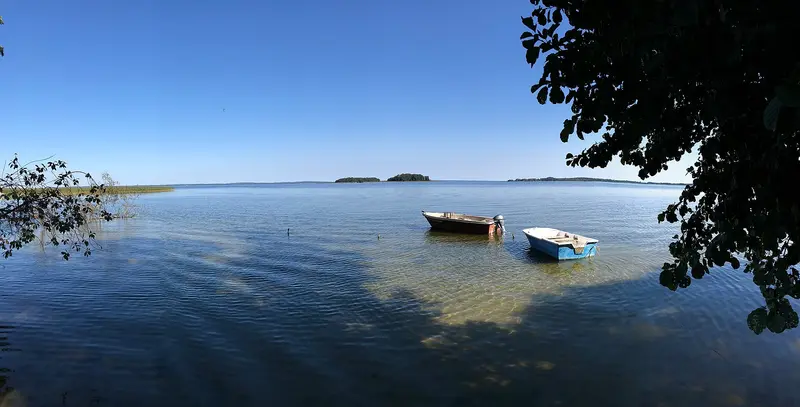
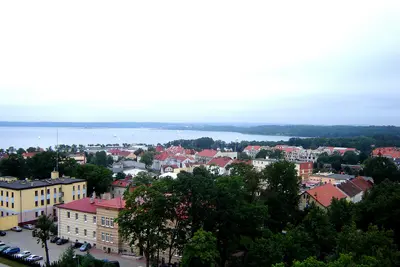
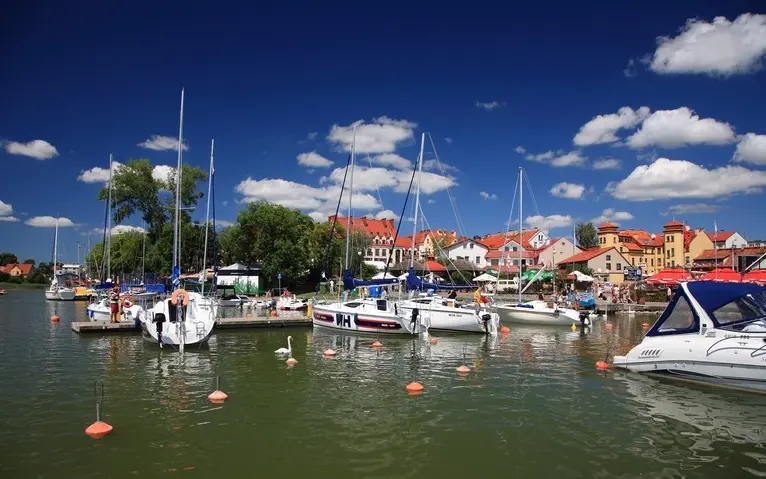
    Nikolaiken (Mikołajki) is a small town with over 3,300 inhabitants in the heart of the Masurian Lake District. The town lies at the narrow passage between Lake Tałty and Lake Mikołajki, which merge here, and only a few kilometres from Lake Śniardwy, Poland's largest lake. Nikolaiken was first mentioned in 1444; it received town privileges in 1726. Today, Mikołajki is one of Masuria's most important sailing centres. Along the shore are a marina, excursion boat piers, and houseboat rentals. The centre is small: restaurants and guesthouses line the market square and church square, and a pedestrian bridge, completed in 2016, connects the waterfront promenades across the narrow lake passage. About five kilometres to the east lies Lake Łuknajno, a nature reserve and UNESCO Biosphere Reserve with one of Europe's largest mute swan colonies. In the vicinity is also the Krutynia, a popular river for canoe trips.

    Sights in Nikolaiken (Mikołajki)

    Discover the most important sights and attractions

    Holy Trinity Church
    Church

    1Holy Trinity Church

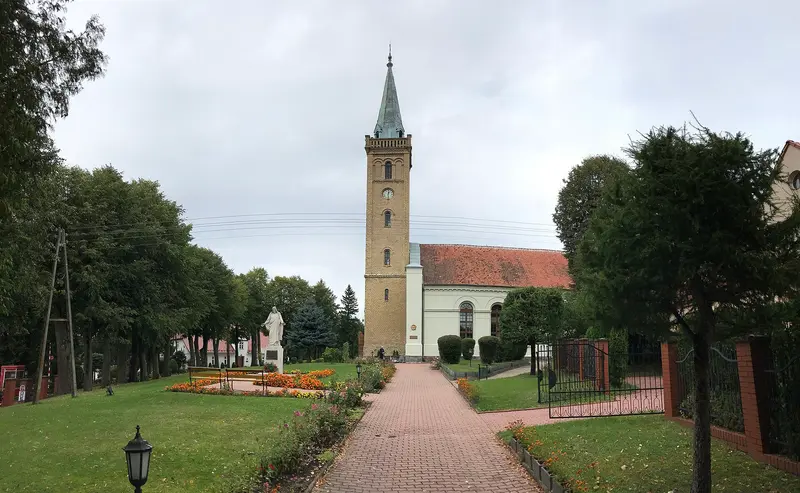
    The Evangelical Augsburg Church on Church Square was built to a design by Karl Friedrich Schinkel and consecrated in 1842; the tower was added in 1880. Inside, a coffered barrel vault and wooden galleries define the space. Right next door, by the Evangelical parish, lies the Museum of the Polish Reformation.
    Open in Google Maps
    Spirdingsee (Śniardwy)
    Natural Feature

    2Spirdingsee (Śniardwy)

    At roughly 113 square kilometers, Lake Śniardwy is Poland's largest lake. It averages just under six meters deep, has eight islands, and connects via canals to the other major Masurian Lakes. From Mikołajki, you can reach it by boat through Lake Mikołajki.
    Open in Google Maps
    Łuknajno Lake Nature Reserve
    Park

    3Łuknajno Lake Nature Reserve

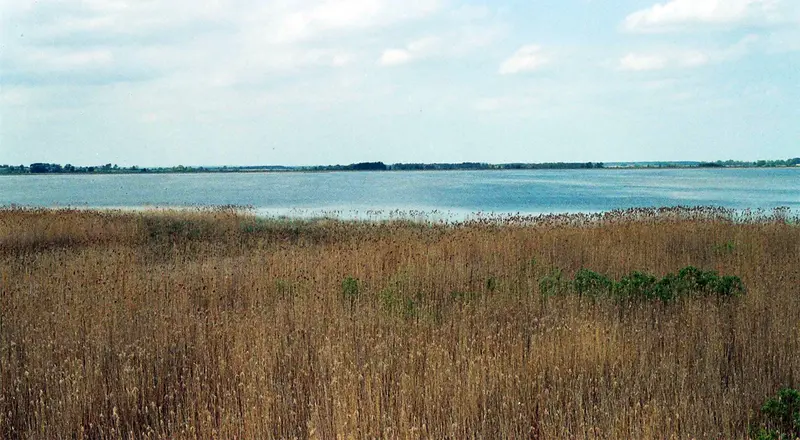
    The shallow Lake Łuknajno, five kilometers east of Mikołajki, protected since 1947, is a UNESCO Biosphere Reserve since 1976 and a Ramsar site since 1977. It is home to one of Europe's largest mute swan colonies, in some years with around 2,000 animals.
    Open in Google Maps

    Videos & Travel Reports

    Wunderschön! Masuren: Polens Seenparadies

    Judith Rakers reist für ARD Reisen durch die Masurische Seenplatte: per Kajak auf der Krutynia, zum Pilzesammeln in die Johannisburger Heide, nach Nikolaiken am Śniardwy-See und nach Allenstein.

    Restaurants in Nikolaiken (Mikołajki)

    1

    Restaurant on the Bay

    Restaurant at Boutique Hotel Amax on Aleja Spacerowa, recommended in the Michelin Guide Polska 2026. The cuisine is regional; fish, meat, and cheese are smoked in-house. The menu features dishes like sea trout in aspic and chanterelle soup.
    Show on Google Maps
    2

    The Sunny Port

    Fish restaurant on ul. Mrągowska with a maritime-themed interior and a large terrace overlooking the lake. Serving fish from the Masurian Lakes, including eel in aspic, fish broth, pike-perch, and grilled trout.
    Show on Google Maps
    3

    Spiżarnia

    Restaurant on Plac Handlowy with over 20 years of history and Masurian-Old Polish cuisine. Focusing on fish from the Masurian Lakes, soups, and game dishes like roast wild boar, plus Pyzy with pork filling and Masurian-style pork hock.
    Show on Google Maps

    Eating and Drinking

    Smoked Whitefish (Sielawa)

    The small vendace from the Masurian Lakes is closely linked to Nikolaiken; the crowned fish in the town's coat of arms is a reminder of this. It is smoked at local smokehouses and offered in fish restaurants.

    Eel within aspic

    Jellied eel from the region's lakes features on the menus of several fish restaurants in Nikolaiken.

    Pyzy

    Round potato dumplings, often meat-filled in Masuria, are a classic of regional guesthouse fare.

    Culture and History

    Protestant Masuria Until 1945, Nikolaiken belonged to East Prussia, primarily Protestant. Designed by Karl Friedrich Schinkel, the Holy Trinity Church was consecrated in 1842 and remains the parish church of the Lutheran congregation. The 1973-founded Museum of the Polish Reformation, in the Protestant community building, displays old prints, Bibles, and hymnals from Masuria. The King of the Vendace The town's coat of arms depicts a crowned fish, bound with a chain. It's based on a legend: fishermen caught the fish king, who protected lake fish from their nets, allowing them to resume their catches. As the fountain figure Król Sielaw, King of the Vendace, he is now Nikolaiken's emblem. The legend recalls the long-standing importance of fishing here, especially for vendace.

    Arrival and On the Go

    Getting ThereNikolaiken is located on National Road 16 and Voivodeship Road 609. Passenger rail service ceased in 2009, the station is disused; public transport to the town is therefore by bus. In season, excursion boats of Żegluga Mazurska also dock at the harbour.Getting AroundThe town centre, with its promenade, market square, and church, is small and easily explored on foot. Lake Łuknajno and the surrounding area are best reached by bike or car. If you arrive by car, it's best to park in one of the designated car parks on the edge of the town centre.
    Accommodations in Nikolaiken (Mikołajki)

    Find perfect stay in Nikolaiken (Mikołajki)

    Booking.com* (Affiliate link)
    Search Hotels
    Agoda* (Affiliate link)
    Search Hotels
    Airbnb
    Vacation Rentals

    * Affiliate link: if you book through it, we earn a small commission. The price stays the same for you.

    Campgrounds in Nikolaiken (Mikołajki)

    Find perfect campground in Nikolaiken (Mikołajki)

    Search via Google Maps
    Campgrounds nearby (15km)
    Camping.info
    Find Campgrounds
    Park4Night
    RV Parks & Camping

    Plan your trip to Nikolaiken (Mikołajki)

    Save places, build a route and plan your city trip, all in one place.

    1. 1
      Sunrise over alpine peaks and a sea of clouds
      1234

      Round trip

      12 days · 4 stops

      Saved

      Pick a route

      Pick a ready-made one or save places and plan your own.

      Open bookmarks
    2. 2

      Trip to Nikolaiken (Mikołajki)

      Live
      • 1Holy Trinity Church3 days
      • 2Spirdingsee (Śniardwy)4 days
      • 3Łuknajno Lake Nature Reserve5 days
      Budget

      Plan your trip

      The planner sorts stops, days and budget. Plan together in real time.

      Start trip planning
    3. 3
      9:41 No signal
      Nikolaiken (Mikołajki)
      Available offline

      Use it on the road

      Download the guide to your phone and use it on site, even offline.

    Nearby

    Lötzen (Giżycko)

    Lötzen (Giżycko)

    Lötzen (Giżycko), with roughly 27,000 residents, is one of the larger towns in the Masurian Lake District. It's situated on an isthmus between Lake Löwentin (Niegocin) and the Lake Mamry system, including Lake Kisajno. First mentioned in 1340, Lötzen gained town rights in 1612 and has been connected to the rail network since 1868. On Lake Löwentin's shore are harbours, including the municipal Ekomarina, plus the town beach and adjacent park. The Lötzener Canal (Kanał Łuczański) is spanned by an 1898 swing bridge, still hand-operated today. West of town lies the extensive Boyen Fortress grounds, plus a water tower with a viewing café and Bruno's Hill with the 1909 Bruno Cross. Lötzen thrives primarily on water sports. From here, sailing trips and excursion boats depart across the large Masurian lakes, and in summer, the town hosts events like the Sea Shanty Festival.
    Warmian-Masurian

    Warmian-Masurian

    The Warmian-Masurian Voivodeship (Warmińsko-Mazurskie) in northeastern Poland unites two historic landscapes. Ermland (Warmia) in the west was shaped for centuries by the Warmian Cathedral Chapter, whose castles and cathedrals in Allenstein (Olsztyn) and Frauenburg (Frombork) still stand today. Masuren (Mazury) in the east is known for the Masurian Lake District, featuring Lake Spirdingsee (Śniardwy), the largest lake in Poland. Until 1945, the region predominantly belonged to East Prussia. For travelers, Ermland-Masuren is primarily a destination for water sports and nature: sailing on the large lakes, excursion boats between lakeside towns, and canoe tours on rivers like the Krutynia. Additionally, there are testimonies to a turbulent history, from Copernicus and baroque pilgrimage churches to the ruins of the Wolf's Lair.
    Allenstein (Olsztyn)

    Allenstein (Olsztyn)

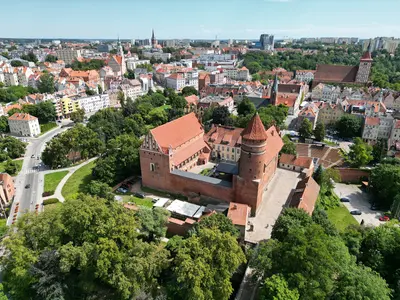
    Allenstein (Olsztyn) is the capital of the Warmian-Masurian Voivodeship and, with over 165,000 inhabitants, the largest city in the region. It is situated on the Łyna River (Alle) in historical Warmia and was founded in 1353. Above the Old Town stands the Castle of the Warmian Cathedral Chapter, where Nicolaus Copernicus lived from 1516 as the administrator of the chapter's estates. Since 1999, Allenstein has also been home to the University of Warmia and Masuria. Its core is the Old Town (Stare Miasto) with the High Gate, remnants of the medieval city wall, the late-Gothic Old Town Hall, and the Co-Cathedral of St. James. Surrounding it are the City Centre (Śródmieście) and districts such as Kortowo, Zatorze, and Jaroty; in total, the city is divided into 23 districts. Unusual for a large city is its proportion of water and forest: within the city limits lie more than ten lakes, the largest being Lake Ukiel with its city beach, plus a large municipal forest. Allenstein is therefore an excellent starting point for excursions into Warmia and the Masurian Lake District.
    Podlachia

    Podlachia

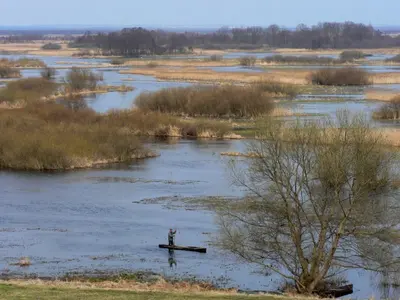
    Podlachia (Podlasie) is located in the far north-east of Poland, bordering Belarus. The regional capital is Białystok. For centuries, the region has been shaped by multiple cultures: Alongside the Polish majority, the Belarusian minority lives here, Orthodox churches stand beside Catholic ones, and until World War II, Jews constituted a large part of the population in many towns. For travellers, Podlachia is primarily a destination for nature experiences. In the south-east lies the Białowieża Forest with its European bison, north-west of Białystok is the vast marsh and river valley of the Biebrza, home to Poland's largest national park. In between are small towns like Tykocin on the Narew, whose history is closely tied to the region's Jewish heritage.
    Białystok

    Białystok

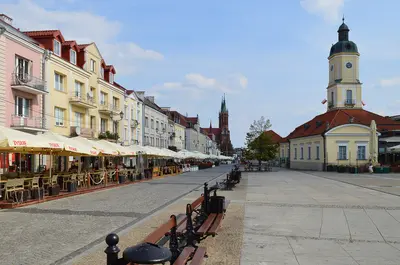
    Białystok is the capital of Podlaskie Voivodeship and, with approximately 290,000 inhabitants, its only large city. It lies northeast of Warsaw (Warszawa), not far from the border with Belarus. Białystok received city rights around 1691, and owes its appearance primarily to the Branicki magnate family, whose baroque palace is known as the 'Versailles of Podlachia'. In the 19th century, the city grew into an industrial center. The heart of the city center (Centrum) is Kościuszko Market (Rynek Kościuszki) with its baroque town hall. To its west, on ul. Lipowa, stand the Orthodox St. Nicholas Cathedral and, a little further on, the modernist St. Roch's Church. To the east, the Branicki Palace with its gardens and the Bojary district connect, known for its old wooden architecture and home to the Zamenhof Center. For centuries, Białystok was a city of many cultures. In 1931, around 40,000 of the approximately 100,000 inhabitants were Jewish, and there were more than 60 synagogues. Today, a Belarusian minority lives in the city, visible among other things in its Orthodox churches. Białystok is a good starting point for excursions to the Białowieża National Park in the southeast of the region.

    Sources & method

    • Photos: Wikimedia Commons, Google Maps. Each photo carries its credit.
    • Place data such as addresses and ratings comes from Google Maps.
    • Video reportages: Wunderschön! Masuren: Polens Seenparadies
    • The content is based on web research from public, traceable sources. How the content is made · The role of AI