Fernweh: Home
    ExploreTravel GuidesPlan a tripMy tripLast visited
    de|en
    All Places & RegionsAll highlightsAbout FernwehFAQPrivacy PolicyImprint
    ExploreTravel GuidesPlan a tripMy tripLast visited
    • Neighborhoods & highlights
    • Eat & drink
    • Food culture
    • Culture
    • Nightlife
    • Getting around
    • Accommodation
    • Plan trip
    • Nearby
    Białystok
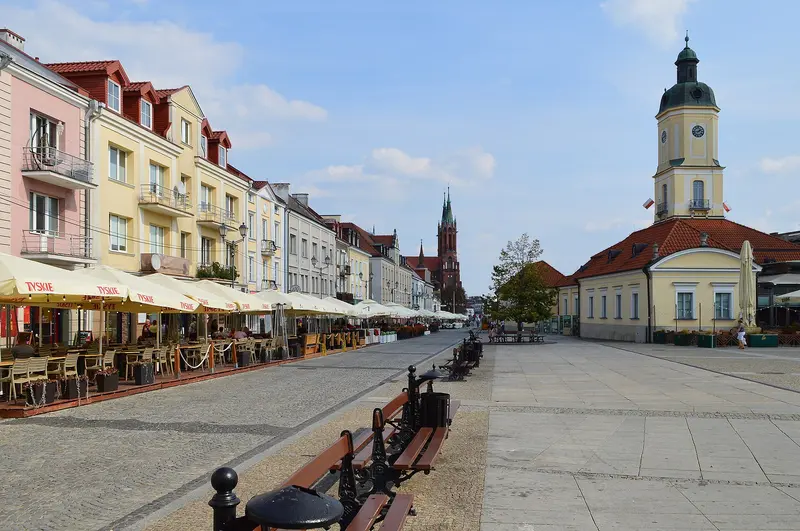
    Scotch Mist / Wikimedia Commons / CC BY-SA 4.0

    Poland

    Białystok

    City

    Białystok is the capital of Podlaskie Voivodeship and, with approximately 290,000 inhabitants, its only large city. It lies northeast of Warsaw (Warszawa), not far from the border with Belarus.

    by Felix Gillen

    1. Home
    2. Destinations
    3. Poland
    4. Podlachia
    5. Białystok
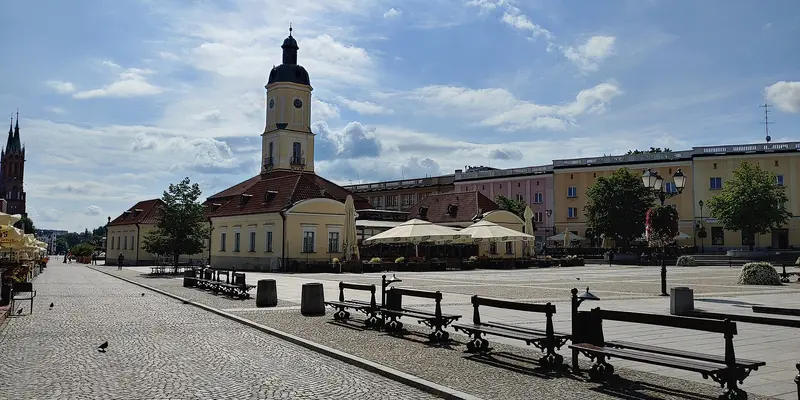
    Białystok is the capital of Podlaskie Voivodeship and, with approximately 290,000 inhabitants, its only large city. It lies northeast of Warsaw (Warszawa), not far from the border with Belarus. Białystok received city rights around 1691, and owes its appearance primarily to the Branicki magnate family, whose baroque palace is known as the 'Versailles of Podlachia'. In the 19th century, the city grew into an industrial center. The heart of the city center (Centrum) is Kościuszko Market (Rynek Kościuszki) with its baroque town hall. To its west, on ul. Lipowa, stand the Orthodox St. Nicholas Cathedral and, a little further on, the modernist St. Roch's Church. To the east, the Branicki Palace with its gardens and the Bojary district connect, known for its old wooden architecture and home to the Zamenhof Center. For centuries, Białystok was a city of many cultures. In 1931, around 40,000 of the approximately 100,000 inhabitants were Jewish, and there were more than 60 synagogues. Today, a Belarusian minority lives in the city, visible among other things in its Orthodox churches. Białystok is a good starting point for excursions to the Białowieża National Park in the southeast of the region.

    Sights in Białystok

    Discover the most important sights and attractions
    Orthodox Nikolai Cathedral
    Church

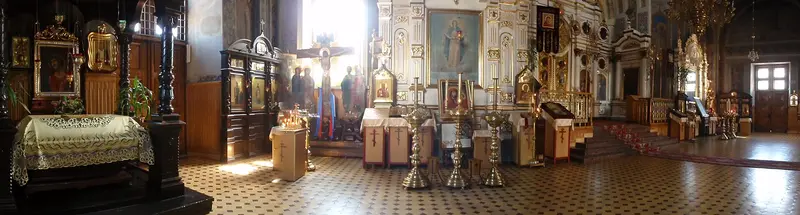
    1Orthodox Nikolai Cathedral

    The Orthodox Cathedral of St. Nicholas on ul. Lipowa was built from 1843 to 1846 and is the main church for the Orthodox community in the city center.
    Open in Google Maps
    St. Rochus Church
    Church

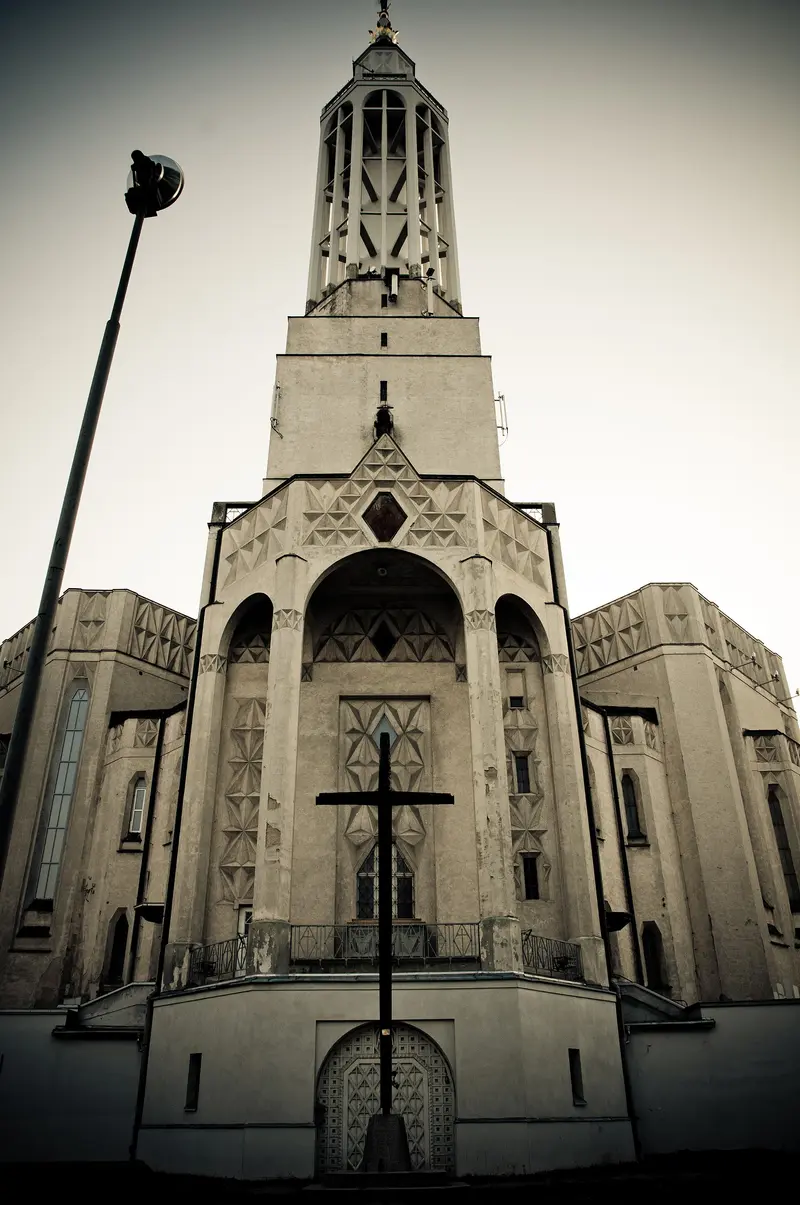
    2St. Rochus Church

    The Church of St. Roch on ul. Abramowicza, west of downtown, was built from 1927 to 1946 in the Modernist style.
    Open in Google Maps
    Zamenhof Center
    Museum

    3Zamenhof Center

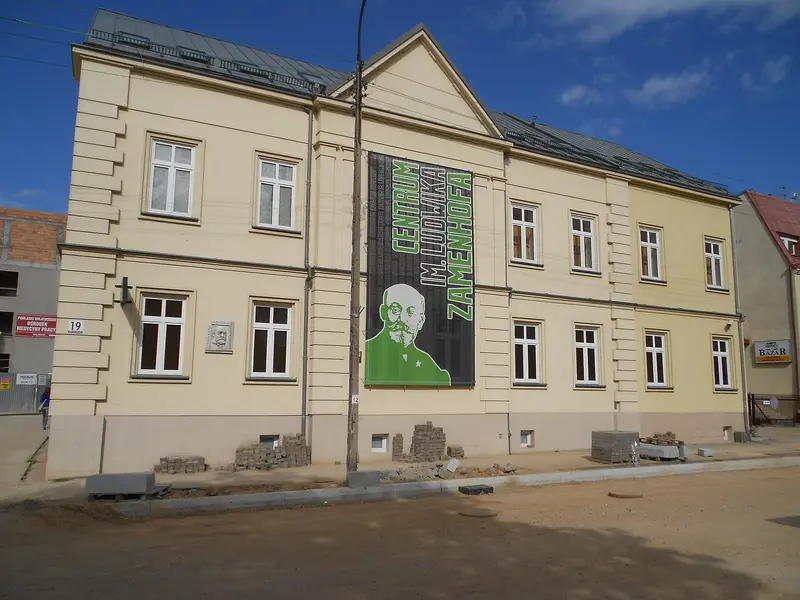
    The Cultural Centre on ul. Warszawska commemorates Ludwik Zamenhof, the founder of Esperanto, born in Białystok in 1859. It opened in July 2009 for the Esperanto World Congress, features the permanent exhibition “Białystok of Young Zamenhof,” and has housed a public Esperanto library since 2010, the first of its kind in Poland.
    Open in Google Maps
    Branicki Palace
    Attraction

    4Branicki Palace

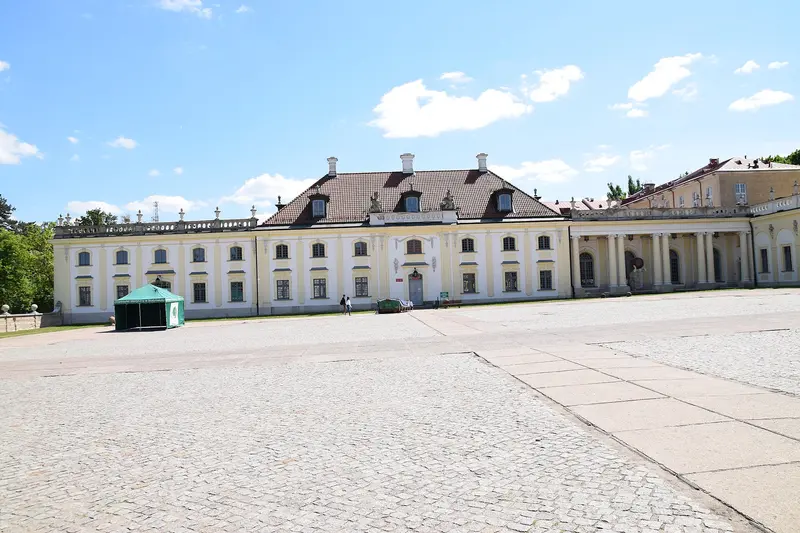
    The late Baroque palace, often dubbed the 'Versailles of Podlachia', was built from 1691 to 1697 to designs by Tylman van Gameren and expanded under Jan Klemens Branicki. Largely destroyed in 1944, it was rebuilt from 1946 to 1960 and is now home to the Medical University. The ensemble includes a French Garden and a landscape park covering approximately 9.7 hectares; the Baroque gardens were reconstructed by 2012.
    Open in Google Maps
    City Hall, Kościuszko Market
    Museum

    5City Hall, Kościuszko Market

    The Baroque Town Hall with clock tower, built 1745-1761 on Jan Klemens Branicki's initiative, never served as the city administration's seat, but as a market hall. Demolished during World War II, it was reconstructed 1954-1958. Today, it houses the Podlachian Museum. Branicki had the surrounding market redesigned after a city fire in 1753.
    Open in Google Maps

    Restaurants in Białystok

    1

    A Matter of Time

    Restaurant, newly awarded a Bib Gourmand in the Michelin Guide Polska 2026. The cuisine is inspired by the forests of Podlachia.
    Show on Google Maps
    2

    Art of Bread and Wine

    A relaxed place centred around bread and wine, awarded a Bib Gourmand in the Michelin Guide Polska 2026.
    Show on Google Maps
    3

    Sztuka Mięsa

    Steakhouse on ul. Krakowska with its own butcher shop, recommended in the Michelin Guide Polska 2026.
    Show on Google Maps

    Food and Drink

    Babka ziemniaczana

    The hearty potato cake made from grated potatoes is on the list of traditional products of the Podlaskie Voivodeship. In nearby Supraśl, a World Championship in baking Kiszka and Babka is held annually.

    Kiszka potato sausage

    The potato sausage consists of grated raw potatoes with bacon and onions, is stuffed into a pig casing and baked in the oven. In Poland, it is typical of Podlachian cuisine.

    Kartacze

    Large potato dumplings with a meat filling, also known as Cepeliny, are among the classics of Podlachian cuisine.

    Culture and History

    City of Cultures and Esperanto On December 15, 1859, Ludwik Zamenhof, the founder of Esperanto, was born in Białystok. The Zamenhof Centre, opened in 2009 on ul. Warszawska, features the exhibition 'Białystok of Young Zamenhof' and has housed a public Esperanto library since 2010. Five signposted thematic routes lead through the city, including a Jewish Heritage Route. The Great Synagogue, built from 1903 to 1913, burned down in 1941. The majority of the Jewish population was murdered in the Holocaust. Stages and Museums The Podlachian Opera and Philharmonic opened in 2012. The Podlachian Museum is located in the Town Hall on Kościuszko Market, while the Museum of Memory of Siberia commemorates the deportations of Poles to Siberia. The Medical University is based in Branicki Palace.

    Nightlife

    1

    Beer4u

    Craft beer pub on ul. Legionowa near Kościuszko Market with a wide selection of draft beers, plus wine and cocktails.
    Show on Google Maps
    2

    Black Market Cocktail Bar

    Cocktail bar downtown, just a few steps from Kościuszko Market.
    Show on Google Maps
    3

    Alchemia Pub

    Pub at ul. Lipowa 4 with craft beers, cocktails, wine, and an extensive whisky list.
    Show on Google Maps

    Getting Here and Around

    Getting There Białystok is situated on the S8 expressway to Warsaw and is connected by train to the capital; the station dates back to the 1860s. From here, trains also run via Ełk to Lötzen (Giżycko) and Allenstein (Olsztyn). You can find current connections with the Polish railway. Getting Around the City Białystok is Poland's largest city, and its public transport consists exclusively of buses. It is organised by Białostocka Komunikacja Miejska (BKM). The city centre, around Kościuszko Market, ul. Lipowa, and Branicki Palace, is easily explored on foot. If you're driving, it's best to park outside the pedestrian zone and pay attention to local signage.

    Accommodations in Białystok

    Find perfect stay in Białystok

    Booking.com* (Affiliate link)
    Search Hotels
    Agoda* (Affiliate link)
    Search Hotels
    Airbnb
    Vacation Rentals

    * Affiliate link: if you book through it, we earn a small commission. The price stays the same for you.

    Campgrounds in Białystok

    Find perfect campground in Białystok

    Search via Google Maps
    Campgrounds nearby (15km)
    Camping.info
    Find Campgrounds
    Park4Night
    RV Parks & Camping

    Plan your trip to Białystok

    Save places, build a route and plan your city trip, all in one place.

    1. 1
      Sunrise over alpine peaks and a sea of clouds
      1234

      Round trip

      12 days · 4 stops

      Saved

      Pick a route

      Pick a ready-made one or save places and plan your own.

      Open bookmarks
    2. 2

      Trip to Białystok

      Live
      • 1Orthodox Nikolai Cathedral3 days
      • 2St. Rochus Church4 days
      • 3Zamenhof Center5 days
      Budget

      Plan your trip

      The planner sorts stops, days and budget. Plan together in real time.

      Start trip planning
    3. 3
      9:41 No signal
      Białystok
      Available offline

      Use it on the road

      Download the guide to your phone and use it on site, even offline.

    Nearby

    Podlachia

    Podlachia

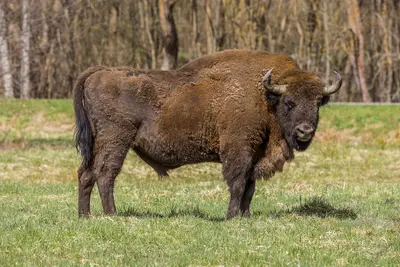
    Podlachia (Podlasie) is located in the far north-east of Poland, bordering Belarus. The regional capital is Białystok. For centuries, the region has been shaped by multiple cultures: Alongside the Polish majority, the Belarusian minority lives here, Orthodox churches stand beside Catholic ones, and until World War II, Jews constituted a large part of the population in many towns. For travellers, Podlachia is primarily a destination for nature experiences. In the south-east lies the Białowieża Forest with its European bison, north-west of Białystok is the vast marsh and river valley of the Biebrza, home to Poland's largest national park. In between are small towns like Tykocin on the Narew, whose history is closely tied to the region's Jewish heritage.
    Białowieża National Park

    Białowieża National Park

    Białowieża National Park (Białowieski Park Narodowy) protects the Polish core of the Białowieża Forest on the border with Belarus. Established in 1932, it is Poland's second-oldest national park after Pieniny National Park, and today covers approximately 105 square kilometers. The forest is considered Europe's last primeval lowland forest, dominated by pedunculate oak, small-leaved lime, and hornbeam. It has been on the UNESCO World Heritage List since 1979, with the Belarusian part added in 1992. The symbol of the park is the European bison (Wisent). The species was extinct in the wild, but in 1952, the first animals bred in captivity were reintroduced here. The village of Białowieża serves as a starting point for visits, featuring the Palace Park, the Museum of Natural History and Forestry, and the park administration. The most valuable part, the former strict protection zone, may only be entered with a licensed guide; other sections are accessible via marked hiking and cycling trails. According to the National Park administration, all hiking trails in the park are open (as of October 2026). Along the border with Belarus, a ban on staying in a border strip has been in effect since June 2024, extended by the Ministry of Interior every 90 days. According to reports on the Polish Ministry of Interior's regulation, this strip generally exempts villages and hiking trails and is approximately two kilometers wide in protected areas. For current travel and security information, including regarding the border area, see the UK Foreign, Commonwealth & Development Office (FCDO).
    Nikolaiken (Mikołajki)

    Nikolaiken (Mikołajki)

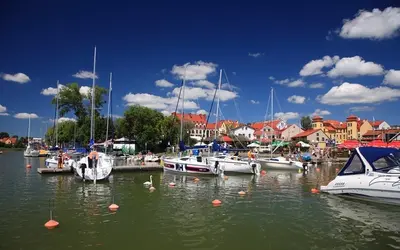
    Nikolaiken (Mikołajki) is a small town with over 3,300 inhabitants in the heart of the Masurian Lake District. The town lies at the narrow passage between Lake Tałty and Lake Mikołajki, which merge here, and only a few kilometres from Lake Śniardwy, Poland's largest lake. Nikolaiken was first mentioned in 1444; it received town privileges in 1726. Today, Mikołajki is one of Masuria's most important sailing centres. Along the shore are a marina, excursion boat piers, and houseboat rentals. The centre is small: restaurants and guesthouses line the market square and church square, and a pedestrian bridge, completed in 2016, connects the waterfront promenades across the narrow lake passage. About five kilometres to the east lies Lake Łuknajno, a nature reserve and UNESCO Biosphere Reserve with one of Europe's largest mute swan colonies. In the vicinity is also the Krutynia, a popular river for canoe trips.
    Lötzen (Giżycko)

    Lötzen (Giżycko)

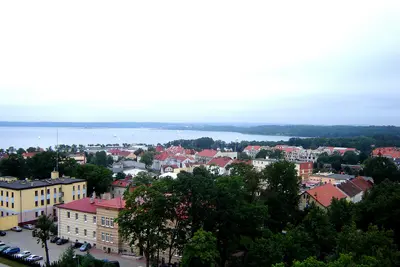
    Lötzen (Giżycko), with roughly 27,000 residents, is one of the larger towns in the Masurian Lake District. It's situated on an isthmus between Lake Löwentin (Niegocin) and the Lake Mamry system, including Lake Kisajno. First mentioned in 1340, Lötzen gained town rights in 1612 and has been connected to the rail network since 1868. On Lake Löwentin's shore are harbours, including the municipal Ekomarina, plus the town beach and adjacent park. The Lötzener Canal (Kanał Łuczański) is spanned by an 1898 swing bridge, still hand-operated today. West of town lies the extensive Boyen Fortress grounds, plus a water tower with a viewing café and Bruno's Hill with the 1909 Bruno Cross. Lötzen thrives primarily on water sports. From here, sailing trips and excursion boats depart across the large Masurian lakes, and in summer, the town hosts events like the Sea Shanty Festival.
    Masovia

    Masovia

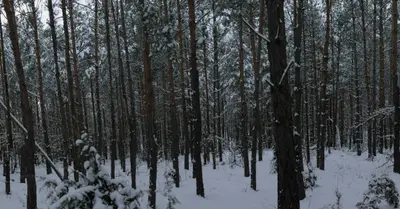
    Masovia (Mazowsze), with approximately 35,600 km², is Poland's largest voivodeship by area and home to about 5.5 million inhabitants. Located in the Central Polish Lowlands, the region spans both sides of the middle Vistula, also crossed by the Bug, Narew, Bzura, and Pilica. At its heart is the capital, Warsaw, surrounded by lowlands, forests, and river valleys. On the city's outskirts begins the Kampinos National Park with dunes and swamps, and to its west, in Żelazowa Wola, lies Fryderyk Chopin's birthplace.

    Sources & method

    • Photos: Wikimedia Commons, Google Maps. Each photo carries its credit.
    • Place data such as addresses and ratings comes from Google Maps.
    • The content is based on web research from public, traceable sources. How the content is made · The role of AI