Fernweh: Home
    ExploreTravel GuidesPlan a tripMy tripLast visited
    de|en
    All Places & RegionsAll highlightsAbout FernwehFAQPrivacy PolicyImprint
    ExploreTravel GuidesPlan a tripMy tripLast visited
    • Neighborhoods & highlights
    • Videos
    • Eat & drink
    • Food culture
    • Culture
    • Nightlife
    • Getting around
    • Accommodation
    • Plan trip
    • Nearby
    Allenstein (Olsztyn)
    Monika Towiańska / Wikimedia Commons / CC BY-SA 4.0

    Poland

    Allenstein (Olsztyn)

    City

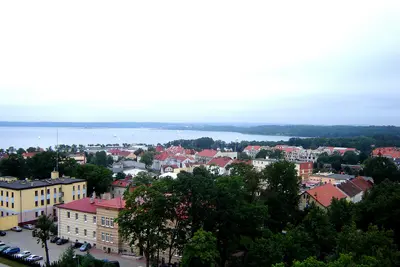
    Allenstein (Olsztyn) is the capital of the Warmian-Masurian Voivodeship and, with over 165,000 inhabitants, the largest city in the region. It is situated on the Łyna River (Alle) in historical Warmia and was founded in 1353.

    by Felix Gillen

    1. Home
    2. Destinations
    3. Poland
    4. Warmian-Masurian
    5. Allenstein (Olsztyn)
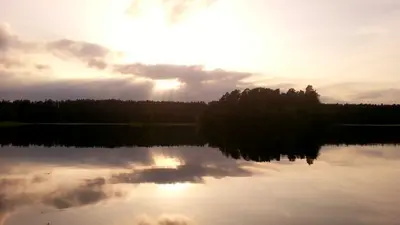
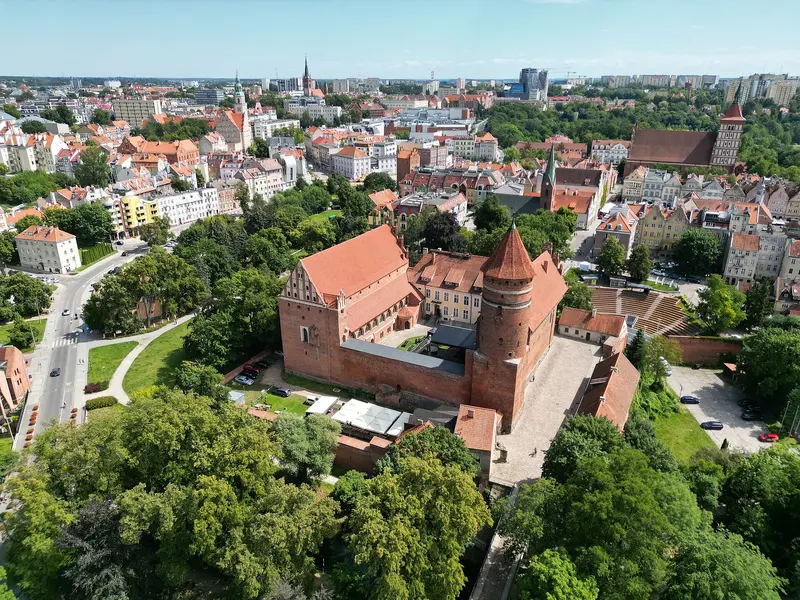
    Allenstein (Olsztyn) is the capital of the Warmian-Masurian Voivodeship and, with over 165,000 inhabitants, the largest city in the region. It is situated on the Łyna River (Alle) in historical Warmia and was founded in 1353. Above the Old Town stands the Castle of the Warmian Cathedral Chapter, where Nicolaus Copernicus lived from 1516 as the administrator of the chapter's estates. Since 1999, Allenstein has also been home to the University of Warmia and Masuria. Its core is the Old Town (Stare Miasto) with the High Gate, remnants of the medieval city wall, the late-Gothic Old Town Hall, and the Co-Cathedral of St. James. Surrounding it are the City Centre (Śródmieście) and districts such as Kortowo, Zatorze, and Jaroty; in total, the city is divided into 23 districts. Unusual for a large city is its proportion of water and forest: within the city limits lie more than ten lakes, the largest being Lake Ukiel with its city beach, plus a large municipal forest. Allenstein is therefore an excellent starting point for excursions into Warmia and the Masurian Lake District.

    Sights in Allenstein (Olsztyn)

    Discover the most important sights and attractions

    Castle of the Warmian Cathedral Chapter
    Castle

    1Castle of the Warmian Cathedral Chapter

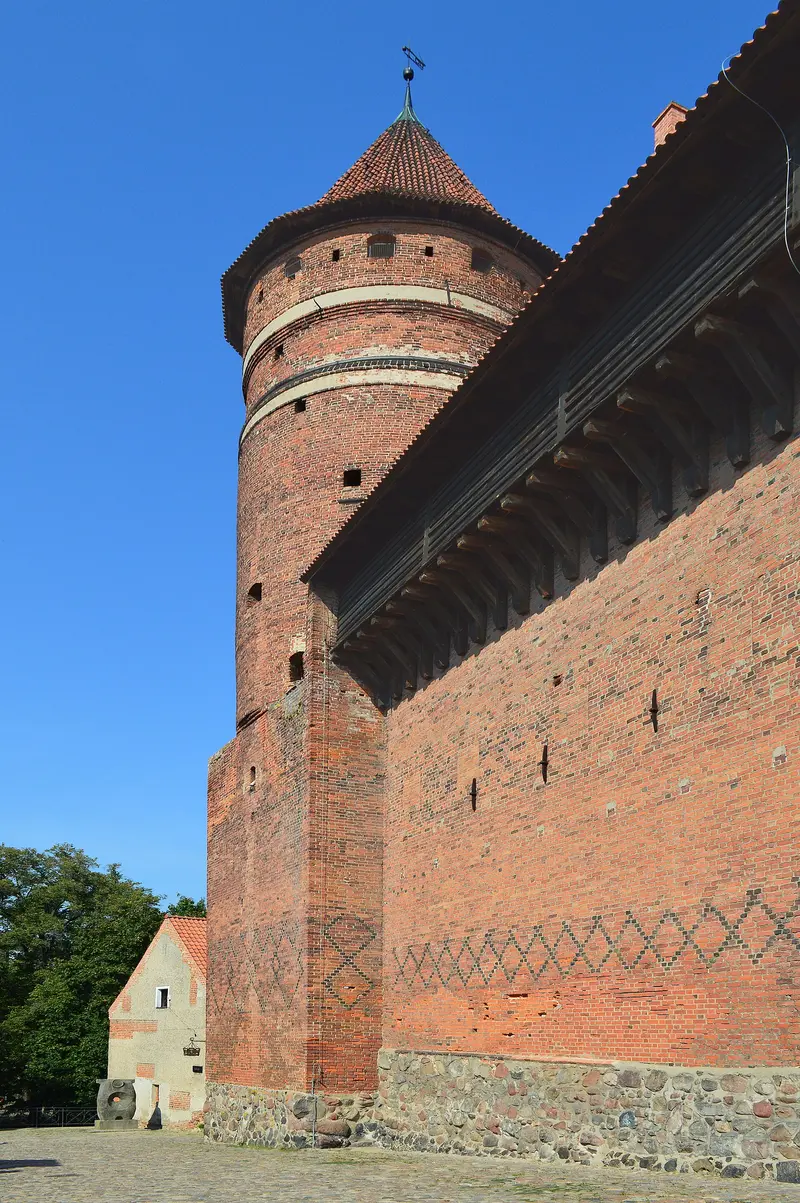
    The Warmian Chapter's Gothic castle dates from 1353 on the steep slope above the Łyna. Nicolaus Copernicus lived here from 1516 as administrator of chapter estates; his 1517 astronomical table is preserved in the cloister. The castle now houses the Museum of Warmia and Masuria.
    Open in Google Maps
    City Beach on Ukiel Lake
    Beach

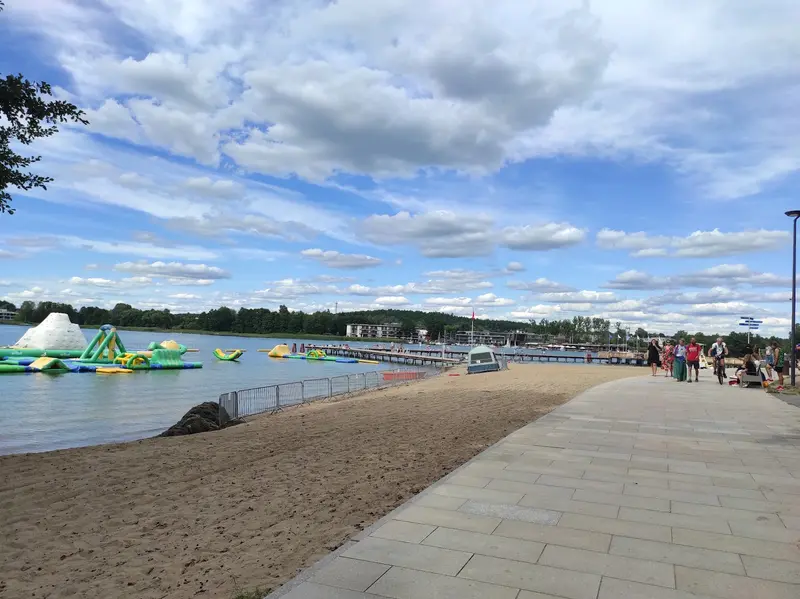
    2City Beach on Ukiel Lake

    The city beach is located on Ukiel, with 412 hectares the largest lake within the city limits, in the northwest of Allenstein on ul. Kapitańska. In summer, there are several swimming areas here, and sailing and kayak harbors are situated on the lake.
    Open in Google Maps
    Allenstein Planetarium
    Point of Interest

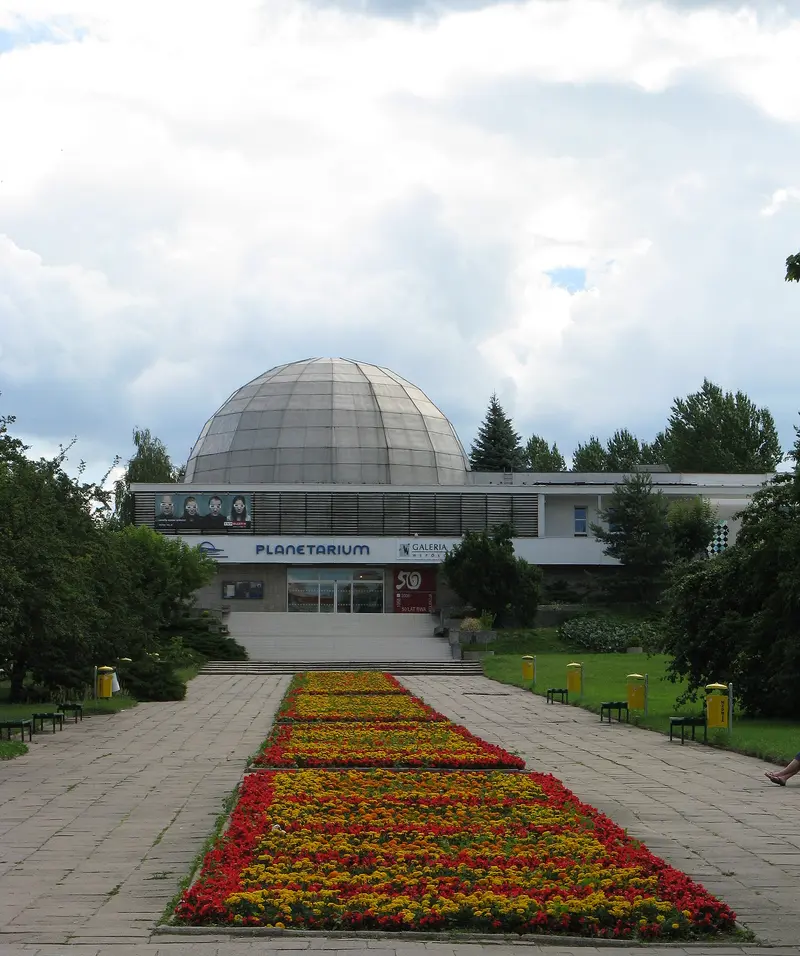
    3Allenstein Planetarium

    The Planetarium opened on February 19, 1973, to mark the 500th birthday of Nicolaus Copernicus. Since its 2012 modernization, it shows presentations with digital fulldome projection.
    Open in Google Maps
    Co-cathedral St. James
    Attraction

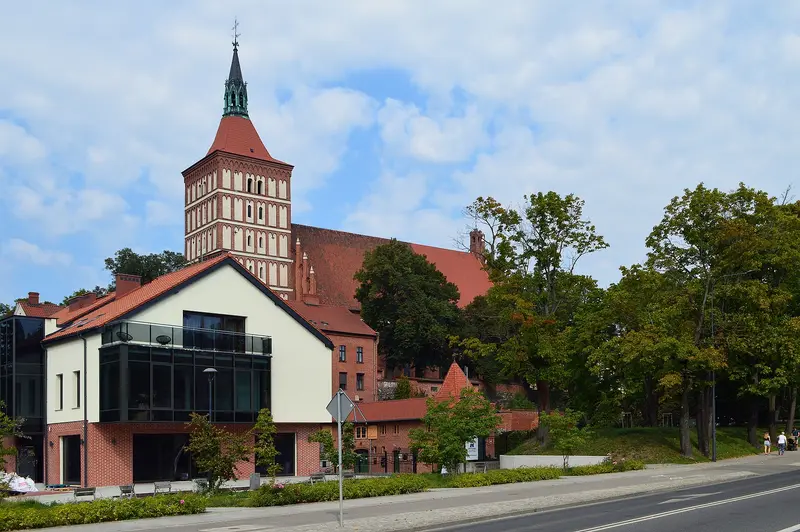
    4Co-cathedral St. James

    The Gothic brick church was built from the second half of the 14th century, its present tower was added in 1596. Today it is the Co-cathedral of the Archdiocese of Warmia and bears the title of Minor Basilica.
    Open in Google Maps
    High Gate (Brama Wysoka)
    Attraction

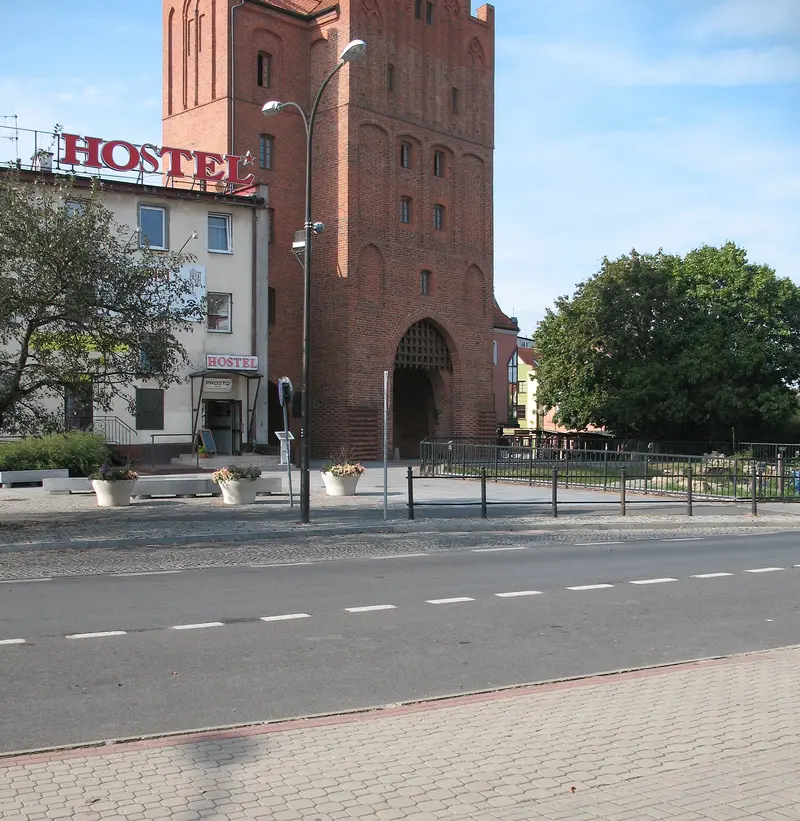
    5High Gate (Brama Wysoka)

    The Hohe Tor is the only surviving of the medieval fortifications' three city gates. It was built in the 14th century, likely taking its current form by the late 15th. Over time it served as armory, prison, and police station; since its 2003 restoration, a Mother of God glass mosaic graces its facade.
    Open in Google Maps

    Videos & Travel Reports

    Wunderschön! Masuren: Polens Seenparadies

    Judith Rakers reist für ARD Reisen durch die Masurische Seenplatte: per Kajak auf der Krutynia, zum Pilzesammeln in die Johannisburger Heide, nach Nikolaiken am Śniardwy-See und nach Allenstein.

    Restaurants in Allenstein (Olsztyn)

    1

    At Andrea's

    Italian restaurant on ul. Kołłątaja in the Old Town, newly awarded a Bib Gourmand in the Michelin Guide Polska 2026 for good value for money. Co-owner is Andrea Marsura, the house Prosecco comes from Valdobbiadene.
    Show on Google Maps
    2

    Cudne Manowce

    Restaurant with Warmian-Masurian cuisine on ul. Chrobrego, situated on the medieval walls of the Old Town with a view of the Łyna. Ingredients are sourced from small regional producers, and the menu features Warmian Dzyndzałki, flatbreads (Podpłomyki), and pike-perch, alongside regional beers.
    Show on Google Maps
    3

    Przystań

    Restaurant directly on the shore of Ukiel Lake, offering water views. The menu highlights fish like pike-perch and trout; bread is baked in-house.
    Show on Google Maps

    Food and Drink

    Dzyndzałki

    Small dumplings with beef filling, a typical specialty of Ermland, which you will find in many restaurants of the region.

    Plindze (Potato pancakes)

    Potato pancakes are regionally called Plindze or Plendze in Warmia and Masuria, after the German word Plinse. You'll find them in many guesthouses in the region.

    Smoked Whitefish (Sielawa)

    The small vendace from the Masurian Lakes is a popular smoked dish in the region, available at local smokehouses and fish restaurants.

    Culture and History

    Copernicus and the Cathedral Chapter The city's history is closely linked to the Warmian Cathedral Chapter, which had the castle built from the mid-14th century. Nicolaus Copernicus managed the Chapter's estates from here and led the defense of the castle in 1521. An astronomical table, which he created himself in 1517, is preserved in the cloister. The Planetarium, opened in 1973 for the astronomer's 500th birthday, builds on this connection. Museums, Stages, and University Within the castle, the Museum of Warmia and Masuria displays collections on the region's history and art. The Stefan Jaracz Theatre opened in 1925; today, it is the city's largest stage. The University of Warmia and Masuria, founded in 1999, brings many students to Olsztyn, which is noticeable in the cafés and pubs around the Old Town.

    Nightlife

    1

    Highlander Whisky Bar

    Whisky bar in the Old Town with a selection of over 100 whiskies; occasional concerts are also held here.
    Show on Google Maps
    2

    Warmia Brewery

    Craft brewery with a restaurant on the Łyna, not far from the Old Town and the Castle. We serve our own house-brewed beer.
    Show on Google Maps
    3

    Carpenter Inn

    Irish Pub at Altstädter Markt. Upstairs, there are regular rock concerts and theme nights.
    Show on Google Maps

    Getting There and Around

    Getting There Olsztyn Główny station is on a line, among others, connecting Korsze and Ełk to Białystok. Olsztyn-Mazury Airport is about 55 kilometers from the city center. For current connections, check with Polish Railways PKP Intercity and the airport's website. Getting Around the City Since December 2015, trams have been running in Olsztyn again; the network now comprises five lines and is complemented by city buses. The Old Town is compact and best explored on foot. Drivers should park outside the Old Town and observe local parking signs.
    Accommodations in Allenstein (Olsztyn)

    Find perfect stay in Allenstein (Olsztyn)

    Booking.com* (Affiliate link)
    Search Hotels
    Agoda* (Affiliate link)
    Search Hotels
    Airbnb
    Vacation Rentals

    * Affiliate link: if you book through it, we earn a small commission. The price stays the same for you.

    Campgrounds in Allenstein (Olsztyn)

    Find perfect campground in Allenstein (Olsztyn)

    Search via Google Maps
    Campgrounds nearby (15km)
    Camping.info
    Find Campgrounds
    Park4Night
    RV Parks & Camping

    Plan your trip to Allenstein (Olsztyn)

    Save places, build a route and plan your city trip, all in one place.

    1. 1
      Sunrise over alpine peaks and a sea of clouds
      1234

      Round trip

      12 days · 4 stops

      Saved

      Pick a route

      Pick a ready-made one or save places and plan your own.

      Open bookmarks
    2. 2

      Trip to Allenstein (Olsztyn)

      Live
      • 1Castle of the Warmian Cathedral Chapter3 days
      • 2City Beach on Ukiel Lake4 days
      • 3Allenstein Planetarium5 days
      Budget

      Plan your trip

      The planner sorts stops, days and budget. Plan together in real time.

      Start trip planning
    3. 3
      9:41 No signal
      Allenstein (Olsztyn)
      Available offline

      Use it on the road

      Download the guide to your phone and use it on site, even offline.

    Nearby

    Warmian-Masurian

    Warmian-Masurian

    The Warmian-Masurian Voivodeship (Warmińsko-Mazurskie) in northeastern Poland unites two historic landscapes. Ermland (Warmia) in the west was shaped for centuries by the Warmian Cathedral Chapter, whose castles and cathedrals in Allenstein (Olsztyn) and Frauenburg (Frombork) still stand today. Masuren (Mazury) in the east is known for the Masurian Lake District, featuring Lake Spirdingsee (Śniardwy), the largest lake in Poland. Until 1945, the region predominantly belonged to East Prussia. For travelers, Ermland-Masuren is primarily a destination for water sports and nature: sailing on the large lakes, excursion boats between lakeside towns, and canoe tours on rivers like the Krutynia. Additionally, there are testimonies to a turbulent history, from Copernicus and baroque pilgrimage churches to the ruins of the Wolf's Lair.
    Nikolaiken (Mikołajki)

    Nikolaiken (Mikołajki)

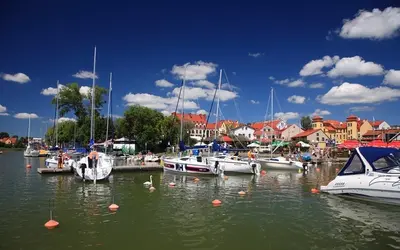
    Nikolaiken (Mikołajki) is a small town with over 3,300 inhabitants in the heart of the Masurian Lake District. The town lies at the narrow passage between Lake Tałty and Lake Mikołajki, which merge here, and only a few kilometres from Lake Śniardwy, Poland's largest lake. Nikolaiken was first mentioned in 1444; it received town privileges in 1726. Today, Mikołajki is one of Masuria's most important sailing centres. Along the shore are a marina, excursion boat piers, and houseboat rentals. The centre is small: restaurants and guesthouses line the market square and church square, and a pedestrian bridge, completed in 2016, connects the waterfront promenades across the narrow lake passage. About five kilometres to the east lies Lake Łuknajno, a nature reserve and UNESCO Biosphere Reserve with one of Europe's largest mute swan colonies. In the vicinity is also the Krutynia, a popular river for canoe trips.
    Lötzen (Giżycko)

    Lötzen (Giżycko)

    Lötzen (Giżycko), with roughly 27,000 residents, is one of the larger towns in the Masurian Lake District. It's situated on an isthmus between Lake Löwentin (Niegocin) and the Lake Mamry system, including Lake Kisajno. First mentioned in 1340, Lötzen gained town rights in 1612 and has been connected to the rail network since 1868. On Lake Löwentin's shore are harbours, including the municipal Ekomarina, plus the town beach and adjacent park. The Lötzener Canal (Kanał Łuczański) is spanned by an 1898 swing bridge, still hand-operated today. West of town lies the extensive Boyen Fortress grounds, plus a water tower with a viewing café and Bruno's Hill with the 1909 Bruno Cross. Lötzen thrives primarily on water sports. From here, sailing trips and excursion boats depart across the large Masurian lakes, and in summer, the town hosts events like the Sea Shanty Festival.
    Marienburg (Malbork)

    Marienburg (Malbork)

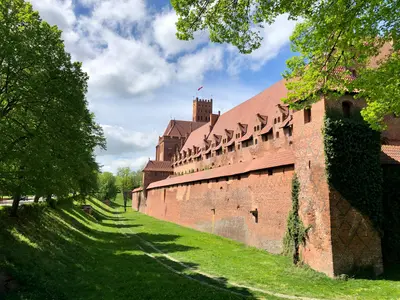
    Marienburg (Malbork), located on the Nogat, a distributary of the Vistula, is considered Europe's largest brick building: over 30 million bricks were used across approximately 21 hectares. The Teutonic Order constructed the complex between about 1270 and 1300; from 1309, it was the Grand Master's seat. A UNESCO World Heritage site since 1997, it attracts around 500,000 visitors each year. The castle has three sections: the Upper Castle (with St. Mary's Church), the Middle Castle (Grand Master's Palace, Great Refectory), and the Outer Bailey (housing service buildings). Plan half a day for the interiors; an excursion from Danzig is easily manageable by train or car.
    Danzig (Gdańsk)

    Danzig (Gdańsk)

    Danzig (Gdańsk) is located on Gdańsk Bay, where the Motława River flows into the Baltic Sea, west of the Vistula estuary. With nearly 490,000 inhabitants, the capital of the Pomeranian Voivodeship is Poland's sixth-largest city and forms the Tri-City (Trójmiasto) with Sopot and Gdingen (Gdynia). For centuries, Danzig was a Hanseatic city, prospering through grain trade and amber. In 1945, its center lay almost entirely in ruins, but it was rebuilt under Polish leadership. The heart is the Main Town (Główne Miasto) with Long Lane, Long Market, and Mariacka Street. To the north lies the Old Town, and east of the Motława are Granary Island and Langgarten. Further north, the shipyards dominate the landscape, where Solidarność originated in 1980. Outside the center are Langfuhr (Wrzeszcz) and Oliva (Oliwa). In Oliwa, you'll find the monastery founded around 1185 and the cathedral. A weekend is sufficient for the Old Town and the main museums. With two or three more days, you can visit Westerplatte and take the S-Bahn to Sopot or continue to the Hel Peninsula.

    Sources & method

    • Photos: Wikimedia Commons, Google Maps. Each photo carries its credit.
    • Place data such as addresses and ratings comes from Google Maps.
    • Video reportages: Wunderschön! Masuren: Polens Seenparadies
    • The content is based on web research from public, traceable sources. How the content is made · The role of AI