Fernweh: Home
    ExploreTravel GuidesPlan a tripMy tripLast visited
    de|en
    All Places & RegionsAll highlightsAbout FernwehFAQPrivacy PolicyImprint
    ExploreTravel GuidesPlan a tripMy tripLast visited
    • Overview
    • Places in the region
    • Eat & drink
    • Food culture
    • Culture
    • Getting around
    • Round trips
    • Nearby
    Crete

    Greece

    Crete

    Region

    Crete is the largest island in Greece and big enough for several trips.

    by Felix Gillen

    1. Home
    2. Destinations
    3. Greece
    4. Crete
    Crete is the largest island in Greece and big enough for several trips. Along the north coast, Venetian-influenced port towns and resorts follow one another; in the south, the mountains drop steeply to the Libyan Sea, with plateaus, gorges and olive groves in between. Add the palaces of the Minoan culture, one of Europe's earliest civilisations, and a cuisine rooted in the island's own farming.
    Crete is about 260 kilometres long and has just over 600,000 inhabitants. Three mountain ranges shape the island: the White Mountains in the west, the Ida range with Psiloritis (2,456 m) in the centre and the Dikti range in the east. The larger towns of Chania, Rethymno, Heraklion and Agios Nikolaos lie on the north coast; the south coast is steeper and more sparsely populated.Well-known sights include the palace of Knossos and the Archaeological Museum in Heraklion, the old towns of Chania and Rethymno, the Samaria Gorge with a trail of about 16 kilometres, and the lagoons of Balos and Elafonisi in the west. One week is enough for part of the island; two make sense for both west and east. Spring and autumn are better for hiking than the hot peak summer.
    Agios Nikolaos

    Place 1 of 4

    Agios Nikolaos

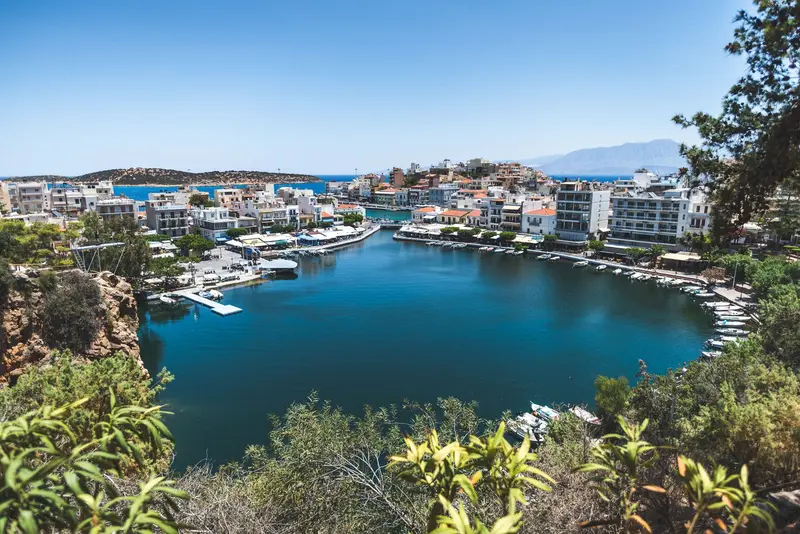
    Agios Nikolaos is the capital of the Lasithi regional unit in eastern Crete and is located on Mirabello Bay. The town's focal point is the small, deep Lake Voulismeni, which is connected to the harbour by a canal.

    Discover
    Rethymno

    Place 2 of 4

    Rethymno

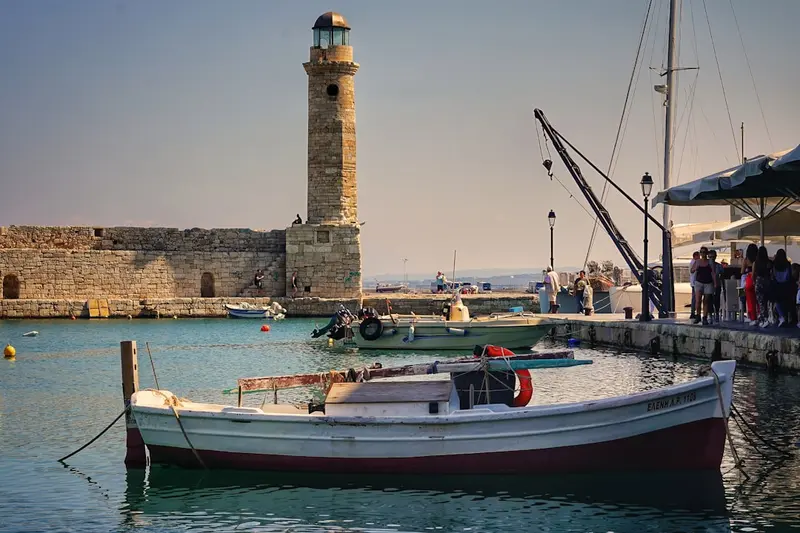
    Rethymno is the third largest city on the north coast of Crete, located between Chania and Heraklion. Its Old Town, with Venetian portals, Ottoman wooden balconies and minarets, is one of the island's best preserved, topped by the Fortezza fortress.

    Discover
    Vai

    Place 3 of 4

    Vai

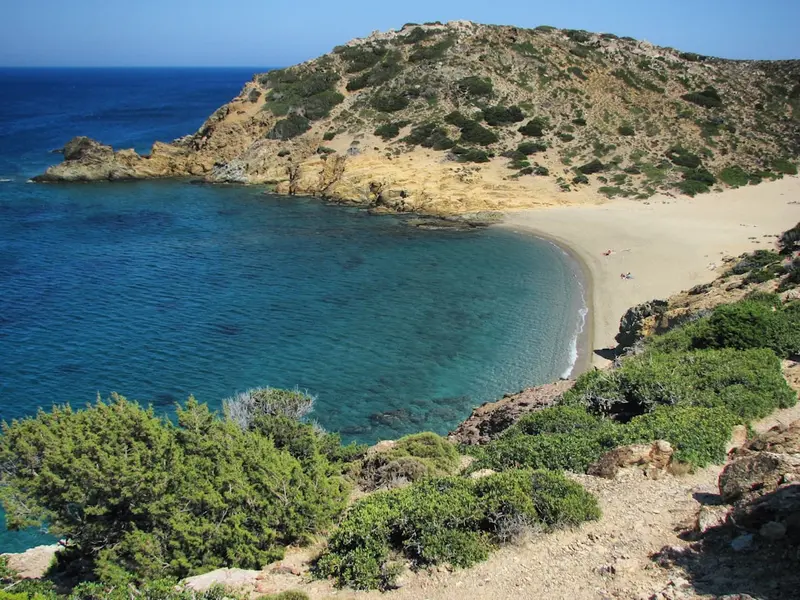
    Vai, on the northeastern tip of Crete, is not a village but a beach backed by a palm grove. Several thousand Cretan Date Palms grow here in a narrow valley, which has been protected since the 1980s.

    Discover
    Matala

    Place 4 of 4

    Matala

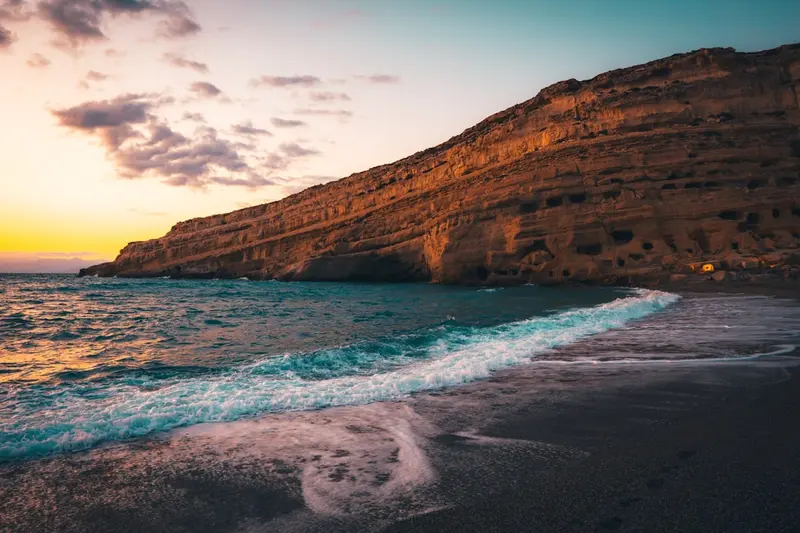
    Matala is located on the south coast of Crete, at the edge of the Messara Plain, and consists of a bay, a handful of alleys, and the cliff face with its caves.

    Discover

    More places in Crete

    Chania

    Chania

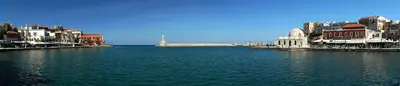
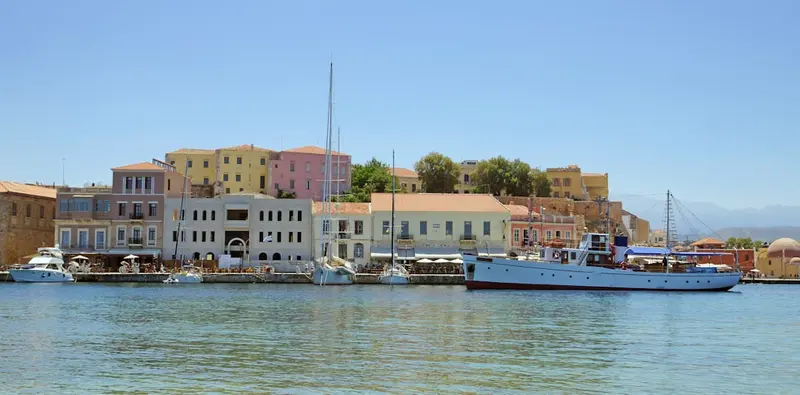
    Chania is Crete's second-largest city and western capital. An Old Town with Venetian, Ottoman, and Jewish quarters side-by-side surrounds its Venetian harbour, featuring a lighthouse, arsenals, and the Mosque of Küçük Hasan Pascha.You come for the Old Town, the Market Hall, and as a base for western Crete's Balos, Falassarna, Elafonissi, and Samaria Gorge.
    Heraklion

    Heraklion

    Heraklion is Crete's largest city and capital, and for most travelers, it's the island's arrival point. Behind the Venetian city walls lies a bustling city center, the harbor with Koules Fortress, and the Archaeological Museum, home to the most important collection of Minoan art.You come for the museum and the Palace of Knossos, a UNESCO World Heritage site for Minoan Palace Centres from 2025. The city itself is more for work than leisure, but a day is well spent on the old town, market, and city walls.
    Loutro

    Loutro

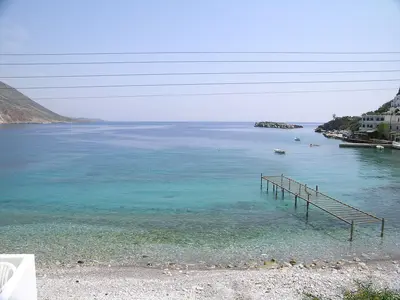
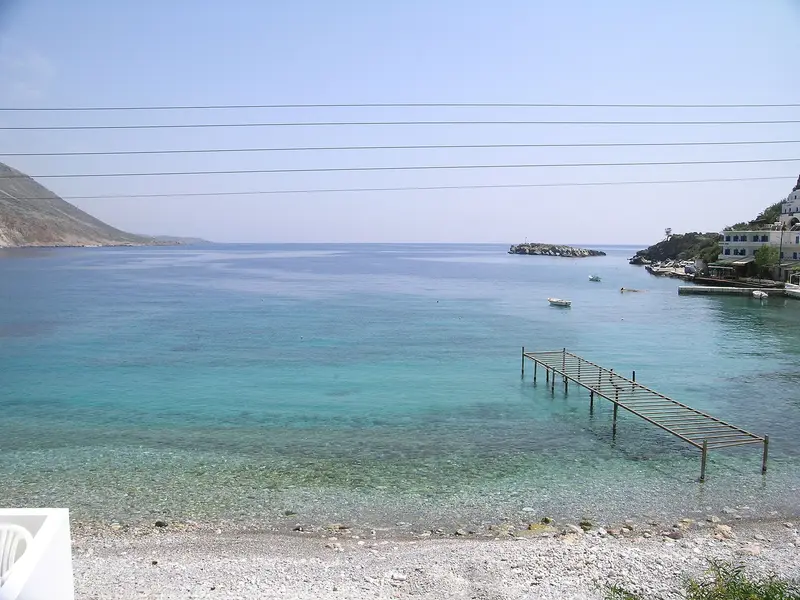
    Loutro is a small village on the south coast of Sfakia between Chora Sfakion and Agia Roumeli. No roads lead here; access is only on foot or by boat. The houses line a natural bay, used as a sheltered harbour since ancient times.
    Elafonissi

    Elafonissi

    Elafonissi is situated on the southwest tip of Crete, where the island tapers off and the nearest road is far away. A shallow lagoon lies between the mainland and an offshore island, its sand appearing pink in places. The area is a Natura 2000 protected site; there's a car park, a canteen, and nothing else.

    Sights in Crete

    Discover the most important sights and attractions

    Palast von Knossos

    Palast von Knossos

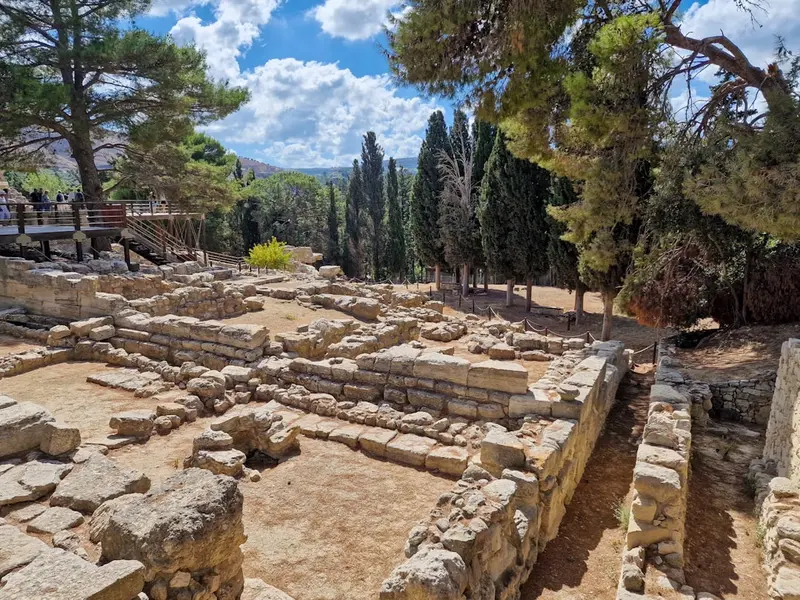
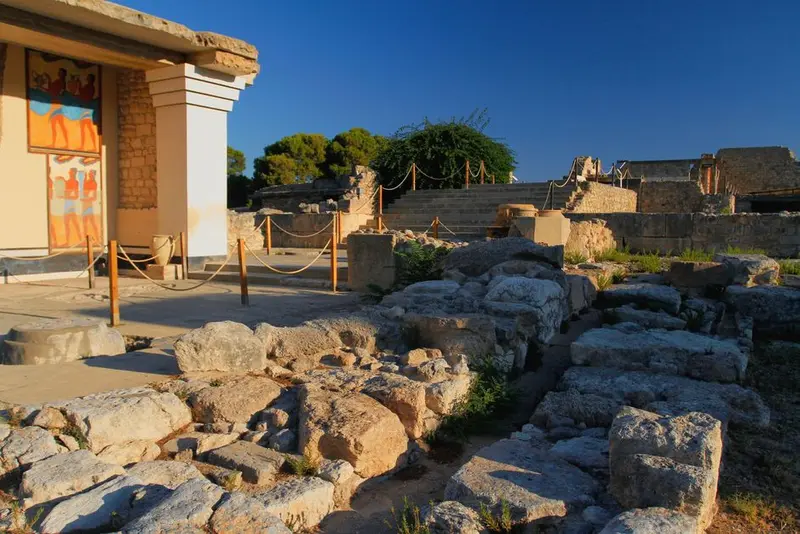
    Knossos was the center of Minoan culture and is located about five kilometers south of Heraklion. The complex includes several floors, light wells, storage magazines, and frescoes, of which the originals are housed in the Archaeological Museum in Heraklion. The reconstructions by excavator Arthur Evans from the early 20th century shape the site's image to this day and are controversially debated in research. There is little shade, so an early morning visit is worthwhile.
    Open in Google Maps
    Samaria-Schlucht

    Samaria-Schlucht

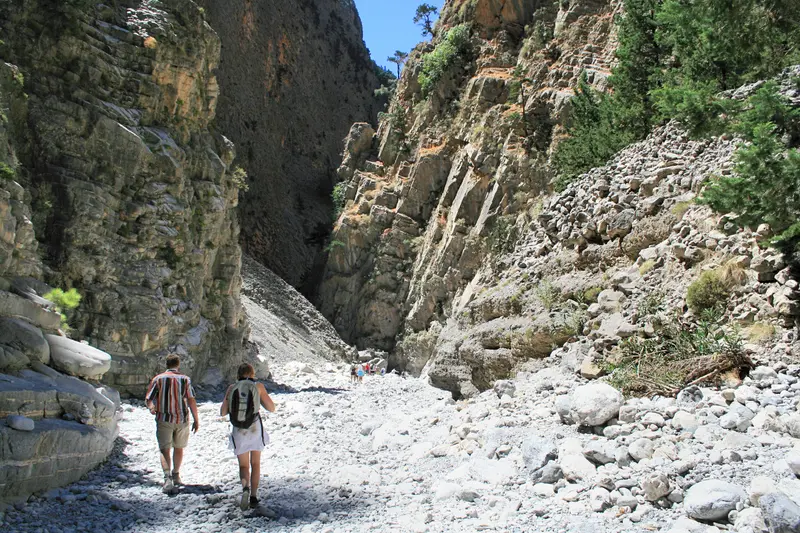
    The Samaria Gorge cuts through the White Mountains for around 16 kilometers, making it one of Europe's longest gorges. The path begins at Xyloskalo on the Omalos plateau and descends steeply to the south coast village of Agia Roumeli. At its narrowest point, the Iron Gates, the rock walls are only a few meters apart. The hike takes five to seven hours depending on pace, the park is closed in winter, and the return is by boat.
    Open in Google Maps
    Archaeological Museum Heraklion

    Archaeological Museum Heraklion

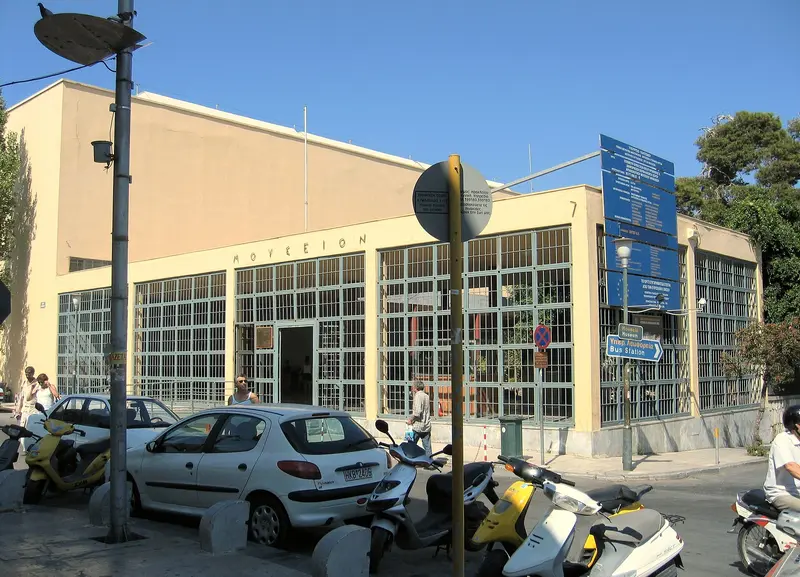
    The Archaeological Museum in Heraklion houses the most important finds of Minoan culture in one place. Among the exhibits are the original frescoes from Knossos, the Snake Goddesses, the Phaistos Disc, and gold jewelry from the Mallia tombs. The collection is chronologically arranged and covers approximately 5500 years of Cretan history. A visit before or after Knossos makes the ruins there much clearer.
    Open in Google Maps
    Insel Spinalonga

    Insel Spinalonga

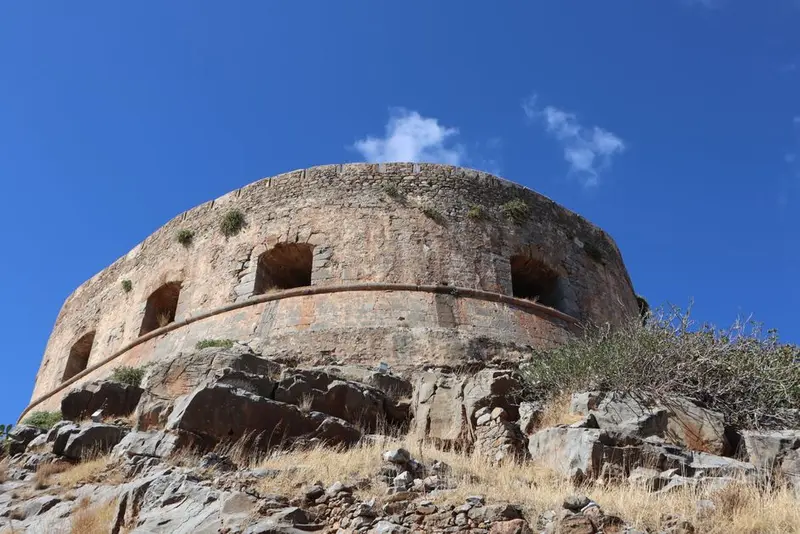
    The rocky island of Spinalonga lies in the Gulf of Mirabello, off the coast near Elounda. The Venetians built a sea fortress here in the 16th century; from 1903 to 1957, the island served as a leper colony. Preserved are the fortress walls, the main street with the houses of the sick, and a small church. Boats depart from Plaka, Elounda, and Agios Nikolaos; the crossing from Plaka takes only a few minutes.
    Open in Google Maps
    Balos Lagoon

    Balos Lagoon

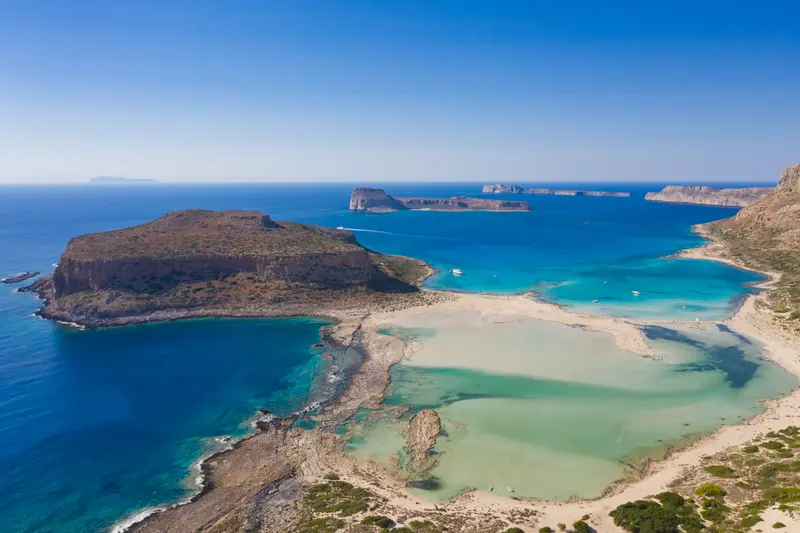
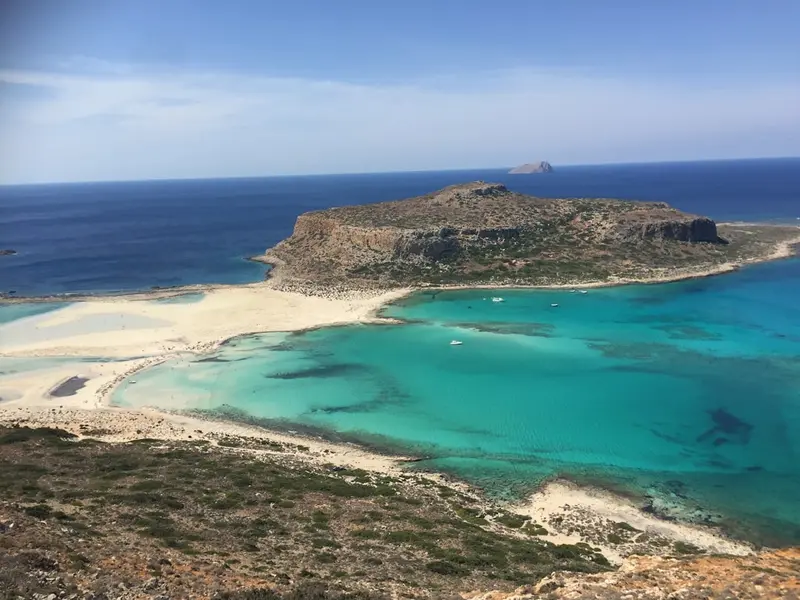
    Balos Lagoon is on Crete's northwest tip, on the Gramvousa Peninsula. Between the mainland and offshore rocks, shallow, bright water sits over a sandbank. Access is by excursion boat from Kissamos, or an unpaved track followed by a 20-minute walk down to the bay. Shade and infrastructure are largely absent; pack water and sun protection.
    Open in Google Maps
    Palace of Phaistos

    Palace of Phaistos

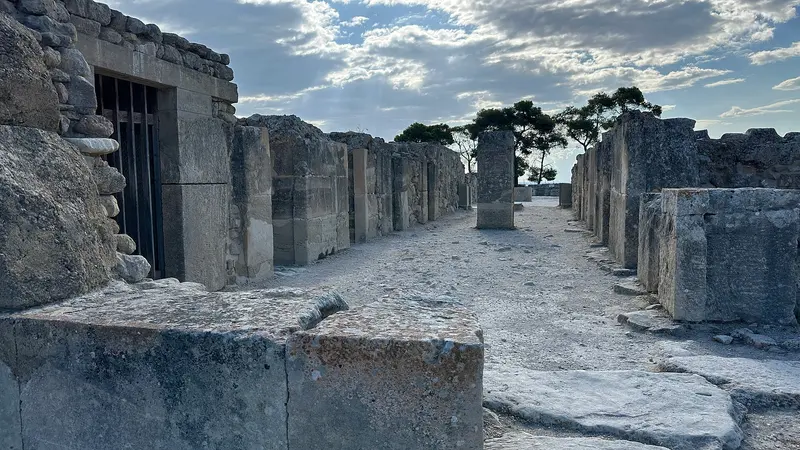
    Phaistos was the second-largest Minoan palace after Knossos, on a hill above the Messara Plain in the south of the island. Unlike Knossos, little reconstruction was carried out here, so the floor plans, the grand staircase, and the storage rooms can be seen in their excavated state. The view extends across the plain to the Ida Mountains. A few kilometers away, the Villa of Agia Triada complements the visit.
    Open in Google Maps

    Restaurants & Cafes

    1

    Dounias (Drakona)

    The Taverna Dounias is located in the mountain village of Drakona in the hinterland of Chania and cooks traditional Cretan dishes exclusively over a wood fire. Many ingredients come from its own farm with gardens and livestock; the menu is seasonal. The host cooks himself and often chats with the guests.
    Show on Google Maps
    2

    Likastos (Archanes)

    Taverna on Venizelou Square in Archanes, a wine village about 15 km south of Heraklion. The menu features Cretan and Greek dishes: salads, lamb, rooster, pites, and grilled platters, alongside local Raki and wine. Outdoor dining is also available on the square.
    Show on Google Maps
    3

    Taverna Nikos (Chora Sfakion)

    Traditional tavern in Chora Sfakion, the small port town on the south coast where ferries from Agia Roumeli and Loutro dock. Cretan cuisine is served, featuring specialties from Sfakia, including the Sfakiani Pita, a thin flatbread filled with Mizithra, eaten with honey.
    Show on Google Maps

    Eating and Drinking in Crete

    Cretan cuisine uses few ingredients, almost all sourced from the island: olive oil, wild herbs, legumes, sheep and goat cheese, plus vegetables from the Messara Plain. Meat plays a smaller role than on the mainland; fish on the south coast is fresher and more expensive than many expect.
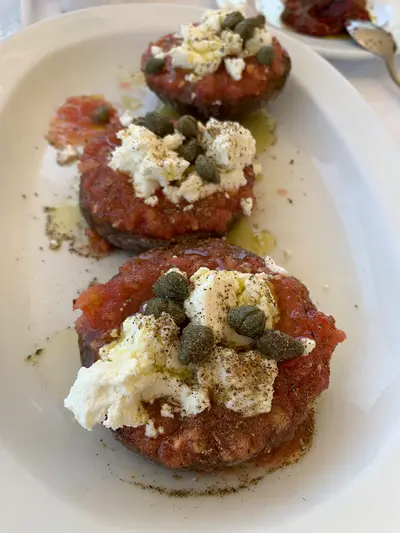
    Dakos

    Dakos

    A hard barley rusk is moistened with water and olive oil and topped with grated tomato, Mizithra cheese, and oregano. The dish originates from shepherd's cuisine and was originally provisions for travelers. It appears on practically every tavern menu and serves as an appetizer for two.

    Chochlioi Boubouristi

    Salt-and-flour-coated snails are placed opening-down in hot olive oil and deglazed with rosemary and vinegar. A Cretan specialty, it's served mainly in spring and after rain. If you dare, eat it with your fingers and plenty of bread.
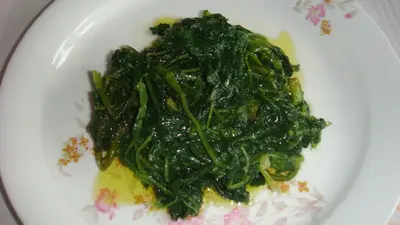
    Wild Greens and Horta

    Wild Greens and Horta

    Boiled wild greens with lemon and olive oil are a staple of every Cretan meal. Depending on the season, Stamnagathi, a bitter wild chicory, dandelion, or fennel greens are served. In many places, these herbs are still hand-picked, and the menu reflects the season accordingly.
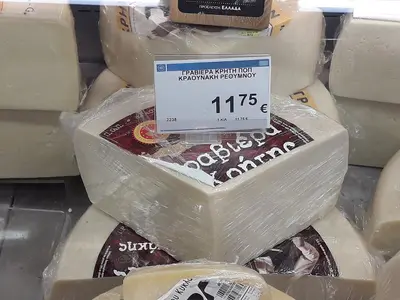
    Cheese: Graviera, Mizithra and Anthotyros

    Cheese: Graviera, Mizithra and Anthotyros

    Graviera is a firm sheep's cheese that matures for at least five months and tastes nutty. Mizithra is available fresh and mild, or dried and salty for grating; Anthotyros's taste lies in between. In the mountain villages of Sfakia and Psiloritis, the cheese is still produced in small dairies.
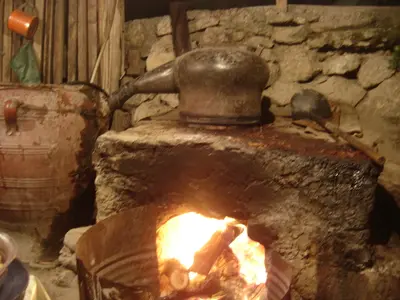
    Raki und kretischer Wein

    Raki und kretischer Wein

    Raki, auf Kreta meist Tsikoudia genannt, wird aus dem Trester der Weinlese gebrannt und im Herbst in vielen Dörfern gemeinsam destilliert. Nach dem Essen steht er ungefragt auf dem Tisch und wird nicht berechnet. Beim Wein lohnen die Inselrebsorten Vidiano und Vilana bei den Weißen sowie Kotsifali und Liatiko bei den Roten.

    What shapes the island

    Layers of historyCrete bears the marks of every power that ruled it. From the third millennium BC the Minoan culture developed here, one of Europe's earliest civilisations, whose palaces at Knossos, Phaistos and Malia are still being studied. Mycenaeans, Dorians, Romans and Byzantines followed, then the Venetians from 1204 and the Ottomans in the 17th century. The Venetians left harbour basins, fortresses and town houses in Chania, Rethymno and Heraklion; the Ottomans left minarets and fountains. Crete only became part of the Greek state in 1913.What lives on in everyday lifeCretan identity is strong and audible. At festivals the lyra, a three-stringed fiddle played on the knee, is accompanied by the laouto, and people dance the pentozali and syrtos. Mantinades, rhymed verses, are often improvised on such occasions. Shepherding traditions and cheesemaking continue in the mountain villages. Since the Seven Countries Study, begun in the 1950s, Cretan cuisine has been seen as a model of the Mediterranean diet: plenty of olive oil, wild greens and pulses, little meat. In many tavernas a raki arrives unasked after the meal.

    Exploring the Island

    Estimating Distances CorrectlyCrete is approx. 260 kilometers long and just 12 kilometers wide at its narrowest point. The well-developed New National Road links the north coast from Kissamos via Chania, Rethymno, and Heraklion to Agios Nikolaos. Driving from west to east takes half a day. Crossing the island is different: Southern connections wind through the mountains, where 40 kilometers can quickly become an hour's drive. Plan routes by time, not by kilometers.Car, Bus, and BoatA rental car is practically essential for reaching the south coast, the plateaus, and the small villages. Fuel stations are sparse inland, and some beach access roads are unpaved tracks, for which a standard compact car is not insured. The bus operator KTEL serves the north coast frequently and reliably, also covering destinations like Omalos, Matala, or Plakias, though with limited daily services. Some places on the southwest coast, including Loutro and Agia Roumeli, have no road access whatsoever: The coastal ferry travels there from Chora Sfakion or Paleochora. Ferry connections to the mainland operate via Heraklion and Chania to Piraeus, mostly as overnight journeys.

    Round trips through this region

    Crete West-East

    Crete West-East

    From Chania, head to the southwestern tip, Elafonissi, then east via Rethymno to Heraklion with the Palace of Knossos. After a detour to Matala on the south coast, the journey ends at Vai Palm Beach in the far east; this leg takes about three and a half hours.

    15 Days
    6 stops

    Nearby

    Matala

    Matala

    Matala is located on the south coast of Crete, at the edge of the Messara Plain, and consists of a bay, a handful of alleys, and the cliff face with its caves. The chambers carved into the sandstone date back to antiquity and were used as tombs in Roman and early Christian times; in the 1960s, dropouts moved in. From the village, the Minoan sites of the Messara and several quiet coves are reachable within a short drive.
    Heraklion

    Heraklion

    Heraklion is Crete's largest city and capital, and for most travelers, it's the island's arrival point. Behind the Venetian city walls lies a bustling city center, the harbor with Koules Fortress, and the Archaeological Museum, home to the most important collection of Minoan art.You come for the museum and the Palace of Knossos, a UNESCO World Heritage site for Minoan Palace Centres from 2025. The city itself is more for work than leisure, but a day is well spent on the old town, market, and city walls.
    Rethymno

    Rethymno

    Rethymno is the third largest city on the north coast of Crete, located between Chania and Heraklion. Its Old Town, with Venetian portals, Ottoman wooden balconies and minarets, is one of the island's best preserved, topped by the Fortezza fortress.You come for the Old Town, the Venetian harbour, and the long sandy beach right in the centre. The university ensures that the city remains lively even off-season.
    Loutro

    Loutro

    Loutro is a small village on the south coast of Sfakia between Chora Sfakion and Agia Roumeli. No roads lead here; access is only on foot or by boat. The houses line a natural bay, used as a sheltered harbour since ancient times.
    Chania

    Chania

    Chania is Crete's second-largest city and western capital. An Old Town with Venetian, Ottoman, and Jewish quarters side-by-side surrounds its Venetian harbour, featuring a lighthouse, arsenals, and the Mosque of Küçük Hasan Pascha.You come for the Old Town, the Market Hall, and as a base for western Crete's Balos, Falassarna, Elafonissi, and Samaria Gorge.

    Sources & method

    • Photos: Wikimedia Commons, Unsplash, Pexels. Each photo carries its credit.
    • Place data such as addresses and ratings comes from Google Maps.
    • The content is based on web research from public, traceable sources. How the content is made · The role of AI